United Kingdom (UK) Medicinal Herbs Market Size, Share & Growth Rate
The United Kingdom (UK) Medicinal Herbs Market was estimated at USD 218 Million in 2025 and is projected to reach USD 269 Million by 2032, growing at a CAGR of 3.0% from 2026 to 2032. This growth trajectory is primarily fueled by the increasing consumer inclination towards natural health solutions, amidst a broader cultural shift towards holistic wellness practices. Additionally, rising awareness about the therapeutic benefits of herbal remedies continues to drive demand across various consumer segments.
United Kingdom (UK) Medicinal Herbs Market Year-wise Growth Rate and Key Drivers
This graph highlights how the United Kingdom (UK) Medicinal Herbs Market has steadily grown over the years, supported by major growth factors.
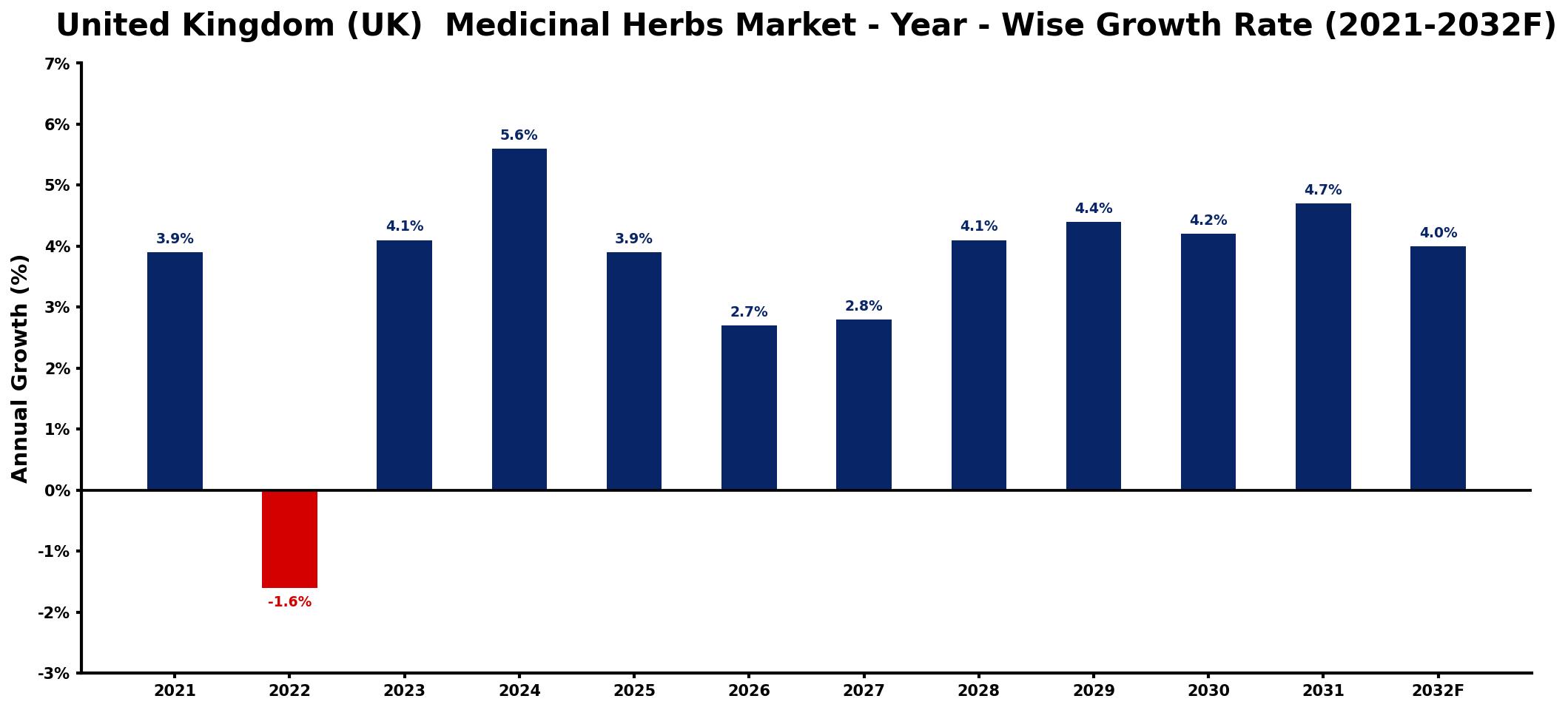
The table below presents the year‑wise growth rates along with the key drivers influencing the market
| Year | Growth Rate | Major Drivers |
| 2021 | 3.9% | Rising consumer health awareness |
| 2022 | -1.6% | Market adjustments in regulations |
| 2023 | 4.1% | Increased online retail presence |
| 2024 | 5.6% | Growing interest in natural remedies |
| 2025 | 3.9% | Expansion of wellness tourism sector |
| 2026 | 2.7% | Enhanced research and development funding |
| 2027 | 2.8% | Strengthening of local supply chains |
| 2028 | 4.1% | Emergence of new product categories |
| 2029 | 4.4% | Collaboration with healthcare professionals |
| 2030 | 4.2% | Increased investment in sustainability |
| 2031 | 4.7% | Broader acceptance in mainstream markets |
| 2032 | 4.0% | Growing demand for holistic therapies |
Note: Market size estimations and growth projections presented in this report are based on 6Wresearch's proprietary forecasting methodology, utilizing the latest available industry data, government publications, and primary research inputs.
United Kingdom (UK) Medicinal Herbs Market Synopsis
The strongest force currently shaping the UK Medicinal Herbs Market is the growing preference for alternative medicine, as consumers increasingly seek out herbal solutions for health conditions. This trend reflects a significant shift in healthcare approaches, moving from conventional pharmaceuticals to natural remedies that are perceived as safer and more effective.
Simultaneously, the rise in popularity of self-care routines, particularly through the use of herbal teas, tinctures, and essential oils, underscores a fundamental change in consumer behavior. As individuals prioritize wellness and preventive care, the market is experiencing an invigorating boost, with a notable focus on high-quality, ethically sourced products.
United Kingdom (UK) Medicinal Herbs Market Key Takeaways
- The market is driven by a growing consumer demand for natural and holistic health solutions.
- Organic and sustainably sourced medicinal herbs are increasingly popular, reflecting ethical purchasing trends.
- Regulatory compliance remains a crucial factor for market participants, affecting product development.
- Investment opportunities are expanding in cultivation, processing, and the development of innovative herbal products.
- Advancements in research and technology are enhancing the safety and efficacy of herbal remedies.
Evaluation of Restraints in United Kingdom (UK) Medicinal Herbs Market
Despite the positive growth outlook, the UK Medicinal Herbs Market faces several constraints. Regulatory hurdles present significant challenges, with the complexity of compliance varying across jurisdictions. This impacts the ability of market players to effectively introduce new products. Furthermore, the necessity for enhanced consumer education is paramount; while interest in herbal remedies is on the rise, many consumers lack comprehensive knowledge about their benefits and proper usage. Quality control and standardization pose additional obstacles, particularly given the natural variability of plant materials, which complicates consistency in product efficacy. This environment of increased competition from traditional pharmaceuticals also places additional pressure on market players striving to gain consumer trust.
United Kingdom (UK) Medicinal Herbs Market Trends
Current trends indicate a significant shift towards organic and ethically sourced medicinal herbs, driven by consumer preferences for sustainable products. There is also a noticeable rise in the popularity of herbal-based personal care items and dietary supplements, with consumers increasingly incorporating these into their daily routines. The market is witnessing innovation in product formulations, leading to the creation of new herbal blends and delivery formats, such as capsules and liquids, catering to diverse consumer needs. Additionally, social media and digital platforms are playing an instrumental role in educating consumers about the benefits of herbal remedies, further driving demand.
United Kingdom (UK) Medicinal Herbs Market Opportunities
The potential for growth and investment within the UK Medicinal Herbs Market is substantial, particularly for businesses focusing on sustainable cultivation and innovative product development. Opportunities exist in the processing and distribution of medicinal herbs, especially as consumer interest in holistic health solutions continues to expand. Companies can capitalize on this trend by offering high-quality herbal products, including supplements, skincare, and wellness teas that align with consumer demand for natural alternatives. Collaborative ventures aimed at educational initiatives and quality assurance can also provide a competitive edge in this evolving landscape.
Government Initiatives in the United Kingdom (UK) Medicinal Herbs Market
The UK government has established various regulatory frameworks to ensure the safety and quality of herbal products. The Medicines and Healthcare products Regulatory Agency (MHRA) plays a critical role in overseeing the licensing of herbal medicines. The Traditional Herbal Medicinal Products Directive (THMPD) requires rigorous registration and compliance with safety and efficacy standards. Moreover, the Department of Health and Social Care promotes research into the benefits of herbal remedies while providing guidelines on their use, enhancing consumer access to safe and effective products.
Future Insights of the United Kingdom (UK) Medicinal Herbs Market
Looking ahead, the UK Medicinal Herbs Market is poised for significant growth through 2026-2032. Increasing consumer awareness and preference for preventive healthcare solutions are expected to amplify the adoption of herbal remedies. Additionally, advancements in scientific research will likely bolster product development and safety, fostering greater acceptance among mainstream health practitioners. With sustainability at the forefront of consumer concerns, the market is anticipated to expand, offering ripe opportunities for innovation and engagement across various sectors.
United Kingdom (UK) Medicinal Herbs Market Latest Developments (2025 - 2026)
Recent developments in the UK Medicinal Herbs Market indicate a growing focus on enhancing product transparency and traceability. Many companies are investing in technology to ensure the authenticity of their herbal products, thereby building consumer trust. Moreover, collaborations between herbal product manufacturers and healthcare professionals are becoming more prevalent, aimed at integrating herbal remedies into traditional healthcare frameworks. This trend not only supports consumer education but also promotes the broader acceptance of medicinal herbs as credible health solutions.
United Kingdom (UK) Medicinal Herbs Market - Key Attractiveness of the Report
- 10 Years of Market Numbers
- Historical Data Starting from 2022 to 2025
- Base Year: 2025
- Forecast Data until 2032
- Key Performance Indicators Impacting the Market
- Major Upcoming Developments and Projects
Key Highlights of the Report:
- United Kingdom (UK) Medicinal Herbs Market Outlook
- Market Size of United Kingdom (UK) Medicinal Herbs Market, 2025
- Forecast of United Kingdom (UK) Medicinal Herbs Market, 2032
- Historical Data and Forecast of United Kingdom (UK) Medicinal Herbs Revenues & Volume for the Period 2022-2032F
- United Kingdom (UK) Medicinal Herbs Market Trend Evolution
- United Kingdom (UK) Medicinal Herbs Market Drivers and Challenges
- United Kingdom (UK) Medicinal Herbs Price Trends
- United Kingdom (UK) Medicinal Herbs Porter's Five Forces
- United Kingdom (UK) Medicinal Herbs Industry Life Cycle
- Historical Data and Forecast of United Kingdom (UK) Medicinal Herbs Market Revenues & Volume By Type for the Period 2022-2032F
- Historical Data and Forecast of United Kingdom (UK) Medicinal Herbs Market Revenues & Volume By Horsetail for the Period 2022-2032F
- Historical Data and Forecast of United Kingdom (UK) Medicinal Herbs Market Revenues & Volume By Dandelion for the Period 2022-2032F
- Historical Data and Forecast of United Kingdom (UK) Medicinal Herbs Market Revenues & Volume By Echinacea for the Period 2022-2032F
- Historical Data and Forecast of United Kingdom (UK) Medicinal Herbs Market Revenues & Volume By Valerian for the Period 2022-2032F
- Historical Data and Forecast of United Kingdom (UK) Medicinal Herbs Market Revenues & Volume By St. John??s Wort for the Period 2022-2032F
- Historical Data and Forecast of United Kingdom (UK) Medicinal Herbs Market Revenues & Volume By Lemon Balm for the Period 2022-2032F
- Historical Data and Forecast of United Kingdom (UK) Medicinal Herbs Market Revenues & Volume By Yarrow for the Period 2022-2032F
- Historical Data and Forecast of United Kingdom (UK) Horsetail Medicinal Herbs Market Revenues & Volume By Calendula for the Period 2022-2032F
- Historical Data and Forecast of United Kingdom (UK) Medicinal Herbs Market Revenues & Volume By Nature for the Period 2022-2032F
- Historical Data and Forecast of United Kingdom (UK) Medicinal Herbs Market Revenues & Volume By Organic for the Period 2022-2032F
- Historical Data and Forecast of United Kingdom (UK) Medicinal Herbs Market Revenues & Volume By Conventional for the Period 2022-2032F
- Historical Data and Forecast of United Kingdom (UK) Medicinal Herbs Market Revenues & Volume By Form for the Period 2022-2032F
- Historical Data and Forecast of United Kingdom (UK) Medicinal Herbs Market Revenues & Volume By Whole for the Period 2022-2032F
- Historical Data and Forecast of United Kingdom (UK) Medicinal Herbs Market Revenues & Volume By Powder for the Period 2022-2032F
- Historical Data and Forecast of United Kingdom (UK) Medicinal Herbs Market Revenues & Volume By Liquid for the Period 2022-2032F
- Historical Data and Forecast of United Kingdom (UK) Medicinal Herbs Market Revenues & Volume By End-Use for the Period 2022-2032F
- Historical Data and Forecast of United Kingdom (UK) Medicinal Herbs Market Revenues & Volume By Medicinal Tea for the Period 2022-2032F
- Historical Data and Forecast of United Kingdom (UK) Medicinal Herbs Market Revenues & Volume By Health Supplement for the Period 2022-2032F
- Historical Data and Forecast of United Kingdom (UK) Medicinal Herbs Market Revenues & Volume By Nutritive Jams for the Period 2022-2032F
- Historical Data and Forecast of United Kingdom (UK) Medicinal Herbs Market Revenues & Volume By Herbal Medicines for the Period 2022-2032F
- Historical Data and Forecast of United Kingdom (UK) Medicinal Herbs Market Revenues & Volume By Cosmeceuticals for the Period 2022-2032F
- Historical Data and Forecast of United Kingdom (UK) Medicinal Herbs Market Revenues & Volume By Other Uses for the Period 2022-2032F
- United Kingdom (UK) Medicinal Herbs Import Export Trade Statistics
- Market Opportunity Assessment By Type
- Market Opportunity Assessment By Nature
- Market Opportunity Assessment By Form
- Market Opportunity Assessment By End-Use
- United Kingdom (UK) Medicinal Herbs Top Companies Market Share
- United Kingdom (UK) Medicinal Herbs Competitive Benchmarking By Technical and Operational Parameters
- United Kingdom (UK) Medicinal Herbs Company Profiles
- United Kingdom (UK) Medicinal Herbs Key Strategic Recommendations






































