United Kingdom (UK) Table Olives Market: Import Trend Analysis
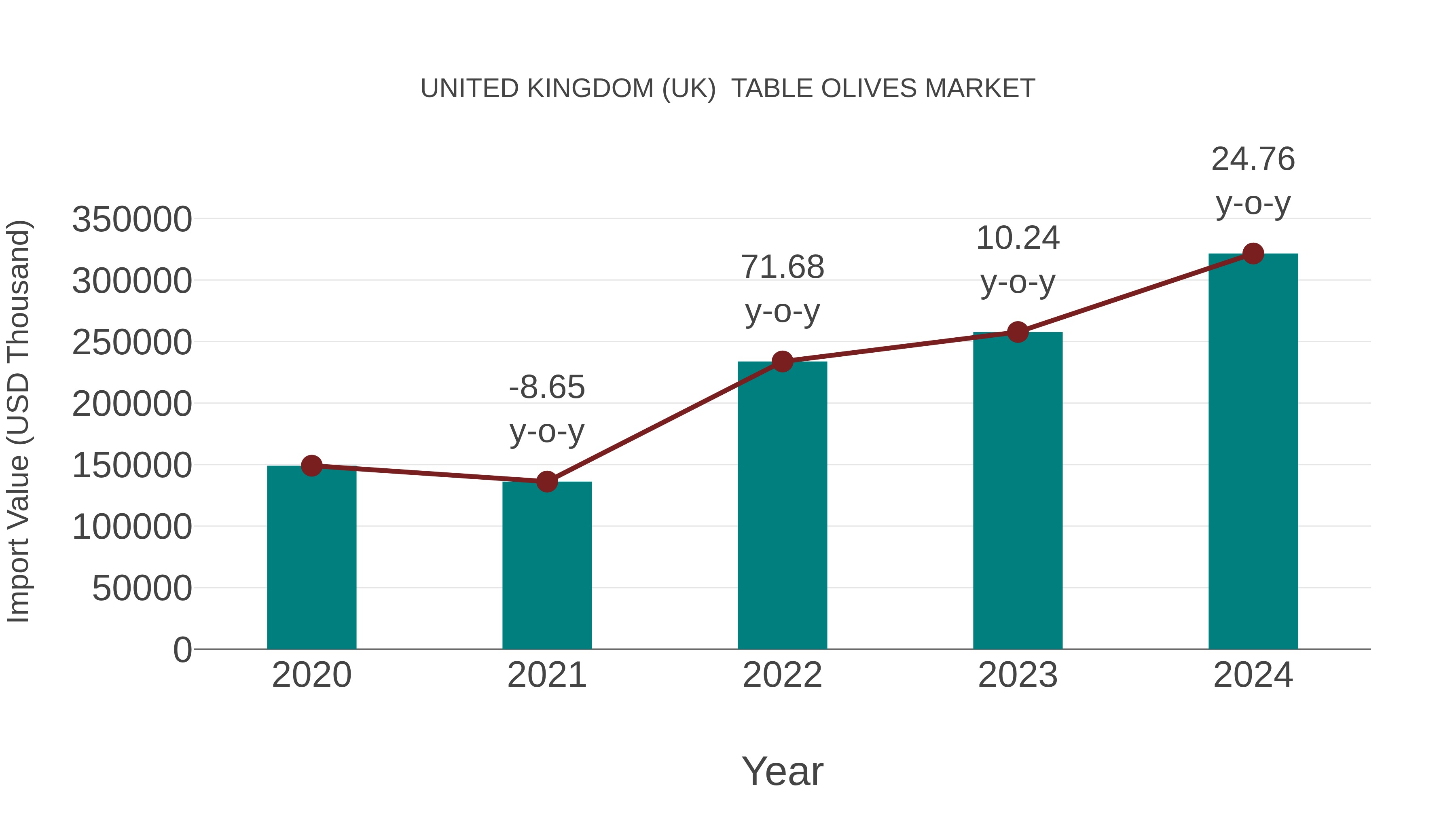
In 2024, the United Kingdom import trend for table olives experienced a notable growth rate of 24.76% compared to the previous year. The compound annual growth rate (CAGR) for the period 2020-2024 stood at 21.19%. This upward import momentum can be attributed to shifting consumer preferences towards healthier food choices, indicating a potential demand shift in the market.
United Kingdom (UK) Table Olives Market Synopsis
The United Kingdom (UK) Table Olives Market is experiencing steady growth driven by increasing consumer awareness of the health benefits associated with olives and the growing popularity of Mediterranean cuisine. The market is characterized by a wide variety of olive types, including green and black olives, stuffed olives, and specialty marinated olives. Retail sales of table olives are primarily driven by supermarkets and hypermarkets, which offer a wide range of options to cater to diverse consumer preferences. The trend towards healthy eating and snacking habits is also contributing to the market growth, as olives are seen as a nutritious and convenient option. Additionally, the UK`s evolving food culture and interest in gourmet and artisanal products are fueling demand for high-quality olives sourced from different regions.
United Kingdom (UK) Table Olives Market Trends
The United Kingdom (UK) Table Olives Market is experiencing a growing demand for premium and specialty olives, driven by the increasing consumer interest in healthy and Mediterranean-inspired products. There is a trend towards a wider variety of olives, including organic, stuffed, and marinated options, appealing to consumers looking for unique flavors and textures. Health-conscious consumers are also driving the demand for olives due to their perceived health benefits, such as being rich in antioxidants and healthy fats. Furthermore, opportunities exist for market players to innovate in packaging formats that cater to convenience and sustainability preferences, such as portion-controlled packs and eco-friendly materials. With the UK`s increasingly diverse culinary landscape and the popularity of Mediterranean cuisine, the Table Olives Market presents opportunities for growth and product differentiation.
United Kingdom (UK) Table Olives Market Challenges
The United Kingdom (UK) Table Olives Market faces several challenges, including limited domestic production leading to heavy reliance on imports, which can be affected by factors such as exchange rates and trade regulations. Additionally, consumer preferences in the UK tend to favor other types of olives such as Kalamata or Spanish varieties, making it challenging for table olives to gain widespread popularity. Competition from other snack options and dips also poses a challenge for table olives to capture a significant market share. Furthermore, the perception of olives as an acquired taste and the lack of awareness about the different varieties and health benefits among consumers present obstacles for market growth in the UK. Overall, increasing consumer education, diversifying product offerings, and addressing import dependencies are key strategies to overcome these challenges in the UK Table Olives Market.
United Kingdom (UK) Table Olives Market Investment Opportunities
The United Kingdom Table Olives Market is primarily driven by increasing consumer awareness about the health benefits of olives, including their high content of antioxidants and healthy fats. The growing trend towards healthier eating habits and the rise in demand for Mediterranean cuisine are also significant drivers of market growth. Additionally, the popularity of olives as a versatile ingredient in various dishes and appetizers, along with the expanding market for gourmet and specialty food products, further contribute to the increasing consumption of table olives in the UK. The influence of food culture and culinary trends, coupled with the availability of a wide range of olive varieties and flavors, are key factors shaping the growth trajectory of the UK Table Olives Market.
United Kingdom (UK) Table Olives Market Government Polices
The United Kingdom (UK) has regulations in place for the import and production of table olives to ensure food safety and quality standards are met. The UK government follows European Union regulations, including labeling requirements and food safety standards, for table olives imported from EU countries. Additionally, the UK has its regulations on pesticide residues and maximum residue levels to ensure the safety of table olives produced domestically or imported from non-EU countries. The UK`s Food Standards Agency (FSA) and Department for Environment, Food & Rural Affairs (DEFRA) oversee the enforcement of these regulations to protect consumer health and maintain the integrity of the UK table olives market. Compliance with these policies is essential for businesses operating in the UK table olives sector to ensure product quality and market access.
United Kingdom (UK) Table Olives Market Future Outlook
The United Kingdom (UK) Table Olives Market is expected to witness steady growth in the coming years due to increasing consumer awareness about the health benefits of olives and the rising popularity of Mediterranean cuisine. The market is likely to be driven by the growing trend of healthy eating habits and the demand for convenient and nutritious snack options. Additionally, the expanding foodservice sector in the UK, coupled with the rising number of restaurants and cafes offering olive-based dishes, is expected to further boost market growth. With a focus on product innovation, sustainable sourcing practices, and effective marketing strategies, key players in the UK Table Olives Market are poised to capitalize on the growing consumer interest and drive market expansion in the foreseeable future.
Key Highlights of the Report:
- United Kingdom (UK) Table Olives Market Outlook
- Market Size of United Kingdom (UK) Table Olives Market, 2025
- Forecast of United Kingdom (UK) Table Olives Market, 2032
- Historical Data and Forecast of United Kingdom (UK) Table Olives Revenues & Volume for the Period 2022 - 2032F
- United Kingdom (UK) Table Olives Market Trend Evolution
- United Kingdom (UK) Table Olives Market Drivers and Challenges
- United Kingdom (UK) Table Olives Price Trends
- United Kingdom (UK) Table Olives Porter's Five Forces
- United Kingdom (UK) Table Olives Industry Life Cycle
- Historical Data and Forecast of United Kingdom (UK) Table Olives Market Revenues & Volume By Type for the Period 2022 - 2032F
- Historical Data and Forecast of United Kingdom (UK) Table Olives Market Revenues & Volume By Black Olive for the Period 2022 - 2032F
- Historical Data and Forecast of United Kingdom (UK) Table Olives Market Revenues & Volume By Green Olive for the Period 2022 - 2032F
- Historical Data and Forecast of United Kingdom (UK) Table Olives Market Revenues & Volume By Application for the Period 2022 - 2032F
- Historical Data and Forecast of United Kingdom (UK) Table Olives Market Revenues & Volume By Online Store for the Period 2022 - 2032F
- Historical Data and Forecast of United Kingdom (UK) Table Olives Market Revenues & Volume By Supermarket for the Period 2022 - 2032F
- Historical Data and Forecast of United Kingdom (UK) Table Olives Market Revenues & Volume By Convenience Store for the Period 2022 - 2032F
- Historical Data and Forecast of United Kingdom (UK) Table Olives Market Revenues & Volume By Other for the Period 2022 - 2032F
- United Kingdom (UK) Table Olives Import Export Trade Statistics
- Market Opportunity Assessment By Type
- Market Opportunity Assessment By Application
- United Kingdom (UK) Table Olives Top Companies Market Share
- United Kingdom (UK) Table Olives Competitive Benchmarking By Technical and Operational Parameters
- United Kingdom (UK) Table Olives Company Profiles
- United Kingdom (UK) Table Olives Key Strategic Recommendations






































