US 5G Satellite Communication Market Highlights
| Report Name | US 5G Satellite Communication Market |
| Forecast period | 2025-2031 |
| CAGR | 28.6% |
| Growing Sector | Defense |
Topics Covered in the US 5G Satellite Communication Market Report
The US 5G Satellite Communication market report thoroughly covers the market by Orbit (Low Earth Orbit (LEO), Medium Earth Orbit (MEO), Geosynchronous Earth Orbit (GEO)), By Satellite Solutions (Backend And Tower Feed, Trunking And Head-End Feed, Communication-On-The-Move, Hybrid Multiplay), By Spectrum (L And S Band (1-4 GHZ), C And X Band (4-12 GHZ), Ku And Ka Band (12-40 GHZ)), By End-Users (Defense And Government, Consumer Electronics, Aviation, Energy And Utilities, Transportation And Logistics, Others) And Competitive Landscape. The report provides an unbiased and detailed analysis of the on-going market trends, opportunities/high growth areas, and market drivers which would help the stakeholders to devise and align their market strategies according to the current and future market dynamics.
US 5G Satellite Communication Market Synopsis
The United States 5G satellite communication market is at the forefront of a revolutionary leap in wireless technology. 5G, the fifth generation of cellular network technology, promises unprecedented data speeds, reduced latency, and the capacity to connect more devices simultaneously. Satellite communication plays a pivotal role in this advancement, primarily by extending coverage in remote areas and acting as a backup for terrestrial networks. Industry providers and the federal government are heavily invested in the deployment and expansion of 5G infrastructure, facilitating an era of enhanced connectivity that will likely empower new services and applications across multiple sectors, including transportation, healthcare, and emergency response systems. Additionally, satellite communications are increasingly integral to the expansion of the 5G network due to their ability to support infrastructure in urban, suburban, and rural areas alike. The advent of low Earth orbit (LEO) satellites is particularly noteworthy, as they promise to reduce latency further, rivaling ground-based systems. With major tech companies and startups launching satellite constellations, there's a noticeable trend towards a more competitive market. Additionally, advancements in satellite miniaturization and cost-effective launch services are democratizing space technology, allowing for more players to enter the market. This surge in competition is expected to spur innovation, leading to improved 5G services and potentially lower costs for end-users.
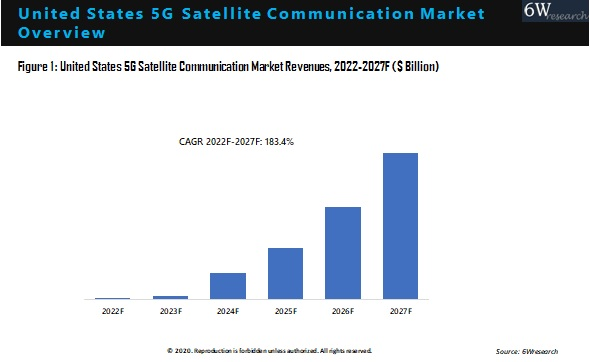
According to 6Wresearch, US 5G Satellite Communication market size is projected to grow at a CAGR of 28.6% during 2025-2031. The true potential of 5G and satellite integration hinges on several key growth drivers. Firstly, governmental policy and funding initiatives will be pivotal, ensuring that infrastructure development isn't just market-driven but also aligned with public interest and digital equity goals. Secondly, the continuing evolution of Internet of Things (IoT) technology, with its need for seamless global connectivity, stands as a major propellant for satellite-5G integration, as countless devices require robust, uninterrupted internet service. Thirdly, the demand for higher bandwidth applications, such as streaming services and cloud-based gaming, necessitates the expansive reach and reliability that this combined network can provide. Finally, as climate change and natural disasters challenge traditional communication infrastructures, the resilience offered by satellites becomes ever more crucial, underpinning their role in future-proofing our communication networks.
Government Initiatives Introduced in the US 5G Satellite Communication Market
Government initiatives play a crucial role in the development and deployment of satellite-5G networks. By crafting policies that encourage innovation and investment in telecommunications, governments can accelerate the integration process while ensuring that it serves the broader public interest. Subsidies and tax incentives might be employed to stimulate the build-out of rural and remote areas, areas which often lack access to high-speed connectivity. Similarly, these efforts have enhanced the US 5G Satellite Communication Market Share. Moreover, regulators play a key role in spectrum management, ensuring the efficient and fair distribution of the radio frequencies necessary for 5G to operate effectively alongside satellite systems. Without governmental support and a framework that nurtures collaboration between the public and private sectors, the full benefits of satellite-5G synergy may fail to reach their potential, especially in underserved communities.
Key Players in the US 5G Satellite Communication Market
Within this transformative landscape, several key companies are emerging as pivotal players in the satellite-5G integration. Leading the pack are entities such as SpaceX with its Starlink project, which aims to deploy thousands of small satellites to provide global internet coverage, and OneWeb, another significant contender racing to build its own constellation for high-speed internet from space. Traditional telecommunication giants like Verizon and AT&T are also active participants, experimenting with satellite technology to enhance their 5G services. In addition, the firms’ clutch gigantic US 5G Satellite Communication Market Revenues. Additionally, tech behemoths such as Amazon have entered the fray with Project Kuiper, a plan to launch a network of satellites to provide low-latency, high-speed broadband connectivity. These companies, among others, are the vanguard, shaping the cutting-edge of satellite-5G convergence and its myriad applications.
Future Insights of the US 5G Satellite Communication Market
The future of satellite-5G integration teems with possibilities that could revolutionize communication as we know it. As these technologies continue to advance, we can anticipate not only improved coverage and connection speeds but also the advent of new services that are currently inconceivable. The Internet of Things (IoT), for instance, will likely experience unprecedented expansion, with satellite-5G networks enabling seamless connectivity for devices in the most remote areas. Furthermore, critical sectors such as agriculture, maritime, and aviation will significantly benefit from enhanced navigational and tracking capabilities. As these innovations progress, issues related to cybersecurity and space traffic management will become increasingly important, prompting the need for sophisticated solutions to ensure secure and sustainable operations in the space environment.
Market Analysis by Satellite Solutions
According to Ravi Bhandari, Research Head, 6Wresearch, in the realm of satellite technology, orbits play a pivotal role in the functionality and services a satellite can provide. Geostationary orbits (GEO) allow satellites to match Earth's rotation, prudently serving areas with stable communication links, while Low Earth Orbits (LEO) facilitate constellations that offer lower latency for activities like real-time data transmission. Medium Earth Orbits (MEO) strike a balance between GEO and LEO, offering navigation and time-signaling services critical for global positioning systems (GPS). Further, with advancements in satellite-5G technology, the market is witnessing a surge in diverse products. From portable satellite phones that ensure connectivity in the most secluded regions to cutting-edge home internet systems capable of reaching rural and underserved communities, the product range is expanding. Furthermore, specialized devices and modules are being developed for industries to enable connected vehicles, smart agriculture equipment, and autonomous shipping, highlighting the transformative impact of these unfolding technologies.
Market Analysis by End Users
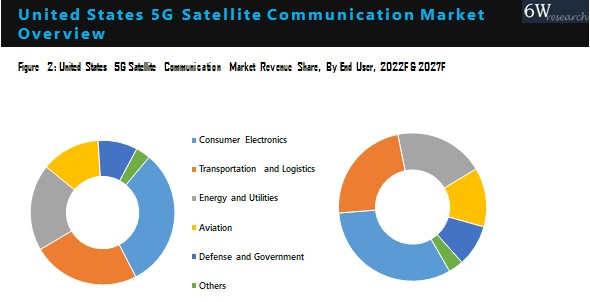
The spectrum of end users benefiting from satellite-5G integration is vast, encompassing individual consumers in search of reliable communication during remote expeditions, rural households requiring high-speed internet access, and professionals in critical sectors such as disaster management, environmental monitoring, and defense services. Additionally, commercial enterprises within transportation, mining, and agriculture are looking to harness these advancements for real-time fleet management, precision farming, and resource exploration, while governments and civic bodies position themselves to improve urban planning and emergency response through enhanced connectivity and data analysis capabilities.
Key Attractiveness of the Report
- 10 Years Market Numbers.
- Historical Data Starting from 2021 to 2024.
- Base Year: 2024.
- Historical Data and Forecast Data until 2031.
- Key Performance Indicators Impacting the Market.
- Major Upcoming Developments and Projects.
Key Highlights of the Report:
- US 5G Substrate Materials Market Outlook
- Market Size of US 5G Substrate Materials Market, 2024
- Forecast of US 5G Substrate Materials Market, 2031
- Historical Data and Forecast of US 5G Substrate Materials Revenues & Volume for the Period 2021 - 2031
- US 5G Substrate Materials Market Trend Evolution
- US 5G Substrate Materials Market Drivers and Challenges
- US 5G Substrate Materials Price Trends
- US 5G Substrate Materials Porter's Five Forces
- US 5G Substrate Materials Industry Life Cycle
- Historical Data and Forecast of US 5G Substrate Materials Market Revenues & Volume By Type for the Period 2021 - 2031
- Historical Data and Forecast of US 5G Substrate Materials Market Revenues & Volume By PTFE for the Period 2021 - 2031
- Historical Data and Forecast of US 5G Substrate Materials Market Revenues & Volume By Ceramics for the Period 2021 - 2031
- Historical Data and Forecast of US 5G Substrate Materials Market Revenues & Volume By Glass for the Period 2021 - 2031
- Historical Data and Forecast of US 5G Substrate Materials Market Revenues & Volume By LCP for the Period 2021 - 2031
- Historical Data and Forecast of US 5G Substrate Materials Market Revenues & Volume By PI for the Period 2021 - 2031
- Historical Data and Forecast of US 5G Substrate Materials Market Revenues & Volume By Applications for the Period 2021 - 2031
- Historical Data and Forecast of US 5G Substrate Materials Market Revenues & Volume By Smartphone Antennas for the Period 2021 - 2031
- Historical Data and Forecast of US 5G Substrate Materials Market Revenues & Volume By Base Station Antennas for the Period 2021 - 2031
- US 5G Substrate Materials Import Export Trade Statistics
- Market Opportunity Assessment By Type
- Market Opportunity Assessment By Applications
- US 5G Substrate Materials Top Companies Market Share
- US 5G Substrate Materials Competitive Benchmarking By Technical and Operational Parameters
- US 5G Substrate Materials Company Profiles
- US 5G Substrate Materials Key Strategic Recommendations
Market Covered
The report offers a comprehensive study of the subsequent market segments:
By Orbit
- Low Earth Orbit (LEO)
- Medium Earth Orbit (MEO)
- Geosynchronous Earth Orbit (GEO)
By Satellite Solutions
- Backend and Tower Feed
- Trunking and Head-end Feed
- Communication-on-the-move
- Hybrid Multiplay
By Spectrum
- L and S band (1-4 GHZ)
- C and X band (4-12 GHZ)
- Ku and Ka band (12-40 GHZ)
By End-users
- Defense and Government
- Consumer Electronics
- Aviation
- Energy and Utilities
- Transportation and Logistics
- Others