United States (US) Hotel Furniture Market Summary
The united states (us) hotel furniture market was estimated at USD 221 Million in 2025 and is projected to reach USD 262 Million by 2032, growing at a CAGR of 2.8% from 2026 to 2032.
United States (US) Hotel Furniture Market Year-wise Growth Rate and Key Drivers
This graph highlights how the United States (US) Hotel Furniture Market has steadily grown over the past five years, supported by major growth factors.
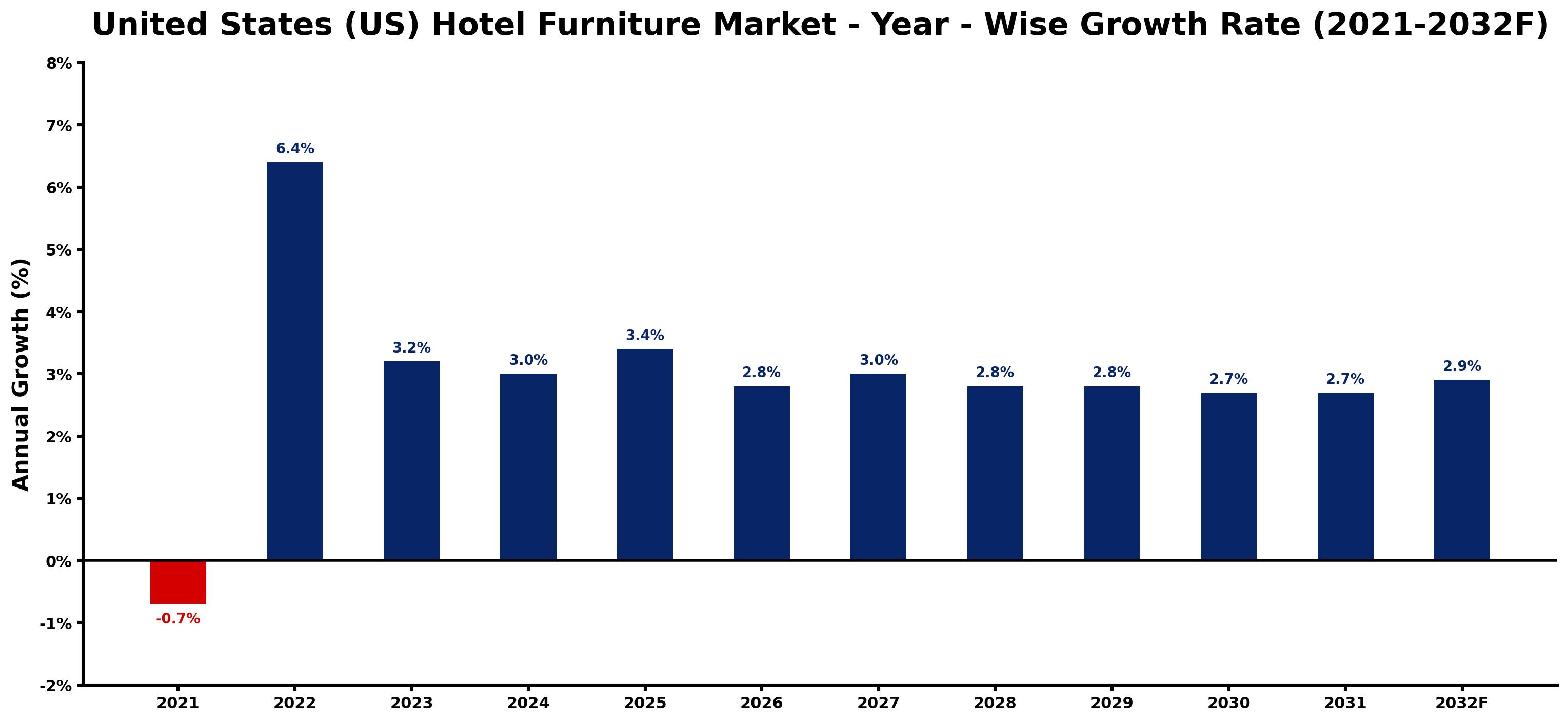
The table below presents the year wise growth rates along with the key drivers influencing the market
| Year | Growth Rate | Major Drivers |
| 2021 | -0.7% | Heightened supply chain disruptions hindered manufacturing capabilities, leading to significant delays in hotel refurbishments. |
| 2022 | 6.4% | Increased focus on sustainability prompted hotels to seek eco-friendly furniture options. |
| 2023 | 3.2% | Technological advancements in materials enhanced durability and aesthetics of hotel furnishings. |
| 2024 | 3.0% | Design trends shifted towards multifunctional spaces, influencing furniture design and utility. |
| 2025 | 3.4% | Corporate travel resurgence revitalized hotel occupancy rates, encouraging furniture investments. |
| 2026 | 2.8% | Customization became a key factor as hotels aimed to enhance guest experiences significantly. |
| 2027 | 3.0% | Emerging boutique hotels emphasized unique furniture styles that reflect local culture and identity. |
| 2028 | 2.8% | Investment in smart technologies integrated into furniture aligned with modern traveler expectations. |
| 2029 | 2.8% | Sustainable sourcing practices emerged as a standard expectation among discerning consumers. |
| 2030 | 2.7% | Partnerships between hotels and local artisans fostered unique furniture offerings and craftsmanship. |
| 2031 | 2.7% | E-commerce platforms simplified purchasing processes for hotels seeking bulk furniture solutions. |
| 2032 | 2.9% | Heightened competition among hotels necessitated continuous innovation in furniture design and functionality. |
Note - Market size estimations and growth projections presented in this report are based on 6Wresearch's advanced forecasting approach, validated with industry datasets as of June 2026.
United States (US) Hotel Furniture Market Synopsis
The United States (US) Hotel Furniture Market is projected to reach 2.8% and witness significant growth during the forecast period (2026-2032). The market is characterized by its competitive nature, driven by evolving consumer preferences, technological advancements, and a dynamic design landscape. Hotels across various segments—luxury, boutique, and budget—continuously seek stylish, high-quality furniture tailored to enhance guest experience. The emphasis on sustainability and eco-friendly practices, alongside rising customization demands, are shaping the market's future direction.
United States (US) Hotel Furniture Market Growth Drivers
Several factors contribute to the growth of the United States (US) Hotel Furniture Market. These include:
- Changing Consumer Preferences: Increasingly discerning guests expect not only comfort but also aesthetically pleasing environments that reflect their values and lifestyles.
- Technological Advancements: The integration of smart technology into furniture, such as built-in USB ports and sophisticated lighting solutions, enhances the guest experience and is in high demand.
- Sustainability Trends: Eco-conscious travelers influence hotel operators to invest in sustainable furniture that uses recycled materials and non-toxic finishes, aligning with environmental standards.
- Customization Demand: Hotels are more frequently opting for bespoke furniture designs to create unique atmospheres, catering specifically to their target demographics and branding strategies.
- Renovation and Upgrading Activities: As competition intensifies, many hotels are renovating their spaces, necessitating new furniture that meets contemporary design trends and enhances overall aesthetics.
United States (US) Hotel Furniture Market Challenges and Restraints
While the United States (US) Hotel Furniture Market presents numerous opportunities, it also faces several challenges:
- Intense Competition: The market features a multitude of furniture suppliers and manufacturers, increasing the pressure to consistently innovate and provide value-added products.
- Rapidly Evolving Design Trends: Keeping pace with fluctuating style preferences can strain resources and require constant adaptation from manufacturers.
- Customization Complexity: Tailoring products to meet diverse hotel brand themes and preferences complicates production processes and can delay time-to-market.
- Raw Material Fluctuations: Variations in the price and availability of raw materials can disrupt supply chains and affect production costs.
- Quality vs. Cost Balance: Hotels often grapple with the need for high-quality, durable items while maintaining cost-effectiveness to stay competitive.
United States (US) Hotel Furniture Market Trends and Opportunities
The landscape of the United States (US) Hotel Furniture Market is shaped by emerging trends that create significant investment opportunities:
- Eco-Friendly Solutions: As sustainability becomes a primary concern, demand for furniture made from sustainable materials continues to rise, signaling investment potential for eco-focused manufacturers.
- Technological Integration: The incorporation of smart features in furniture, such as charging stations and mood lighting, represents a lucrative opportunity for innovation.
- Boutique Hotel Growth: The surge in boutique hotels, which emphasize unique design and guest experiences, creates demand for bespoke and artisanal furniture.
- Collaborative Designs: Partnerships between furniture manufacturers and interior designers can result in exclusive collections that meet specific hotel branding needs, fostering differentiation.
- Online Retail Expansion: The growth of e-commerce platforms allows furniture suppliers to reach broader markets, increasing sales potential for innovative and high-quality products.
United States (US) Hotel Furniture Market Government Investment and Initiatives
Government investment and policy initiatives play a crucial role in shaping the United States (US) Hotel Furniture Market. Key areas of focus include:
- Safety Regulations: The enforcement of stringent safety standards protects consumers and establishes baseline requirements for hotel furniture manufacturing.
- Environmental Policies: Government initiatives promoting sustainable practices encourage manufacturers to adhere to eco-friendly standards, influencing purchasing decisions.
- Public Spending on Infrastructure: Increased investment in infrastructure development supports the hospitality sector, indirectly boosting demand for hotel furniture.
- Trade Regulations: Tariffs and trade agreements impact the import and export dynamics of furniture, affecting pricing and supply chain considerations.
- Training Programs: Government-sponsored training initiatives for manufacturers in sustainable practices enhance industry capabilities, fostering growth in eco-friendly furniture production.
United States (US) Hotel Furniture Market Latest Developments (May 2025 - June 2026)
In the period from May 2025 to June 2026, the United States (US) Hotel Furniture Market has seen notable developments. A surge in interest for eco-conscious furniture has prompted manufacturers to intensify their focus on sustainable production methods and materials. Technological integration in hotel furnishings continues to evolve, with smart technology becoming a standard expectation rather than an added feature. Design trends emphasize personalization, pushing hotels to seek unique and custom furniture solutions to distinguish themselves in a competitive landscape. Furthermore, supply chain adjustments have been a critical focus area as manufacturers adapt to fluctuating raw material availability. This period has also witnessed an increase in renovation projects undertaken by hotels aiming to upgrade their interiors for enhanced guest experiences.
United States (US) Hotel Furniture Market - Key Attractiveness of the Report
- 10 Years of Market Numbers
- Historical Data Starting from 2022 to 2025
- Base Year: 2025
- Forecast Data until 2032
- Key Performance Indicators Impacting the Market
- Major Upcoming Developments and Projects
Key Highlights of the Report:
- United States (US) Hotel Furniture Market Outlook
- Market Size of United States (US) Hotel Furniture Market, 2025
- Forecast of United States (US) Hotel Furniture Market, 2032F
- Historical Data and Forecast of United States (US) Hotel Furniture Revenues & Volume for the Period 2022-2032F
- United States (US) Hotel Furniture Market Trend Evolution
- United States (US) Hotel Furniture Market Drivers and Challenges
- United States (US) Hotel Furniture Price Trends
- United States (US) Hotel Furniture Porter's Five Forces
- United States (US) Hotel Furniture Industry Life Cycle
- Historical Data and Forecast of United States (US) Hotel Furniture Market Revenues & Volume By Product Types for the Period 2022-2032F
- Historical Data and Forecast of United States (US) Hotel Furniture Market Revenues & Volume By Table and Chairs for the Period 2022-2032F
- Historical Data and Forecast of United States (US) Hotel Furniture Market Revenues & Volume By Hotel Beds for the Period 2022-2032F
- Historical Data and Forecast of United States (US) Hotel Furniture Market Revenues & Volume By Hotel Casegoods for the Period 2022-2032F
- Historical Data and Forecast of United States (US) Hotel Furniture Market Revenues & Volume By Other for the Period 2022-2032F
- Historical Data and Forecast of United States (US) Hotel Furniture Market Revenues & Volume By Applications for the Period 2022-2032F
- Historical Data and Forecast of United States (US) Hotel Furniture Market Revenues & Volume By Business Hotel for the Period 2022-2032F
- Historical Data and Forecast of United States (US) Hotel Furniture Market Revenues & Volume By Luxury Hotel for the Period 2022-2032F
- Historical Data and Forecast of United States (US) Hotel Furniture Market Revenues & Volume By Boutique Hotel for the Period 2022-2032F
- Historical Data and Forecast of United States (US) Hotel Furniture Market Revenues & Volume By Other for the Period 2022-2032F
- United States (US) Hotel Furniture Import Export Trade Statistics
- Market Opportunity Assessment By Product Types
- Market Opportunity Assessment By Applications
- United States (US) Hotel Furniture Top Companies Market Share
- United States (US) Hotel Furniture Competitive Benchmarking By Technical and Operational Parameters
- United States (US) Hotel Furniture Company Profiles
- United States (US) Hotel Furniture Key Strategic Recommendations






































