United States (US) Small Mammal and Reptile Food Market Top 5 Importing Countries and Market Competition (HHI) Analysis
The United States small mammal and reptile food import market experienced significant growth in 2024, with top exporting countries including Thailand, Canada, China, Vietnam, and Mexico. The market concentration, as measured by the HHI, increased from moderate to high in 2024, indicating a more competitive landscape. The impressive Compound Annual Growth Rate (CAGR) of 15.81% from 2020 to 2024 highlights the strong demand for these products. Additionally, the notable growth rate of 29.46% from 2023 to 2024 suggests a rapidly expanding market with opportunities for both domestic and international players to capitalize on this trend.
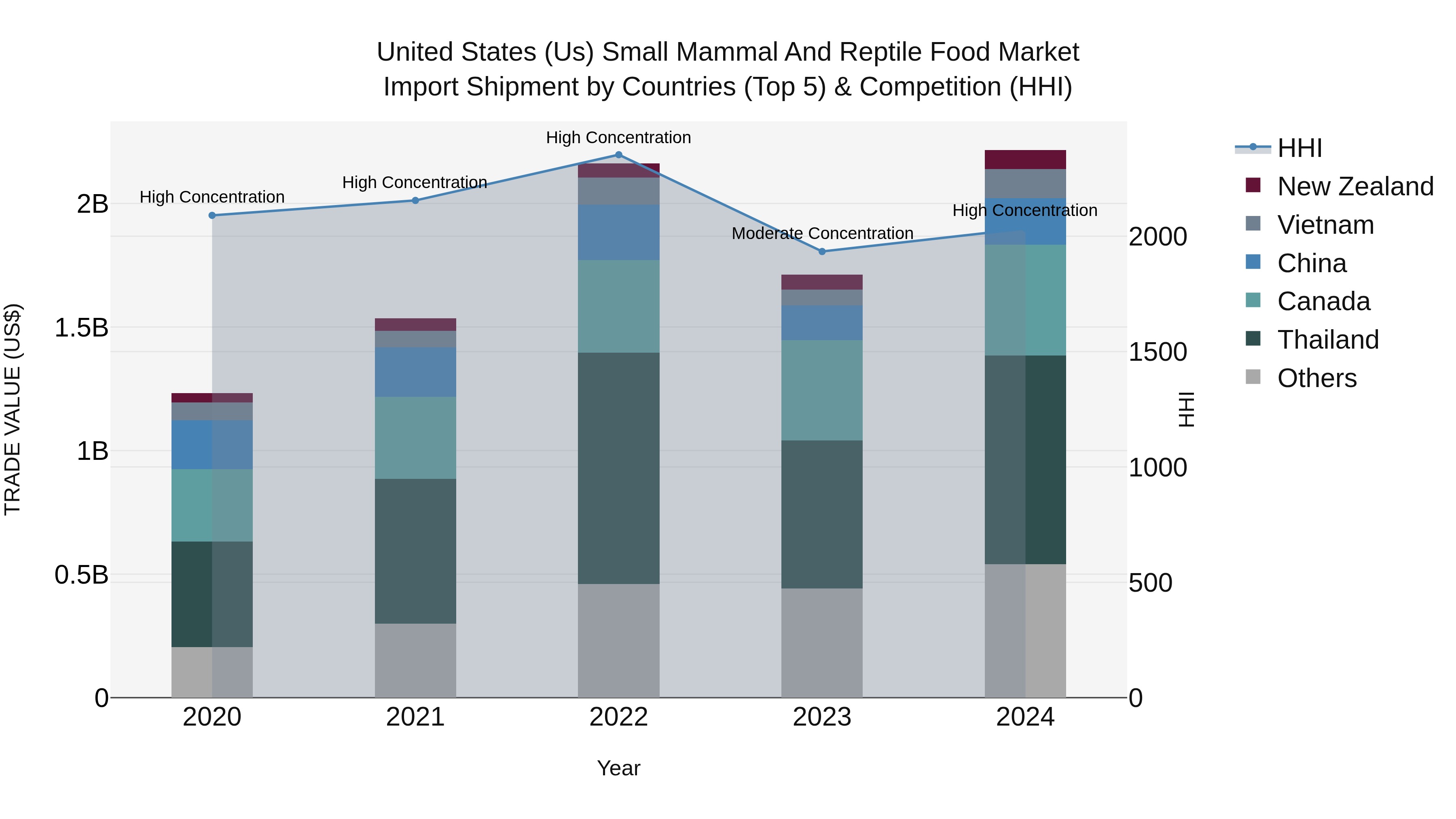
United States (US) Small Mammal and Reptile Food Market Synopsis
The United States Small Mammal and Reptile Food Market is a niche segment within the broader pet food industry, catering to the specific dietary needs of small mammals like rabbits, guinea pigs, hamsters, and reptiles such as snakes, lizards, and turtles. The market is driven by the increasing popularity of small exotic pets among consumers seeking companionship and low-maintenance pets. Key trends in the market include a growing demand for natural and organic food options, as well as specialized diets catering to the unique nutritional requirements of different species. Market players range from large pet food manufacturers to smaller boutique brands offering premium and specialized products. Distribution channels include pet stores, online retailers, and veterinary clinics. The market is expected to continue growing as pet ownership trends evolve and consumers seek high-quality nutrition for their small mammal and reptile companions.
United States (US) Small Mammal and Reptile Food Market Trends
The US Small Mammal and Reptile Food Market is experiencing growth driven by the increasing popularity of small pets like hamsters, guinea pigs, and reptiles as companions. Consumers are increasingly seeking premium and natural food options for their pets, leading to a rise in demand for high-quality, nutritionally balanced diets for small mammals and reptiles. The market is also witnessing a trend towards eco-friendly and sustainable products, with pet owners showing a preference for products that are ethically sourced and environmentally conscious. Additionally, the rise of e-commerce platforms has made it easier for consumers to access a wide variety of small mammal and reptile food products, contributing to the overall growth of the market. Manufacturers are responding to these trends by innovating and introducing new product lines that cater to the evolving preferences of pet owners.
United States (US) Small Mammal and Reptile Food Market Challenges
The US Small Mammal and Reptile Food Market faces several challenges, including increasing competition from large pet food manufacturers that offer a wide range of products for various animals, leading to smaller niche brands struggling to differentiate themselves. Another challenge is the rising costs of raw materials, such as high-quality proteins and vitamins, which can impact product pricing and profit margins. Additionally, consumer preferences are shifting towards natural and organic products, putting pressure on manufacturers to source sustainable and ethically produced ingredients. Lastly, regulatory challenges related to labeling requirements and product safety standards can create barriers to entry for smaller companies in the market. Overall, navigating these challenges requires innovative product development, effective marketing strategies, and a strong focus on quality and compliance to stay competitive in the Small Mammal and Reptile Food Market.
United States (US) Small Mammal and Reptile Food Market Investment Opportunities
The US Small Mammal and Reptile Food Market presents attractive investment opportunities due to the growing popularity of small pets like hamsters, guinea pigs, and reptiles as companions. Consumers are increasingly seeking high-quality and specialized food products for their small pets, creating a demand for premium and nutritious small mammal and reptile food options. Investing in innovative and natural ingredient-based small mammal and reptile food brands could capitalize on this trend. Additionally, opportunities exist in developing sustainable and eco-friendly packaging solutions to appeal to environmentally conscious consumers. With the pet industry experiencing steady growth and pet owners prioritizing the health and well-being of their animals, investing in the US Small Mammal and Reptile Food Market has the potential for long-term profitability and market expansion.
Jordan Agar Market Government Policies
The US Small Mammal and Reptile Food Market is subject to various government policies related to food safety, labeling, and import regulations. The Food and Drug Administration (FDA) oversees the safety and labeling requirements for pet food products, ensuring that they meet nutritional standards and do not contain harmful ingredients. The US Department of Agriculture (USDA) also plays a role in regulating animal feed ingredients to safeguard animal health. Additionally, the US Fish and Wildlife Service enforces regulations on the import and export of exotic species used as food for reptiles, ensuring compliance with conservation and wildlife protection laws. Overall, government policies in the US Small Mammal and Reptile Food Market aim to uphold quality standards, protect animal welfare, and preserve biodiversity.
United States (US) Small Mammal and Reptile Food Market Future Outlook
The future outlook for the United States Small Mammal and Reptile Food Market appears promising, driven by the increasing popularity of small pets such as reptiles, birds, and small mammals like hamsters and guinea pigs. As more consumers look for high-quality and specialized nutrition for their pets, the demand for premium small mammal and reptile food products is expected to rise. Additionally, the growing awareness of the importance of proper nutrition for the overall health and well-being of these pets is likely to fuel market growth. Manufacturers are anticipated to focus on developing innovative and nutritious food options tailored to the specific dietary needs of small mammals and reptiles, leading to a more diverse product range in the market. Overall, the US Small Mammal and Reptile Food Market is poised for steady expansion in the coming years.
Key Highlights of the Report:
- United States (US) Small Mammal and Reptile Food Market Outlook
- Market Size of United States (US) Small Mammal and Reptile Food Market, 2024
- Forecast of United States (US) Small Mammal and Reptile Food Market, 2031
- Historical Data and Forecast of United States (US) Small Mammal and Reptile Food Revenues & Volume for the Period 2021 - 2031
- United States (US) Small Mammal and Reptile Food Market Trend Evolution
- United States (US) Small Mammal and Reptile Food Market Drivers and Challenges
- United States (US) Small Mammal and Reptile Food Price Trends
- United States (US) Small Mammal and Reptile Food Porter's Five Forces
- United States (US) Small Mammal and Reptile Food Industry Life Cycle
- Historical Data and Forecast of United States (US) Small Mammal and Reptile Food Market Revenues & Volume By Type for the Period 2021 - 2031
- Historical Data and Forecast of United States (US) Small Mammal and Reptile Food Market Revenues & Volume By Rabbits Food for the Period 2021 - 2031
- Historical Data and Forecast of United States (US) Small Mammal and Reptile Food Market Revenues & Volume By Rodents Food for the Period 2021 - 2031
- Historical Data and Forecast of United States (US) Small Mammal and Reptile Food Market Revenues & Volume By Small Reptiles Food for the Period 2021 - 2031
- Historical Data and Forecast of United States (US) Small Mammal and Reptile Food Market Revenues & Volume By Other for the Period 2021 - 2031
- Historical Data and Forecast of United States (US) Small Mammal and Reptile Food Market Revenues & Volume By Application for the Period 2021 - 2031
- Historical Data and Forecast of United States (US) Small Mammal and Reptile Food Market Revenues & Volume By Pet-Speciality Stores for the Period 2021 - 2031
- Historical Data and Forecast of United States (US) Small Mammal and Reptile Food Market Revenues & Volume By Supermarkets and Hypermarkets for the Period 2021 - 2031
- Historical Data and Forecast of United States (US) Small Mammal and Reptile Food Market Revenues & Volume By Convenience Stores for the Period 2021 - 2031
- Historical Data and Forecast of United States (US) Small Mammal and Reptile Food Market Revenues & Volume By Other for the Period 2021 - 2031
- United States (US) Small Mammal and Reptile Food Import Export Trade Statistics
- Market Opportunity Assessment By Type
- Market Opportunity Assessment By Application
- United States (US) Small Mammal and Reptile Food Top Companies Market Share
- United States (US) Small Mammal and Reptile Food Competitive Benchmarking By Technical and Operational Parameters
- United States (US) Small Mammal and Reptile Food Company Profiles
- United States (US) Small Mammal and Reptile Food Key Strategic Recommendations






































