United States (US) Tennis Equipment Market Top 5 Importing Countries and Market Competition (HHI) Analysis
The United States continues to be a key destination for tennis equipment imports, with China, Japan, Indonesia, Cambodia, and Taiwan being the top exporting countries in 2024. Despite high concentration with a high Herfindahl-Hirschman Index (HHI), the market is showing steady growth, with a compound annual growth rate (CAGR) of 5.95% from 2020 to 2024. The impressive growth rate of 26.0% from 2023 to 2024 indicates a strong demand for tennis equipment in the US market, presenting opportunities for both domestic and international suppliers.
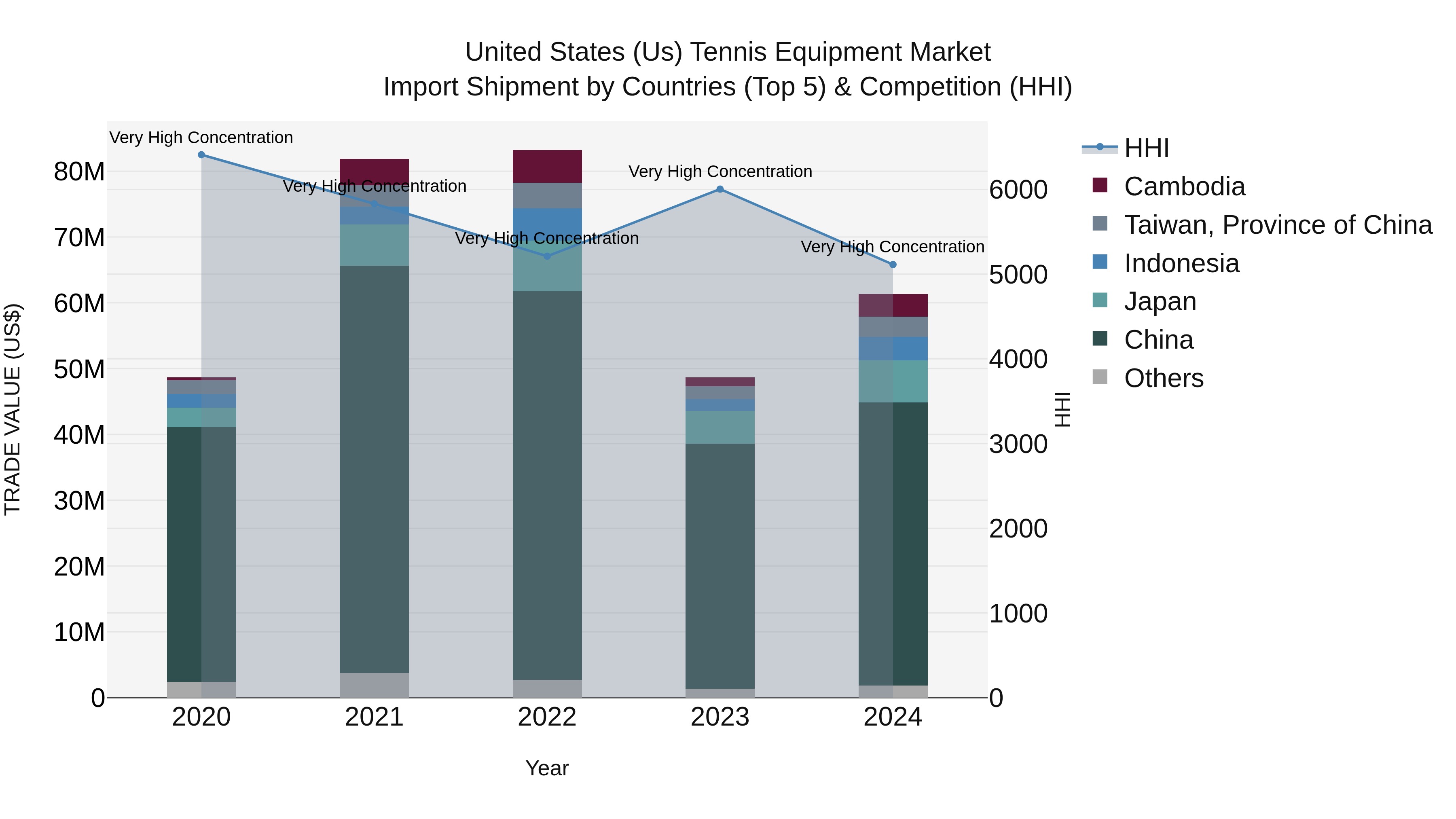
United States (US) Tennis Equipment Market Overview
The United States Tennis Equipment Market is a dynamic and competitive industry driven by factors such as increasing participation in tennis, rising popularity of the sport, and advancements in technology. The market comprises a wide range of products including tennis rackets, balls, strings, bags, apparel, and accessories. Key players in the market include Wilson, Babolat, Head, and Prince Sports. The market is characterized by constant innovation in product design and materials to enhance player performance. With a growing interest in health and fitness activities, the demand for tennis equipment is expected to continue to rise, especially among recreational players and fitness enthusiasts. Online retail channels have also played a significant role in expanding the reach of tennis equipment to a broader consumer base.
United States (US) Tennis Equipment Market Trends and Opportunities
The United States Tennis Equipment Market is experiencing a shift towards sustainability and technology integration. Consumers are increasingly seeking eco-friendly and durable materials in tennis equipment, driving the demand for products made from recycled materials or sustainable sources. Additionally, technological advancements such as smart rackets and sensors for performance tracking are gaining popularity among players looking to enhance their skills and monitor their progress. Opportunities exist for brands to innovate and meet the growing demand for sustainable and tech-integrated tennis equipment. E-commerce platforms are also playing a significant role in the market, providing convenience and a wide range of choices for consumers to purchase tennis gear online. Overall, the US Tennis Equipment Market is poised for growth as it embraces sustainability and technology trends.
United States (US) Tennis Equipment Market Challenges
In the US Tennis Equipment Market, one of the main challenges faced is increasing competition from other sports and leisure activities. With a wide range of recreational options available to consumers, tennis is facing competition for both participants and consumer spending. Additionally, the high cost associated with tennis equipment, such as rackets, balls, and apparel, can act as a barrier for entry for new players or those looking to upgrade their gear. Another challenge is the seasonality of the sport, with outdoor play being limited by weather conditions in many parts of the country, leading to fluctuations in demand for equipment. Manufacturers and retailers in the US Tennis Equipment Market need to address these challenges by focusing on innovation, affordability, and promoting the health and social benefits of the sport to attract and retain customers.
United States (US) Tennis Equipment Market Drivers
The United States Tennis Equipment Market is primarily driven by factors such as the increasing popularity of tennis as a recreational sport, rising participation rates in tournaments and leagues, growing awareness about the health benefits associated with playing tennis, and the influence of professional players endorsing specific brands. Additionally, technological advancements in tennis equipment, such as racquets with improved performance features and enhanced durability, are also driving market growth. The availability of a wide range of tennis equipment options catering to different skill levels and playing styles further fuels market demand. Promotional activities, sponsorships, and partnerships with tennis clubs and academies also play a significant role in driving sales in the US tennis equipment market.
United States (US) Tennis Equipment Market Government Policies
Government policies related to the US Tennis Equipment Market primarily focus on trade regulations, import tariffs, and consumer safety standards. The US government imposes tariffs on imported tennis equipment, affecting the overall pricing and competitiveness of both domestic and international brands in the market. Additionally, there are regulations in place to ensure that tennis equipment meets safety standards to protect consumers from potential hazards. The government also plays a role in promoting sports participation through various programs and initiatives, which indirectly benefit the tennis equipment market by stimulating interest and demand for tennis-related products. Overall, government policies in the US Tennis Equipment Market aim to maintain a fair and competitive environment while prioritizing consumer safety and promoting sports engagement.
United States (US) Tennis Equipment Market Future Outlook
The future outlook for the United States Tennis Equipment Market is positive, driven by factors such as increasing participation in tennis, growing interest in health and fitness activities, and rising disposable incomes. Technological advancements in tennis equipment, such as smart racquets and high-performance gear, are also expected to drive market growth. Additionally, the popularity of professional tennis events and tournaments, as well as the influence of top tennis players, will continue to fuel consumer interest in the sport and drive demand for tennis equipment. Market players are likely to focus on innovation, sustainability, and customization to cater to the evolving needs and preferences of consumers. Overall, the US Tennis Equipment Market is poised for steady growth in the coming years.
Key Highlights of the Report:
- United States (US) Tennis Equipment Market Outlook
- Market Size of United States (US) Tennis Equipment Market, 2024
- Forecast of United States (US) Tennis Equipment Market, 2031
- Historical Data and Forecast of United States (US) Tennis Equipment Revenues & Volume for the Period 2021- 2031
- United States (US) Tennis Equipment Market Trend Evolution
- United States (US) Tennis Equipment Market Drivers and Challenges
- United States (US) Tennis Equipment Price Trends
- United States (US) Tennis Equipment Porter's Five Forces
- United States (US) Tennis Equipment Industry Life Cycle
- Historical Data and Forecast of United States (US) Tennis Equipment Market Revenues & Volume By Type for the Period 2021- 2031
- Historical Data and Forecast of United States (US) Tennis Equipment Market Revenues & Volume By Racquet for the Period 2021- 2031
- Historical Data and Forecast of United States (US) Tennis Equipment Market Revenues & Volume By Apparel for the Period 2021- 2031
- Historical Data and Forecast of United States (US) Tennis Equipment Market Revenues & Volume By Balls for the Period 2021- 2031
- Historical Data and Forecast of United States (US) Tennis Equipment Market Revenues & Volume By Tennis Bags for the Period 2021- 2031
- Historical Data and Forecast of United States (US) Tennis Equipment Market Revenues & Volume By Grips & Accessories for the Period 2021- 2031
- Historical Data and Forecast of United States (US) Tennis Equipment Market Revenues & Volume By Others for the Period 2021- 2031
- Historical Data and Forecast of United States (US) Tennis Equipment Market Revenues & Volume By Application for the Period 2021- 2031
- Historical Data and Forecast of United States (US) Tennis Equipment Market Revenues & Volume By Entertainment for the Period 2021- 2031
- Historical Data and Forecast of United States (US) Tennis Equipment Market Revenues & Volume By Athletic Contest for the Period 2021- 2031
- Historical Data and Forecast of United States (US) Tennis Equipment Market Revenues & Volume By Others for the Period 2021- 2031
- United States (US) Tennis Equipment Import Export Trade Statistics
- Market Opportunity Assessment By Type
- Market Opportunity Assessment By Application
- United States (US) Tennis Equipment Top Companies Market Share
- United States (US) Tennis Equipment Competitive Benchmarking By Technical and Operational Parameters
- United States (US) Tennis Equipment Company Profiles
- United States (US) Tennis Equipment Key Strategic Recommendations






































