United States (US) Waterproof Socks Market Size, Share & Growth Rate
The United States (US) Waterproof Socks Market was estimated at USD 204 Million in 2025 and is projected to reach USD 240 Million by 2032, growing at a CAGR of 2.3% from 2026 to 2032. This growth is primarily driven by the escalating interest in outdoor recreational activities among consumers, including hiking, camping, and water sports. As more individuals venture into nature, the demand for high-performance waterproof socks that combine comfort and durability continues to rise.
United States (US) Waterproof Socks Market Year-wise Growth Rate and Key Drivers
This graph highlights how the United States (US) Waterproof Socks Market has steadily grown over the years, supported by major growth factors.
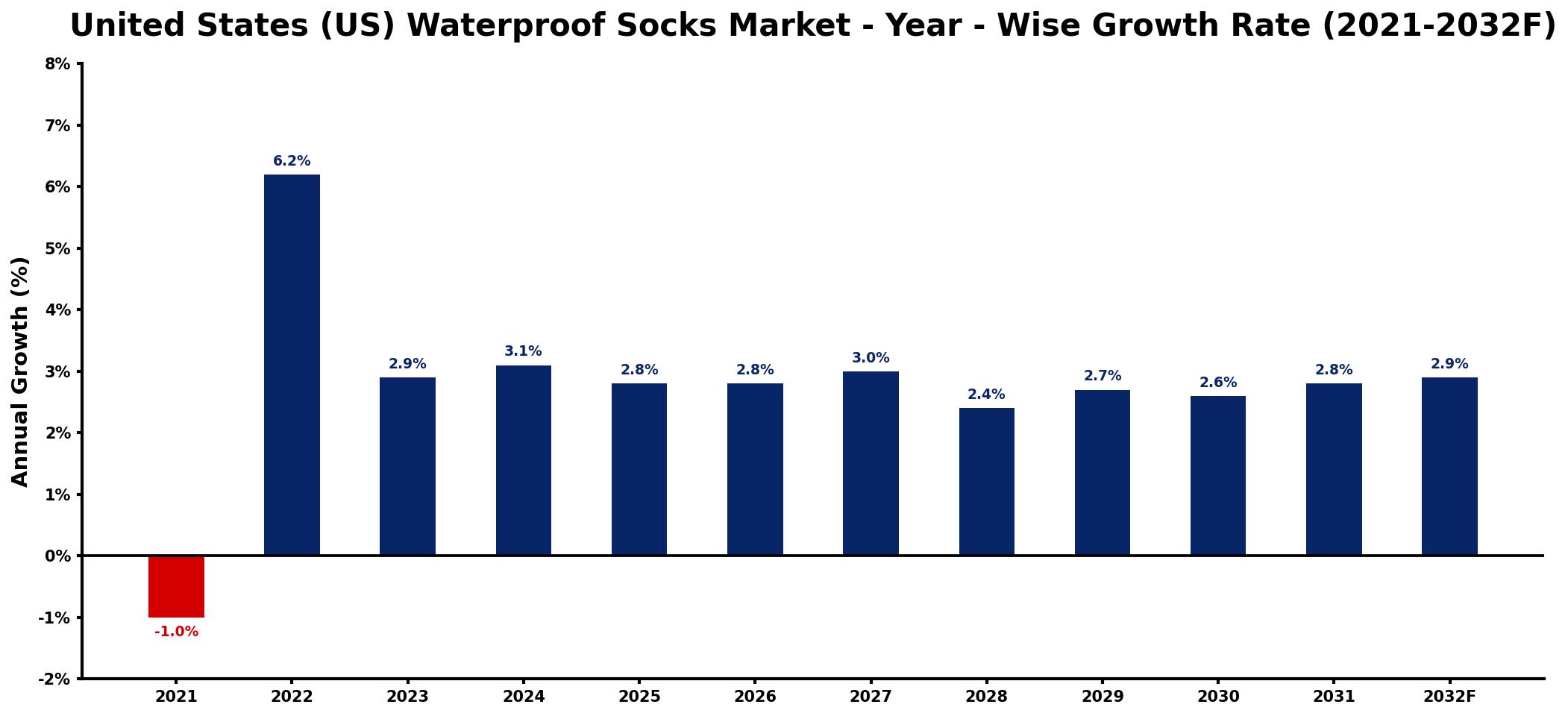
The table below presents the year‑wise growth rates along with the key drivers influencing the market
| Year | Growth Rate | Major Drivers |
| 2021 | -1.0% | Decreased outdoor recreational activities |
| 2022 | 6.2% | Increased interest in outdoor adventures |
| 2023 | 2.9% | Growth in eco-friendly materials |
| 2024 | 3.1% | Rising demand for active lifestyles |
| 2025 | 2.8% | Expansion of e-commerce platforms |
| 2026 | 2.8% | Surge in outdoor sports participation |
| 2027 | 3.0% | Innovations in textile technology |
| 2028 | 2.4% | Growing awareness of moisture management |
| 2029 | 2.7% | Increased marketing of performance gear |
| 2030 | 2.6% | Rising popularity of hiking activities |
| 2031 | 2.8% | growing emerging market penetration |
| 2032 | 2.9% | Increased consumer focus on durability |
Note: Market size estimations and growth projections presented in this report are based on 6Wresearch's proprietary forecasting methodology, utilizing the latest available industry data, government publications, and primary research inputs.
United States (US) Waterproof Socks Market Synopsis
Recent momentum in the US Waterproof Socks Market highlights a growing consumer awareness of the importance of specialized outdoor gear, with waterproof socks emerging as essential for ensuring foot comfort in wet conditions. This trend indicates a shift towards greater emphasis on performance features in outdoor apparel, setting the stage for an expanding market.
Looking ahead, the market is expected to benefit from continued innovations in material technology and design, which are crucial in meeting both functional and aesthetic demands. As sustainability becomes increasingly significant in consumer choices, brands focusing on eco-friendly options are likely to capture a larger share of the market.
United States (US) Waterproof Socks Market Key Takeaways
- The market is fueled by the rising participation in outdoor recreational activities and sports.
- Innovations in waterproofing technology are enhancing performance and breathability.
- Eco-friendly materials are becoming a significant consideration for consumers.
- Strategic partnerships and marketing efforts are critical for brand visibility and competitiveness.
- There is a need for consumer education on the benefits of waterproof socks over traditional options.
Evaluation of Restraints in United States (US) Waterproof Socks Market
Despite its potential, the US Waterproof Socks Market faces several restraints that may limit growth. Consumer awareness remains relatively low, and many individuals still perceive waterproof socks as bulky or uncomfortable compared to traditional options. The market is also characterized by intense competition from established brands, which may not specialize in waterproof products. Additionally, maintaining an optimal balance between waterproofing capabilities and breathability is a technical challenge, further complicating consumer perceptions. These factors contribute to fluctuations in demand, particularly during off-peak seasons for outdoor activities.
United States (US) Waterproof Socks Market Trends
The US Waterproof Socks Market is witnessing several key trends. First, innovations in materials are driving product improvements, with brands focusing on enhancing waterproofing capabilities without sacrificing breathability. Second, stylish designs are emerging as a priority, appealing to a fashion-conscious consumer base that values both functionality and aesthetics. Moreover, the movement towards sustainability is prompting manufacturers to explore options made from recycled and eco-friendly materials, aligning product offerings with consumer values. Collaborations between outdoor and fashion brands are further blending functionality and style, pushing the envelope in product development.
United States (US) Waterproof Socks Market Opportunities
Investment opportunities within the US Waterproof Socks Market are robust, given the upward trajectory of outdoor recreational activities. Companies can benefit from targeting innovative brands that prioritize technological advancements, eco-friendly materials, and diverse product designs. Additionally, strategic partnerships with outdoor retailers and e-commerce platforms will be critical in amplifying market reach and visibility. Furthermore, as consumer preferences evolve, there lies a significant opportunity to educate potential buyers about the advantages of high-quality waterproof socks, enhancing market penetration.
Government Initiatives in the United States (US) Waterproof Socks Market
Government policies related to the US Waterproof Socks Market primarily focus on ensuring product safety and quality standards are met. Agencies such as the US Consumer Product Safety Commission (CPSC) oversee the safety regulations of materials utilized in waterproof sock manufacturing. Additionally, environmental regulations affecting the use of certain chemicals in production processes shape industry practices. The goal of these policies is to protect consumers while promoting fair competition, ultimately contributing to the overall health and safety of the market.
Future Insights of the United States (US) Waterproof Socks Market
The outlook for the United States Waterproof Socks Market between 2026 and 2032 appears optimistic. As consumer interest in outdoor activities continues to grow, the demand for performance-driven products that ensure comfort and dryness will likely increase. Manufacturers are expected to further invest in advanced technologies and materials, enhancing the durability and waterproofing of socks tailored to outdoor enthusiasts. Additionally, the rise of e-commerce is set to expand market accessibility, allowing brands to connect with a broader audience. The confluence of evolving consumer preferences and technological advancements positions the market for steady growth.
United States (US) Waterproof Socks Market Latest Developments (2025 - 2026)
Recent developments in the US Waterproof Socks Market highlight a strong trend towards innovation. Many brands have initiated collaborative projects that incorporate cutting-edge material technology while focusing on sustainability. This includes the introduction of lines made from recycled materials that appeal to environmentally conscious consumers. Additionally, several companies have ramped up their digital marketing efforts to enhance brand visibility and consumer engagement, particularly through e-commerce channels, reflecting the changing landscape of retail.
United States (US) Waterproof Socks Market - Key Attractiveness of the Report
- 10 Years of Market Numbers
- Historical Data Starting from 2022 to 2025
- Base Year: 2025
- Forecast Data until 2032
- Key Performance Indicators Impacting the Market
- Major Upcoming Developments and Projects
Key Highlights of the Report:
- United States (US) Waterproof Socks Market Outlook
- Market Size of United States (US) Waterproof Socks Market, 2025
- Forecast of United States (US) Waterproof Socks Market, 2032
- Historical Data and Forecast of United States (US) Waterproof Socks Revenues & Volume for the Period 2022-2032F
- United States (US) Waterproof Socks Market Trend Evolution
- United States (US) Waterproof Socks Market Drivers and Challenges
- United States (US) Waterproof Socks Price Trends
- United States (US) Waterproof Socks Porter's Five Forces
- United States (US) Waterproof Socks Industry Life Cycle
- Historical Data and Forecast of United States (US) Waterproof Socks Market Revenues & Volume By Gender for the Period 2022-2032F
- Historical Data and Forecast of United States (US) Waterproof Socks Market Revenues & Volume By Male for the Period 2022-2032F
- Historical Data and Forecast of United States (US) Waterproof Socks Market Revenues & Volume By Female for the Period 2022-2032F
- Historical Data and Forecast of United States (US) Waterproof Socks Market Revenues & Volume By Unisex for the Period 2022-2032F
- Historical Data and Forecast of United States (US) Waterproof Socks Market Revenues & Volume By Product for the Period 2022-2032F
- Historical Data and Forecast of United States (US) Waterproof Socks Market Revenues & Volume By Mid-calf Length Waterproof Socks for the Period 2022-2032F
- Historical Data and Forecast of United States (US) Waterproof Socks Market Revenues & Volume By Ankle-length Socks for the Period 2022-2032F
- Historical Data and Forecast of United States (US) Waterproof Socks Market Revenues & Volume By Knee-length Socks for the Period 2022-2032F
- United States (US) Waterproof Socks Import Export Trade Statistics
- Market Opportunity Assessment By Gender
- Market Opportunity Assessment By Product
- United States (US) Waterproof Socks Top Companies Market Share
- United States (US) Waterproof Socks Competitive Benchmarking By Technical and Operational Parameters
- United States (US) Waterproof Socks Company Profiles
- United States (US) Waterproof Socks Key Strategic Recommendations






































