Uruguay Personal Luxury Goods Market: Import Trend Analysis
Imports of personal luxury goods in Uruguay experienced steady growth from 2017 to 2019. However, in 2020, there was a noticeable decline due to the impact of the global pandemic. The market is expected to gradually recover as economic conditions improve.
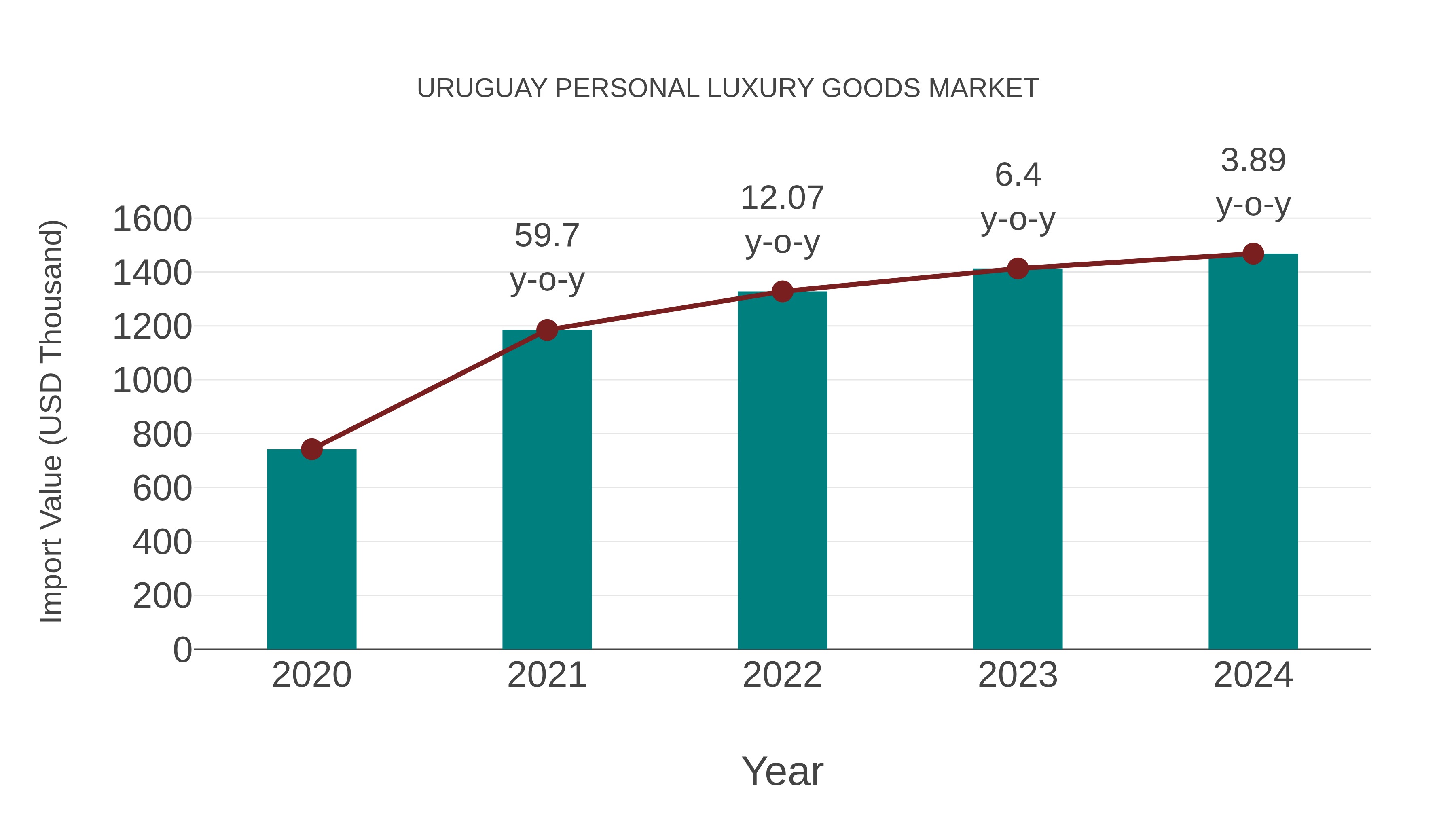
Uruguay Personal Luxury Goods Market Synopsis
The Uruguay personal luxury goods market is experiencing steady growth driven by increasing purchasing power and a growing interest in luxury items among consumers. The market primarily consists of luxury fashion, accessories, beauty products, and high-end electronics. Key players in the market include international luxury brands such as Louis Vuitton, Gucci, and Chanel, as well as local boutique luxury retailers. The demand for personal luxury goods is also being fueled by a rising number of affluent individuals and tourists in Uruguay. E-commerce has played a significant role in expanding the reach of luxury brands to a wider audience in the country. Overall, the Uruguay personal luxury goods market presents opportunities for luxury brands to cater to the evolving preferences of consumers seeking high-quality and exclusive products.
Uruguay Personal Luxury Goods Market Trends
The Personal Luxury Goods Market in Uruguay is currently experiencing a shift towards sustainability and conscious consumerism. Consumers are increasingly seeking products that are ethically sourced, environmentally friendly, and have a positive social impact. This trend is driving luxury brands to incorporate sustainable practices into their production processes and offer more transparent supply chains. Additionally, there is a growing preference for experiential luxury, with consumers valuing unique, personalized experiences over material possessions. The rise of e-commerce and digital platforms has also influenced the market, leading to a greater emphasis on online sales and digital marketing strategies. Overall, the Uruguay Personal Luxury Goods Market is evolving to meet the changing preferences and values of consumers towards sustainability, experiential luxury, and digital engagement.
Uruguay Personal Luxury Goods Market Challenges
In the Uruguay Personal Luxury Goods Market, a key challenge is the relatively small size of the market compared to other countries, leading to limited consumer base and lower purchasing power. Additionally, the country`s economic fluctuations and high import taxes on luxury goods can impact consumer spending and discourage international luxury brands from entering the market. Another challenge is the presence of a strong informal economy, which can undermine sales of legitimate luxury products. Furthermore, the lack of awareness and understanding of luxury brands among the local population poses a hurdle in attracting and retaining affluent customers. Overall, navigating these challenges requires strategic marketing efforts, pricing strategies, and partnerships with local retailers to establish a stronger foothold in the Uruguay luxury goods market.
Uruguay Personal Luxury Goods Market Investment Opportunities
The Uruguay Personal Luxury Goods Market offers attractive investment opportunities in various sectors such as fashion, accessories, cosmetics, and jewelry. With a growing economy and increasing disposable income levels, there is a rising demand for luxury products among Uruguay`s affluent population. Investing in luxury fashion brands, high-end jewelry stores, premium cosmetics retailers, and exclusive accessories boutiques could yield significant returns in this market. Additionally, there is a trend towards experiential luxury, with opportunities to invest in luxury hotels, spas, and fine dining establishments to cater to the discerning tastes of Uruguay`s luxury consumers. Overall, the Uruguay Personal Luxury Goods Market presents a promising landscape for investors looking to capitalize on the country`s growing luxury market segment.
Jordan Agar Market Government Policies
The government policies related to the Personal Luxury Goods Market in Uruguay primarily focus on regulating import duties and taxes on luxury items. The country imposes high import tariffs on luxury goods to protect domestic industries and encourage local consumption. Additionally, there are restrictions on the advertising and promotion of luxury products to prevent ostentatious displays of wealth. The government also monitors the market to ensure compliance with anti-money laundering regulations and prevent illicit activities in the luxury sector. Overall, the government policies in Uruguay aim to balance the demand for luxury goods with the need to maintain economic stability and social equality.
Uruguay Personal Luxury Goods Market Future Outlook
The future outlook for the Uruguay Personal Luxury Goods Market appears positive, with steady growth expected driven by increasing disposable income levels and a growing interest in luxury products among the country`s affluent consumers. The market is forecasted to benefit from a rise in tourism, particularly luxury tourism, which will further boost the demand for high-end goods. Additionally, the expanding presence of luxury brands in the country and the development of luxury shopping destinations are likely to contribute to the market`s growth. With a favorable economic environment and a rising appreciation for luxury items, the Uruguay Personal Luxury Goods Market is poised for a promising future ahead.
Key Highlights of the Report:
- Uruguay Personal Luxury Goods Market Outlook
- Market Size of Uruguay Personal Luxury Goods Market, 2025
- Forecast of Uruguay Personal Luxury Goods Market, 2032
- Historical Data and Forecast of Uruguay Personal Luxury Goods Revenues & Volume for the Period 2022 - 2032F
- Uruguay Personal Luxury Goods Market Trend Evolution
- Uruguay Personal Luxury Goods Market Drivers and Challenges
- Uruguay Personal Luxury Goods Price Trends
- Uruguay Personal Luxury Goods Porter's Five Forces
- Uruguay Personal Luxury Goods Industry Life Cycle
- Historical Data and Forecast of Uruguay Personal Luxury Goods Market Revenues & Volume By Distribution Channel for the Period 2022 - 2032F
- Historical Data and Forecast of Uruguay Personal Luxury Goods Market Revenues & Volume By Offline for the Period 2022 - 2032F
- Historical Data and Forecast of Uruguay Personal Luxury Goods Market Revenues & Volume By Online for the Period 2022 - 2032F
- Historical Data and Forecast of Uruguay Personal Luxury Goods Market Revenues & Volume By Product for the Period 2022 - 2032F
- Historical Data and Forecast of Uruguay Personal Luxury Goods Market Revenues & Volume By Hard luxury for the Period 2022 - 2032F
- Historical Data and Forecast of Uruguay Personal Luxury Goods Market Revenues & Volume By Apparel for the Period 2022 - 2032F
- Historical Data and Forecast of Uruguay Personal Luxury Goods Market Revenues & Volume By Cosmetics and perfumes for the Period 2022 - 2032F
- Historical Data and Forecast of Uruguay Personal Luxury Goods Market Revenues & Volume By Accessories for the Period 2022 - 2032F
- Historical Data and Forecast of Uruguay Personal Luxury Goods Market Revenues & Volume By Others for the Period 2022 - 2032F
- Uruguay Personal Luxury Goods Import Export Trade Statistics
- Market Opportunity Assessment By Distribution Channel
- Market Opportunity Assessment By Product
- Uruguay Personal Luxury Goods Top Companies Market Share
- Uruguay Personal Luxury Goods Competitive Benchmarking By Technical and Operational Parameters
- Uruguay Personal Luxury Goods Company Profiles
- Uruguay Personal Luxury Goods Key Strategic Recommendations






































