Venezuela Fluid Milk Market Summary
The venezuela fluid milk market was estimated at USD 318 Million in 2025 and is projected to reach USD 441 Million by 2032, growing at a CAGR of 5.4% from 2026 to 2032.
Venezuela Fluid Milk Market Year-wise Growth Rate and Key Drivers
This graph highlights how the Venezuela Fluid Milk Market has steadily grown over the past five years, supported by major growth factors.
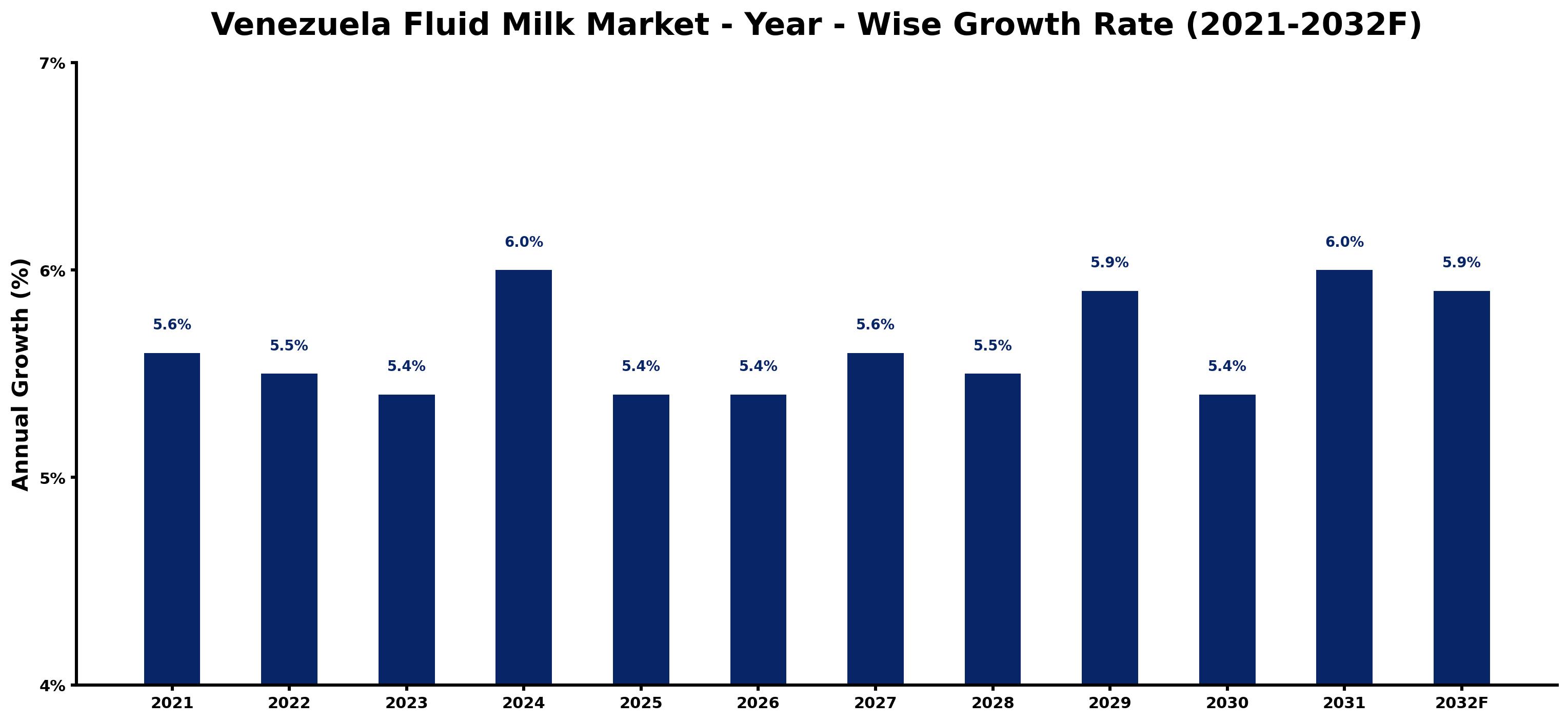
The table below presents the year wise growth rates along with the key drivers influencing the market
| Year | Growth Rate | Major Drivers |
| 2021 | 5.6% | Economic instability continues to pressure local milk production, limiting supply chain efficiency. |
| 2022 | 5.5% | Inflation impacts consumer purchasing power, altering preferences towards lower-cost dairy alternatives. |
| 2023 | 5.4% | International dairy prices fluctuate, influencing import opportunities for premium milk brands. |
| 2024 | 6.0% | Local production initiatives face hurdles, affecting overall milk availability in urban regions. |
| 2025 | 5.4% | Import restrictions create a niche market for domestic producers to fill gaps. |
| 2026 | 5.4% | Health awareness campaigns promote dairy consumption, boosting the fluid milk segment's visibility. |
| 2027 | 5.6% | Rising interest in organic products fosters new market entrants targeting health-conscious consumers. |
| 2028 | 5.5% | Innovative packaging solutions introduced, enhancing product shelf life and consumer appeal. |
| 2029 | 5.9% | Retail sector transformation favors modern grocery formats, improving milk product accessibility. |
| 2030 | 5.4% | Emerging e-commerce platforms facilitate direct-to-consumer milk sales in urban areas. |
| 2031 | 6.0% | Sustainability trends shape consumer expectations, urging brands to adopt eco-friendly practices. |
| 2032 | 5.9% | Ongoing political challenges prompt collaborations among stakeholders to stabilize the milk supply chain. |
Note - Market size estimations and growth projections presented in this report are based on 6Wresearch's advanced forecasting approach, validated with industry datasets as of June 2026.
Venezuela Fluid Milk Market Synopsis
The Venezuela Fluid Milk Market is projected to reach 5.4% and witness significant growth during the forecast period (2026-2032). The fluid milk industry in Venezuela has grappled with challenges stemming from the nation's turbulent economic landscape, particularly its high inflation rates and substantial political instability. Despite these adversities, there remains a crucial demand for fluid milk among Venezuelan consumers, which presents unique opportunities for companies adept at navigating the complexities of this challenging environment.
Venezuela Fluid Milk Market Trends and Opportunities
The current dynamics of the Venezuela Fluid Milk Market are significantly influenced by economic turmoil, leading to disruptions in the supply chain and price volatility. As consumers face limited access to domestically produced milk, many are pivoting towards alternative dairy options, including imported milk and powdered milk products. This shift in consumer behavior indicates a growing market for imported alternatives and highlights an opportunity for local producers to improve their offerings.
Furthermore, an emerging trend in the market is the increasing interest in plant-based milk alternatives, particularly among health-conscious consumers and those with lactose intolerance. This trend opens avenues for innovation within the dairy sector, offering companies the chance to cater to a segment of the population that is evolving rapidly towards healthier choices. In addition, the premium and organic milk segments stand to benefit from this health-centric consumer shift, as there is a desire for higher-quality and more nutritious options, even amidst economic adversities.
Venezuela Fluid Milk Market Challenges and Restraints
The challenges facing the Venezuela Fluid Milk Market are multifaceted, mainly driven by the prevailing economic instability and hyperinflation. These conditions have caused severe fluctuations in pricing, leaving producers and consumers struggling to maintain consistent budgeting strategies. The shortage of raw materials results from sanctions and ongoing political unrest, which disrupts the supply chain and leads to inconsistent availability of fluid milk.
Additionally, infrastructure inadequacies—particularly concerning transportation and storage—significantly affect the distribution of milk products across Venezuela. This lack of reliable infrastructure further compounds the challenges faced by the industry, presenting a complex environment for stakeholders aiming to operate effectively within the market.
Venezuela Fluid Milk Market Investment Opportunities
Despite the various hurdles, the Venezuela Fluid Milk Market presents several promising investment opportunities. There is a substantial potential for enhancing and modernizing dairy farms, which can lead to increased production capacity and improved overall efficiency. Investment in processing facilities also holds promise, enabling better quality control and product innovation.
Moreover, exploring avenues for value-added products, such as flavored milk, lactose-free variants, and organic options, could align with shifting consumer preferences and meet the growing demand within the local market. As disposable income levels begin to rise, the urgency for dairy products will likely increase, creating further opportunities for market players willing to take calculated risks in this volatile economic landscape.
Venezuela Fluid Milk Market Government Investment and Initiatives
Government policies governing the Venezuela Fluid Milk Market are significantly shaped by the prevailing economic and political climate. The Venezuelan government has implemented several price controls and subsidies aimed at ensuring that milk products remain affordable for the populace. These interventions are intended to bolster local milk production and processing activities, thereby reducing reliance on imports.
Nevertheless, persistent economic challenges such as inflation and resource shortages have adversely impacted the milk industry, resulting in dwindling production levels. Regulatory frameworks designed to support local producers have faced criticism for being inadequate, leading to inefficiencies and disruptions in the supply chain. Overall, while government initiatives strive to maintain access to affordable milk products, the effectiveness of these measures remains contingent upon resolving underlying economic instabilities.
Venezuela Fluid Milk Market Latest Developments (May 2025 - June 2026)
The period between May 2025 and June 2026 has witnessed notable developments within the Venezuela Fluid Milk Market. Companies have increasingly focused on innovating their product lines to better align with consumer preferences, particularly in light of rising health awareness and demand for premium products. There has been a noticeable uptick in the introduction of lactose-free and organic options, responding directly to shifting consumer needs.
Moreover, alongside ongoing challenges related to the economic crisis, stakeholders have begun to form strategic partnerships aimed at enhancing supply chain efficiency. This collaboration is expected to help mitigate some of the distribution challenges that have plagued the market for years. Additionally, consumer sentiment remains a critical factor, influencing companies to adopt more flexible pricing strategies to remain competitive in a fluctuating marketplace.
Venezuela Fluid Milk Market - Key Attractiveness of the Report
- 10 Years of Market Numbers
- Historical Data Starting from 2022 to 2025
- Base Year: 2025
- Forecast Data until 2032
- Key Performance Indicators Impacting the Market
- Major Upcoming Developments and Projects
Key Highlights of the Report:
- Venezuela Fluid Milk Market Outlook
- Market Size of Venezuela Fluid Milk Market, 2025
- Forecast of Venezuela Fluid Milk Market, 2032F
- Historical Data and Forecast of Venezuela Fluid Milk Revenues & Volume for the Period 2022-2032F
- Venezuela Fluid Milk Market Trend Evolution
- Venezuela Fluid Milk Market Drivers and Challenges
- Venezuela Fluid Milk Price Trends
- Venezuela Fluid Milk Porter's Five Forces
- Venezuela Fluid Milk Industry Life Cycle
- Historical Data and Forecast of Venezuela Fluid Milk Market Revenues & Volume By Source for the Period 2022-2032F
- Historical Data and Forecast of Venezuela Fluid Milk Market Revenues & Volume By Cow Milk for the Period 2022-2032F
- Historical Data and Forecast of Venezuela Fluid Milk Market Revenues & Volume By Ship Milk for the Period 2022-2032F
- Historical Data and Forecast of Venezuela Fluid Milk Market Revenues & Volume By Goat Milk for the Period 2022-2032F
- Historical Data and Forecast of Venezuela Fluid Milk Market Revenues & Volume By Buffalo Milk for the Period 2022-2032F
- Historical Data and Forecast of Venezuela Fluid Milk Market Revenues & Volume By Type for the Period 2022-2032F
- Historical Data and Forecast of Venezuela Fluid Milk Market Revenues & Volume By Whole Milk for the Period 2022-2032F
- Historical Data and Forecast of Venezuela Fluid Milk Market Revenues & Volume By Low Fat Milk for the Period 2022-2032F
- Historical Data and Forecast of Venezuela Fluid Milk Market Revenues & Volume By Reduced Fat Milk for the Period 2022-2032F
- Historical Data and Forecast of Venezuela Fluid Milk Market Revenues & Volume By Skim Milk for the Period 2022-2032F
- Historical Data and Forecast of Venezuela Fluid Milk Market Revenues & Volume By Cultured Buttermilk for the Period 2022-2032F
- Historical Data and Forecast of Venezuela Fluid Milk Market Revenues & Volume By Lactose Free Milk for the Period 2022-2032F
- Historical Data and Forecast of Venezuela Fluid Milk Market Revenues & Volume By Flavoured Milk for the Period 2022-2032F
- Historical Data and Forecast of Venezuela Fluid Milk Market Revenues & Volume By Application for the Period 2022-2032F
- Historical Data and Forecast of Venezuela Fluid Milk Market Revenues & Volume By Fortified Milk for the Period 2022-2032F
- Historical Data and Forecast of Venezuela Fluid Milk Market Revenues & Volume By Flavored Dairy Milk for the Period 2022-2032F
- Historical Data and Forecast of Venezuela Fluid Milk Market Revenues & Volume By Yogurts for the Period 2022-2032F
- Historical Data and Forecast of Venezuela Fluid Milk Market Revenues & Volume By Cheese for the Period 2022-2032F
- Historical Data and Forecast of Venezuela Fluid Milk Market Revenues & Volume By Creams for the Period 2022-2032F
- Historical Data and Forecast of Venezuela Fluid Milk Market Revenues & Volume By Frozen Desserts for the Period 2022-2032F
- Historical Data and Forecast of Venezuela Fluid Milk Market Revenues & Volume By Distribution Channel for the Period 2022-2032F
- Historical Data and Forecast of Venezuela Fluid Milk Market Revenues & Volume By Supermarket for the Period 2022-2032F
- Historical Data and Forecast of Venezuela Fluid Milk Market Revenues & Volume By Convenience Stores for the Period 2022-2032F
- Historical Data and Forecast of Venezuela Fluid Milk Market Revenues & Volume By Food Speciality Stores for the Period 2022-2032F
- Historical Data and Forecast of Venezuela Fluid Milk Market Revenues & Volume By Others for the Period 2022-2032F
- Venezuela Fluid Milk Import Export Trade Statistics
- Market Opportunity Assessment By Source
- Market Opportunity Assessment By Type
- Market Opportunity Assessment By Application
- Market Opportunity Assessment By Distribution Channel
- Venezuela Fluid Milk Top Companies Market Share
- Venezuela Fluid Milk Competitive Benchmarking By Technical and Operational Parameters
- Venezuela Fluid Milk Company Profiles
- Venezuela Fluid Milk Key Strategic Recommendations






































