Vietnam Air Conditioner Market Growth Rate
According to 6Wresearch internal database and industry insights, the Vietnam Air Conditioner Market is projected to grow at a compound annual growth rate (CAGR) of 7.4% during the forecast period from 2026 to 2032.
Vietnam Air Conditioner Market Year-wise Growth Rate and Key Drivers
This graph highlights how the Vietnam Air Conditioner Market has steadily grown over the past five years, supported by major growth Factors.
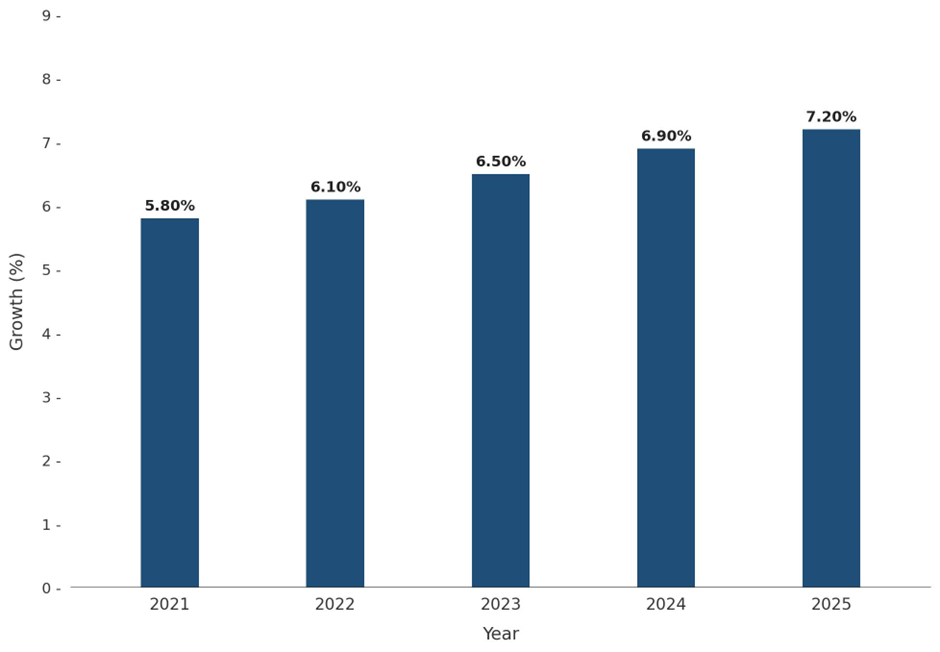
The table below presents the year‑wise growth rates along with the key drivers influencing the market
| Years | Est. Annual Growth in % | Growth Drivers |
| 2021 | 5.8% | Rising urbanization and increasing construction activities. |
| 2022 | 6.1% | Growing middle-class population and disposable income. |
| 2023 | 6.5% | Increasing demand for energy-efficient cooling systems. |
| 2024 | 6.9% | Expansion of commercial infrastructure and smart buildings. |
| 2025 | 7.2% | Adoption of advanced inverter and eco-friendly air conditioners |
Topics Covered in the Vietnam Air Conditioner Market Report
The Vietnam Air Conditioner Market report thoroughly covers the market by type and application, providing an unbiased and detailed analysis of ongoing market trends, opportunities, challenges, and market drivers, helping stakeholders align their strategies with current and future market dynamics.
Vietnam Air Conditioner Market Highlights
| Report Name |
Vietnam Air Conditioner Market |
| Forecast period | 2026-2032 |
| CAGR | 7.4% |
| Market Size |
Air Conditioners |
Vietnam Air Conditioner Market Synopsis
The Vietnam Air Conditioner Market is experiencing strong growth due to, increasing infrastructure development, rapid urbanization, and rising demand for energy-efficient cooling solutions as growing disposable incomes and changing lifestyles are encouraging the adoption of air conditioning systems across residential and commercial sectors. Furthermore, advancement in technology such as smart connectivity, inverter technology, and eco-friendly refrigerants are enhancing product efficiency and appeal. Additionally, government initiatives promoting energy efficiency are contributing significantly to Vietnam Air Conditioner Market Growth.
Evaluation of Growth Drivers in the Vietnam Air Conditioner Market (2026-2032)
Below mentioned are some prominent drivers and their impact on the market dynamics:
| Drivers | Primary Segments Affected | Why It Matters (Evidence) |
| Rising Urbanization and Construction | Room Air Conditioners, Centralized Systems | Increasing residential and commercial buildings boost AC demand. |
| Growing Demand for Energy Efficiency | Ductless, Room Air Conditioners | Consumers prefer energy-saving inverter ACs to reduce electricity costs. |
| Expansion of Commercial Sector | Centralized Air Conditioners | The large-scale installations of offices, malls and retail spaces function as their main operational drivers. |
| Increasing Disposable Income | Residential Segment | Higher income levels enable purchase of premium AC units. |
| Technological Advancements | All Types | Smart and connected ACs enhance convenience and performance. |
The Vietnam Air Conditioner Market Size is projected to grow at a CAGR of 7.4% from 2026 to 2032. The Vietnam Air Conditioner Market is growing due to rapid infrastructure development, and rising demand for reliable and efficient cooling solutions in both residential and commercial sectors as technological advancements, such as inverter technology and smart features, are improving performance and product appeal and increasing awareness of energy efficiency and environmental sustainability is encouraging the adoption of eco-friendly systems, supporting long-term market growth and pushing manufacturers to develop innovative, energy-efficient air conditioning products.
Evaluation of Restraints in the Vietnam Air Conditioner Market
Below mentioned are some major restraints and their influence on the market dynamics:
| Restraints | Primary Segments Affected | What This Means (Evidence) |
| High Initial Cost | Centralized Air Conditioners | Premium systems may limit adoption among price-sensitive consumers. |
| Energy Consumption Concerns | Room Air Conditioners | High electricity usage impacts consumer purchasing decisions. |
| Maintenance Costs | Ducted Systems | The total cost of ownership increases when equipment requires periodic maintenance. |
| Environmental Regulations | All Types | The regulations about refrigerant usage create higher costs for companies to meet their compliance obligations. |
| Seasonal Demand Fluctuations | All Segments | Sales vary depending on weather conditions. |
Vietnam Air Conditioner Market Challenges
The Vietnam Air Conditioner Industry faces several challenges such as high installation and maintenance costs, particularly for centralized systems used in large commercial spaces there is Intense competition among both global and local brands which creates strong pricing pressure and reduces profit margins. Due to strict environmental regulations related to refrigerants and energy efficiency standards increases operational complexity for manufacturers as fluctuating raw material costs also impact production and addressing these challenges requires innovation, cost optimization, and development of eco-friendly, energy-efficient air conditioning solutions.
Vietnam Air Conditioner Market Trends
Here are some major trends changing the Vietnam Air Conditioner Market Growth dynamics:
- Growing Adoption of Inverter Technology - People tend to use inverter air conditioners as these systems provide energy-efficient cooling which decreases electricity use.
- Rising Demand for Smart Air Conditioners - Smart ACs with Wi-Fi connectivity and remote control features are enhancing convenience and user experience.
- Shift Toward Eco-Friendly Refrigerants - People those who care about the environment now seek air conditioning systems that use refrigerants with minimal environmental impact through the use of R32 refrigerant.
- Expansion of E-commerce Sales Channels - The online platforms of e-commerce sales channels allow consumers to compare different air conditioning systems and complete their purchases more efficiently.
Investment Opportunities in the Vietnam Air Conditioner Market
The Vietnam Air Conditioner Market presents several investment opportunities, including:
- Development of Energy-Efficient Solutions: The Development of Energy-Efficient Solutions requires companies to invest in inverter technology and energy-saving solutions.
- Expansion in Smart Appliance Segment: Smart ACs provide manufacturers with opportunities to create new products which set their brands apart from competitors.
- Growth in Commercial Infrastructure Projects: The rising construction of malls and offices and hotels creates a need for centralized air conditioning systems.
- Focus on Affordable Product Lines: Businesses can reach budget-conscious customers by delivering reasonably priced products which meet their requirements.
Top 5 Leading Players in the Vietnam Air Conditioner Market
Below is the list of prominent companies leading the Vietnam Air Conditioner Market Share:
1. Daikin Vietnam
| Company Name | Daikin Vietnam |
|---|---|
| Established Year | 1924 (Vietnam operations since 1995) |
| Headquarters | Japan |
| Official Website | Click Here |
Daikin is a dominant market leader in Vietnam, recognized for high-efficiency inverter technology and durable cooling systems suited for the country's diverse tropical climate.
2. Panasonic Vietnam
| Company Name | Panasonic Vietnam |
|---|---|
| Established Year | 1918 (Vietnam operations since 1971) |
| Headquarters | Japan |
| Official Website | Click Here |
Panasonic holds a significant market share by offering air conditioners equipped with advanced air purification technologies, such as nanoe™ X, which are highly valued in Vietnam's urban centers.
3. LG Electronics Vietnam
| Company Name | LG Electronics Vietnam |
|---|---|
| Established Year | 1958 (Vietnam operations since 1995) |
| Headquarters | South Korea |
| Official Website | Click Here |
LG is a leading player focused on smart connectivity and energy-saving solutions, providing a wide range of residential and commercial units through an extensive local distribution network.
4. Samsung Electronics Vietnam
| Company Name | Samsung Electronics Vietnam |
|---|---|
| Established Year | 1969 (Vietnam operations since 1996) |
| Headquarters | South Korea |
| Official Website | Click Here |
Samsung is known for its innovative "WindFree" cooling technology and modern designs, catering to tech-savvy Vietnamese consumers looking for comfort without direct cold drafts.
5. Casper Electric Vietnam
| Company Name | Casper Electric (Vietnam) |
|---|---|
| Established Year | 2016 |
| Headquarters | Thailand |
| Official Website | Click Here |
Casper has rapidly become one of the top brands in Vietnam by providing affordable, high-quality air conditioners with excellent after-sales service, making them a preferred choice for the mass market.
Government Regulations Introduced in the Vietnam Air Conditioner Market
According to Vietnamese government data, the Vietnamese government has implemented energy efficiency standards to help decrease energy costs. The development of energy efficiency ratings clearly does this as they encourage consumers to purchase products that save energy compared to others. In addition, the government has put forth regulations that encourage manufacturers to use R32 coolants to promote sustainability through the use of climate-friendly refrigerants. As more consumers learn about the benefits of energy-efficient air conditioning systems, manufacturers will create products that are both energy-efficient and environmentally-friendly as a consequence.
Future Insights of the Vietnam Air Conditioner Market
The Future outlook for the Vietnam Air Conditioner Market remains positive, driven by rapid urbanization and continuous advancements in cooling technologies as increasing demand for connected, smart and energy-efficient air conditioners is expected to significantly drive market growth. Additionally, the expansion of commercial infrastructure, including malls, offices, and hospitality spaces, will further boost demand as growing consumer awareness regarding sustainability and energy conservation is also encouraging adoption, while ongoing innovation and improved product availability will support long-term market development.
Market Segmentation Analysis
The report offers a comprehensive study of the following market segments and their leading categories:
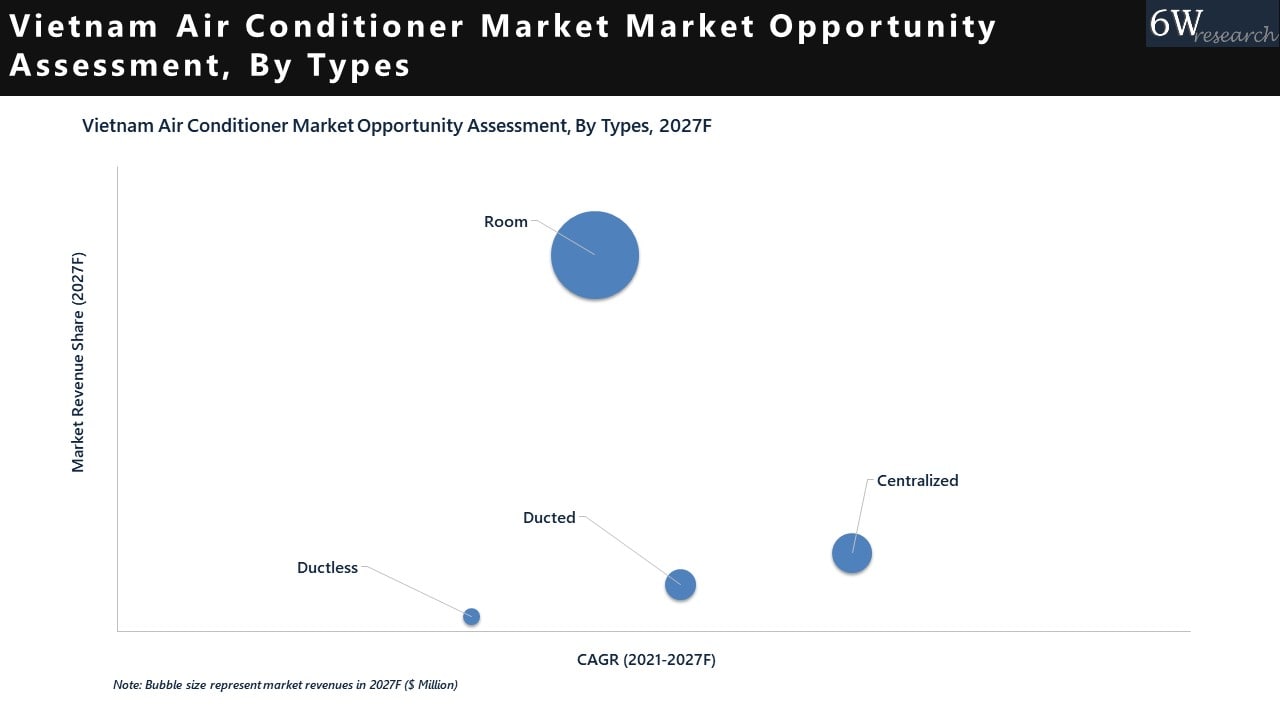
By Type - Room Air Conditioner to Dominate the Market
According to Ritika Kalra, Senior Research Analyst, 6Wresearch, Room air conditioners are expected to dominate the Vietnam Air Conditioner Market due to their affordability, ease of installation, and suitability for residential applications. Increasing demand from urban households further supports this segment.
By Application - Residential to Dominate the Market
The residential segment is expected to dominate due to rising urbanization and increasing adoption of air conditioners in homes. Growing disposable incomes and improved living standards are driving this segment.
Key Attractiveness of the Report
- 10 Years of Market Numbers
- Historical Data Starting from 2022 to 2025
- Base Year: 2025
- Forecast Data until 2032
- Key Performance Indicators Impacting the Market
- Major Upcoming Developments and Projects
Key Highlights of the Report:
- Vietnam Air Conditioner Market Outlook
- Market Size of Vietnam Air Conditioner Market, 2025
- Forecast of Vietnam Air Conditioner Market, 2032
- Historical Data and Forecast of Vietnam Air Conditioner Revenues & Volume for the Period 2022-2032
- Vietnam Air Conditioner Market Trend Evolution
- Vietnam Air Conditioner Market Drivers and Challenges
- Vietnam Air Conditioner Price Trends
- Vietnam Air Conditioner Porter's Five Forces
- Vietnam Air Conditioner Industry Life Cycle
- Historical Data and Forecast of Vietnam Air Conditioner Market Revenues & Volume By Type for the Period 2022-2032
- Historical Data and Forecast of Vietnam Air Conditioner Market Revenues & Volume By Room Air Conditioner for the Period 2022-2032
- Historical Data and Forecast of Vietnam Air Conditioner Market Revenues & Volume By Ducted Air Conditioner for the Period 2022-2032
- Historical Data and Forecast of Vietnam Air Conditioner Market Revenues & Volume By Ductless Air Conditioner for the Period 2022-2032
- Historical Data and Forecast of Vietnam Air Conditioner Market Revenues & Volume By Centralized Air Conditioner for the Period 2022-2032
- Historical Data and Forecast of Vietnam Air Conditioner Market Revenues & Volume By Application for the Period 2022-2032
- Historical Data and Forecast of Vietnam Air Conditioner Market Revenues & Volume By Residential for the Period 2022-2032
- Historical Data and Forecast of Vietnam Air Conditioner Market Revenues & Volume By Healthcare for the Period 2022-2032
- Historical Data and Forecast of Vietnam Air Conditioner Market Revenues & Volume By Commercial & Retail for the Period 2022-2032
- Historical Data and Forecast of Vietnam Air Conditioner Market Revenues & Volume By Transportation & Infrastructure for the Period 2022-2032
- Historical Data and Forecast of Vietnam Air Conditioner Market Revenues & Volume By Hospitality for the Period 2022-2032
- Historical Data and Forecast of Vietnam Air Conditioner Market Revenues & Volume By Others for the Period 2022-2032
- Vietnam Air Conditioner Import Export Trade Statistics
- Market Opportunity Assessment By Type
- Market Opportunity Assessment By Application
- Vietnam Air Conditioner Top Companies Market Share
- Vietnam Air Conditioner Competitive Benchmarking By Technical and Operational Parameters
- Vietnam Air Conditioner Company Profiles
- Vietnam Air Conditioner Key Strategic Recommendations
Market Covered
The report offers a comprehensive study of the subsequent market segments:
By Type
- Room Air Conditioner
- Ducted Air Conditioner
- Ductless Air Conditioner
- Centralized Air Conditioner
By Application
- Residential
- Healthcare
- Commercial & Retail
- Transportation & Infrastructure
- Hospitality
- Others