Vietnam Bathroom Linen Market Size, Share & Growth Rate
The Vietnam Bathroom Linen Market was estimated at USD 456 Million in 2025 and is projected to reach USD 643 Million by 2032, growing at a CAGR of 5.0% from 2026 to 2032. This growth trajectory is primarily fueled by rising disposable incomes, which enable consumers to invest in premium quality bathroom linens. Additionally, the flourishing hospitality sector further propels demand as hotels seek luxurious products to enhance guest experience.
Vietnam Bathroom Linen Market Year-wise Growth Rate and Key Drivers
This graph highlights how the Vietnam Bathroom Linen Market has steadily grown over the years, supported by major growth factors.
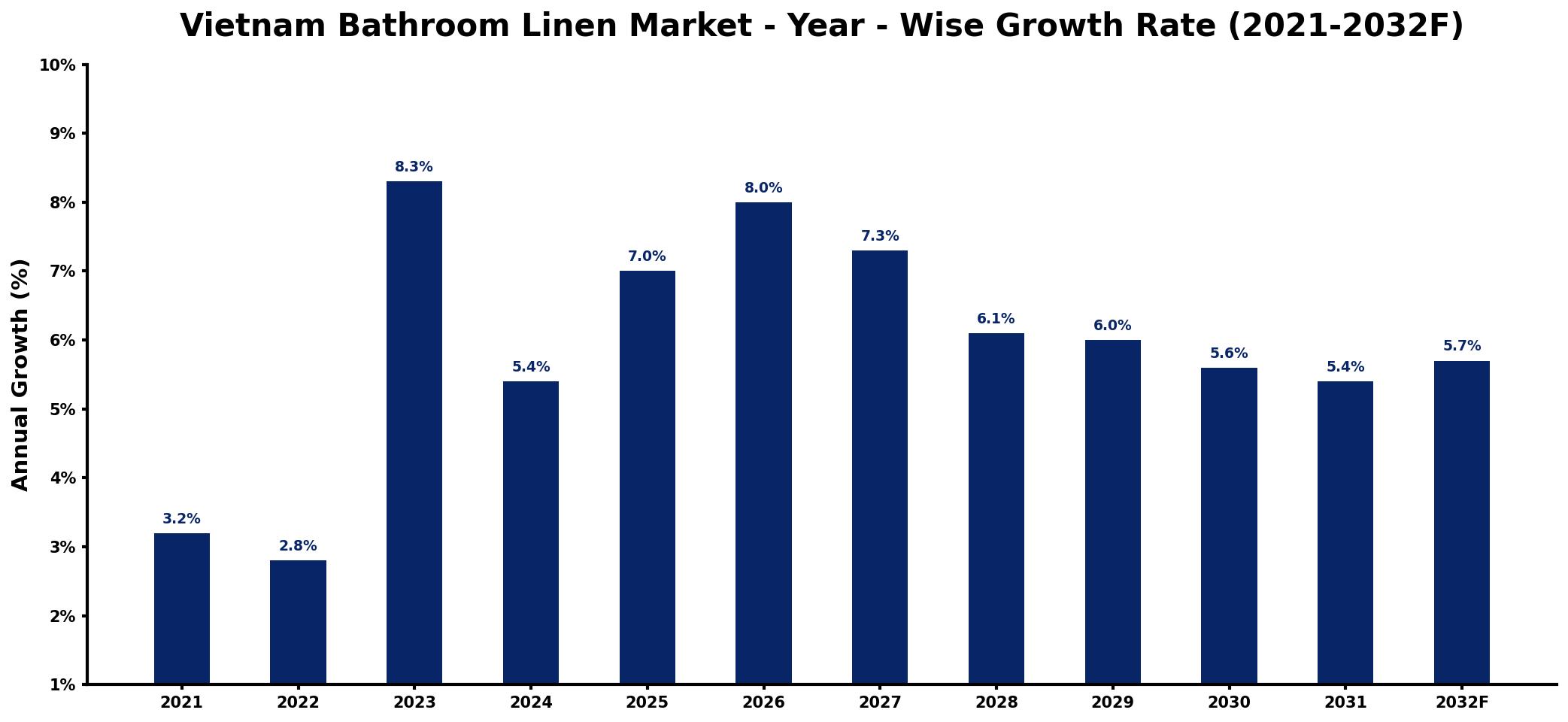
The table below presents the year‑wise growth rates along with the key drivers influencing the market
| Year | Growth Rate | Major Drivers |
| 2021 | 3.2% | Rising consumer spending trends |
| 2022 | 2.8% | Increased home renovation activities |
| 2023 | 8.3% | Surge in hospitality sector growth |
| 2024 | 5.4% | Growing eco-friendly product demand |
| 2025 | 7.0% | Expansion of online retail channels |
| 2026 | 8.0% | Investment in sustainable manufacturing |
| 2027 | 7.3% | Enhanced consumer awareness campaigns |
| 2028 | 6.1% | Diversification of product offerings |
| 2029 | 6.0% | Strengthening of supply chain logistics |
| 2030 | 5.6% | Development of smart home technologies |
| 2031 | 5.4% | Increased focus on health benefits |
| 2032 | 5.7% | Rising popularity of luxury items |
Note: Market size estimations and growth projections presented in this report are based on 6Wresearch's proprietary forecasting methodology, utilizing the latest available industry data, government publications, and primary research inputs.
Vietnam Bathroom Linen Market Synopsis
The most significant force driving the Vietnam bathroom linen market is the increasing consumer emphasis on hygiene and comfort. As individuals become more health-conscious, there is a marked shift towards high-quality, easy-to-clean bathroom linens, incorporating antimicrobial properties. This trend reflects a broader societal move towards personal wellness and luxury.
In addition to consumer behavior, the hospitality industry emerges as a vital contributor to the market landscape. Hotels and resorts are continually elevating their linen standards, actively investing in premium options that not only offer comfort but also enhance the overall aesthetic experience for guests. This ongoing demand underscores the significance of quality in driving market dynamics.
Vietnam Bathroom Linen Market Key Takeaways
- The market is witnessing steady growth driven by rising disposable incomes and increased spending on quality bathroom products.
- Sustainable and eco-friendly materials are becoming essential as consumers prioritize environmentally conscious choices.
- The hospitality sector's demand for high-end linens remains a major influence on market expansion.
- Emerging consumer trends reflect a growing emphasis on hygiene and antimicrobial properties in bathroom linen products.
- The competitive landscape features both local manufacturers and international brands seeking to capture market share.
Evaluation of Restraints in Vietnam Bathroom Linen Market
Despite the positive growth outlook, the Vietnam bathroom linen market faces several limitations. Changing consumer preferences present a continuous challenge, as manufacturers must keep pace with evolving demands for hygiene and quality. Additionally, the ongoing effects of supply chain disruptions, particularly in the aftermath of the COVID-19 pandemic, necessitate agile responses from businesses. Striking a balance between maintaining affordability and meeting high-quality standards remains critical for sustained market participation.
Vietnam Bathroom Linen Market Trends
The current market landscape is shaped by notable trends including the shift towards sustainable practices, with consumers increasingly gravitating towards eco-friendly bathroom linen products. Furthermore, digitalization is playing a significant role, with e-commerce platforms becoming vital for distribution and consumer engagement. Social media influences also affect purchasing decisions, prompting brands to enhance their online presence to capture the attention of a broader audience.
Vietnam Bathroom Linen Market Opportunities
There are several lucrative opportunities within the Vietnam bathroom linen market. The rise in domestic tourism presents a substantial avenue for hospitality-focused businesses to invest in quality linens. Additionally, collaboration with designers and brands to introduce limited edition and luxury product lines could attract higher-end consumers. Targeting health-conscious demographics with antimicrobial and hypoallergenic products is another promising direction for innovation and growth.
Government Initiatives in the Vietnam Bathroom Linen Market
The Vietnamese government has been proactive in supporting local textile manufacturing, including bathroom linen. Policies aimed at boosting sustainable practices and encouraging the use of environmentally friendly materials are becoming increasingly relevant. Public spending on infrastructure and tourism development also indirectly supports market growth by enhancing the hospitality sector's demand for high-quality linens.
Future Insights of the Vietnam Bathroom Linen Market
Looking ahead to the 2026-2032 period, the Vietnam bathroom linen market is expected to thrive, driven by continued economic development and evolving consumer expectations. The increasing integration of technology in production processes and supply chains will likely enhance efficiency and product quality. Additionally, as more consumers prioritize sustainability, brands that align their offerings with eco-friendly practices are poised to capture significant market share.
Vietnam Bathroom Linen Market Latest Developments (2025 - 2026)
Recent developments in the Vietnam bathroom linen market indicate a growing interest in luxury and sustainable products. Several brands are launching initiatives to incorporate organic materials into their lines, appealing to health-conscious consumers. Additionally, e-commerce sales have surged as brands adapt to changing shopping behaviors, enhancing their online presence to reach wider audiences. The hospitality sector is also rebounding, driving demand for premium linen offerings.
Vietnam Bathroom Linen Market - Key Attractiveness of the Report
- 10 Years of Market Numbers
- Historical Data Starting from 2022 to 2025
- Base Year: 2025
- Forecast Data until 2032
- Key Performance Indicators Impacting the Market
- Major Upcoming Developments and Projects
Key Highlights of the Report:
- Vietnam Bathroom Linen Market Outlook
- Market Size of Vietnam Bathroom Linen Market, 2025
- Forecast of Vietnam Bathroom Linen Market, 2032
- Historical Data and Forecast of Vietnam Bathroom Linen Revenues & Volume for the Period 2022-2032F
- Vietnam Bathroom Linen Market Trend Evolution
- Vietnam Bathroom Linen Market Drivers and Challenges
- Vietnam Bathroom Linen Price Trends
- Vietnam Bathroom Linen Porter's Five Forces
- Vietnam Bathroom Linen Industry Life Cycle
- Historical Data and Forecast of Vietnam Bathroom Linen Market Revenues & Volume By Product for the Period 2022-2032F
- Historical Data and Forecast of Vietnam Bathroom Linen Market Revenues & Volume By Bath Towels for the Period 2022-2032F
- Historical Data and Forecast of Vietnam Bathroom Linen Market Revenues & Volume By Bathrobes for the Period 2022-2032F
- Historical Data and Forecast of Vietnam Bathroom Linen Market Revenues & Volume By Others for the Period 2022-2032F
- Vietnam Bathroom Linen Import Export Trade Statistics
- Market Opportunity Assessment By Product
- Vietnam Bathroom Linen Top Companies Market Share
- Vietnam Bathroom Linen Competitive Benchmarking By Technical and Operational Parameters
- Vietnam Bathroom Linen Company Profiles
- Vietnam Bathroom Linen Key Strategic Recommendations






































