Vietnam Blockchain Market Size & Growth Rate (2026-2032)
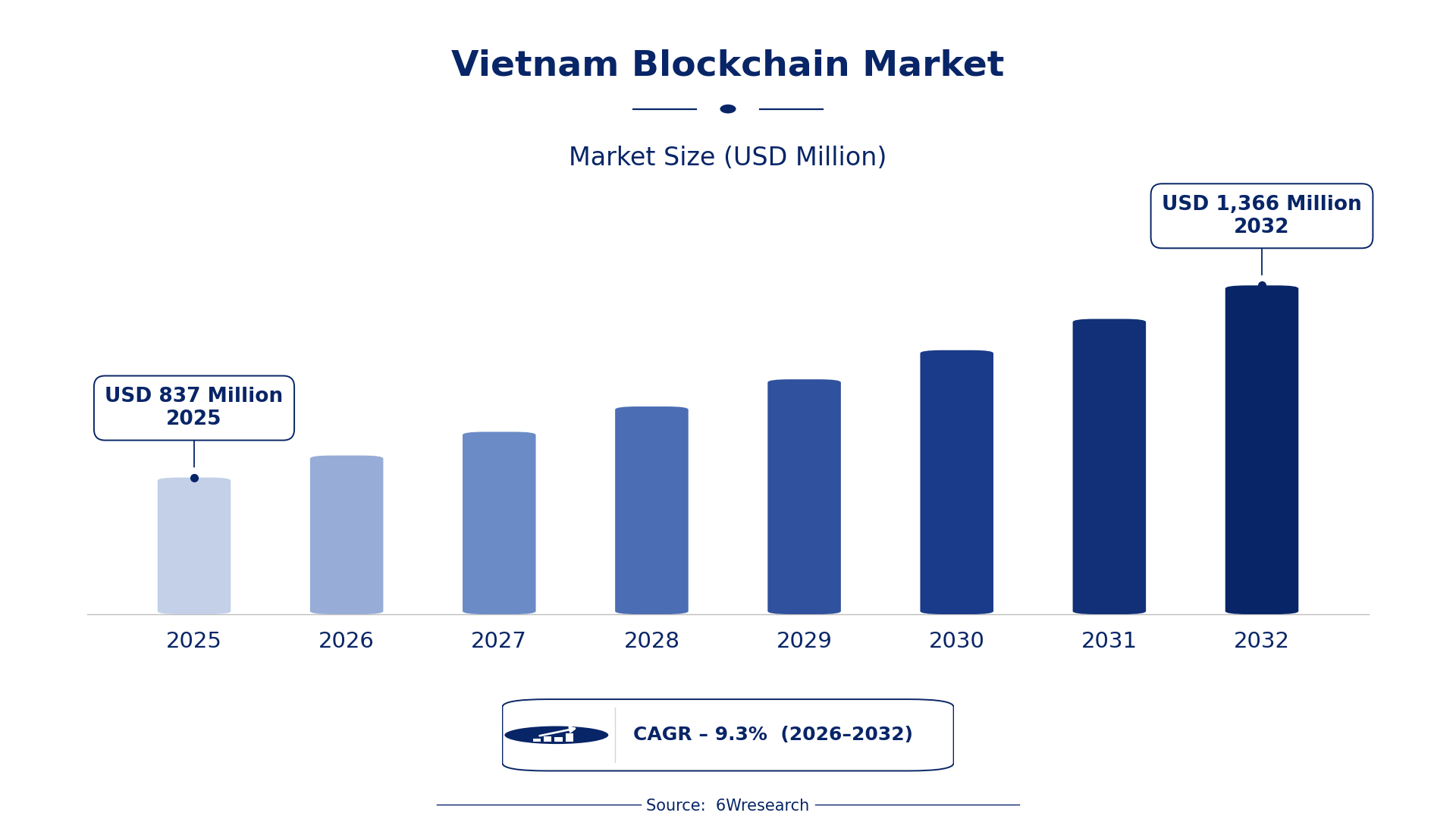
The Vietnam Blockchain Market was estimated at USD 837 Million in 2025 and is projected to reach USD 1366 Million by 2032, growing at a CAGR of 9.3% from 2026 to 2032.
Vietnam Blockchain Market Synopsis
The appetite for blockchain technology in Vietnam is surging, as sectors like finance and supply chain eagerly explore decentralized solutions to enhance operational transparency. Local enterprises are increasingly integrating blockchain to streamline processes and mitigate fraud risk, reflecting a broader trend of digital transformation.
Additionally, the government’s growing focus on blockchain as a tool for public sector innovation is attracting attention from startups and investors alike. This collaborative spirit is fostering an ecosystem ripe for advancements in areas such as digital identity verification, asset tokenization, and supply chain traceability.
Vietnam Blockchain Market Year-wise Growth Rate and Key Drivers
This graph illustrates the annual growth rates of the Vietnam Blockchain Market from 2021 to 2032, highlighting a steady upward trajectory and projected expansion over the forecast period.
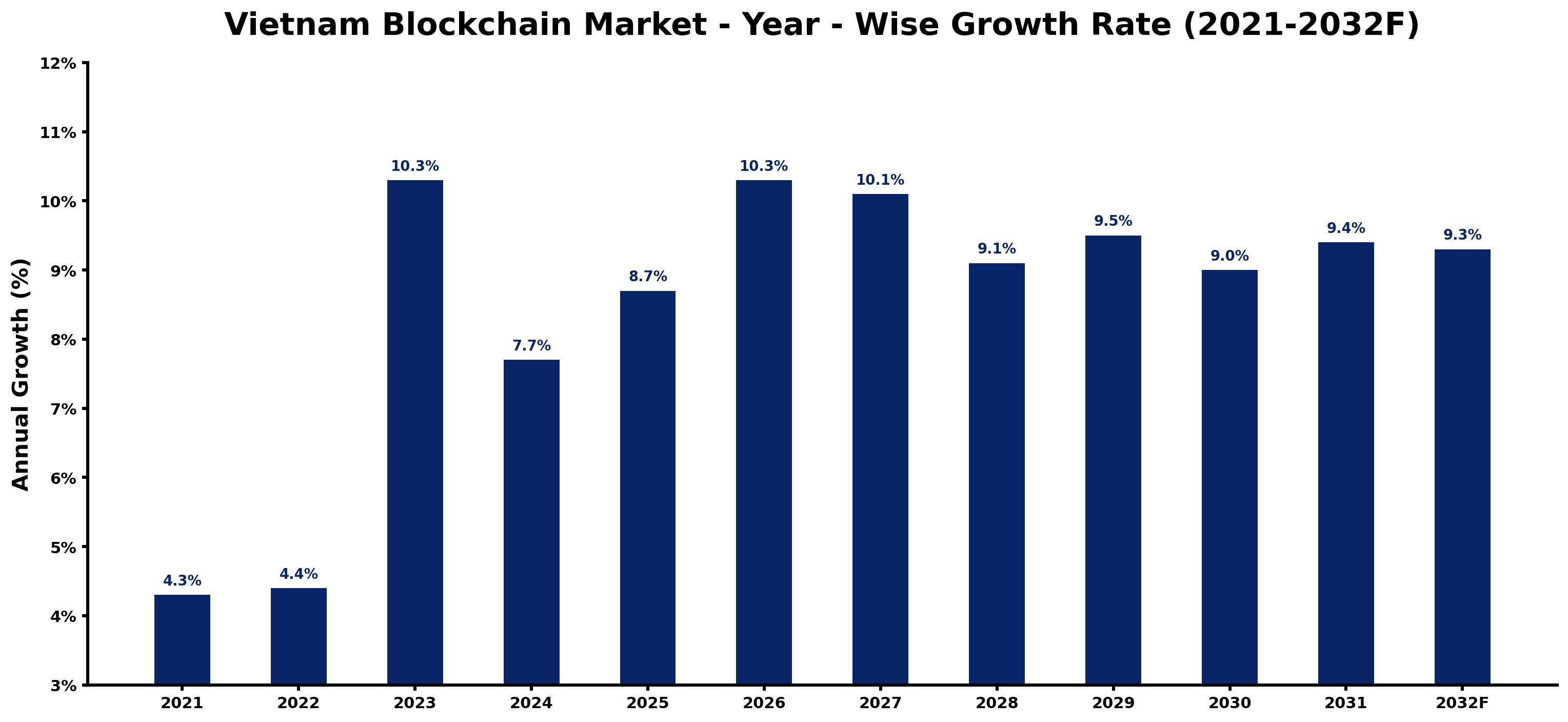
The table below presents the year‑wise growth rates along with the key drivers influencing the market
| Year | Growth Rate | Major Drivers |
| 2021 | 4.3% | Government support for blockchain startups and innovation. |
| 2022 | 4.4% | Growing interest in cryptocurrency among Vietnamese investors. |
| 2023 | 10.3% | Adoption of blockchain in e-governance initiatives. |
| 2024 | 7.7% | Increased venture capital funding for blockchain projects. |
| 2025 | 8.7% | Local educational programs promoting blockchain technologies. |
| 2026 | 10.3% | Regulatory framework favoring digital asset marketplaces. |
| 2027 | 10.1% | Rise of blockchain-based fintech solutions in Vietnam. |
| 2028 | 9.1% | Collaboration between tech firms and universities on blockchain research. |
| 2029 | 9.5% | Policy initiatives encouraging blockchain use in agriculture. |
| 2030 | 9.0% | Vietnamese firms exploring blockchain for fraud prevention. |
| 2031 | 9.4% | Integration of blockchain in real estate transactions. |
| 2032 | 9.3% | Local demand for digital identity solutions powered by blockchain. |
Note: Market size estimations and growth projections presented in this report are based on 6Wresearch's proprietary forecasting methodology, utilizing the latest available industry data, government publications, and primary research inputs.
Vietnam Blockchain Market Key Takeaways
Below are some of the specific key takeaways from the market, including:
- Blockchain adoption is increasingly recognized for its potential to enhance transparency and efficiency across multiple industries.
- Government initiatives are critical in promoting blockchain technology, especially in administrative processes.
- The rise of digital currencies and NFTs is catalyzing further blockchain integration in Vietnam.
- Collaboration between startups and established firms is shaping innovative solutions tailored to local needs.
- Challenges such as regulatory clarity and public trust remain pivotal for sustained market growth.
Evaluation of Restraints in Vietnam Blockchain Market
Vietnam's blockchain market faces significant challenges, chiefly stemming from regulatory ambiguity. The absence of clear guidelines for blockchain implementation hampers investor confidence and complicates the integration of these technologies in traditional sectors. This uncertainty can deter potential partnerships, which are essential for innovation and adoption. Additionally, the need for widespread education on blockchain's benefits complicates market entry for many businesses, as they must overcome skepticism and build trust in new systems. As the market matures, addressing these restraints is crucial for unlocking its full potential.
Vietnam Blockchain Market Trends
A major trend in the Vietnam Blockchain Market is the increasing focus on decentralized finance (DeFi) solutions. Businesses are seeking innovative ways to access capital and streamline transactions, driving interest in blockchain-based finance platforms. Healthtech is also rapidly adopting blockchain, with initiatives aimed at improving patient data security and interoperability.
Environmental sustainability is gaining traction, as blockchain can enhance traceability in supply chains for sustainably sourced goods. This shift aligns with global sustainability goals, pushing Vietnamese firms to adopt eco-friendly practices underpinned by blockchain technology.
Vietnam Blockchain Market Opportunities
Significant growth opportunities exist in several areas of the Vietnam Blockchain Market. The healthcare sector is ripe for blockchain solutions that improve patient record management and data sharing among healthcare providers. Furthermore, the logistics industry stands to benefit from enhanced supply chain tracking and authentication processes, reducing losses and fraud.
As more companies explore blockchain applications, there is an opportunity for local startups to innovate and partner with global firms. Investments in digital identity solutions, particularly for e-commerce and government services, are expected to grow, creating a strong market for blockchain-based verification systems.
Government Initiatives in the Vietnam Blockchain Market
The Vietnamese government is actively fostering a favorable environment for blockchain technology, with initiatives aimed at enhancing efficiency in public services and reducing corruption. Policymakers recognize the need for regulatory frameworks that support innovation while ensuring security and trust in blockchain applications. Such efforts are vital for positioning Vietnam as a regional blockchain hub.
- A recently completed initiative involved the establishment of a regulatory sandbox that allows startups to pilot blockchain solutions in controlled environments.
- Currently, a collaborative project is underway between the government and various tech firms to develop a blockchain framework aimed at improving public administrative efficiency.
- A planned national strategy for digital transformation includes a roadmap for integrating blockchain technology across governmental functions, expected to be rolled out in 2026.
- Ongoing discussions are focusing on developing standards for blockchain implementation in sectors like finance and healthcare.
- A recent public-private partnership initiative aims to enhance blockchain literacy through workshops and training programs across the country.
Future Insights of the Vietnam Blockchain Market
Looking ahead to 2026-2032, the Vietnam Blockchain Market is likely to witness accelerated growth driven by technological advancements and increasing public sector investments. As regulatory frameworks solidify, confidence in blockchain solutions will grow, fostering broader adoption across industries. Furthermore, the convergence of blockchain with other technologies, such as AI and IoT, will create innovative applications that enhance operational efficiencies and drive competitive advantages.
Vietnam Blockchain Market Latest Developments
In the past year, activity within the Vietnam Blockchain Market has intensified as stakeholders respond to increasing demand for transparency and security across various sectors. Local companies have been actively investing in blockchain solutions, while partnerships between startups and established enterprises have become more frequent, spurring innovation.
- A leading technology firm launched a blockchain-based supply chain management solution in early 2023, addressing the rising need for traceability in logistics.
- In Q3 2023, a major financial institution initiated a pilot program using blockchain to enhance cross-border transaction efficiency.
- Currently, a government-backed initiative is ongoing that aims to build a nationwide blockchain infrastructure to support digital government services.
- Upcoming plans include a pilot blockchain project in healthcare expected to start by early 2024, focusing on patient data security.
- A collaborative venture announced in late 2023 is set to develop educational resources on blockchain technology for businesses, enhancing awareness and adoption.
Vietnam Blockchain Market - Key Attractiveness of the Report
- 10 Years of Market Numbers
- Historical Data Starting from 2022 to 2025
- Base Year: 2025
- Forecast Data until 2032
- Key Performance Indicators Impacting the Market
- Major Upcoming Developments and Projects
Key Highlights of the Report:
- Vietnam Blockchain Market Outlook
- Market Size of Vietnam Blockchain Market, 2025
- Forecast of Vietnam Blockchain Market, 2032
- Historical Data and Forecast of Vietnam Blockchain Revenues & Volume for the Period 2022-2032F
- Vietnam Blockchain Market Trend Evolution
- Vietnam Blockchain Market Drivers and Challenges
- Vietnam Blockchain Price Trends
- Vietnam Blockchain Porter's Five Forces
- Vietnam Blockchain Industry Life Cycle
- Historical Data and Forecast of Vietnam Blockchain Market Revenues & Volume By Component for the Period 2022-2032F
- Historical Data and Forecast of Vietnam Blockchain Market Revenues & Volume By Platforms for the Period 2022-2032F
- Historical Data and Forecast of Vietnam Blockchain Market Revenues & Volume By Services for the Period 2022-2032F
- Historical Data and Forecast of Vietnam Blockchain Market Revenues & Volume By Provider for the Period 2022-2032F
- Historical Data and Forecast of Vietnam Blockchain Market Revenues & Volume By Application for the Period 2022-2032F
- Historical Data and Forecast of Vietnam Blockchain Market Revenues & Volume By Middleware for the Period 2022-2032F
- Historical Data and Forecast of Vietnam Blockchain Market Revenues & Volume By Infrastructure for the Period 2022-2032F
- Historical Data and Forecast of Vietnam Blockchain Market Revenues & Volume By Type for the Period 2022-2032F
- Historical Data and Forecast of Vietnam Blockchain Market Revenues & Volume By Public for the Period 2022-2032F
- Historical Data and Forecast of Vietnam Blockchain Market Revenues & Volume By Private for the Period 2022-2032F
- Historical Data and Forecast of Vietnam Blockchain Market Revenues & Volume By Hybrid for the Period 2022-2032F
- Historical Data and Forecast of Vietnam Blockchain Market Revenues & Volume By Organization Size for the Period 2022-2032F
- Historical Data and Forecast of Vietnam Blockchain Market Revenues & Volume By SMEs for the Period 2022-2032F
- Historical Data and Forecast of Vietnam Blockchain Market Revenues & Volume By Large Organizations for the Period 2022-2032F
- Vietnam Blockchain Import Export Trade Statistics
- Market Opportunity Assessment By Component
- Market Opportunity Assessment By Provider
- Market Opportunity Assessment By Type
- Market Opportunity Assessment By Organization Size
- Vietnam Blockchain Top Companies Market Share
- Vietnam Blockchain Competitive Benchmarking By Technical and Operational Parameters
- Vietnam Blockchain Company Profiles
- Vietnam Blockchain Key Strategic Recommendations






































