Vietnam Botanical Supplements Market Size Growth Rate
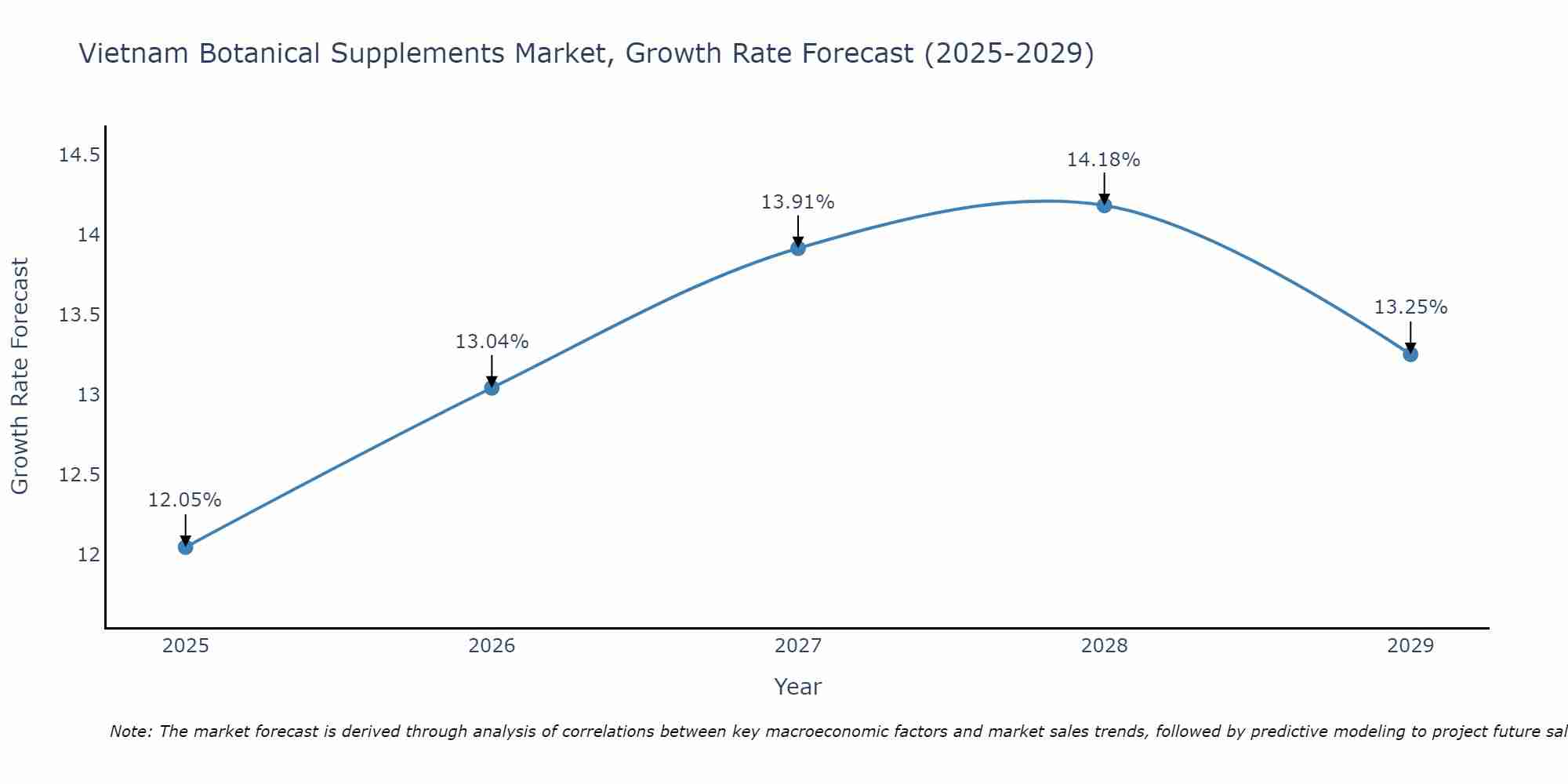
The Vietnam Botanical Supplements Market is projected to witness mixed growth rate patterns during 2025 to 2029. Starting at 12.05% in 2025, the market peaks at 14.18% in 2028, and settles at 13.25% by 2029.
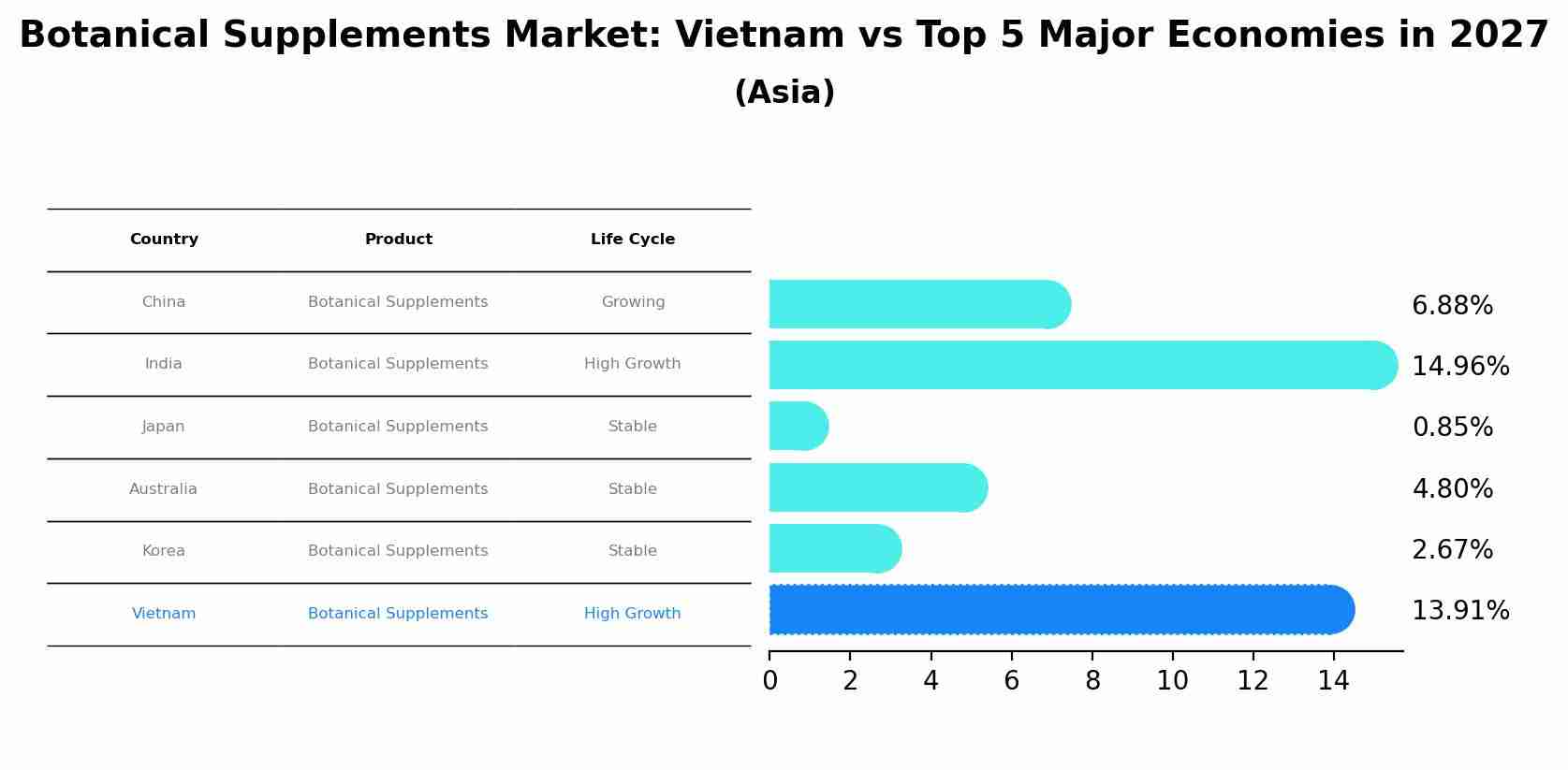
Botanical Supplements Market: Vietnam vs Top 5 Major Economies in 2027 (Asia)
Vietnam's Botanical Supplements market is anticipated to experience a high growth rate of 13.91% by 2027, reflecting trends observed in the largest economy China, followed by India, Japan, Australia and South Korea.
Vietnam Botanical Supplements Market Overiew
The Vietnam Botanical Supplements market is witnessing increased consumer interest in natural and herbal products. The growing awareness of health and wellness, coupled with a preference for organic alternatives, drives the demand for botanical supplements. Market players are focusing on product innovation, quality assurance, and sustainable sourcing to meet consumer expectations. Regulatory support and standards for herbal products play a crucial role in shaping the market. Marketing strategies emphasizing the benefits of botanical supplements contribute to the overall market growth.
Drivers of the Market
The Vietnam Botanical Supplements market is experiencing robust growth driven by an increasing focus on health and wellness among the population. Consumers are increasingly turning to natural and plant-based supplements due to their perceived health benefits. Moreover, a surge in disposable income, coupled with a growing awareness of preventive healthcare, has fueled the demand for botanical supplements. Regulatory support and the availability of a wide range of products are further propelling the market forward.
Challenges of the Market
The Vietnam Botanical Supplements market encounters challenges related to quality control, consumer trust, and regulatory compliance. Ensuring the authenticity and quality of botanical ingredients is a constant struggle, given the diversity of sources and potential adulteration issues. Building and maintaining consumer trust in the efficacy and safety of botanical supplements is essential but challenging due to misinformation and a lack of standardized regulations. Regulatory frameworks governing botanical supplements are evolving, adding complexity to market dynamics. Successfully addressing these challenges is pivotal for the sustainable growth of the Vietnam Botanical Supplements market.
COVID 19 Impact on the Market
The pandemic underscored the importance of health and wellness, influencing the Vietnam botanical supplements market. Consumers showed an increased interest in immune-boosting supplements, driving demand for botanical products. However, supply chain disruptions, including the sourcing of raw materials, impacted the production and availability of certain supplements. Changes in consumer spending patterns and economic uncertainties also influenced purchasing decisions. The industry adapted by emphasizing online sales channels and promoting products that align with health and immunity trends.
Key Players in the Market
For the Vietnam Botanical Supplements market, key players like Vietnam Pharmaceutical Corporation (Vinapharm), Ha Tay Pharmaceutical JSC, and Nam Duoc JSC play pivotal roles. These companies are known for their commitment to producing high-quality botanical supplements, contributing to the growth of the health and wellness industry in Vietnam.
Key Highlights of the Report:
- Vietnam Botanical Supplements Market Outlook
- Market Size of Vietnam Botanical Supplements Market, 2024
- Forecast of Vietnam Botanical Supplements Market, 2031
- Historical Data and Forecast of Vietnam Botanical Supplements Revenues & Volume for the Period 2021-2031
- Vietnam Botanical Supplements Market Trend Evolution
- Vietnam Botanical Supplements Market Drivers and Challenges
- Vietnam Botanical Supplements Price Trends
- Vietnam Botanical Supplements Porter's Five Forces
- Vietnam Botanical Supplements Industry Life Cycle
- Historical Data and Forecast of Vietnam Botanical Supplements Market Revenues & Volume By Source for the Period 2021-2031
- Historical Data and Forecast of Vietnam Botanical Supplements Market Revenues & Volume By Herbs for the Period 2021-2031
- Historical Data and Forecast of Vietnam Botanical Supplements Market Revenues & Volume By Leaves for the Period 2021-2031
- Historical Data and Forecast of Vietnam Botanical Supplements Market Revenues & Volume By Spices for the Period 2021-2031
- Historical Data and Forecast of Vietnam Botanical Supplements Market Revenues & Volume By Flowers for the Period 2021-2031
- Historical Data and Forecast of Vietnam Botanical Supplements Market Revenues & Volume By Others for the Period 2021-2031
- Historical Data and Forecast of Vietnam Botanical Supplements Market Revenues & Volume By Form for the Period 2021-2031
- Historical Data and Forecast of Vietnam Botanical Supplements Market Revenues & Volume By Powder for the Period 2021-2031
- Historical Data and Forecast of Vietnam Botanical Supplements Market Revenues & Volume By Liquid for the Period 2021-2031
- Historical Data and Forecast of Vietnam Botanical Supplements Market Revenues & Volume By Tablets for the Period 2021-2031
- Historical Data and Forecast of Vietnam Botanical Supplements Market Revenues & Volume By Capsules for the Period 2021-2031
- Historical Data and Forecast of Vietnam Botanical Supplements Market Revenues & Volume By Gummies for the Period 2021-2031
- Historical Data and Forecast of Vietnam Botanical Supplements Market Revenues & Volume By Others for the Period 2021-2031
- Historical Data and Forecast of Vietnam Botanical Supplements Market Revenues & Volume By Application for the Period 2021-2031
- Historical Data and Forecast of Vietnam Botanical Supplements Market Revenues & Volume By Energy & Weight Management for the Period 2021-2031
- Historical Data and Forecast of Vietnam Botanical Supplements Market Revenues & Volume By General Health for the Period 2021-2031
- Historical Data and Forecast of Vietnam Botanical Supplements Market Revenues & Volume By Bone & Joint Health for the Period 2021-2031
- Historical Data and Forecast of Vietnam Botanical Supplements Market Revenues & Volume By Gastrointestinal Health for the Period 2021-2031
- Historical Data and Forecast of Vietnam Botanical Supplements Market Revenues & Volume By Immunity for the Period 2021-2031
- Historical Data and Forecast of Vietnam Botanical Supplements Market Revenues & Volume By Cardiac Health for the Period 2021-2031
- Historical Data and Forecast of Vietnam Botanical Supplements Market Revenues & Volume By Diabetes for the Period 2021-2031
- Historical Data and Forecast of Vietnam Botanical Supplements Market Revenues & Volume By Anti-cancer for the Period 2021-2031
- Historical Data and Forecast of Vietnam Botanical Supplements Market Revenues & Volume By Distribution Channel for the Period 2021-2031
- Historical Data and Forecast of Vietnam Botanical Supplements Market Revenues & Volume By Offline for the Period 2021-2031
- Historical Data and Forecast of Vietnam Botanical Supplements Market Revenues & Volume By Online for the Period 2021-2031
- Vietnam Botanical Supplements Import Export Trade Statistics
- Market Opportunity Assessment By Source
- Market Opportunity Assessment By Form
- Market Opportunity Assessment By Application
- Market Opportunity Assessment By Distribution Channel
- Vietnam Botanical Supplements Top Companies Market Share
- Vietnam Botanical Supplements Competitive Benchmarking By Technical and Operational Parameters
- Vietnam Botanical Supplements Company Profiles
- Vietnam Botanical Supplements Key Strategic Recommendations






































