Vietnam Candied Fruit Market Summary
The vietnam candied fruit market was estimated at USD 1364 Million in 2025 and is projected to reach USD 1938 Million by 2032, growing at a CAGR of 7.7% from 2026 to 2032.
Vietnam Candied Fruit Market Year-wise Growth Rate and Key Drivers
This graph highlights how the Vietnam Candied Fruit Market has steadily grown over the past five years, supported by major growth factors.
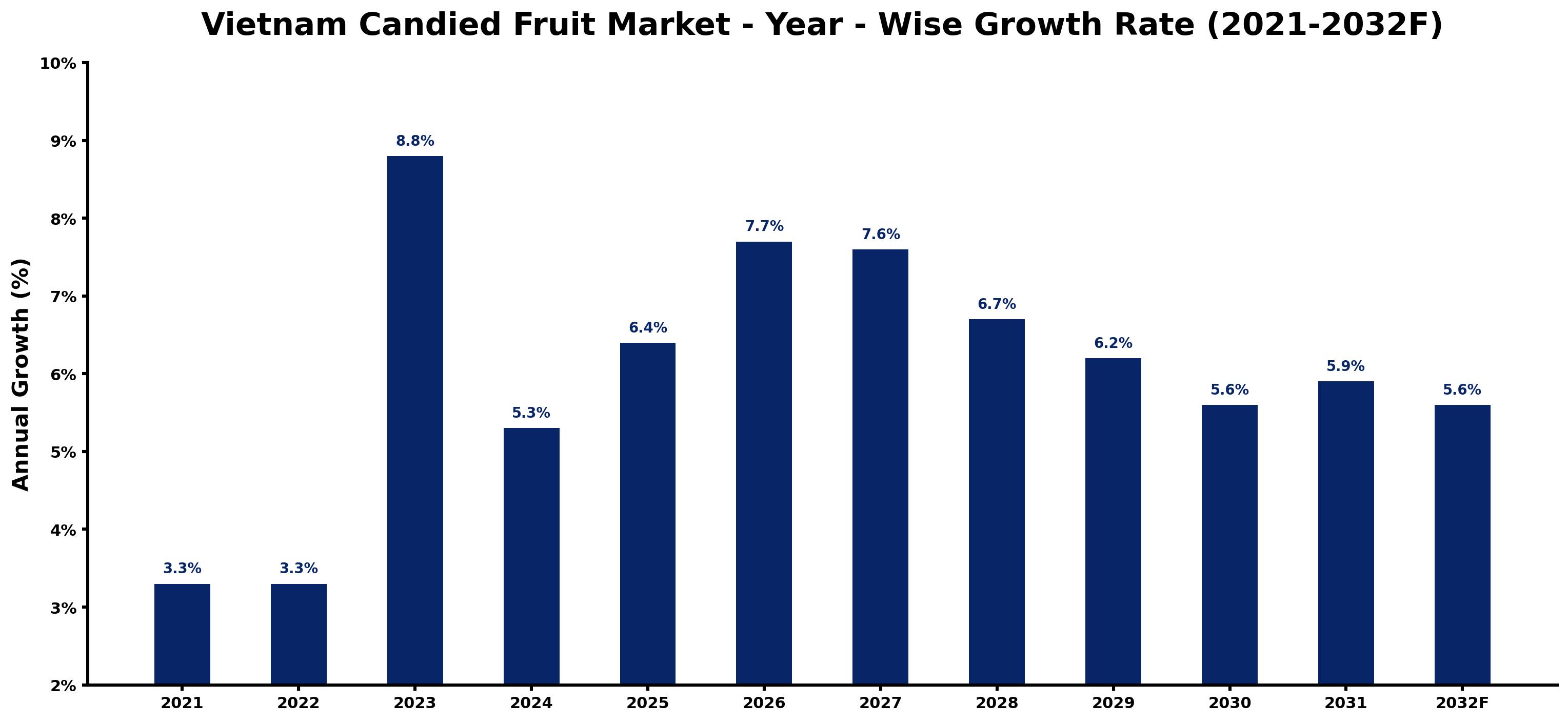
The table below presents the year wise growth rates along with the key drivers influencing the market
| Year | Growth Rate | Major Drivers |
| 2021 | 3.3% | Heightened interest in healthy snacking options enhances candied fruit's market appeal. |
| 2022 | 3.3% | Local sourcing trends lead to a surge in artisanal candied fruit production. |
| 2023 | 8.8% | E-commerce platforms provide broader access to niche candied fruit varieties for consumers. |
| 2024 | 5.3% | Cultural celebrations boost demand for traditional candied fruits in Vietnam's festive seasons. |
| 2025 | 6.4% | Sustainable farming practices gain traction, positively impacting product quality and pricing. |
| 2026 | 7.7% | Innovative packaging solutions attract environmentally conscious buyers in urban markets. |
| 2027 | 7.6% | The influx of foreign investment fosters competition among local candied fruit producers. |
| 2028 | 6.7% | Health-conscious consumers drive demand for low-sugar variants of candied fruits. |
| 2029 | 6.2% | Increased globalization opens avenues for exporting Vietnam's candied fruits to international markets. |
| 2030 | 5.6% | Social media influencers promote candied fruits, creating unique marketing opportunities. |
| 2031 | 5.9% | Emerging culinary trends inspire unique flavor combinations in the candied fruit sector. |
| 2032 | 5.6% | Advanced logistics and supply chain efficiencies reduce costs, enabling market expansion. |
Note - Market size estimations and growth projections presented in this report are based on 6Wresearch's advanced forecasting approach, validated with industry datasets as of June 2026.
Vietnam Candied Fruit Market Synopsis
The Vietnam Candied Fruit Market is projected to reach 7.7% and witness significant growth during the forecast period (2026-2032). The market has seen a remarkable transformation characterized by increasing consumer interest in indulgent confectionery options. Candied fruits, which are fruits preserved in sugar syrup, have found their way into various culinary applications, from sugary snacks to elaborate desserts, thereby enhancing their appeal across different consumer demographics.
Vietnam Candied Fruit Market Growth Drivers
Several factors are propelling the Vietnam candied fruit market towards expansion. Notably:
- The tradition of gifting during festivals and special occasions has fostered a cultural preference for candied fruits, making them a popular choice among consumers for sharing greetings and well-wishes.
- Rising disposable incomes have allowed Vietnamese consumers to spend more on premium food products, including high-quality candied fruits, reflecting a shift towards indulgent consumption.
- Changing consumer preferences towards natural and healthier confectionery options have further fueled demand, as candied fruits are perceived as relatively wholesome treats compared to synthetic sweets.
- The expanding middle class in Vietnam is increasingly inclined to explore gourmet food items, which has resulted in greater interest in artisanal and premium candied fruit varieties.
- Promotional activities and marketing strategies by manufacturers have enhanced product visibility, thus stimulating consumer interest and purchase intentions across various demographic groups.
Vietnam Candied Fruit Market Challenges and Restraints
Despite the optimistic growth trajectory, the Vietnam candied fruit market faces significant challenges.
- The confectionery sector is highly competitive, with numerous alternatives available, compelling manufacturers to distinguish their products through unique offerings and innovative approaches.
- Inconsistent quality of raw materials, such as fruits and sugar, can lead to fluctuations in production costs, impacting overall profitability and pricing strategies.
- Consumer health trends advocating for reduced sugar intake may hamper the consumption of candied fruits, leading companies to explore sugar-free alternatives or develop new product lines.
- Supply chain disruptions, particularly those stemming from agricultural practices and climate change, can adversely affect the availability of key ingredients necessary for production.
- Market saturation in urban areas may pose hurdles for growth, necessitating businesses to explore new geographic regions or niche markets to maintain expansion.
Vietnam Candied Fruit Market COVID-19 Impact
The onset of the Covid-19 pandemic in 2025 initiated several challenges for the Vietnam candied fruit market. Lockdown measures disrupted production and distribution channels, while shifting consumer behaviors altered purchasing patterns.
As restrictions eased, there was a notable resurgence in demand for indulgent treats, including candied fruits, as consumers sought comfort during trying times. Gifting practices continued, with candied fruits featuring prominently in celebrations, thereby maintaining their status as cherished treats even amidst economic uncertainty. Additionally, the recovery of hospitality and tourism sectors contributed positively to market dynamics, with candied fruits being marketed as unique souvenirs and gifts for tourists.
Vietnam Candied Fruit Market Government Investment and Initiatives
The Vietnamese government has recognized the potential of the candied fruit sector and is taking initiatives to bolster its growth through various policies and programs.
- Investment in agricultural infrastructure aims to enhance the quality and yield of raw materials essential for candied fruit production, thus ensuring a stable supply chain.
- Public spending on food safety and quality assurance programs is intended to boost consumer confidence in local products, including candied fruits.
- Government incentives aimed at supporting small and medium enterprises (SMEs) in the confectionery sector are fostering innovation and competitiveness within the market.
- Collaboration between public institutions and private sectors is encouraged to develop sustainable practices in the production and distribution of candied fruits.
- Promotional campaigns targeting domestic and international markets aim to position Vietnam as a leading exporter of high-quality candied fruit products.
Vietnam Candied Fruit Market Latest Developments (May 2025 - June 2026)
The period from May 2025 to June 2026 has been marked by several noteworthy developments in the Vietnam candied fruit market. Manufacturers have increasingly focused on enhancing product offerings with innovative flavors and improved packaging solutions to attract a broader consumer base.
There has also been a rising trend toward the incorporation of local fruits into the candied fruit product line, promoting regional varieties and heritage flavors. This strategy not only appeals to consumer preferences for unique and authentic products but also supports local farmers and economies. Furthermore, regulatory frameworks governing food safety standards have tightened, prompting manufacturers to consistently improve quality control measures and transparency in their production processes.
Vietnam Candied Fruit Market - Key Attractiveness of the Report
- 10 Years of Market Numbers
- Historical Data Starting from 2022 to 2025
- Base Year: 2025
- Forecast Data until 2032
- Key Performance Indicators Impacting the Market
- Major Upcoming Developments and Projects
Key Highlights of the Report:
- Vietnam Candied Fruit Market Outlook
- Market Size of Vietnam Candied Fruit Market, 2025
- Forecast of Vietnam Candied Fruit Market, 2032
- Historical Data and Forecast of Vietnam Candied Fruit Revenues & Volume for the Period 2022-2032F
- Vietnam Candied Fruit Market Trend Evolution
- Vietnam Candied Fruit Market Drivers and Challenges
- Vietnam Candied Fruit Price Trends
- Vietnam Candied Fruit Porter's Five Forces
- Vietnam Candied Fruit Industry Life Cycle
- Historical Data and Forecast of Vietnam Candied Fruit Market Revenues & Volume By Type for the Period 2022-2032F
- Historical Data and Forecast of Vietnam Candied Fruit Market Revenues & Volume By Hard Type for the Period 2022-2032F
- Historical Data and Forecast of Vietnam Candied Fruit Market Revenues & Volume By Chewing Type for the Period 2022-2032F
- Historical Data and Forecast of Vietnam Candied Fruit Market Revenues & Volume By Distribution Channel for the Period 2022-2032F
- Historical Data and Forecast of Vietnam Candied Fruit Market Revenues & Volume By Convenience Stores for the Period 2022-2032F
- Historical Data and Forecast of Vietnam Candied Fruit Market Revenues & Volume By Traditional Grocery Stores for the Period 2022-2032F
- Historical Data and Forecast of Vietnam Candied Fruit Market Revenues & Volume By Supermarkets/Hypermarkets for the Period 2022-2032F
- Historical Data and Forecast of Vietnam Candied Fruit Market Revenues & Volume By Online Sales Channel for the Period 2022-2032F
- Historical Data and Forecast of Vietnam Candied Fruit Market Revenues & Volume By Others for the Period 2022-2032F
- Vietnam Candied Fruit Import Export Trade Statistics
- Market Opportunity Assessment By Type
- Market Opportunity Assessment By Distribution Channel
- Vietnam Candied Fruit Top Companies Market Share
- Vietnam Candied Fruit Competitive Benchmarking By Technical and Operational Parameters
- Vietnam Candied Fruit Company Profiles
- Vietnam Candied Fruit Key Strategic Recommendations






































