Vietnam Container Security Market Size & Growth Rate (2026-2032)
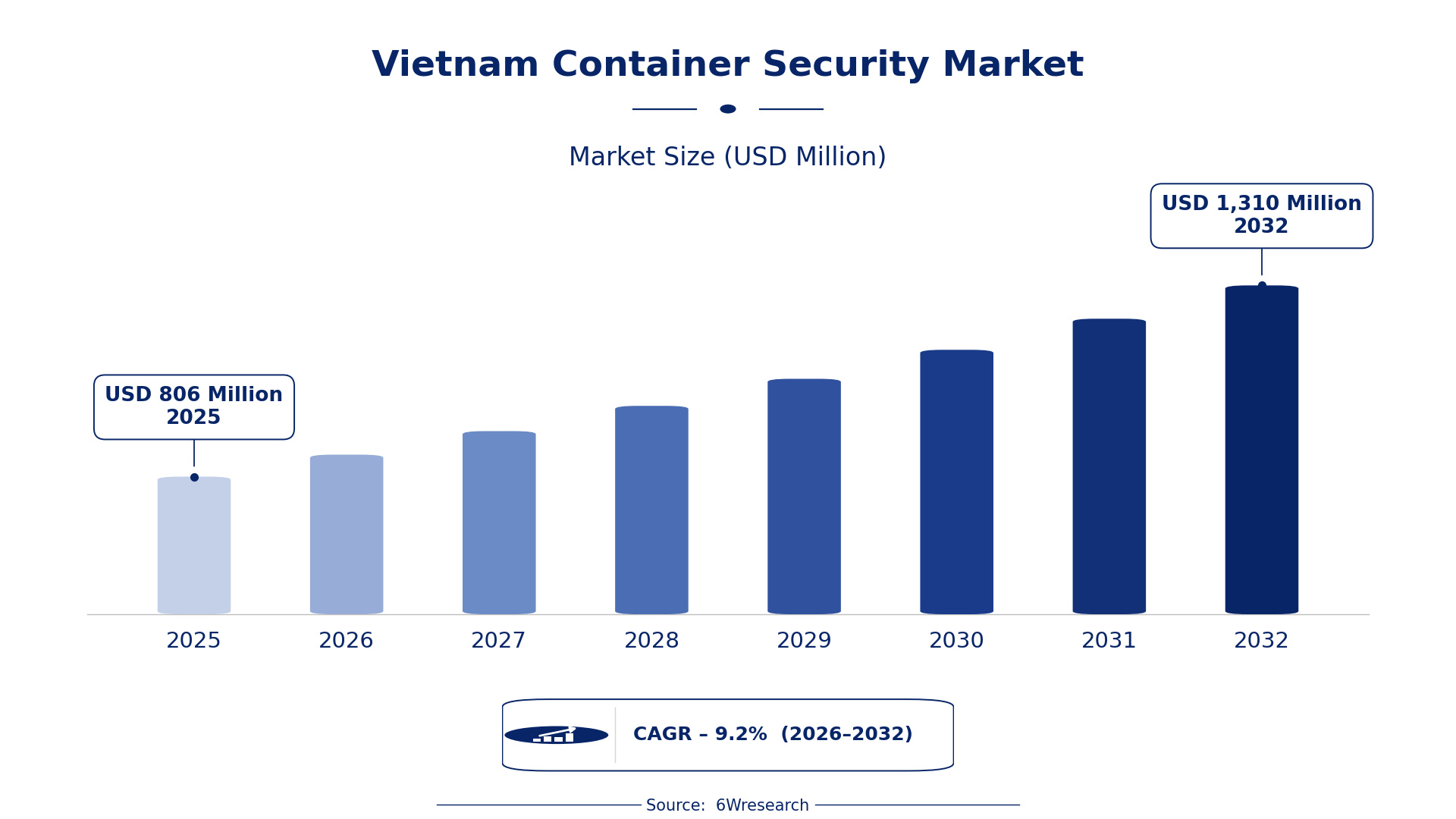
The Vietnam Container Security Market was estimated at USD 806 Million in 2025 and is projected to reach USD 1310 Million by 2032, growing at a CAGR of 9.2% from 2026 to 2032.
Vietnam Container Security Market Synopsis
Vietnam’s Container Security market is currently on an upswing, fueled by the rapid adoption of containerization and microservices architectures. As organizations transition to cloud-native strategies, they are realizing the critical need for comprehensive security measures tailored to containerized environments.
Looking ahead, the market is set to evolve alongside the growing complexities of cyber threats and the demand for compliance with regulatory standards. The integration of security practices into the DevOps pipeline will increasingly be a focal point for organizations aiming to bolster their security posture.
Vietnam Container Security Market Year-wise Growth Rate and Key Drivers
This graph illustrates the annual growth rates of the Vietnam Container Security Market from 2021 to 2032, highlighting a steady upward trajectory and projected expansion over the forecast period.
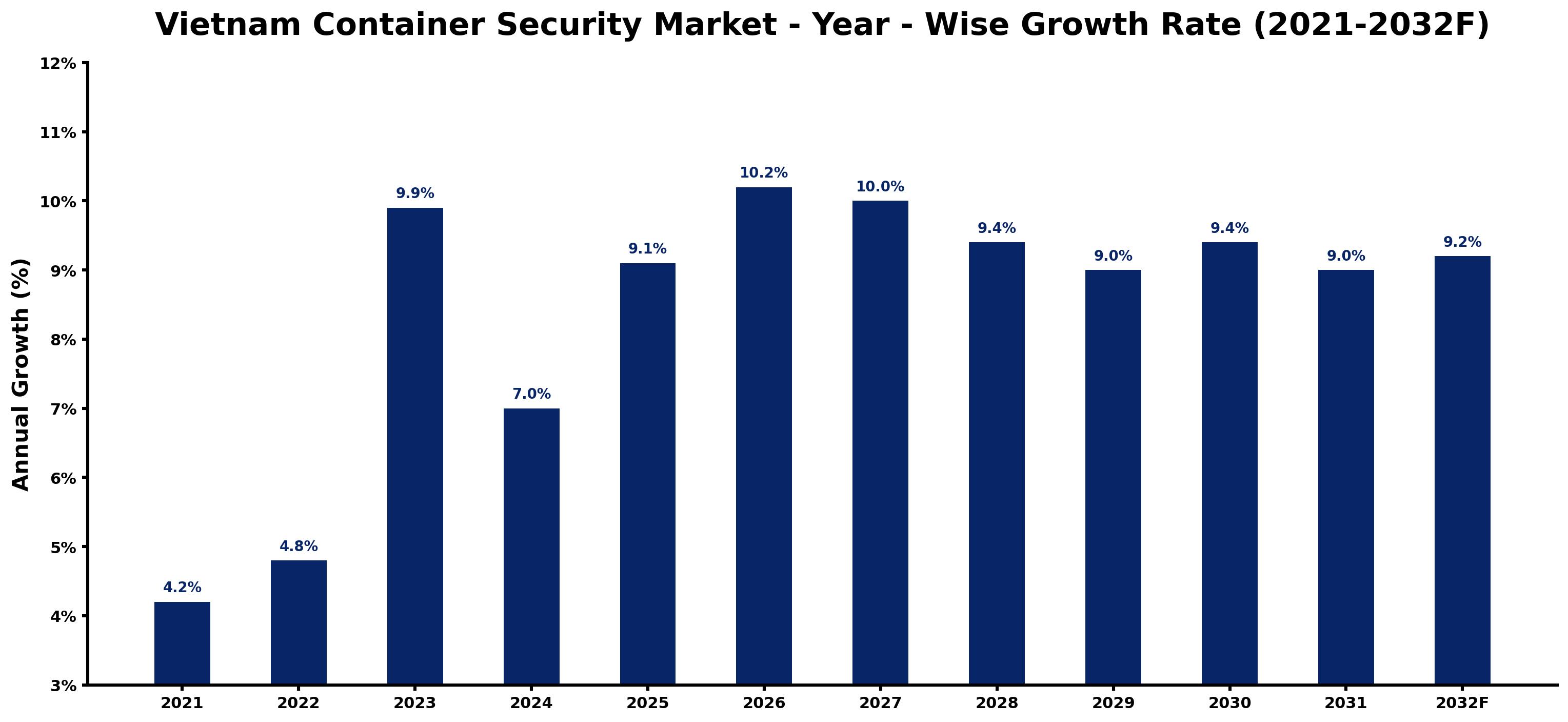
The table below presents the year‑wise growth rates along with the key drivers influencing the market
| Year | Growth Rate | Major Drivers |
| 2021 | 4.2% | Vietnam's Logistics Development Plan enhances container security standards. |
| 2022 | 4.8% | Rising exports drive demand for secure container transport. |
| 2023 | 9.9% | Implementation of national cybersecurity law boosts container security needs. |
| 2024 | 7.0% | Increased foreign investments improve security infrastructure in ports. |
| 2025 | 9.1% | Growth in e-commerce necessitates better container security solutions. |
| 2026 | 10.2% | Government push for improved supply chain resilience mandates security. |
| 2027 | 10.0% | Technological advancements in tracking systems enhance security measures. |
| 2028 | 9.4% | Emerging regulations on cargo theft prevention drive market growth. |
| 2029 | 9.0% | International partnerships promote advanced security technologies for containers. |
| 2030 | 9.4% | Local manufacturers innovate in smart container security systems. |
| 2031 | 9.0% | Increased piracy threats in South China Sea prompt upgrades. |
| 2032 | 9.2% | Rising insurance premiums for cargo drive security investments. |
Note: Market size estimations and growth projections presented in this report are based on 6Wresearch's proprietary forecasting methodology, utilizing the latest available industry data, government publications, and primary research inputs.
Vietnam Container Security Market Key Takeaways
Below are some of the specific key takeaways from the market, including:
- The market is driven by the rising adoption of containerization and cloud-native technologies.
- Regulatory compliance is pushing organizations to invest in security solutions for containerized applications.
- There is a pronounced skills gap within development and operations teams regarding container security.
- Integration of security into CI/CD processes remains a significant challenge.
- Increasing digital transformation initiatives are rapidly enhancing the demand for container security measures.
Evaluation of Restraints in Vietnam Container Security Market
Despite its growth trajectory, the Vietnam Container Security market faces substantial challenges. The complexity of securing containerized environments requires a departure from traditional security models, which can be daunting for many organizations. on top of that, the lack of awareness and requisite skills among development teams can lead to vulnerabilities. Integrating security practices into existing development workflows is not just a technical challenge; it also demands a cultural shift that many businesses are still grappling with. Additionally, compliance with data protection laws poses ongoing hurdles for organizations operating within a strict regulatory framework.
Vietnam Container Security Market Trends
Several trends are currently shaping the Vietnam Container Security market. The adoption of microservices and orchestration tools like Kubernetes is escalating the demand for specialized security solutions. on top of that, the focus on DevSecOps practices is growing, as organizations prioritize security within the application development lifecycle. Awareness campaigns and training programs aimed at closing the skills gap are emerging as critical components of many organizations’ strategies. Enhanced collaboration between security and development teams is becoming a necessity as the market matures.
Vietnam Container Security Market Opportunities
The opportunities within the Vietnam Container Security market are vast. Organizations seeking to implement robust security measures for their containerized applications will drive demand for innovative solutions. This includes products that offer comprehensive vulnerability management and real-time threat detection. on top of that, as regulatory frameworks tighten, companies focusing on compliance-centric solutions are likely to find ample room for growth. The intersection of emerging technologies, such as AI and machine learning, with container security will create additional avenues for market players.
Government Initiatives in the Vietnam Container Security Market
The Vietnamese government is actively shaping the container security market through various initiatives that emphasize regulatory compliance and cyber resilience. Public-sector priorities are increasingly focused on securing critical digital infrastructure, reflecting the growing concern over cyber threats. These initiatives not only help foster a secure environment for businesses but also promote investment in container security solutions.
- A national cybersecurity strategy launched in early 2025 aims to enhance the country's cyber defense capabilities.
- Ongoing workshops and training programs for IT professionals are designed to elevate skills in container security.
- A public-private collaboration initiative is currently underway, focused on developing standardized security protocols for containerized applications.
- Upcoming regulatory guidelines expected in late 2026 will mandate enhanced security measures for organizations using container technologies.
Future Insights of the Vietnam Container Security Market
From 2026 to 2032, the Vietnam Container Security market is anticipated to continue its upward trajectory, bolstered by growing digital transformation efforts and escalating cyber threats. As organizations recognize the importance of security throughout the container lifecycle, investments in innovative solutions will increase. The alignment of security practices with DevOps methodologies will also gain prominence, enhancing the security of applications from inception to deployment. As regulations evolve, companies that prioritize compliance and security will be well-positioned for success.
Vietnam Container Security Market Latest Developments
In the past year, activity within the Vietnam Container Security market has intensified as organizations adapt to new cyber threats. A marked increase in demand for integrated security solutions has been observed, reflecting a growing recognition of the need for proactive measures. This shift is evident as organizations work to enhance their defenses against increasingly sophisticated attacks.
- A technology vendor initiated a rollout of an advanced container security solution in Q2 2025, aimed at improving real-time threat detection capabilities.
- A leading regional operator partnered with educational institutions in early 2025 to provide container security training programs for IT professionals.
- Currently ongoing projects include the integration of AI-driven analytics into existing container security frameworks to bolster compliance monitoring.
- By mid-2026, a major upgrade to container security protocols is anticipated, enhancing the overall security infrastructure of participating organizations.
Vietnam Container Security Market - Key Attractiveness of the Report
- 10 Years of Market Numbers
- Historical Data Starting from 2022 to 2025
- Base Year: 2025
- Forecast Data until 2032
- Key Performance Indicators Impacting the Market
- Major Upcoming Developments and Projects
Key Highlights of the Report:
- Vietnam Container Security Market Outlook
- Market Size of Vietnam Container Security Market, 2025
- Forecast of Vietnam Container Security Market, 2032
- Historical Data and Forecast of Vietnam Container Security Revenues & Volume for the Period 2022-2032F
- Vietnam Container Security Market Trend Evolution
- Vietnam Container Security Market Drivers and Challenges
- Vietnam Container Security Price Trends
- Vietnam Container Security Porter's Five Forces
- Vietnam Container Security Industry Life Cycle
- Historical Data and Forecast of Vietnam Container Security Market Revenues & Volume By Component for the Period 2022-2032F
- Historical Data and Forecast of Vietnam Container Security Market Revenues & Volume By Container Security Products for the Period 2022-2032F
- Historical Data and Forecast of Vietnam Container Security Market Revenues & Volume By Services (Professional, Managed) for the Period 2022-2032F
- Historical Data and Forecast of Vietnam Container Security Market Revenues & Volume By Deployment Type for the Period 2022-2032F
- Historical Data and Forecast of Vietnam Container Security Market Revenues & Volume By Cloud for the Period 2022-2032F
- Historical Data and Forecast of Vietnam Container Security Market Revenues & Volume By On-premises for the Period 2022-2032F
- Historical Data and Forecast of Vietnam Container Security Market Revenues & Volume By Vertical for the Period 2022-2032F
- Historical Data and Forecast of Vietnam Container Security Market Revenues & Volume By BFSI for the Period 2022-2032F
- Historical Data and Forecast of Vietnam Container Security Market Revenues & Volume By Retail for the Period 2022-2032F
- Historical Data and Forecast of Vietnam Container Security Market Revenues & Volume By Government for the Period 2022-2032F
- Historical Data and Forecast of Vietnam Container Security Market Revenues & Volume By Healthcare for the Period 2022-2032F
- Vietnam Container Security Import Export Trade Statistics
- Market Opportunity Assessment By Component
- Market Opportunity Assessment By Deployment Type
- Market Opportunity Assessment By Vertical
- Vietnam Container Security Top Companies Market Share
- Vietnam Container Security Competitive Benchmarking By Technical and Operational Parameters
- Vietnam Container Security Company Profiles
- Vietnam Container Security Key Strategic Recommendations






































