Vietnam Crystal Lighting Market Summary
The vietnam crystal lighting market was estimated at USD 727 Million in 2025 and is projected to reach USD 1032 Million by 2032, growing at a CAGR of 7.8% from 2026 to 2032.
Vietnam Crystal Lighting Market Year-wise Growth Rate and Key Drivers
This graph highlights how the Vietnam Crystal Lighting Market has steadily grown over the past five years, supported by major growth factors.
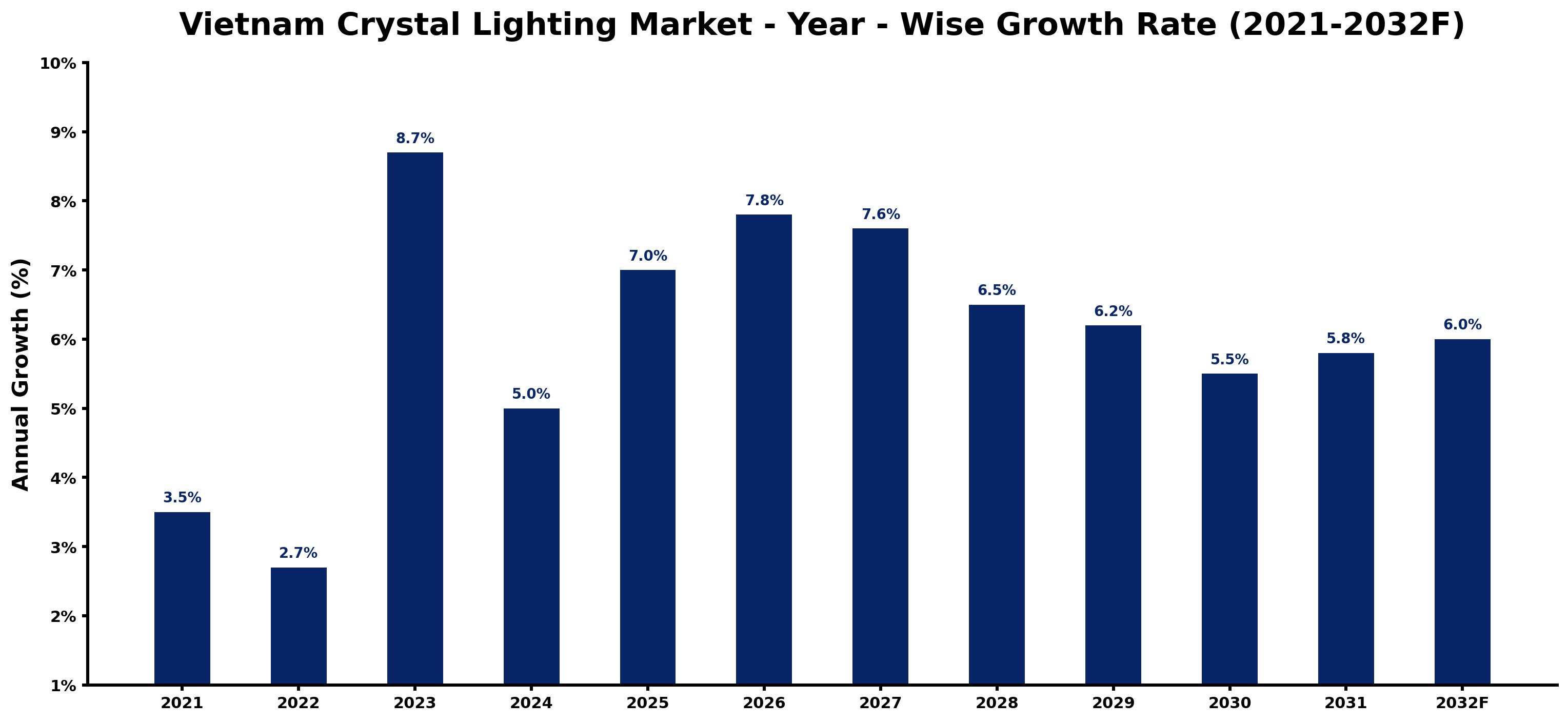
The table below presents the year wise growth rates along with the key drivers influencing the market
| Year | Growth Rate | Major Drivers |
| 2021 | 3.5% | Post-lockdown retail projects highlight the need for innovative lighting solutions. |
| 2022 | 2.7% | Urbanization escalates demand for aesthetic yet energy-efficient lighting installations. |
| 2023 | 8.7% | Flux in manufacturing relocation fosters local production of crystal lighting fixtures. |
| 2024 | 5.0% | Rural electrification initiatives drive market entry for affordable lighting options. |
| 2025 | 7.0% | Emerging tech trends inspire unique designs, appealing to younger demographics. |
| 2026 | 7.8% | Export opportunities expand as Vietnam's manufacturing capabilities gain international recognition. |
| 2027 | 7.6% | Sustainability concerns push consumers towards eco-friendly crystal lighting alternatives. |
| 2028 | 6.5% | Luxury home market expansion catalyzes demand for high-end crystal lighting designs. |
| 2029 | 6.2% | E-commerce growth leads to increased accessibility for consumers seeking unique products. |
| 2030 | 5.5% | Architectural innovations emphasize lighting design as a key aesthetic element. |
| 2031 | 5.8% | Smart home technology integration creates new avenues for interactive lighting solutions. |
| 2032 | 6.0% | Cultural appreciation for artistry in lighting enhances market opportunities significantly. |
Note - Market size estimations and growth projections presented in this report are based on 6Wresearch's advanced forecasting approach, validated with industry datasets as of June 2026.
Vietnam Crystal Lighting Market Synopsis
The Vietnam Crystal Lighting Market is projected to reach 7.8% and witness significant growth during the forecast period (2026-2032). This dynamic market is on a trajectory of rapid expansion, driven by several key factors. The urbanization wave sweeping across Vietnam is one of the primary catalysts, as more urban residents seek sophisticated lighting solutions for their homes and businesses. Additionally, rising disposable incomes are empowering consumers to invest in higher quality lighting products, particularly crystal lighting that offers elegance and energy efficiency. The construction sector's resurgence further contributes to this trend, creating increased demand for luxurious lighting options that enhance interior spaces.
Vietnam Crystal Lighting Market Growth Drivers
A multitude of factors are propelling the Vietnam Crystal Lighting Market forward. Firstly, the rapid pace of urbanization means that more consumers are gravitating towards stylish home décor, leading to a heightened preference for crystal lighting. Secondly, as disposable income increases, individuals are more willing to make purchases that enhance their living environments. Thirdly, there is an escalating focus on energy-efficient solutions, pushing manufacturers to innovate crystal lighting designs that consume less power while delivering superior illumination. Furthermore, the growth in construction projects across the nation is augmenting demand for these decorative lighting solutions in both residential and commercial spaces. Lastly, advancements in technology, particularly regarding IoT and smart home integration, are enhancing the appeal of crystal lighting products, making them a preferred choice among tech-savvy consumers.
Vietnam Crystal Lighting Market Challenges and Restraints
Despite the promising growth outlook, the Vietnam Crystal Lighting Market faces a set of challenges. One of the foremost issues is the high cost associated with crystal lighting products, which may deter budget-conscious consumers, especially in a developing economy. Additionally, strong competition from alternative lighting options, such as LED lighting, poses a significant challenge by providing consumers with more affordable and energy-efficient choices. Issues related to supply chain disruptions can also affect the availability of raw materials necessary for crystal lights, leading to potential delays in production and distribution. Furthermore, a lack of awareness regarding the benefits and technological advancements in crystal lighting may hinder market penetration. Lastly, fluctuating economic conditions may impact consumer purchasing power, thus affecting overall market growth.
Vietnam Crystal Lighting Market Trends and Opportunities
Several emerging trends are shaping the Vietnam Crystal Lighting Market. The integration of smart technology into lighting systems is a significant trend, as consumers increasingly opt for products that can be controlled via smartphones or home automation systems. Additionally, there is a shift towards sustainable and eco-friendly products, with manufacturers focusing on creating energy-efficient crystal lighting options that appeal to environmentally conscious consumers. The rise of e-commerce platforms has also transformed the retail landscape, providing an opportunity for crystal lighting products to reach a broader audience beyond traditional retail outlets. Moreover, customized lighting solutions are gaining traction, as consumers desire unique and personalized décor that reflects their individual style. Lastly, collaborations between designers and manufacturers are leading to innovative product designs that enhance the aesthetic and functional appeal of crystal lighting.
Vietnam Crystal Lighting Market Government Investment and Initiatives
The Vietnamese government's commitment to infrastructure development and urbanization is fostering a conducive environment for the growth of the crystal lighting market. Through various public initiatives, the government is promoting energy-efficient lighting solutions, offering tax exemptions and subsidies for manufacturers that produce eco-friendly products. These policies encourage investment in the lighting sector, facilitating innovation and the introduction of new products. Furthermore, the government's focus on smart city developments is likely to spur demand for advanced lighting solutions, including crystal lighting integrated with IoT technology, thus paving the way for future market growth. Public spending on urban infrastructure and housing projects is also expected to increase the demand for decorative lighting solutions, making it a vital area for investment.
Vietnam Crystal Lighting Market Latest Developments (May 2025 - June 2026)
In the period from May 2025 to June 2026, several noteworthy developments have occurred in the Vietnam Crystal Lighting Market. Industry players have increasingly focused on integrating smart technologies with traditional crystal lights, enhancing consumer interaction and control through mobile applications. Moreover, collaborations among local and international brands have led to innovative product launches that combine aesthetic appeal with functionality. Research and development activities have intensified, focusing on sustainable practices, including the use of recyclable materials in crystal lighting manufacturing. Additionally, advancements in LED technologies have prompted the introduction of hybrid crystal lighting products that offer both beauty and energy efficiency. These developments signify a trend towards more personalized and technologically advanced lighting solutions in the market.
Vietnam Crystal Lighting Market - Key Attractiveness of the Report
- 10 Years of Market Numbers
- Historical Data Starting from 2022 to 2025
- Base Year: 2025
- Forecast Data until 2032
- Key Performance Indicators Impacting the Market
- Major Upcoming Developments and Projects
Key Highlights of the Report:
- Vietnam Crystal Lighting Market Outlook
- Market Size of Vietnam Crystal Lighting Market, 2025
- Forecast of Vietnam Crystal Lighting Market, 2032F
- Historical Data and Forecast of Vietnam Crystal Lighting Revenues & Volume for the Period 2022-2032F
- Vietnam Crystal Lighting Market Trend Evolution
- Vietnam Crystal Lighting Market Drivers and Challenges
- Vietnam Crystal Lighting Price Trends
- Vietnam Crystal Lighting Porter's Five Forces
- Vietnam Crystal Lighting Industry Life Cycle
- Historical Data and Forecast of Vietnam Crystal Lighting Market Revenues & Volume By Product Type for the Period 2022-2032F
- Historical Data and Forecast of Vietnam Crystal Lighting Market Revenues & Volume By Ceiling Crystal Lights for the Period 2022-2032F
- Historical Data and Forecast of Vietnam Crystal Lighting Market Revenues & Volume By Crystal Chandeliers for the Period 2022-2032F
- Historical Data and Forecast of Vietnam Crystal Lighting Market Revenues & Volume By Others for the Period 2022-2032F
- Historical Data and Forecast of Vietnam Crystal Lighting Market Revenues & Volume By Applications for the Period 2022-2032F
- Historical Data and Forecast of Vietnam Crystal Lighting Market Revenues & Volume By Commercial for the Period 2022-2032F
- Historical Data and Forecast of Vietnam Crystal Lighting Market Revenues & Volume By Designer for the Period 2022-2032F
- Historical Data and Forecast of Vietnam Crystal Lighting Market Revenues & Volume By Superior Residential for the Period 2022-2032F
- Vietnam Crystal Lighting Import Export Trade Statistics
- Market Opportunity Assessment By Product Type
- Market Opportunity Assessment By Applications
- Vietnam Crystal Lighting Top Companies Market Share
- Vietnam Crystal Lighting Competitive Benchmarking By Technical and Operational Parameters
- Vietnam Crystal Lighting Company Profiles
- Vietnam Crystal Lighting Key Strategic Recommendations






































