Vietnam Delicatessen Meats Market Summary
The vietnam delicatessen meats market was estimated at USD 425 Million in 2025 and is projected to reach USD 600 Million by 2032, growing at a CAGR of 7.9% from 2026 to 2032.
Vietnam Delicatessen Meats Market Year-wise Growth Rate and Key Drivers
This graph highlights how the Vietnam Delicatessen Meats Market has steadily grown over the past five years, supported by major growth factors.
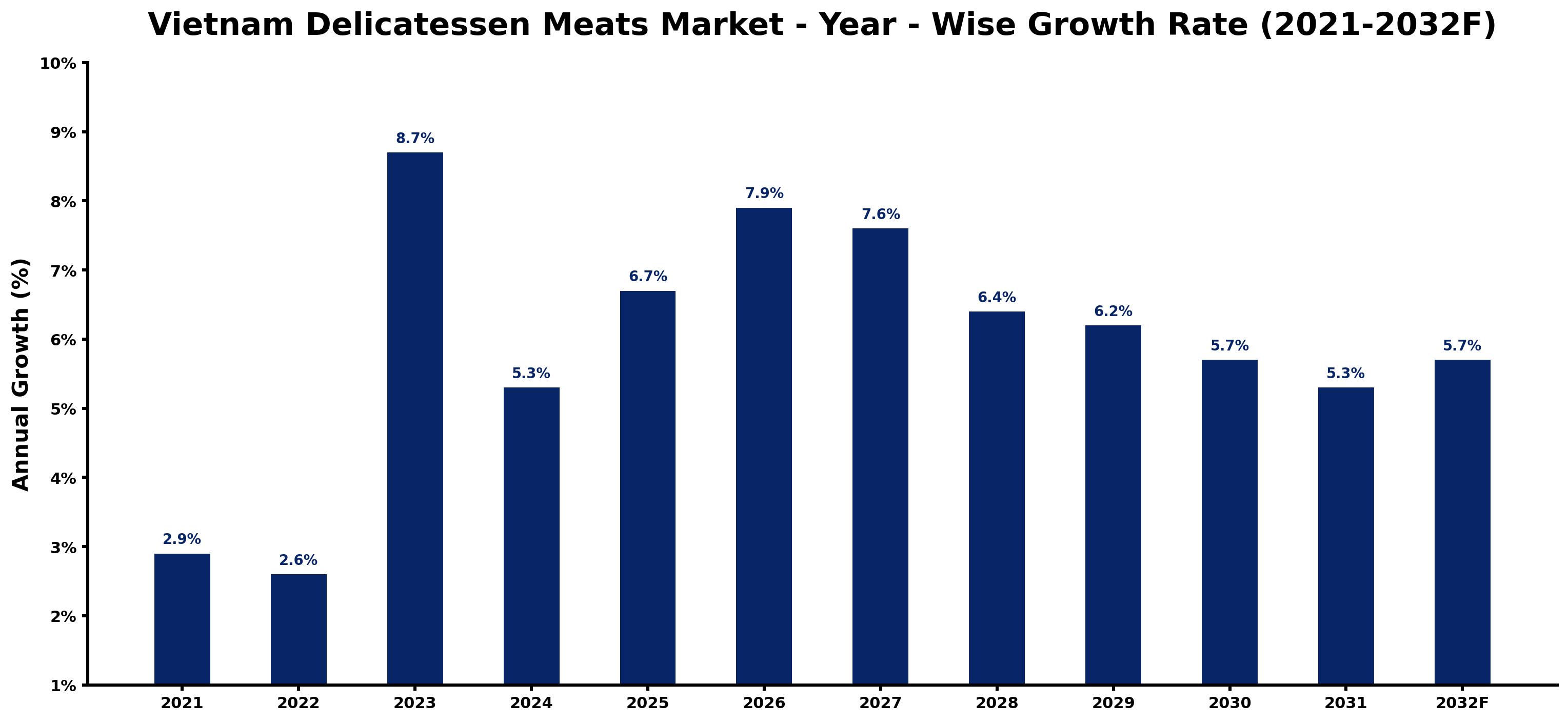
The table below presents the year wise growth rates along with the key drivers influencing the market
| Year | Growth Rate | Major Drivers |
| 2021 | 2.9% | Post-lockdown retail projects rekindled consumer interest in premium delicatessen meats. |
| 2022 | 2.6% | Vietnam's urbanization trends significantly boosted demand for convenience food options. |
| 2023 | 8.7% | Expansion of online grocery platforms helped streamline meat distribution channels effectively. |
| 2024 | 5.3% | Rural development initiatives increased access to delicatessen meats across diverse regions. |
| 2025 | 6.7% | Local producers adapted to international quality standards, enhancing market competitiveness significantly. |
| 2026 | 7.9% | Emerging culinary trends saw increased incorporation of delicatessen meats in traditional dishes. |
| 2027 | 7.6% | Health-conscious consumers sought out premium, low-fat delicatessen options with natural preservatives. |
| 2028 | 6.4% | Advent of artisanal butchers created niche markets within urban centers, attracting food enthusiasts. |
| 2029 | 6.2% | Sustainability efforts among brands attracted environmentally aware consumers seeking ethical options. |
| 2030 | 5.7% | International trade agreements facilitated import of diverse delicatessen meats, enriching local offerings. |
| 2031 | 5.3% | Expanding dining experiences drove growth in gourmet meat boards and charcuterie selections. |
| 2032 | 5.7% | Innovative marketing strategies leveraged social media to engage younger consumer demographics effectively. |
Note - Market size estimations and growth projections presented in this report are based on 6Wresearch's advanced forecasting approach, validated with industry datasets as of June 2026.
Vietnam Delicatessen Meats Market Synopsis
The Vietnam Delicatessen Meats Market is projected to reach 7.9% and witness significant growth during the forecast period (2026-2032). Delicatessen meats, encompassing premium cured and processed varieties such as ham, salami, sausages, and various cold cuts, are gaining increasing popularity among Vietnamese consumers. This growing preference is driven by several economic and sociocultural factors, including an increase in disposable income, urbanization, and the rising interest in gourmet food products influenced by international culinary trends.
Vietnam Delicatessen Meats Market Growth Drivers
The Vietnam delicatessen meats market is influenced by various drivers that contribute to its expansion:
- Rising disposable income levels among Vietnamese consumers have led to a heightened demand for premium food products, including delicatessen meats. Consumers are willing to invest in higher-quality food items, particularly in urban areas where gourmet offerings are becoming more accessible.
- Globalization plays a significant role, as the infusion of Western cultural influences has shifted culinary preferences in Vietnam. There is a growing appreciation for international flavors, particularly European-style deli meats, which enhances the attractiveness of delicatessen offerings.
- Urbanization is transforming consumer lifestyles, prompting a demand for convenient food solutions. Ready-to-eat delicatessen meats align perfectly with the needs of busy urban dwellers looking for quick yet indulgent meal options.
- The rapid development of modern retail channels, such as supermarkets and hypermarkets, has improved the accessibility of delicatessen meats. These venues not only provide a variety of options but also enhance product visibility.
- The expanding foodservice sector, including restaurants, hotels, and cafes, is driving demand for premium meats to cater to consumers seeking elevated dining experiences, further solidifying the position of delicatessen meats in the market.
Vietnam Delicatessen Meats Market Challenges and Restraints
Despite the positive outlook for the Vietnam delicatessen meats market, several challenges could impact growth:
- Strict food safety and hygiene regulations are crucial for maintaining quality standards in delicatessen meats. Ensuring product safety, especially for imported items, is vital for cultivating consumer trust.
- The cost of delicatessen meats is generally higher than that of conventional meat products, which may deter price-sensitive consumers from making purchases. This pricing dynamic requires effective marketing strategies to convey the value of gourmet offerings.
- Consumer education on the nutritional benefits and unique qualities of delicatessen meats is essential to enhance market acceptance. Many consumers may not be fully aware of the characteristics that differentiate premium products from standard meat options.
- Potential supply chain disruptions can pose challenges for the distribution of delicatessen meats, particularly for imported varieties, leading to fluctuations in availability and pricing.
- Competition from alternative protein sources and the increasing popularity of plant-based diets may further constrain market growth, as consumers explore a broader range of dietary options.
Vietnam Delicatessen Meats Market COVID-19 Impact
The Covid-19 pandemic significantly affected various sectors, including the Vietnam delicatessen meats market. Initially, the hospitality and foodservice sectors experienced substantial disruptions due to lockdowns and movement restrictions, leading to a decline in demand from restaurants and hotels. However, as restrictions eased, the retail segment experienced a marked increase in demand for packaged and ready-to-eat delicatessen meats. With consumers inclined towards home cooking and seeking convenient meal solutions, sales through supermarkets and online platforms surged, reflecting a shift in consumer purchasing patterns.
Vietnam Delicatessen Meats Market Government Investment and Initiatives
The Vietnamese government has been proactive in fostering the growth of the delicatessen meats market through various investment initiatives and policy frameworks. Efforts to enhance food safety regulations and implement quality control measures are critical for ensuring product integrity. Additionally, public spending aimed at improving food processing infrastructure supports the development of the market. The government also encourages the importation of high-quality ingredients, which can enhance local delicatessen offerings. Furthermore, trade agreements with international partners are being explored to promote culinary exchange and diversification of available products. These initiatives aim to create a robust framework for cultivating consumer trust and enhancing market potential.
Vietnam Delicatessen Meats Market Latest Developments (May 2025 - June 2026)
Recent developments in the Vietnam delicatessen meats market have showcased a trend toward increased diversification in product offerings and improved distribution capabilities. The market is witnessing a rise in innovative products that cater to evolving consumer preferences, particularly those favoring unique flavors and health-conscious options. Retail channels are adapting to this dynamic environment by enhancing their online presence and offering more convenient shopping solutions. Additionally, partnerships within the foodservice sector have emerged to deliver premium delicatessen meats to consumers, exemplifying a collaborative approach to meeting market demand. Overall, these developments indicate a vibrant and responsive market landscape.
Vietnam Delicatessen Meats Market - Key Attractiveness of the Report
- 10 Years of Market Numbers
- Historical Data Starting from 2022 to 2025
- Base Year: 2025
- Forecast Data until 2032
- Key Performance Indicators Impacting the Market
- Major Upcoming Developments and Projects
Key Highlights of the Report:
- Vietnam Delicatessen Meats Market Outlook
- Market Size of Vietnam Delicatessen Meats Market, 2025
- Forecast of Vietnam Delicatessen Meats Market, 2032
- Historical Data and Forecast of Vietnam Delicatessen Meats Revenues & Volume for the Period 2022-2032F
- Vietnam Delicatessen Meats Market Trend Evolution
- Vietnam Delicatessen Meats Market Drivers and Challenges
- Vietnam Delicatessen Meats Price Trends
- Vietnam Delicatessen Meats Porter's Five Forces
- Vietnam Delicatessen Meats Industry Life Cycle
- Historical Data and Forecast of Vietnam Delicatessen Meats Market Revenues & Volume By Product Type for the Period 2022-2032F
- Historical Data and Forecast of Vietnam Delicatessen Meats Market Revenues & Volume By Cured deli meat for the Period 2022-2032F
- Historical Data and Forecast of Vietnam Delicatessen Meats Market Revenues & Volume By Uncured deli meat for the Period 2022-2032F
- Historical Data and Forecast of Vietnam Delicatessen Meats Market Revenues & Volume By Applications for the Period 2022-2032F
- Historical Data and Forecast of Vietnam Delicatessen Meats Market Revenues & Volume By Restaurant for the Period 2022-2032F
- Historical Data and Forecast of Vietnam Delicatessen Meats Market Revenues & Volume By Customer for the Period 2022-2032F
- Historical Data and Forecast of Vietnam Delicatessen Meats Market Revenues & Volume By Retailer for the Period 2022-2032F
- Historical Data and Forecast of Vietnam Delicatessen Meats Market Revenues & Volume By Others for the Period 2022-2032F
- Vietnam Delicatessen Meats Import Export Trade Statistics
- Market Opportunity Assessment By Product Type
- Market Opportunity Assessment By Applications
- Vietnam Delicatessen Meats Top Companies Market Share
- Vietnam Delicatessen Meats Competitive Benchmarking By Technical and Operational Parameters
- Vietnam Delicatessen Meats Company Profiles
- Vietnam Delicatessen Meats Key Strategic Recommendations






































