Vietnam Dermatology Drugs Market Size, Share & Growth Rate
The Vietnam Dermatology Drugs Market was estimated at USD 459 Million in 2025 and is projected to reach USD 647 Million by 2032, growing at a CAGR of 5.0% from 2026 to 2032. This growth trajectory is significantly influenced by the increasing prevalence of skin conditions and heightened awareness surrounding skincare among the population. Additionally, the rapid advancements in pharmaceutical research are leading to the development of innovative dermatological treatments, further driving market expansion.
Vietnam Dermatology Drugs Market Year-wise Growth Rate and Key Drivers
This graph highlights how the Vietnam Dermatology Drugs Market has steadily grown over the years, supported by major growth factors.
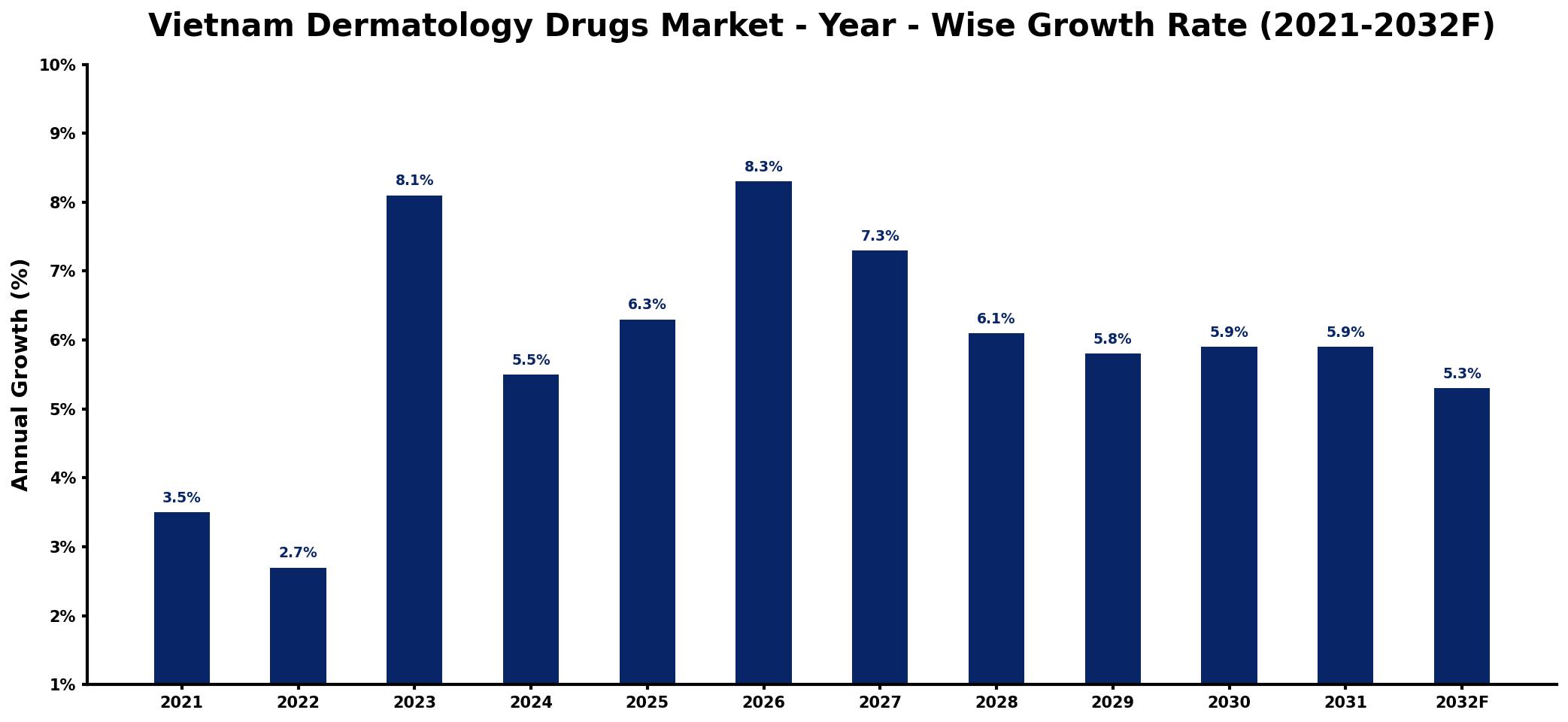
The table below presents the year‑wise growth rates along with the key drivers influencing the market
| Year | Growth Rate | Major Drivers |
| 2021 | 3.5% | Rising awareness of skin health |
| 2022 | 2.7% | Growing prevalence of skin disorders |
| 2023 | 8.1% | Increased investment in healthcare |
| 2024 | 5.5% | Expansion of healthcare infrastructure |
| 2025 | 6.3% | Advancements in treatment technologies |
| 2026 | 8.3% | Surge in online health consultations |
| 2027 | 7.3% | Growing demand for natural remedies |
| 2028 | 6.1% | Increase in aging population demographics |
| 2029 | 5.8% | Heightened focus on preventive care |
| 2030 | 5.9% | Emergence of telemedicine services |
| 2031 | 5.9% | Growth in health insurance coverage |
| 2032 | 5.3% | Rise in consumer health awareness |
Note: Market size estimations and growth projections presented in this report are based on 6Wresearch's proprietary forecasting methodology, utilizing the latest available industry data, government publications, and primary research inputs.
Vietnam Dermatology Drugs Market Synopsis
Vietnam's dermatology drugs market is characterized by a diverse range of products, including creams, ointments, and prescription medications tailored to treat various skin ailments. The rise in dermatological issues, exacerbated by lifestyle changes and environmental factors, is a critical demand driver in this burgeoning market.
The growing aging population in Vietnam is contributing to increased demand for effective dermatological solutions, as older adults are more prone to skin disorders. Alongside this, the rise in consumer consciousness regarding skin health and aesthetics has prompted both preventative and therapeutic treatments, creating a robust market environment.
Vietnam Dermatology Drugs Market Key Takeaways
- The market is driven by the rising incidence of skin diseases and conditions such as acne, eczema, and psoriasis.
- Advancements in medical science are facilitating the development of more effective dermatological drugs.
- Increased accessibility to dermatological clinics across the country enhances patient consultation and treatment options.
- Consumer awareness around skincare is fueling demand for both therapeutic and cosmetic dermatological products.
- Telemedicine is emerging as a vital tool for patient consultations, significantly impacting service delivery in the dermatology sector.
Evaluation of Restraints in Vietnam Dermatology Drugs Market
Despite promising growth, the Vietnam dermatology drugs market faces significant challenges. One major restraint is the healthcare infrastructure, which is unevenly distributed, particularly impacting access to specialized dermatological care in rural regions. Furthermore, regulatory requirements for drug approvals and the need for extensive clinical trials can impede the timely introduction of new products to the market. These barriers often lead to disparities in treatment availability and can hinder overall market growth.
Vietnam Dermatology Drugs Market Trends
Several current trends are shaping the Vietnam dermatology drugs market. One notable trend is the increasing demand for natural and organic skincare products, as consumers become more aware of the ingredients in their treatments. Additionally, the integration of technology, including telemedicine, is revolutionizing patient access to dermatological care, allowing for remote consultations and follow-ups. Furthermore, the emergence of personalized medicine is paving the way for more targeted therapies, creating opportunities for innovation in the sector.
Vietnam Dermatology Drugs Market Opportunities
Significant growth opportunities exist in the Vietnam dermatology drugs market, particularly through the expansion of telehealth services that enable broader patient outreach. Moreover, partnerships between pharmaceutical companies and local healthcare providers can improve drug distribution and patient education. The increasing focus on preventive skincare, especially among the youth demographic, also presents a vital avenue for investment and growth in dermatological products.
Government Initiatives in the Vietnam Dermatology Drugs Market
The Vietnamese government has implemented several initiatives aimed at improving healthcare access and standards, which directly benefit the dermatology drugs market. Public spending on healthcare has increased, reflecting a commitment to enhancing treatment options across the country. Programs designed to train healthcare professionals in dermatological care are also underway, fostering a more skilled workforce equipped to address the growing demand for dermatological services.
Future Insights of the Vietnam Dermatology Drugs Market
Looking ahead to 2026-2032, the Vietnam dermatology drugs market is poised for substantial growth driven by a combination of demographic shifts and evolving consumer preferences. The increasing incidence of skin conditions, coupled with advancements in treatment technologies and a robust pipeline of new products, will continue to enhance market potential. Moreover, as awareness regarding skin health escalates, investments in dermatological innovations are expected to follow suit, paving the way for a dynamic and competitive landscape.
Vietnam Dermatology Drugs Market Latest Developments (2025 - 2026)
Recent developments in the Vietnam dermatology drugs market reflect a growing focus on innovative treatments. Pharmaceutical companies are increasingly prioritizing research into novel therapies tailored to specific skin conditions, driven by demand for effective, patient-centered solutions. Additionally, partnerships between tech firms and healthcare providers are emerging, enhancing the capabilities of telemedicine platforms in dermatology.
Vietnam Dermatology Drugs Market - Key Attractiveness of the Report
- 10 Years of Market Numbers
- Historical Data Starting from 2022 to 2025
- Base Year: 2025
- Forecast Data until 2032
- Key Performance Indicators Impacting the Market
- Major Upcoming Developments and Projects
Key Highlights of the Report:
- Vietnam Dermatology Drugs Market Outlook
- Market Size of Vietnam Dermatology Drugs Market, 2025
- Forecast of Vietnam Dermatology Drugs Market, 2032
- Historical Data and Forecast of Vietnam Dermatology Drugs Revenues & Volume for the Period 2022-2032F
- Vietnam Dermatology Drugs Market Trend Evolution
- Vietnam Dermatology Drugs Market Drivers and Challenges
- Vietnam Dermatology Drugs Price Trends
- Vietnam Dermatology Drugs Porter's Five Forces
- Vietnam Dermatology Drugs Industry Life Cycle
- Historical Data and Forecast of Vietnam Dermatology Drugs Market Revenues & Volume By Application for the Period 2022-2032F
- Historical Data and Forecast of Vietnam Dermatology Drugs Market Revenues & Volume By Acne for the Period 2022-2032F
- Historical Data and Forecast of Vietnam Dermatology Drugs Market Revenues & Volume By Atopic Dermatitis for the Period 2022-2032F
- Historical Data and Forecast of Vietnam Dermatology Drugs Market Revenues & Volume By Psoriasis for the Period 2022-2032F
- Historical Data and Forecast of Vietnam Dermatology Drugs Market Revenues & Volume By Others for the Period 2022-2032F
- Historical Data and Forecast of Vietnam Dermatology Drugs Market Revenues & Volume By Route of Administration for the Period 2022-2032F
- Historical Data and Forecast of Vietnam Dermatology Drugs Market Revenues & Volume By Oral for the Period 2022-2032F
- Historical Data and Forecast of Vietnam Dermatology Drugs Market Revenues & Volume By Parenteral for the Period 2022-2032F
- Historical Data and Forecast of Vietnam Dermatology Drugs Market Revenues & Volume By Topical for the Period 2022-2032F
- Historical Data and Forecast of Vietnam Dermatology Drugs Market Revenues & Volume By Distribution Channel for the Period 2022-2032F
- Historical Data and Forecast of Vietnam Dermatology Drugs Market Revenues & Volume By Hospital Pharmacy for the Period 2022-2032F
- Historical Data and Forecast of Vietnam Dermatology Drugs Market Revenues & Volume By Retail Pharmacy for the Period 2022-2032F
- Historical Data and Forecast of Vietnam Dermatology Drugs Market Revenues & Volume By Online Pharmacy for the Period 2022-2032F
- Vietnam Dermatology Drugs Import Export Trade Statistics
- Market Opportunity Assessment By Application
- Market Opportunity Assessment By Route of Administration
- Market Opportunity Assessment By Distribution Channel
- Vietnam Dermatology Drugs Top Companies Market Share
- Vietnam Dermatology Drugs Competitive Benchmarking By Technical and Operational Parameters
- Vietnam Dermatology Drugs Company Profiles
- Vietnam Dermatology Drugs Key Strategic Recommendations






































