Vietnam Dog and Cat Food Market Summary
The vietnam dog and cat food market was estimated at USD 352 Million in 2025 and is projected to reach USD 497 Million by 2032, growing at a CAGR of 7.7% from 2026 to 2032.
Vietnam Dog and Cat Food Market Year-wise Growth Rate and Key Drivers
This graph highlights how the Vietnam Dog and Cat Food Market has steadily grown over the past five years, supported by major growth factors.
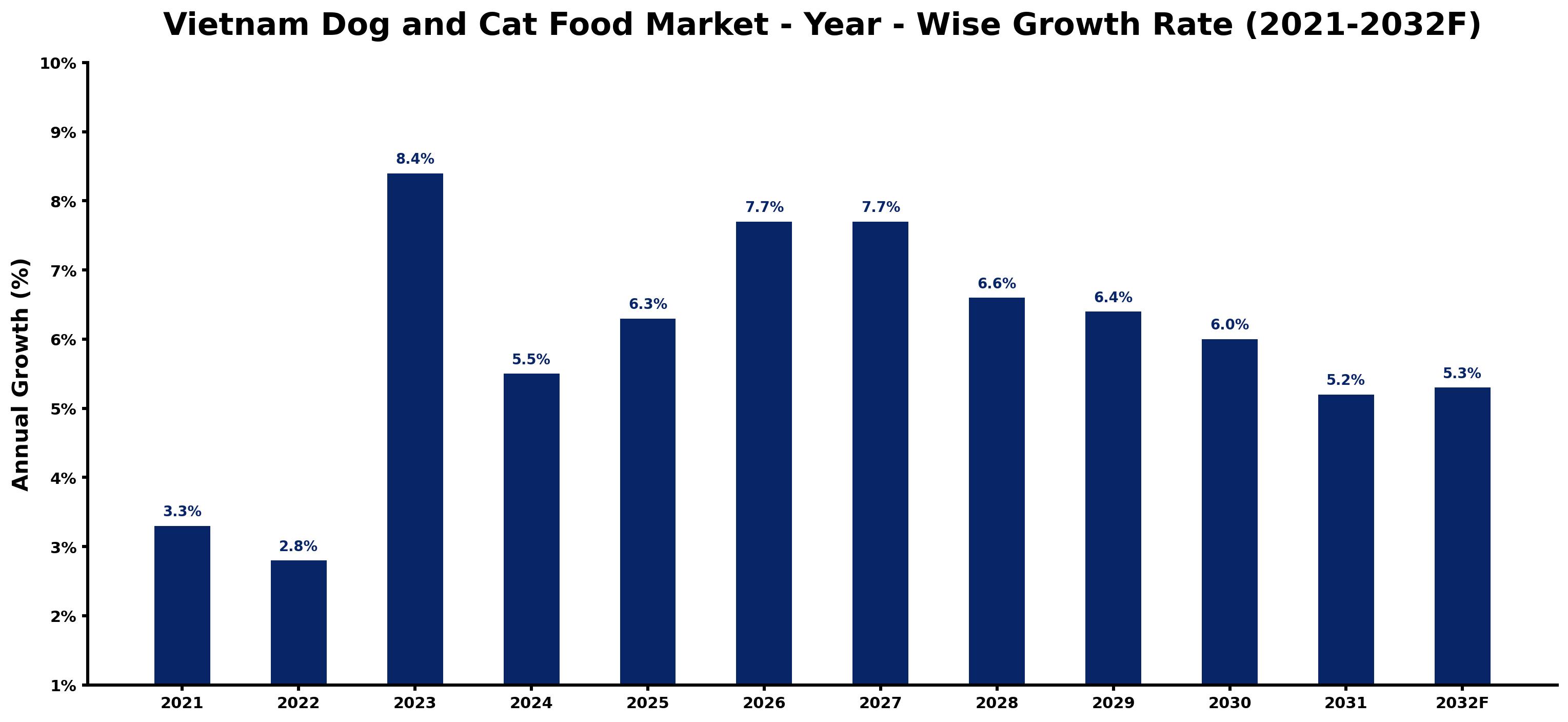
The table below presents the year wise growth rates along with the key drivers influencing the market
| Year | Growth Rate | Major Drivers |
| 2021 | 3.3% | Vietnam's expanding middle class increasingly seeks premium pet food options. |
| 2022 | 2.8% | Urbanization trends lead to higher pet ownership rates in metropolitan areas. |
| 2023 | 8.4% | E-commerce platforms become primary channels for pet food distribution. |
| 2024 | 5.5% | Health-conscious consumers gravitate toward organic and natural pet food products. |
| 2025 | 6.3% | Local brands innovate with flavors catering to Vietnamese culinary preferences. |
| 2026 | 7.7% | Rural pet ownership rises, expanding market reach beyond urban centers. |
| 2027 | 7.7% | Veterinary care advancements foster awareness of pet nutrition importance. |
| 2028 | 6.6% | International brands invest in localized manufacturing facilities for quicker supply. |
| 2029 | 6.4% | Digital marketing campaigns effectively target younger pet-owning demographics. |
| 2030 | 6.0% | Sustainable packaging solutions gain traction among eco-conscious consumers. |
| 2031 | 5.2% | Pet food regulation improvements build consumer trust in product quality. |
| 2032 | 5.3% | Collaborations between brands and local influencers boost market visibility significantly. |
Note - Market size estimations and growth projections presented in this report are based on 6Wresearch's advanced forecasting approach, validated with industry datasets as of June 2026.
Vietnam Dog and Cat Food Market Synopsis
The Vietnam Dog and Cat Food Market is projected to reach 7.7% and witness significant growth during the forecast period (2026-2032). This growth is attributed to shifting pet ownership trends, increased awareness of pet nutrition, and a burgeoning pet care industry. Urbanization and changing lifestyles have contributed to a rising pet ownership rate, particularly in metropolitan regions, rendering a robust demand for pet food products. Pet owners' pursuit of specialized and premium food options has catalyzed the influx of both domestic and international brands into the market, further diversifying product offerings. The humanization of pets, with owners treating them as family members, enhances the need for high-quality and nutritious food. Consequently, this burgeoning industry faces both growth opportunities and challenges related to regulations and consumer health concerns.
Vietnam Dog and Cat Food Market Growth Drivers
Several factors are instrumental in driving the growth of the Vietnam Dog and Cat Food Market. The primary driver is the rise in urbanization, leading to an increase in pet ownership in urban centers, which has resulted in a greater demand for nutritious food products. Pet owners are increasingly inclined to choose high-quality food options that cater to their pets' health needs. The trend of pet humanization has further intensified this demand, as many consider their pets to be integral family members deserving of premium care.
- The expansion of the pet care industry, encompassing grooming and veterinary services, has bolstered the demand for dog and cat food, providing an integrated care approach for pet owners.
- A wider variety of products available from domestic and international brands enables consumers to select from an array of high-quality options, thus invigorating market growth.
- The increasing focus on health and nutrition among pet owners compels manufacturers to innovate and expand product lines to meet evolving consumer preferences.
- Marketing strategies highlighting the benefits of premium pet food significantly influence consumer choices, driving higher sales volumes.
- Sustained economic growth in Vietnam has led to increased disposable incomes, allowing pet owners to invest in superior pet food brands.
Vietnam Dog and Cat Food Market Challenges and Restraints
Despite the notable growth prospects, the Vietnam Dog and Cat Food Market encounters several challenges that could impede its progress. One major challenge is the rising concerns regarding pet health and safety, as consumers become increasingly vigilant about the quality and sourcing of ingredients used in pet food. Building consumer trust in product safety and quality is paramount for maintaining market stability.
- Regulatory changes and import restrictions on pet food products present obstacles that could alter the supply chain dynamics and product availability in the market.
- The competitive nature of the pet food sector requires brands to continually innovate and differentiate their products to remain relevant in a saturated market.
- Economic fluctuations can influence consumer spending patterns, leading to a potential shift towards budget-friendly pet food options during downturns.
- Maintaining transparency in ingredient sourcing is increasingly crucial as consumers demand information about the products they buy.
- Marketing initiatives focused on educating consumers about the importance of high-quality pet food are necessary to address health concerns proactively.
Vietnam Dog and Cat Food Market Impact of COVID-19
The COVID-19 pandemic has had a mixed impact on the Vietnam Dog and Cat Food Market. Initially, the pandemic prompted a surge in demand due to panic-buying and stockpiling of essential goods, including pet food. However, disruptions to the supply chain and logistics posed challenges, affecting product availability over the extended period of the pandemic.
As the crisis unfolded, economic uncertainties led some pet owners to gravitate towards more affordable pet food alternatives, resulting in a shift in purchasing behaviors. Furthermore, the closure of pet grooming services and veterinary clinics during the height of the pandemic hindered the overall pet care sector. Positively, the pandemic underscored the significance of pet companionship, further encouraging pet adoptions and a sustained growth trajectory for the pet food market. Brands that adapted to the changing landscape—particularly through online retail and delivery strategies—were able to secure a competitive edge during this period.
Vietnam Dog and Cat Food Market Government Investment and Initiatives
The Vietnamese government's initiatives aimed at bolstering the pet care industry significantly impact the Vietnam Dog and Cat Food Market. Various investment programs encourage the modernization of agricultural practices, which includes enhanced quality control measures for food products, ensuring the safety and nutritional value of pet food. Additionally, public spending on veterinary services and animal welfare promotes responsible pet ownership, indirectly supporting the demand for high-quality pet food.
The government's focus on improving regulatory frameworks facilitates a more transparent industry environment, enhancing consumer confidence in pet food products. Initiatives supporting domestic production of pet food ingredients are designed to reduce reliance on imports and ensure consistent product quality. Moreover, campaigns aimed at educating the public about pet nutrition and responsible pet ownership further emphasize the rising trend of pet humanization, fostering a conducive atmosphere for market growth.
Vietnam Dog and Cat Food Market Latest Developments (May 2025 - June 2026)
Recent developments in the Vietnam Dog and Cat Food Market reflect evolving industry dynamics and consumer preferences. The focus on premium and specialized pet food products has intensified, driven by increasing awareness of pet health and nutrition. Brands are responding to these trends by diversifying their product lines, incorporating innovative ingredients, and enhancing packaging to appeal to the eco-conscious consumer.
Additionally, there has been a noticeable increase in online retail channels as brands strive to adapt to post-pandemic consumer behavior. Digital marketing strategies emphasizing the nutritional benefits of pet food options are becoming a standard approach for engaging consumers. The development of loyalty programs and subscription services are also gaining traction, providing pet owners with convenient access to their preferred products.
Vietnam Dog and Cat Food Market - Key Attractiveness of the Report
- 10 Years of Market Numbers
- Historical Data Starting from 2022 to 2025
- Base Year: 2025
- Forecast Data until 2032
- Key Performance Indicators Impacting the Market
- Major Upcoming Developments and Projects
Key Highlights of the Report:
- Vietnam Dog and Cat Food Market Outlook
- Market Size of Vietnam Dog and Cat Food Market, 2025
- Forecast of Vietnam Dog and Cat Food Market, 2032
- Historical Data and Forecast of Vietnam Dog and Cat Food Revenues & Volume for the Period 2022-2032F
- Vietnam Dog and Cat Food Market Trend Evolution
- Vietnam Dog and Cat Food Market Drivers and Challenges
- Vietnam Dog and Cat Food Price Trends
- Vietnam Dog and Cat Food Porter's Five Forces
- Vietnam Dog and Cat Food Industry Life Cycle
- Historical Data and Forecast of Vietnam Dog and Cat Food Market Revenues & Volume By Animal Type for the Period 2022-2032F
- Historical Data and Forecast of Vietnam Dog and Cat Food Market Revenues & Volume By Dog for the Period 2022-2032F
- Historical Data and Forecast of Vietnam Dog and Cat Food Market Revenues & Volume By Cat for the Period 2022-2032F
- Historical Data and Forecast of Vietnam Dog and Cat Food Market Revenues & Volume By Product Type for the Period 2022-2032F
- Historical Data and Forecast of Vietnam Dog and Cat Food Market Revenues & Volume By Dry Food for the Period 2022-2032F
- Historical Data and Forecast of Vietnam Dog and Cat Food Market Revenues & Volume By Wet/Canned Food for the Period 2022-2032F
- Historical Data and Forecast of Vietnam Dog and Cat Food Market Revenues & Volume By Nutritious Food for the Period 2022-2032F
- Historical Data and Forecast of Vietnam Dog and Cat Food Market Revenues & Volume By Snacks/Treats for the Period 2022-2032F
- Historical Data and Forecast of Vietnam Dog and Cat Food Market Revenues & Volume By Others for the Period 2022-2032F
- Historical Data and Forecast of Vietnam Dog and Cat Food Market Revenues & Volume By Distribution Channel for the Period 2022-2032F
- Historical Data and Forecast of Vietnam Dog and Cat Food Market Revenues & Volume By Specialized Pet Shops for the Period 2022-2032F
- Historical Data and Forecast of Vietnam Dog and Cat Food Market Revenues & Volume By Supermarkets/Hypermarkets for the Period 2022-2032F
- Historical Data and Forecast of Vietnam Dog and Cat Food Market Revenues & Volume By Online Channel for the Period 2022-2032F
- Historical Data and Forecast of Vietnam Dog and Cat Food Market Revenues & Volume By Other Channels for the Period 2022-2032F
- Vietnam Dog and Cat Food Import Export Trade Statistics
- Market Opportunity Assessment By Animal Type
- Market Opportunity Assessment By Product Type
- Market Opportunity Assessment By Distribution Channel
- Vietnam Dog and Cat Food Top Companies Market Share
- Vietnam Dog and Cat Food Competitive Benchmarking By Technical and Operational Parameters
- Vietnam Dog and Cat Food Company Profiles
- Vietnam Dog and Cat Food Key Strategic Recommendations






































