Vietnam Energy Saving & Fluorescent Market Summary
The vietnam energy saving & fluorescent market was estimated at USD 270 Million in 2025 and is projected to reach USD 381 Million by 2032, growing at a CAGR of 7.7% from 2026 to 2032.
Vietnam Energy Saving & Fluorescent Market Year-wise Growth Rate and Key Drivers
This graph highlights how the Vietnam Energy Saving & Fluorescent Market has steadily grown over the past five years, supported by major growth factors.
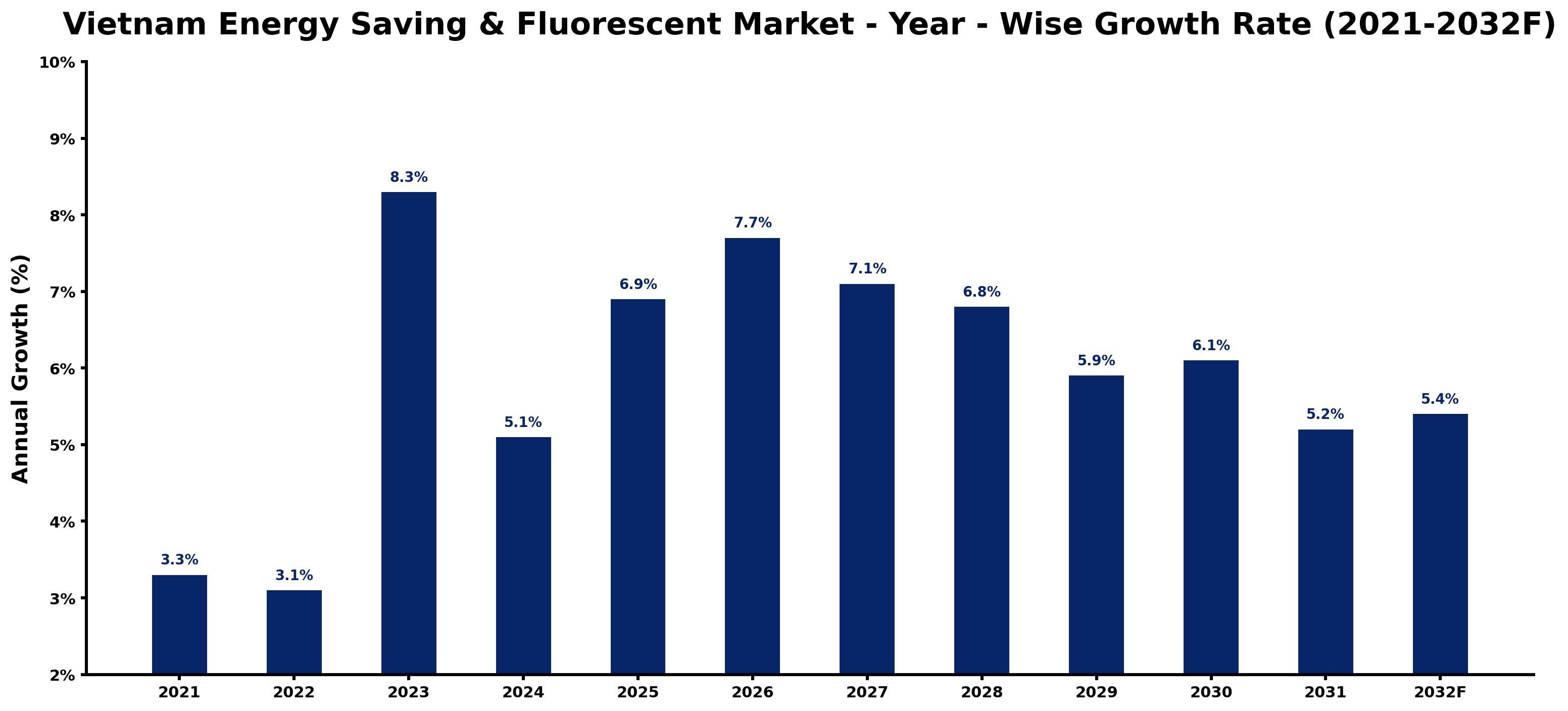
The table below presents the year wise growth rates along with the key drivers influencing the market
| Year | Growth Rate | Major Drivers |
| 2021 | 3.3% | Post-pandemic recovery led to increased focus on energy-efficient solutions in Vietnam. |
| 2022 | 3.1% | Emerging manufacturers in urban centers began adopting fluorescent technologies significantly. |
| 2023 | 8.3% | Rural electrification efforts brought energy-saving options to previously underserved communities. |
| 2024 | 5.1% | Local businesses embraced energy efficiency as a cost-saving measure to enhance competitiveness. |
| 2025 | 6.9% | Home renovation trends included energy-efficient lighting, changing consumer purchasing patterns. |
| 2026 | 7.7% | Increased environmental awareness among consumers fostered demand for sustainable lighting solutions. |
| 2027 | 7.1% | Corporate sustainability goals prompted enterprises to invest in energy-efficient lighting technologies. |
| 2028 | 6.8% | Competition among manufacturers spurred innovations in energy-saving product designs and features. |
| 2029 | 5.9% | Investment in infrastructure improvements facilitated wider distribution of energy-saving products. |
| 2030 | 6.1% | Technological advances made energy-efficient lighting more accessible to a broader market. |
| 2031 | 5.2% | Collaboration between government and private sectors promoted widespread education on energy savings. |
| 2032 | 5.4% | Market maturity allowed for diverse offerings, catering to various consumer needs and preferences. |
Note - Market size estimations and growth projections presented in this report are based on 6Wresearch's advanced forecasting approach, validated with industry datasets as of June 2026.
Vietnam Energy Saving & Fluorescent Market Synopsis
The Vietnam Energy Saving Fluorescent Market is projected to reach 7.7% and witness significant growth during the forecast period (2026-2032). This market encompasses energy-efficient fluorescent lighting solutions, including compact fluorescent lamps (CFLs) and T5/T8 fluorescent tubes, which have become increasingly popular due to their reduced energy consumption and lower operational costs in comparison to traditional incandescent bulbs.
Vietnam Energy Saving & Fluorescent Market Growth Drivers
Several factors are driving the expansion of the Vietnam Energy Saving & Fluorescent Market. First, the Vietnamese government's commitment to promoting energy efficiency is a significant catalyst. Numerous policies, regulations, and incentives have been established to encourage the adoption of energy-saving lighting solutions. These initiatives align with the country's broader goals for energy conservation and sustainability.
Second, the rising cost of electricity within Vietnam has led both residential and commercial consumers to seek out energy-efficient alternatives that can mitigate operational costs. Energy-saving fluorescent lamps effectively meet this demand, offering substantial long-term savings.
Furthermore, an increasing awareness about environmental issues among the Vietnamese populace has fueled the demand for energy-efficient products. Consumers are now more inclined to make choices that contribute to sustainability, driving the adoption of energy-saving fluorescent solutions.
Additionally, urbanization and rapid infrastructure development across the country are contributing to the growth of the lighting industry. As cities expand, the need for effective lighting solutions intensifies, and energy-saving fluorescent options emerge as a viable and cost-efficient choice.
Lastly, the availability of diverse product offerings within the energy-saving fluorescent segment has made it easier for consumers and businesses to find suitable lighting solutions tailored to their specific needs.
Vietnam Energy Saving & Fluorescent Market Challenges and Restraints
Despite the positive trends, the Vietnam Energy Saving & Fluorescent Market faces several challenges that could hinder its growth. A significant barrier is the initial cost associated with energy-saving fluorescent lamps, which tends to be higher than that of traditional incandescent bulbs. This upfront investment may deter price-sensitive consumers from making the switch.
Furthermore, while awareness and understanding of energy-efficient lighting are increasing, a segment of the population still lacks sufficient information regarding the benefits and proper usage of energy-saving fluorescent lamps. This knowledge gap can slow down the market's growth.
The rapid advancements in the LED lighting sector also present a competitive challenge. With the proliferation of LED technology, which offers even greater energy efficiency and longer lifespans, consumers may prefer LEDs over fluorescent options. This shift in preference could impact the overall demand for energy-saving fluorescent lamps in the coming years.
Moreover, fluctuating economic conditions and uncertainties can instill hesitation among consumers and businesses when considering investments in new lighting technologies.
Lastly, the need for ongoing maintenance and replacements of fluorescent lamps can be a drawback for some users, especially when compared to the low-maintenance benefits associated with LED options.
Vietnam Energy Saving & Fluorescent Market Government Investment and Initiatives
The Vietnamese government's proactive approach to energy savings includes various investments and initiatives that support the growth of the Vietnam Energy Saving & Fluorescent Market. Programs aimed at promoting energy-efficient lighting solutions are a crucial part of national energy policies. These efforts are designed to reduce overall energy consumption and greenhouse gas emissions while encouraging sustainable practices across various sectors.
Public spending on infrastructure development often incorporates energy-efficient technologies, which help foster the market for energy-saving lighting solutions. Furthermore, government incentives aimed at manufacturers and consumers alike play a significant role in enhancing adoption rates.
Policies that establish energy efficiency standards for lighting products have also been implemented, ensuring only high-quality, energy-saving solutions are available to consumers. These measures not only promote market growth but also protect consumers from substandard products.
Additionally, educational campaigns are frequently launched to raise awareness about the benefits of energy-saving fluorescent lamps, enhancing public understanding and acceptance of these solutions. This concerted effort to improve information accessibility is vital for fostering a culture of energy conservation within the country.
The government's vision for a sustainable energy future further emphasizes the development and implementation of efficient lighting technologies, which will likely benefit the Vietnamese energy-saving fluorescent market moving forward.
Vietnam Energy Saving & Fluorescent Market Latest Developments (May 2025 - June 2026)
In the period from May 2025 to June 2026, the Vietnam Energy Saving & Fluorescent Market experienced various developments that shaped its trajectory. The government reinforced its commitment to energy efficiency by introducing new policies aimed at bolstering the adoption of energy-efficient lighting measures. These policies are expected to facilitate funding for projects focusing on the installation of energy-saving fluorescent lighting across multiple sectors.
Industry stakeholders observed an uptick in consumer interest as public awareness campaigns successfully highlighted the cost-saving and environmental benefits of energy-saving fluorescent lamps. This increased visibility has translated into greater consumer acceptance, leading to steady growth in demand.
During this period, new partnerships were formed between government agencies and private sector entities to enhance the distribution of energy-saving fluorescent products in urban areas. This collaboration aimed to reach wider audiences and address barriers to entry for consumers who might have limited access to energy-efficient technologies.
Moreover, as competition in the lighting market intensified, innovations in energy-saving fluorescent technologies emerged, with manufacturers striving to enhance product performance and lifespan. These advancements reflected the need to remain competitive amid the rapid growth of LED alternatives.
Overall, the developments during this period signified a concerted effort among stakeholders to bolster the Vietnam Energy Saving & Fluorescent Market, setting the stage for future growth.
Vietnam Energy Saving & Fluorescent Market - Key Attractiveness of the Report
- 10 Years of Market Numbers
- Historical Data Starting from 2022 to 2025
- Base Year: 2025
- Forecast Data until 2032
- Key Performance Indicators Impacting the Market
- Major Upcoming Developments and Projects
Key Highlights of the Report:
- Vietnam Energy Saving & Fluorescent Market Outlook
- Market Size of Vietnam Energy Saving & Fluorescent Market, 2025
- Forecast of Vietnam Energy Saving & Fluorescent Market, 2032
- Historical Data and Forecast of Vietnam Energy Saving & Fluorescent Revenues & Volume for the Period 2022-2032F
- Vietnam Energy Saving & Fluorescent Market Trend Evolution
- Vietnam Energy Saving & Fluorescent Market Drivers and Challenges
- Vietnam Energy Saving & Fluorescent Price Trends
- Vietnam Energy Saving & Fluorescent Porter's Five Forces
- Vietnam Energy Saving & Fluorescent Industry Life Cycle
- Historical Data and Forecast of Vietnam Energy Saving & Fluorescent Market Revenues & Volume By Sources for the Period 2022-2032F
- Historical Data and Forecast of Vietnam Energy Saving & Fluorescent Market Revenues & Volume By High-Intensity Discharge Lamps (HID) for the Period 2022-2032F
- Historical Data and Forecast of Vietnam Energy Saving & Fluorescent Market Revenues & Volume By Linear Fluorescent Lamps (LFL) for the Period 2022-2032F
- Historical Data and Forecast of Vietnam Energy Saving & Fluorescent Market Revenues & Volume By Light Emitting Diodes (LED) for the Period 2022-2032F
- Historical Data and Forecast of Vietnam Energy Saving & Fluorescent Market Revenues & Volume By Applications for the Period 2022-2032F
- Historical Data and Forecast of Vietnam Energy Saving & Fluorescent Market Revenues & Volume By Commercial for the Period 2022-2032F
- Historical Data and Forecast of Vietnam Energy Saving & Fluorescent Market Revenues & Volume By Residential for the Period 2022-2032F
- Historical Data and Forecast of Vietnam Energy Saving & Fluorescent Market Revenues & Volume By Government for the Period 2022-2032F
- Vietnam Energy Saving & Fluorescent Import Export Trade Statistics
- Market Opportunity Assessment By Sources
- Market Opportunity Assessment By Applications
- Vietnam Energy Saving & Fluorescent Top Companies Market Share
- Vietnam Energy Saving & Fluorescent Competitive Benchmarking By Technical and Operational Parameters
- Vietnam Energy Saving & Fluorescent Company Profiles
- Vietnam Energy Saving & Fluorescent Key Strategic Recommendations






































