Vietnam Ethnic Clothing Market Summary
The vietnam ethnic clothing market was estimated at USD 432 Million in 2025 and is projected to reach USD 610 Million by 2032, growing at a CAGR of 7.7% from 2026 to 2032.
Vietnam Ethnic Clothing Market Year-wise Growth Rate and Key Drivers
This graph highlights how the Vietnam Ethnic Clothing Market has steadily grown over the past five years, supported by major growth factors.
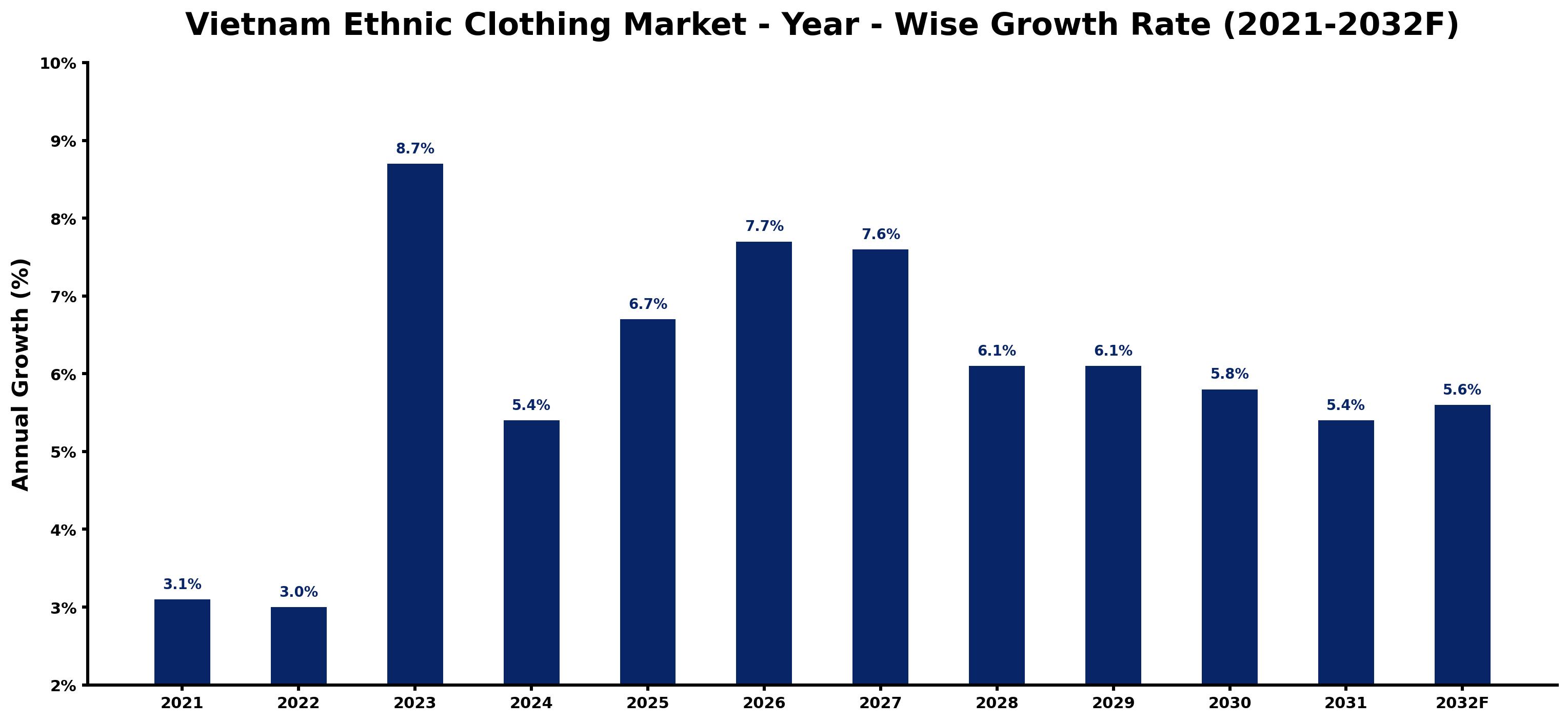
The table below presents the year wise growth rates along with the key drivers influencing the market
| Year | Growth Rate | Major Drivers |
| 2021 | 3.1% | Post-lockdown retail projects revive interest in traditional clothing styles in urban centers. |
| 2022 | 3.0% | Cultural festivals celebrate ethnic diversity, boosting visibility for local fashion artisans. |
| 2023 | 8.7% | Social media influencers highlight ethnic wear, connecting younger generations to cultural heritage. |
| 2024 | 5.4% | Sustainable practices attract eco-conscious consumers, increasing demand for natural fabric sourcing. |
| 2025 | 6.7% | Online marketplaces expand reach for ethnic clothing, allowing remote artisans to access broader audiences. |
| 2026 | 7.7% | Collaborations between designers and local communities foster unique clothing lines and authenticity. |
| 2027 | 7.6% | Increased international tourism leads to greater exposure and appreciation for ethnic garments. |
| 2028 | 6.1% | Local fashion weeks showcase ethnic clothing, enhancing industry credibility and market presence. |
| 2029 | 6.1% | Rising disposable incomes enable consumers to invest in premium quality ethnic apparel. |
| 2030 | 5.8% | E-commerce platforms enhance user experiences, streamlining the buying process for ethnic clothing. |
| 2031 | 5.4% | Continuing urbanization creates demand for unique cultural expressions through fashion choices. |
| 2032 | 5.6% | Educational initiatives promote traditional crafts, ensuring skills and designs are preserved for future generations. |
Note - Market size estimations and growth projections presented in this report are based on 6Wresearch's advanced forecasting approach, validated with industry datasets as of June 2026.
Vietnam Ethnic Clothing Market Synopsis
The Vietnam Ethnic Clothing Market is projected to reach 7.7% and witness significant growth during the forecast period (2026-2032). This market reflects the vibrant tapestry of Vietnam's diverse ethnic heritage, with garments showcasing unique designs, colors, and patterns distinct to various cultural groups. As traditional clothing often embodies deep cultural narratives, it plays a critical role in the identity and pride of these communities.
Vietnam Ethnic Clothing Market Growth Drivers
Several key factors drive the expansion of the Vietnam Ethnic Clothing Market. One of the most significant is the cultural pride associated with ethnic garments, especially during festivals and cultural events. These occasions not only promote the use of traditional attire but also encourage intergenerational transmission of cultural values. Additionally, the tourism sector significantly contributes to demand, as international visitors often seek ethnic clothing as souvenirs, thus enhancing their cultural experience.
- The rise in cultural tourism has fueled interest in local traditions, thereby increasing the demand for ethnic garments.
- A growing movement among Vietnamese consumers to embrace traditional fashion alternatives has reinforced market growth.
- The unique aesthetic appeal of ethnic clothing provides opportunities for exports, attracting interest from global fashion markets.
- Social media platforms have increased visibility for ethnic fashion, influencing consumer preferences.
- Collaborations between local artisans and modern fashion designers have further amplified the market's potential.
Vietnam Ethnic Clothing Market Challenges and Restraints
Despite its growth, the Vietnam Ethnic Clothing Market faces several challenges. One significant issue is the prevalence of counterfeit products that mimic genuine ethnic garments, which undermines the authenticity and sales of legitimate items. The artisan nature of traditional clothing often results in higher production costs and longer lead times, making it challenging to compete with mass-produced alternatives.
- The handmade aspect of many ethnic garments can limit scalability and market reach.
- Maintaining the sustainability of traditional textile practices is increasingly difficult due to changing material availability.
- Consumer shifts towards fast fashion may detract from the perceived value of traditional clothing.
- Economic fluctuations can impact disposable income, thus affecting consumer spending on ethnic clothing.
- The threat of cultural appropriation can create tensions between indigenous practices and commercial markets.
Vietnam Ethnic Clothing Market Government Investment and Initiatives
The Vietnamese government recognizes the importance of the ethnic clothing sector as a means of preserving cultural heritage and fostering economic development. Various initiatives have been implemented to support artisans and promote traditional textile practices. Investment in training programs for artisans aims to enhance skills and ensure the sustainability of traditional garment-making techniques.
Public spending on cultural festivals and events that feature ethnic clothing has increased, creating additional platforms for promotion. Furthermore, the government actively collaborates with local NGOs to support the documentation and commercialization of traditional clothing, reinforcing its market presence.
Through trade fairs and exhibitions, the government seeks to connect artisans with potential buyers, both domestically and internationally. Incentives for eco-friendly practices encourage the use of sustainable materials, thereby aligning cultural preservation with modern environmental demands.
Vietnam Ethnic Clothing Market Latest Developments (May 2025 - June 2026)
Recent developments in the Vietnam Ethnic Clothing Market indicate a sustained focus on innovation while honoring traditional crafts. The period from May 2025 to June 2026 has seen a rise in collaborations aimed at revitalizing traditional designs with contemporary fashion sensibilities. Local designers are increasingly incorporating ethnic elements into mainstream apparel, expanding the audience for these garments.
Additionally, there has been a notable increase in online platforms dedicated to selling ethnic clothing, making these garments more accessible to a broader demographic. This shift is further supported by digital marketing campaigns that highlight the stories and craftsmanship behind each piece. The fusion of cultural motifs with modern design aesthetics has garnered attention from fashion influencers, enhancing the visibility of the Vietnam Ethnic Clothing Market.
Vietnam Ethnic Clothing Market - Key Attractiveness of the Report
- 10 Years of Market Numbers
- Historical Data Starting from 2022 to 2025
- Base Year: 2025
- Forecast Data until 2032
- Key Performance Indicators Impacting the Market
- Major Upcoming Developments and Projects
Key Highlights of the Report:
- Vietnam Ethnic Clothing Market Outlook
- Market Size of Vietnam Ethnic Clothing Market, 2025
- Forecast of Vietnam Ethnic Clothing Market, 2032
- Historical Data and Forecast of Vietnam Ethnic Clothing Revenues & Volume for the Period 2022-2032F
- Vietnam Ethnic Clothing Market Trend Evolution
- Vietnam Ethnic Clothing Market Drivers and Challenges
- Vietnam Ethnic Clothing Price Trends
- Vietnam Ethnic Clothing Porter's Five Forces
- Vietnam Ethnic Clothing Industry Life Cycle
- Historical Data and Forecast of Vietnam Ethnic Clothing Market Revenues & Volume By Gender Type for the Period 2022-2032F
- Historical Data and Forecast of Vietnam Ethnic Clothing Market Revenues & Volume By Men for the Period 2022-2032F
- Historical Data and Forecast of Vietnam Ethnic Clothing Market Revenues & Volume By Women for the Period 2022-2032F
- Historical Data and Forecast of Vietnam Ethnic Clothing Market Revenues & Volume By Kids for the Period 2022-2032F
- Historical Data and Forecast of Vietnam Ethnic Clothing Market Revenues & Volume By Distribution Channel for the Period 2022-2032F
- Historical Data and Forecast of Vietnam Ethnic Clothing Market Revenues & Volume By Online for the Period 2022-2032F
- Historical Data and Forecast of Vietnam Ethnic Clothing Market Revenues & Volume By Offline for the Period 2022-2032F
- Vietnam Ethnic Clothing Import Export Trade Statistics
- Market Opportunity Assessment By Gender Type
- Market Opportunity Assessment By Distribution Channel
- Vietnam Ethnic Clothing Top Companies Market Share
- Vietnam Ethnic Clothing Competitive Benchmarking By Technical and Operational Parameters
- Vietnam Ethnic Clothing Company Profiles
- Vietnam Ethnic Clothing Key Strategic Recommendations






































