Vietnam Fleet Management Market Size & Growth Rate (2026-2032)
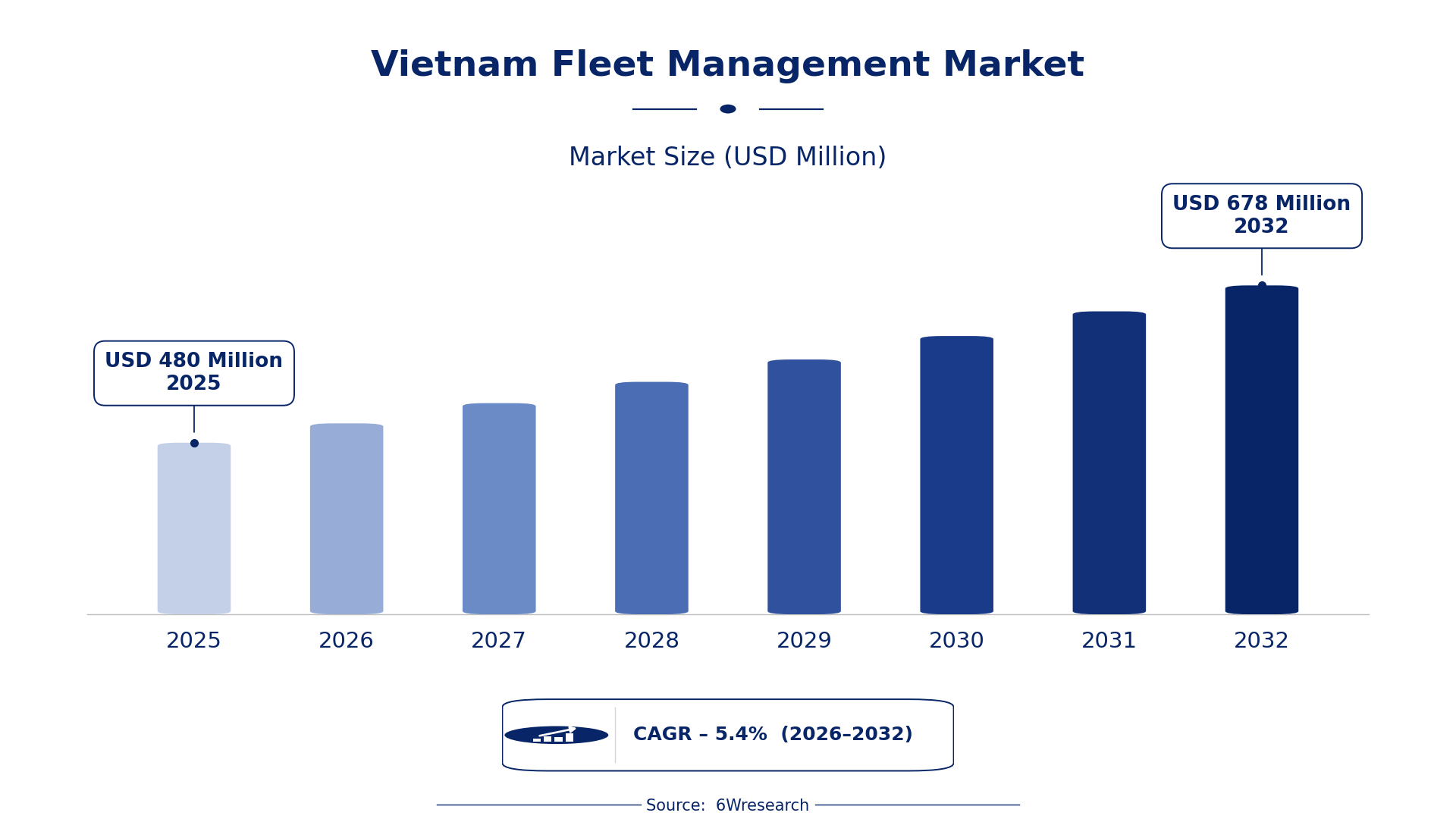
The Vietnam Fleet Management Market was estimated at USD 480 Million in 2025 and is projected to reach USD 678 Million by 2032, growing at a CAGR of 5.4% from 2026 to 2032.
Vietnam Fleet Management Market Synopsis
Recent momentum in the Vietnam Fleet Management Market reflects a growing dependence on sophisticated logistics solutions. As businesses strive for greater operational efficiency, the demand for fleet management technologies has surged, particularly in sectors heavily reliant on transportation.
Looking forward, this market is set to expand even further as organizations integrate advanced telematics and GPS tracking into their operations. The focus on sustainability and regulatory compliance will further drive investments in this sector, ensuring that fleet management remains a priority for companies across the country.
Vietnam Fleet Management Market Year-wise Growth Rate and Key Drivers
This graph illustrates the annual growth rates of the Vietnam Fleet Management Market from 2021 to 2032, highlighting a steady upward trajectory and projected expansion over the forecast period.
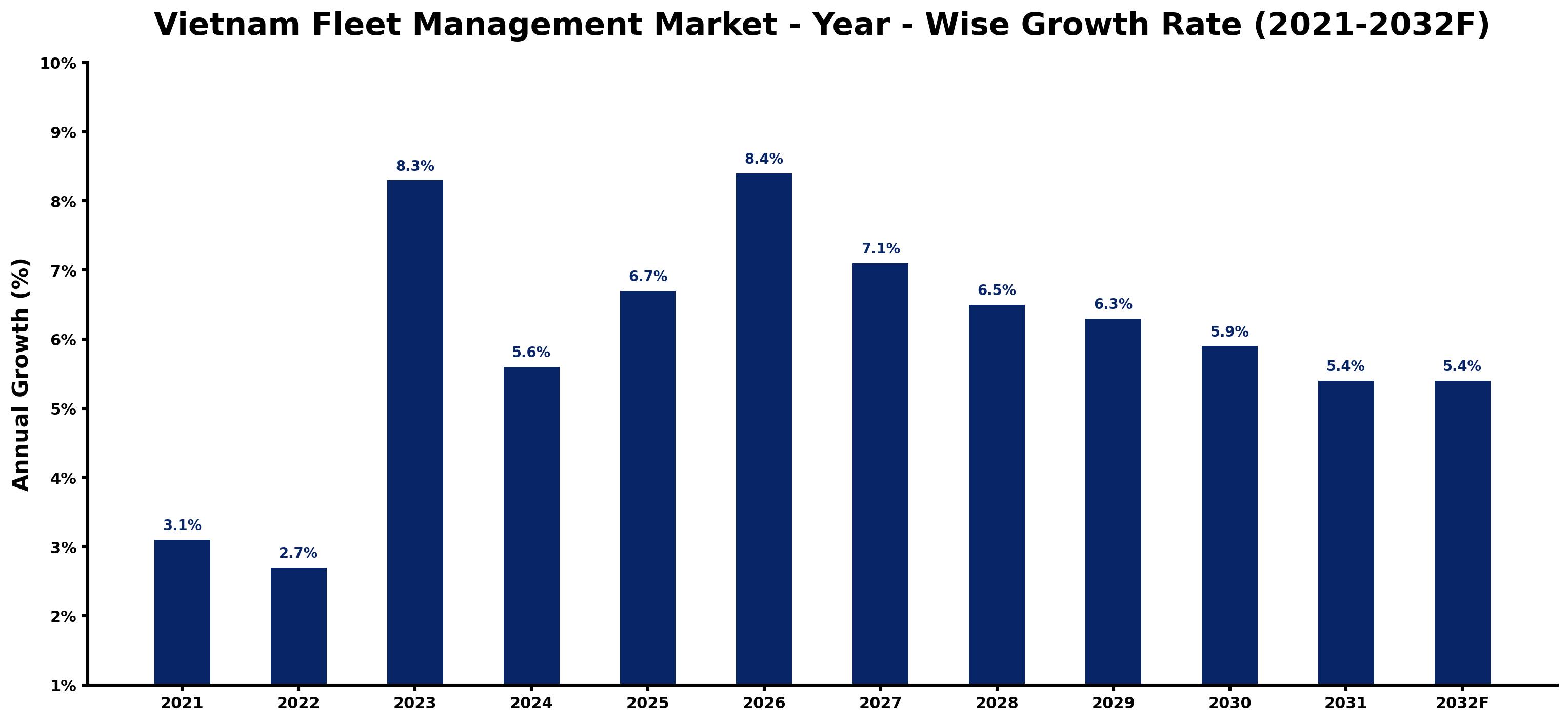
The table below presents the year‑wise growth rates along with the key drivers influencing the market
| Year | Growth Rate | Major Drivers |
| 2021 | 3.1% | Government incentives for logistics efficiency improvement initiatives |
| 2022 | 2.7% | Rising fuel prices pushing adoption of fleet management software |
| 2023 | 8.3% | Vietnam's digital economy growth enhancing transport technology uptake |
| 2024 | 5.6% | Increased foreign investment in logistics and transportation sectors |
| 2025 | 6.7% | Local telecommunication advancements improving fleet connectivity solutions |
| 2026 | 8.4% | Government policies supporting electric vehicle fleet transitions |
| 2027 | 7.1% | Increased urbanization driving logistics demand in metro areas |
| 2028 | 6.5% | Fleet automation technologies gaining traction among local businesses |
| 2029 | 6.3% | Strengthening supply chains increasing need for fleet oversight |
| 2030 | 5.9% | Government regulations encouraging environmentally-friendly transport solutions |
| 2031 | 5.4% | Rising consumer demand for reliable delivery services impacting fleets |
| 2032 | 5.4% | Partnerships between tech firms and logistics companies expanding offerings |
Note: Market size estimations and growth projections presented in this report are based on 6Wresearch's proprietary forecasting methodology, utilizing the latest available industry data, government publications, and primary research inputs.
Vietnam Fleet Management Market Key Takeaways
Below are some of the specific key takeaways from the market, including:
- The market is experiencing rapid growth, driven by the demand for enhanced operational efficiency.
- Adoption of telematics and predictive maintenance is reshaping fleet management practices.
- Government regulations are pushing for improved road safety and environmental compliance.
- Ongoing challenges related to infrastructure quality may affect the effectiveness of fleet management solutions.
- The COVID-19 pandemic has accelerated the digital transformation within the fleet management sector.
Evaluation of Restraints in Vietnam Fleet Management Market
The Vietnam Fleet Management Market faces real challenges that can impede its growth. Infrastructure quality varies significantly across the country, impacting the effectiveness of fleet operations and management solutions. Issues such as traffic congestion and high accident rates create an environment where fleet reliability can be compromised. Additionally, the initial investment required for telematics and GPS technologies can be a barrier for smaller operators, limiting their ability to compete effectively in this growing market.
Vietnam Fleet Management Market Trends
Several trends are shaping the Vietnam Fleet Management Market today. Increasing fuel costs have made fuel efficiency a top priority for fleet operators, leading to a greater emphasis on route optimization technologies. Additionally, the rising importance of sustainability is pushing companies to adopt solutions that minimize their carbon footprint. The integration of artificial intelligence in fleet management is also on the rise, helping organizations predict maintenance needs and enhance overall vehicle performance.
Vietnam Fleet Management Market Opportunities
The opportunities for growth in the Vietnam Fleet Management Market are substantial. With the government focusing on infrastructure development, companies can benefit from improved transport networks that enhance fleet operations. The increasing demand for smart logistics solutions presents a ripe environment for investment in advanced telematics systems. on top of that, as businesses adapt to digital transformation, there is a growing need for innovative software solutions that streamline fleet management processes.
Government Initiatives in the Vietnam Fleet Management Market
The Vietnamese government is actively shaping the fleet management sector through various initiatives aimed at enhancing safety and efficiency. A robust regulatory framework is being established to ensure compliance with safety standards and environmental regulations. These policies are crucial as they encourage businesses to adopt modern fleet management technologies, ultimately benefiting the economy.
- A national policy launched in 2024 mandating the adoption of telematics in all commercial vehicles.
- Current initiatives focused on upgrading transportation infrastructure are underway, aimed at improving road conditions nationwide.
- A public-private partnership expected to enhance GPS tracking systems is planned for 2026.
- Recent regulations introduced in 2025 aimed at reducing carbon emissions are pushing companies to modernize their fleets.
- Upcoming training programs for fleet operators to improve safety standards are scheduled to begin in early 2026.
Future Insights of the Vietnam Fleet Management Market
As we look toward 2026-2032, the Vietnam Fleet Management Market is likely to see continued growth driven by technological advancements and regulatory changes. The increasing integration of AI and IoT will revolutionize how fleets are monitored and managed, leading to unprecedented levels of efficiency. on top of that, with growing emphasis on sustainability, companies that invest in eco-friendly fleet solutions will likely gain a competitive edge. The market's trajectory suggests a vibrant future, fueled by innovation and a commitment to operational excellence.
Vietnam Fleet Management Market Latest Developments
In the last year, the Vietnam Fleet Management Market has seen a flurry of activity as companies respond to changing demands and technological opportunities. The push for digital transformation has been evident, with several initiatives aimed at integrating advanced fleet management systems gaining traction.
- A major technology vendor announced the launch of a new fleet management software suite in early 2025, aimed at enhancing vehicle tracking capabilities.
- An ongoing initiative focusing on the implementation of AI-driven analytics in fleet operations began in mid-2025 and continues to evolve.
- A partnership between logistics firms to share telematics data for improved route efficiency is currently underway, with plans to expand by late 2025.
- A leading regional operator is expected to roll out a fleet optimization program in Q3 2026, aimed at reducing operational costs.
- Recent upgrades to telematics infrastructure were completed in late 2024, significantly improving data availability for fleet operators.
Vietnam Fleet Management Market - Key Attractiveness of the Report
- 10 Years of Market Numbers
- Historical Data Starting from 2022 to 2025
- Base Year: 2025
- Forecast Data until 2032
- Key Performance Indicators Impacting the Market
- Major Upcoming Developments and Projects
Key Highlights of the Report:
- Vietnam Fleet Management Market Outlook
- Market Size of Vietnam Fleet Management Market, 2025
- Forecast of Vietnam Fleet Management Market, 2032
- Historical Data and Forecast of Vietnam Fleet Management Revenues & Volume for the Period 2022-2032F
- Vietnam Fleet Management Market Trend Evolution
- Vietnam Fleet Management Market Drivers and Challenges
- Vietnam Fleet Management Price Trends
- Vietnam Fleet Management Porter's Five Forces
- Vietnam Fleet Management Industry Life Cycle
- Historical Data and Forecast of Vietnam Fleet Management Market Revenues & Volume By Solution for the Period 2022-2032F
- Historical Data and Forecast of Vietnam Fleet Management Market Revenues & Volume By Operations Management for the Period 2022-2032F
- Historical Data and Forecast of Vietnam Fleet Management Market Revenues & Volume By Vehicle Maintenance and Diagnostics for the Period 2022-2032F
- Historical Data and Forecast of Vietnam Fleet Management Market Revenues & Volume By Fleet Analytics and Reporting for the Period 2022-2032F
- Historical Data and Forecast of Vietnam Fleet Management Market Revenues & Volume By Deployment Type for the Period 2022-2032F
- Historical Data and Forecast of Vietnam Fleet Management Market Revenues & Volume By Cloud for the Period 2022-2032F
- Historical Data and Forecast of Vietnam Fleet Management Market Revenues & Volume By On-premises for the Period 2022-2032F
- Historical Data and Forecast of Vietnam Fleet Management Market Revenues & Volume By Fleet Type for the Period 2022-2032F
- Historical Data and Forecast of Vietnam Fleet Management Market Revenues & Volume By Commercial Fleets for the Period 2022-2032F
- Historical Data and Forecast of Vietnam Fleet Management Market Revenues & Volume By Passenger Cars for the Period 2022-2032F
- Historical Data and Forecast of Vietnam Fleet Management Market Revenues & Volume By Service for the Period 2022-2032F
- Historical Data and Forecast of Vietnam Fleet Management Market Revenues & Volume By Professional Services for the Period 2022-2032F
- Historical Data and Forecast of Vietnam Fleet Management Market Revenues & Volume By Managed Services for the Period 2022-2032F
- Historical Data and Forecast of Vietnam Fleet Management Market Revenues & Volume By Vertical for the Period 2022-2032F
- Historical Data and Forecast of Vietnam Fleet Management Market Revenues & Volume By Retail for the Period 2022-2032F
- Historical Data and Forecast of Vietnam Fleet Management Market Revenues & Volume By Healthcare and Pharmaceutical for the Period 2022-2032F
- Historical Data and Forecast of Vietnam Fleet Management Market Revenues & Volume By Construction for the Period 2022-2032F
- Historical Data and Forecast of Vietnam Fleet Management Market Revenues & Volume By Transportation and Logistics for the Period 2022-2032F
- Historical Data and Forecast of Vietnam Fleet Management Market Revenues & Volume By Utilities for the Period 2022-2032F
- Historical Data and Forecast of Vietnam Fleet Management Market Revenues & Volume By Oil, Gas, and Mining for the Period 2022-2032F
- Historical Data and Forecast of Vietnam Fleet Management Market Revenues & Volume By Government for the Period 2022-2032F
- Historical Data and Forecast of Vietnam Fleet Management Market Revenues & Volume By Other Verticals for the Period 2022-2032F
- Vietnam Fleet Management Import Export Trade Statistics
- Market Opportunity Assessment By Solution
- Market Opportunity Assessment By Deployment Type
- Market Opportunity Assessment By Fleet Type
- Market Opportunity Assessment By Service
- Market Opportunity Assessment By Vertical
- Vietnam Fleet Management Top Companies Market Share
- Vietnam Fleet Management Competitive Benchmarking By Technical and Operational Parameters
- Vietnam Fleet Management Company Profiles
- Vietnam Fleet Management Key Strategic Recommendations






































