Vietnam Food Dehydrators Market Size, Share & Growth Rate
The Vietnam Food Dehydrators Market was estimated at USD 272 Million in 2025 and is projected to reach USD 382 Million by 2032, growing at a CAGR of 5.0% from 2026 to 2032. This growth trajectory is fueled by an increasing awareness of food preservation techniques and a rising interest in healthy eating among Vietnamese consumers. As home cooks seek to extend the shelf life of seasonal produce and create nutritious snacks, the demand for food dehydrators is set to rise steadily.
Vietnam Food Dehydrators Market Year-wise Growth Rate and Key Drivers
This graph highlights how the Vietnam Food Dehydrators Market has steadily grown over the years, supported by major growth factors.
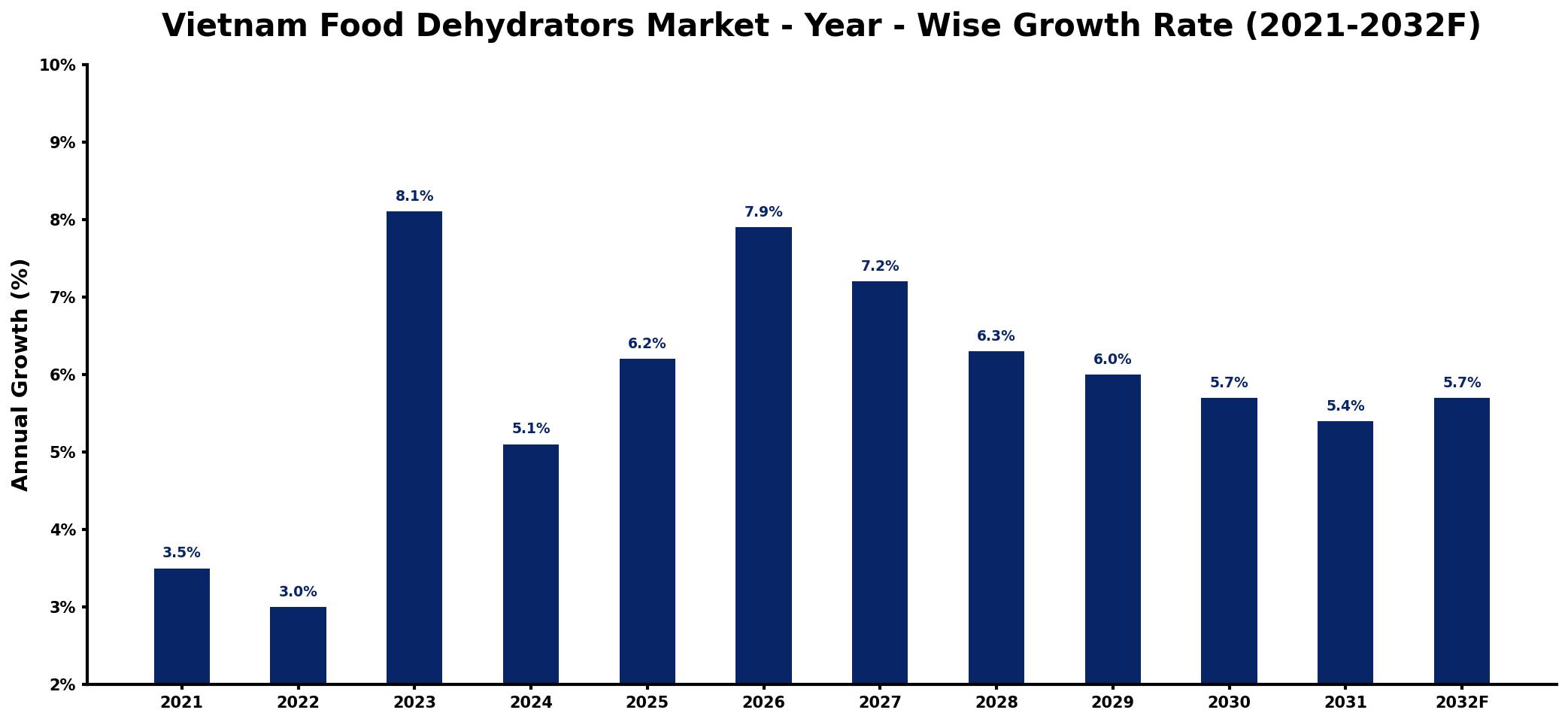
The table below presents the year‑wise growth rates along with the key drivers influencing the market
| Year | Growth Rate | Major Drivers |
| 2021 | 3.5% | Growing health consciousness among consumers |
| 2022 | 3.0% | Increased home cooking trends |
| 2023 | 8.1% | Rising demand for natural snacks |
| 2024 | 5.1% | Expanding retail distribution channels |
| 2025 | 6.2% | Surge in online shopping preferences |
| 2026 | 7.9% | Growing interest in sustainable practices |
| 2027 | 7.2% | Increased awareness of preservation techniques |
| 2028 | 6.3% | Rising disposable income levels |
| 2029 | 6.0% | Expansion of organic product offerings |
| 2030 | 5.7% | Growing popularity of DIY solutions |
| 2031 | 5.4% | Increased focus on nutrition awareness |
| 2032 | 5.7% | increased domestic production output |
Note: Market size estimations and growth projections presented in this report are based on 6Wresearch's proprietary forecasting methodology, utilizing the latest available industry data, government publications, and primary research inputs.
Vietnam Food Dehydrators Market Synopsis
In Vietnam, the food dehydrators market is witnessing a notable shift as more consumers turn to home cooking and preservation methods. This change reflects a broader trend toward healthier eating and reduced food waste, aligning with global movements toward sustainability. As individuals look for cost-effective and healthier food options, food dehydrators have emerged as a practical solution to preserve the flavor and nutritional value of fruits, vegetables, and meats.
The increasing prevalence of health-conscious lifestyles has propelled the popularity of homemade dried snacks, which are both nutritious and customizable. Moreover, innovations in food dehydrator technology have expanded their usability, making these appliances an essential part of modern kitchens across Vietnam. As consumers become more educated about their benefits, the market continues to evolve and attract a diverse customer base.
Vietnam Food Dehydrators Market Key Takeaways
- The market is experiencing robust growth due to heightened consumer interest in food preservation and healthy eating.
- There is a strong demand for homemade dried snacks, which is reshaping purchasing behavior.
- Increased consumer awareness and education will drive future market expansion.
- The COVID-19 pandemic significantly boosted home cooking trends, impacting food dehydrator sales positively.
- Innovative features and designs in food dehydrators are attracting more users in the domestic market.
Evaluation of Restraints in Vietnam Food Dehydrators Market
Despite the growth potential, the Vietnam food dehydrators market faces certain constraints that hinder its full expansion. Limited consumer awareness regarding the functionality and advantages of food dehydrators presents a significant barrier. Many potential users may not fully understand how to utilize these appliances effectively for different types of foods, leading to underutilization. Consequently, manufacturers must enhance marketing efforts, focusing on educational initiatives that highlight the diverse applications of food dehydrators. Additionally, the initial investment cost of these appliances may deter some consumers, necessitating a strong value proposition to encourage adoption.
Vietnam Food Dehydrators Market Trends
Several key trends are shaping the Vietnam food dehydrators market. Firstly, there is a noticeable shift towards multifunctional devices that not only dehydrate but also perform other cooking functions such as baking and fermenting. This versatility attracts consumers looking for space-saving kitchen solutions. Secondly, the trend of health and wellness continues to gain traction, influencing more consumers to seek out nutritious, homemade alternatives to commercially available snacks. Furthermore, as environmental awareness rises, the focus on reducing food waste is driving interest in food preservation technologies, reinforcing the market's position.
Vietnam Food Dehydrators Market Opportunities
The Vietnam food dehydrators market presents numerous opportunities for growth and investment. The increasing popularity of health-centric diets offers a ripe environment for product development, particularly in creating dehydrators that cater to specific dietary needs, such as vegan or gluten-free options. Additionally, enhancing online sales channels and e-commerce platforms can significantly broaden market reach, especially in urban areas. Partnerships with culinary influencers and health-focused organizations could further elevate consumer interest and drive adoption rates, positioning the market for sustained growth.
Government Initiatives in the Vietnam Food Dehydrators Market
The Vietnamese government is increasingly recognizing the importance of food preservation technologies, which aligns with broader goals of enhancing food security and reducing waste. Policies encouraging sustainable practices and investments in local manufacturing can bolster the food dehydrators market. Additionally, initiatives promoting health and wellness programs are likely to complement the growth of consumer interest in food preservation technologies, providing a supportive regulatory environment for market participants.
Future Insights of the Vietnam Food Dehydrators Market
Looking ahead, the Vietnam food dehydrators market is poised for significant evolution. Between 2026 and 2032, we can expect further integration of advanced technologies, such as smart features that allow for app-controlled drying processes. This technological advancement will likely appeal to tech-savvy consumers who prioritize convenience. Additionally, as the market expands, we may witness greater segmentation, with products tailored to specific consumer preferences, such as compact models for urban households or high-capacity units for larger families. Overall, the market is set to thrive as awareness and appreciation for home preservation techniques grow.
Vietnam Food Dehydrators Market Latest Developments (2025 - 2026)
Recent developments in the Vietnam food dehydrators market indicate a growing interest from manufacturers to innovate and diversify their product offerings. Companies are focusing on enhancing the energy efficiency of dehydrators while incorporating user-friendly designs that cater to novice users. There is also an emerging trend of collaborating with local farmers to promote farm-to-table initiatives, emphasizing the freshness and quality of dehydrated products. Trade exhibitions and promotional events centered around cooking and health have increased visibility and consumer engagement in this sector.
Vietnam Food Dehydrators Market - Key Attractiveness of the Report
- 10 Years of Market Numbers
- Historical Data Starting from 2022 to 2025
- Base Year: 2025
- Forecast Data until 2032
- Key Performance Indicators Impacting the Market
- Major Upcoming Developments and Projects
Key Highlights of the Report:
- Vietnam Food Dehydrators Market Outlook
- Market Size of Vietnam Food Dehydrators Market, 2025
- Forecast of Vietnam Food Dehydrators Market, 2032
- Historical Data and Forecast of Vietnam Food Dehydrators Revenues & Volume for the Period 2022-2032F
- Vietnam Food Dehydrators Market Trend Evolution
- Vietnam Food Dehydrators Market Drivers and Challenges
- Vietnam Food Dehydrators Price Trends
- Vietnam Food Dehydrators Porter's Five Forces
- Vietnam Food Dehydrators Industry Life Cycle
- Historical Data and Forecast of Vietnam Food Dehydrators Market Revenues & Volume By Technology for the Period 2022-2032F
- Historical Data and Forecast of Vietnam Food Dehydrators Market Revenues & Volume By Vertical Flow for the Period 2022-2032F
- Historical Data and Forecast of Vietnam Food Dehydrators Market Revenues & Volume By Horizontal Flow for the Period 2022-2032F
- Historical Data and Forecast of Vietnam Food Dehydrators Market Revenues & Volume By End-Use for the Period 2022-2032F
- Historical Data and Forecast of Vietnam Food Dehydrators Market Revenues & Volume By Industrial for the Period 2022-2032F
- Historical Data and Forecast of Vietnam Food Dehydrators Market Revenues & Volume By Commercial for the Period 2022-2032F
- Historical Data and Forecast of Vietnam Food Dehydrators Market Revenues & Volume By Residential for the Period 2022-2032F
- Historical Data and Forecast of Vietnam Food Dehydrators Market Revenues & Volume By Others for the Period 2022-2032F
- Historical Data and Forecast of Vietnam Food Dehydrators Market Revenues & Volume By Energy Source for the Period 2022-2032F
- Historical Data and Forecast of Vietnam Food Dehydrators Market Revenues & Volume By Electricity for the Period 2022-2032F
- Historical Data and Forecast of Vietnam Food Dehydrators Market Revenues & Volume By Biofuel for the Period 2022-2032F
- Historical Data and Forecast of Vietnam Food Dehydrators Market Revenues & Volume By Solar for the Period 2022-2032F
- Historical Data and Forecast of Vietnam Food Dehydrators Market Revenues & Volume By Others for the Period 2022-2032F
- Vietnam Food Dehydrators Import Export Trade Statistics
- Market Opportunity Assessment By Technology
- Market Opportunity Assessment By End-Use
- Market Opportunity Assessment By Energy Source
- Vietnam Food Dehydrators Top Companies Market Share
- Vietnam Food Dehydrators Competitive Benchmarking By Technical and Operational Parameters
- Vietnam Food Dehydrators Company Profiles
- Vietnam Food Dehydrators Key Strategic Recommendations






































