Vietnam Glucose Market Size Growth Rate
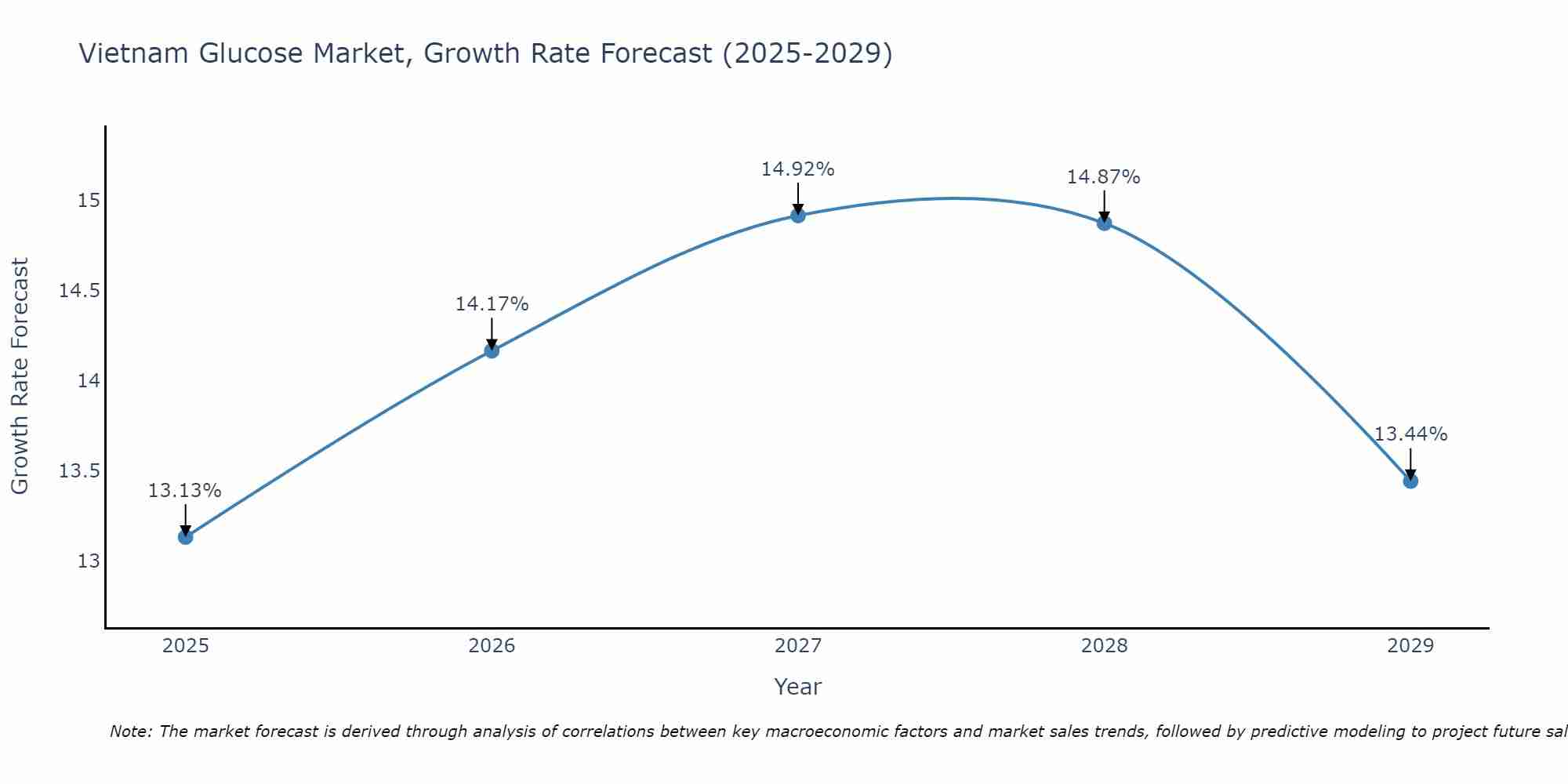
The Vietnam Glucose Market is projected to witness mixed growth rate patterns during 2025 to 2029. Growth accelerates to 14.92% in 2027, following an initial rate of 13.13%, before easing to 13.44% at the end of the period.
Glucose Market: Vietnam vs Top 5 Major Economies in 2027 (Asia)
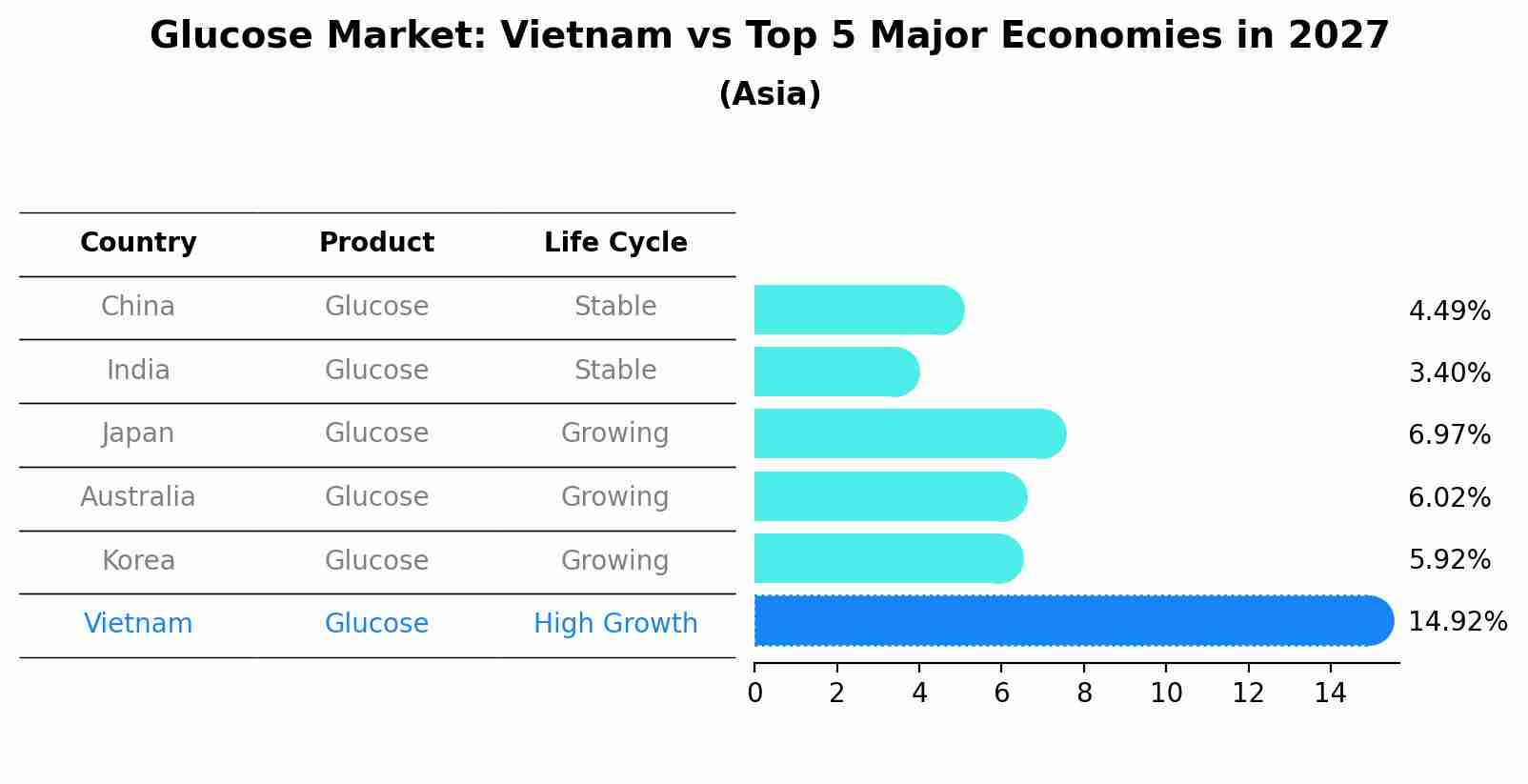
By 2027, Vietnam's Glucose market is forecasted to achieve a high growth rate of 14.92%, with China leading the Asia region, followed by India, Japan, Australia and South Korea.
Vietnam Glucose Market Synopsis
The Vietnam glucose market has witnessed substantial growth in recent years, driven by the country`s expanding food and beverage industry and the increasing demand for sweeteners in various applications. Glucose, a simple sugar derived from corn starch, is widely used as a sweetener and food additive in the food processing sector. As Vietnam experiences population growth, rising disposable incomes, and changes in consumer preferences, the demand for glucose as a versatile and cost-effective sweetener has been on the rise.
Drivers of the Market
Several factors have contributed to the growth of the glucose market in Vietnam. Firstly, the country`s growing urbanization and busy lifestyles have led to an increased consumption of processed and convenience foods, which often contain glucose as a sweetening agent. Secondly, the popularity of bakery and confectionery products in Vietnam has driven the demand for glucose as a key ingredient in the manufacturing of various sweets and treats. Moreover, the food and beverage industry`s focus on product innovation and the development of low-calorie and healthier sweetening options has further boosted the use of glucose in various food and beverage formulations.
Challenges of the Market
Despite its growth, the Vietnam glucose market faces certain challenges. One of the primary challenges is the competition from alternative sweeteners, such as high fructose corn syrup (HFCS), which is also used in various food and beverage products. Additionally, increasing health concerns related to excessive sugar consumption have led to a shift in consumer preferences towards natural and healthier sweeteners, posing challenges for glucose manufacturers to address these changing demands.
COVID-19 Impact on the Market
The outbreak of the Covid-19 pandemic had implications for the Vietnam glucose market. The pandemic led to changes in consumer spending and preferences, with increased demand for packaged and processed foods during periods of lockdown and social distancing. This may have influenced the demand for glucose used in various food products. Moreover, disruptions in the supply chain and production processes during the pandemic may have impacted the availability and pricing of glucose. The pandemic also emphasized the importance of e-commerce and digital marketing for glucose manufacturers and retailers to reach consumers during periods of restricted movement and reduced foot traffic in traditional retail outlets.
Key Highlights of the Report:
- Vietnam Glucose Market Outlook
- Market Size of Vietnam Glucose Market, 2024
- Forecast of Vietnam Glucose Market, 2031
- Historical Data and Forecast of Vietnam Glucose Revenues & Volume for the Period 2021-2031
- Vietnam Glucose Market Trend Evolution
- Vietnam Glucose Market Drivers and Challenges
- Vietnam Glucose Price Trends
- Vietnam Glucose Porter's Five Forces
- Vietnam Glucose Industry Life Cycle
- Historical Data and Forecast of Vietnam Glucose Market Revenues & Volume By Source for the Period 2021-2031
- Historical Data and Forecast of Vietnam Glucose Market Revenues & Volume By Wheat for the Period 2021-2031
- Historical Data and Forecast of Vietnam Glucose Market Revenues & Volume By Corn for the Period 2021-2031
- Historical Data and Forecast of Vietnam Glucose Market Revenues & Volume By Others for the Period 2021-2031
- Historical Data and Forecast of Vietnam Glucose Market Revenues & Volume By Type for the Period 2021-2031
- Historical Data and Forecast of Vietnam Glucose Market Revenues & Volume By Food and Beverage for the Period 2021-2031
- Historical Data and Forecast of Vietnam Glucose Market Revenues & Volume By Pharmaceuticals for the Period 2021-2031
- Historical Data and Forecast of Vietnam Glucose Market Revenues & Volume By Others for the Period 2021-2031
- Vietnam Glucose Import Export Trade Statistics
- Market Opportunity Assessment By Source
- Market Opportunity Assessment By Type
- Vietnam Glucose Top Companies Market Share
- Vietnam Glucose Competitive Benchmarking By Technical and Operational Parameters
- Vietnam Glucose Company Profiles
- Vietnam Glucose Key Strategic Recommendations






































