Vietnam Hams, Shoulders and Cuts of Swine Market Size, Share & Growth Rate
The Vietnam Hams, Shoulders and Cuts of Swine Market was estimated at USD 182 Million in 2025 and is projected to reach USD 257 Million by 2032, growing at a CAGR of 5.1% from 2026 to 2032. This growth trajectory is primarily fueled by the enduring popularity of pork in Vietnamese cuisine, coupled with rising consumer demand for high-quality and versatile meat products. As culinary trends evolve, consumers are increasingly drawn to both traditional cuts and innovative preparations that enhance the culinary experience.
Vietnam Hams, Shoulders and Cuts of Swine Market Year-wise Growth Rate and Key Drivers
This graph highlights how the Vietnam Hams, Shoulders and Cuts of Swine Market has steadily grown over the years, supported by major growth factors.
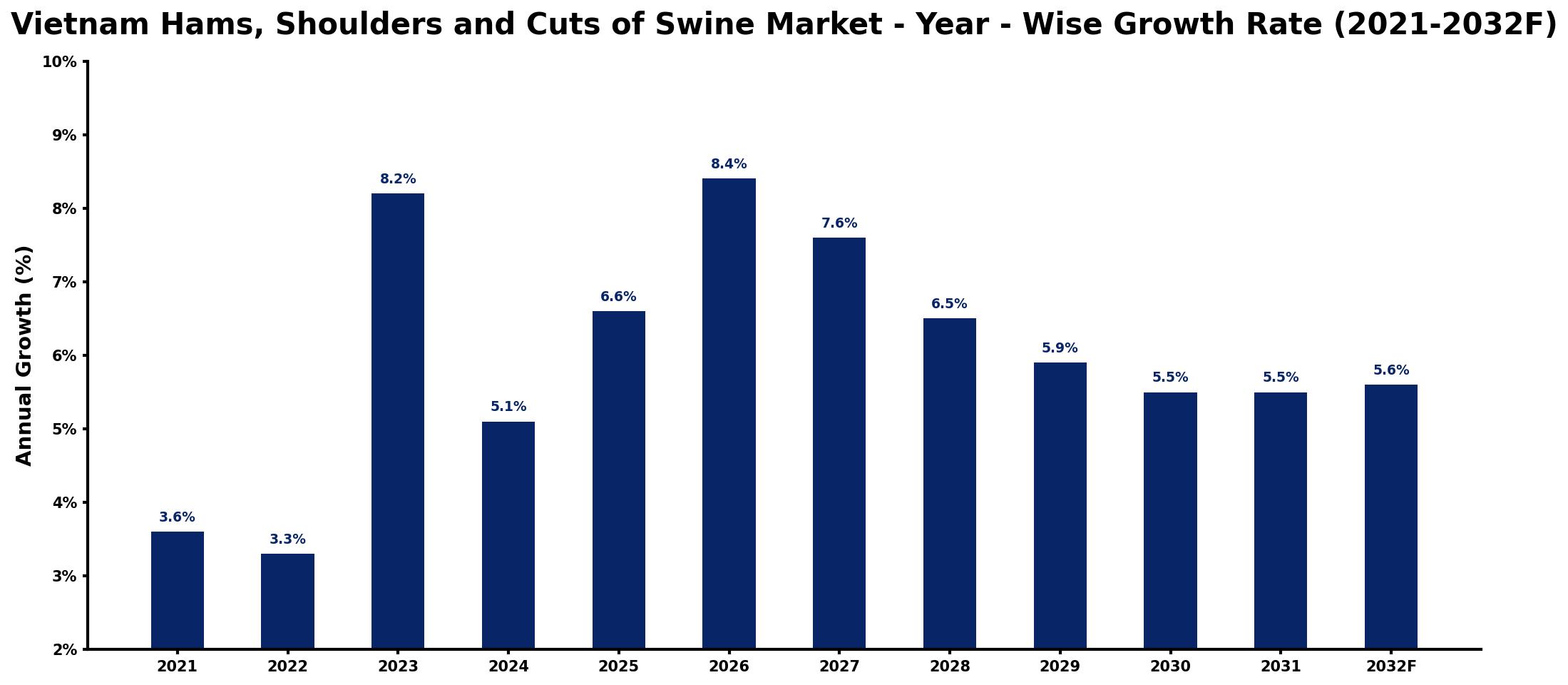
The table below presents the year‑wise growth rates along with the key drivers influencing the market
| Year | Growth Rate | Major Drivers |
| 2021 | 3.6% | Rising consumer protein demand |
| 2022 | 3.3% | Increased foodservice sector growth |
| 2023 | 8.2% | Expansion of retail distribution channels |
| 2024 | 5.1% | Growing health-conscious consumer base |
| 2025 | 6.6% | Enhanced supply chain efficiency |
| 2026 | 8.4% | Investment in food processing technology |
| 2027 | 7.6% | Emerging trends in gourmet products |
| 2028 | 6.5% | Strengthening export market opportunities |
| 2029 | 5.9% | Surge in online grocery shopping |
| 2030 | 5.5% | Focus on sustainable sourcing practices |
| 2031 | 5.5% | Development of new product varieties |
| 2032 | 5.6% | rising export shipment volumes |
Note: Market size estimations and growth projections presented in this report are based on 6Wresearch's proprietary forecasting methodology, utilizing the latest available industry data, government publications, and primary research inputs.
Vietnam Hams, Shoulders and Cuts of Swine Market Synopsis
Recent momentum in the Vietnam Hams, Shoulders and Cuts of Swine Market underscores the integral role of these products in everyday Vietnamese meals. However, the market faces a future where evolving consumer preferences and the impact of globalization may alter demand patterns. Emerging trends toward quality and convenience will likely shape the next phase of growth.
As consumers continue to appreciate both traditional culinary methods and modern processing innovations, the market is poised for diversification. While traditional ham-making and curing techniques endure, new flavors and presentation styles are gaining traction, indicating a dynamic landscape for producers and retailers alike.
Vietnam Hams, Shoulders and Cuts of Swine Market Key Takeaways
- Pork remains a staple in Vietnamese cuisine, ensuring consistent demand for hams, shoulders, and cuts.
- Innovations in processing techniques are creating opportunities for new product offerings and increased consumer interest.
- The impact of COVID-19 highlighted vulnerabilities in supply chains but also accelerated consumer preference for packaged meats.
- Quality control is critical, with consumers expecting higher standards from producers to maintain trust.
- The rise of fast-food culture has influenced consumption patterns, broadening the appeal of processed pork products.
Evaluation of Restraints in Vietnam Hams, Shoulders and Cuts of Swine Market
Despite its robust growth, the Vietnam Hams, Shoulders and Cuts of Swine Market is not without its challenges. The competition from processed meat alternatives poses a significant threat to traditional pork cuts. Moreover, the market faces the pressing need for stringent quality control measures. Maintaining high standards not only ensures consumer safety but also fosters brand loyalty. Without consistent quality, producers may struggle to retain market share amidst increasing competition.
Vietnam Hams, Shoulders and Cuts of Swine Market Trends
Current trends indicate a strong shift towards health-conscious eating, influencing the type of cuts consumers are seeking. Theres also a growing interest in locally sourced and organic meats, reflecting a broader global trend toward sustainability. In addition, digital marketing strategies are increasingly being leveraged to engage consumers and promote new product lines effectively. As the market adapts, these trends are expected to drive innovation and redefine consumer expectations.
Vietnam Hams, Shoulders and Cuts of Swine Market Opportunities
Opportunities for growth in the Vietnam Hams, Shoulders and Cuts of Swine Market are abundant. The demand for premium quality and specialty cuts can be capitalized on by producers offering artisanal products. Additionally, expanding distribution channels, particularly e-commerce platforms, can enhance market reach. As consumer preferences continue to evolve, investing in product development to align with health trends and lifestyle changes will be crucial for sustaining growth.
Government Initiatives in the Vietnam Hams, Shoulders and Cuts of Swine Market
The Vietnamese government has been proactive in promoting food safety and quality assurance in the meat sector. Initiatives aimed at improving livestock production practices and enhancing meat processing standards are crucial to ensuring consumer confidence. Additionally, public awareness campaigns regarding healthy eating habits are being emphasized, aiming to elevate the standards of meat products available in the market. These measures not only support local producers but also contribute to the overall health of the population.
Future Insights of the Vietnam Hams, Shoulders and Cuts of Swine Market
Looking towards 2026-2032, the Vietnam Hams, Shoulders and Cuts of Swine Market is expected to undergo significant transformations. As traditional culinary practices continue to merge with modern consumer demands, the sector will likely see an influx of new products designed to cater to diverse palates. Furthermore, as health consciousness continues to rise, the focus on organic and ethically sourced products will shape production strategies. This evolving landscape promises to present both challenges and opportunities for stakeholders aiming to thrive in this dynamic market.
Vietnam Hams, Shoulders and Cuts of Swine Market Latest Developments (2025 - 2026)
The market has recently seen a shift towards digital transformation, with several producers enhancing their online presence to capture emerging consumer segments. Additionally, some companies have begun to experiment with fusion flavors, blending traditional pork cuts with international cuisines to cater to evolving tastes. In response to growing health awareness, a few brands have started offering lower-fat and organic options, reflecting an adaptation to market demands.
Vietnam Hams, Shoulders and Cuts of Swine Market - Key Attractiveness of the Report
- 10 Years of Market Numbers
- Historical Data Starting from 2022 to 2025
- Base Year: 2025
- Forecast Data until 2032
- Key Performance Indicators Impacting the Market
- Major Upcoming Developments and Projects
Key Highlights of the Report:
- Vietnam Hams, Shoulders and Cuts of Swine Market Outlook
- Market Size of Vietnam Hams, Shoulders and Cuts of Swine Market, 2025
- Forecast of Vietnam Hams, Shoulders and Cuts of Swine Market, 2032
- Historical Data and Forecast of Vietnam Hams, Shoulders and Cuts of Swine Revenues & Volume for the Period 2022-2032F
- Vietnam Hams, Shoulders and Cuts of Swine Market Trend Evolution
- Vietnam Hams, Shoulders and Cuts of Swine Market Drivers and Challenges
- Vietnam Hams, Shoulders and Cuts of Swine Price Trends
- Vietnam Hams, Shoulders and Cuts of Swine Porter's Five Forces
- Vietnam Hams, Shoulders and Cuts of Swine Industry Life Cycle
- Historical Data and Forecast of Vietnam Hams, Shoulders and Cuts of Swine Market Revenues & Volume By Product Type for the Period 2022-2032F
- Historical Data and Forecast of Vietnam Hams, Shoulders and Cuts of Swine Market Revenues & Volume By Processed Meat for the Period 2022-2032F
- Historical Data and Forecast of Vietnam Hams, Shoulders and Cuts of Swine Market Revenues & Volume By Frozen Meat for the Period 2022-2032F
- Historical Data and Forecast of Vietnam Hams, Shoulders and Cuts of Swine Market Revenues & Volume By Chilled Meat for the Period 2022-2032F
- Historical Data and Forecast of Vietnam Hams, Shoulders and Cuts of Swine Market Revenues & Volume By Canned Meat for the Period 2022-2032F
- Historical Data and Forecast of Vietnam Hams, Shoulders and Cuts of Swine Market Revenues & Volume By Fresh Meat for the Period 2022-2032F
- Historical Data and Forecast of Vietnam Hams, Shoulders and Cuts of Swine Market Revenues & Volume By Animal Type for the Period 2022-2032F
- Historical Data and Forecast of Vietnam Hams, Shoulders and Cuts of Swine Market Revenues & Volume By Cattle and Buffalo for the Period 2022-2032F
- Historical Data and Forecast of Vietnam Hams, Shoulders and Cuts of Swine Market Revenues & Volume By Pig for the Period 2022-2032F
- Historical Data and Forecast of Vietnam Hams, Shoulders and Cuts of Swine Market Revenues & Volume By Poultry for the Period 2022-2032F
- Historical Data and Forecast of Vietnam Hams, Shoulders and Cuts of Swine Market Revenues & Volume By Sheep and Goat for the Period 2022-2032F
- Historical Data and Forecast of Vietnam Hams, Shoulders and Cuts of Swine Market Revenues & Volume By Other Animals for the Period 2022-2032F
- Historical Data and Forecast of Vietnam Hams, Shoulders and Cuts of Swine Market Revenues & Volume By Distribution Channel for the Period 2022-2032F
- Historical Data and Forecast of Vietnam Hams, Shoulders and Cuts of Swine Market Revenues & Volume By Business to Consumers (B2C) for the Period 2022-2032F
- Historical Data and Forecast of Vietnam Hams, Shoulders and Cuts of Swine Market Revenues & Volume By Modern Groceries for the Period 2022-2032F
- Historical Data and Forecast of Vietnam Hams, Shoulders and Cuts of Swine Market Revenues & Volume By Wet & Butcher Shops for the Period 2022-2032F
- Historical Data and Forecast of Vietnam Hams, Shoulders and Cuts of Swine Market Revenues & Volume By Convenience Stores for the Period 2022-2032F
- Historical Data and Forecast of Vietnam Hams, Shoulders and Cuts of Swine Market Revenues & Volume By Business to Business (B2B) for the Period 2022-2032F
- Historical Data and Forecast of Vietnam Hams, Shoulders and Cuts of Swine Market Revenues & Volume By Other Channel for the Period 2022-2032F
- Vietnam Hams, Shoulders and Cuts of Swine Import Export Trade Statistics
- Market Opportunity Assessment By Product Type
- Market Opportunity Assessment By Animal Type
- Market Opportunity Assessment By Distribution Channel
- Vietnam Hams, Shoulders and Cuts of Swine Top Companies Market Share
- Vietnam Hams, Shoulders and Cuts of Swine Competitive Benchmarking By Technical and Operational Parameters
- Vietnam Hams, Shoulders and Cuts of Swine Company Profiles
- Vietnam Hams, Shoulders and Cuts of Swine Key Strategic Recommendations






































