Vietnam Hotel Furniture Market Summary
The vietnam hotel furniture market was estimated at USD 817 Million in 2025 and is projected to reach USD 1159 Million by 2032, growing at a CAGR of 8.3% from 2026 to 2032.
Vietnam Hotel Furniture Market Year-wise Growth Rate and Key Drivers
This graph highlights how the Vietnam Hotel Furniture Market has steadily grown over the past five years, supported by major growth factors.
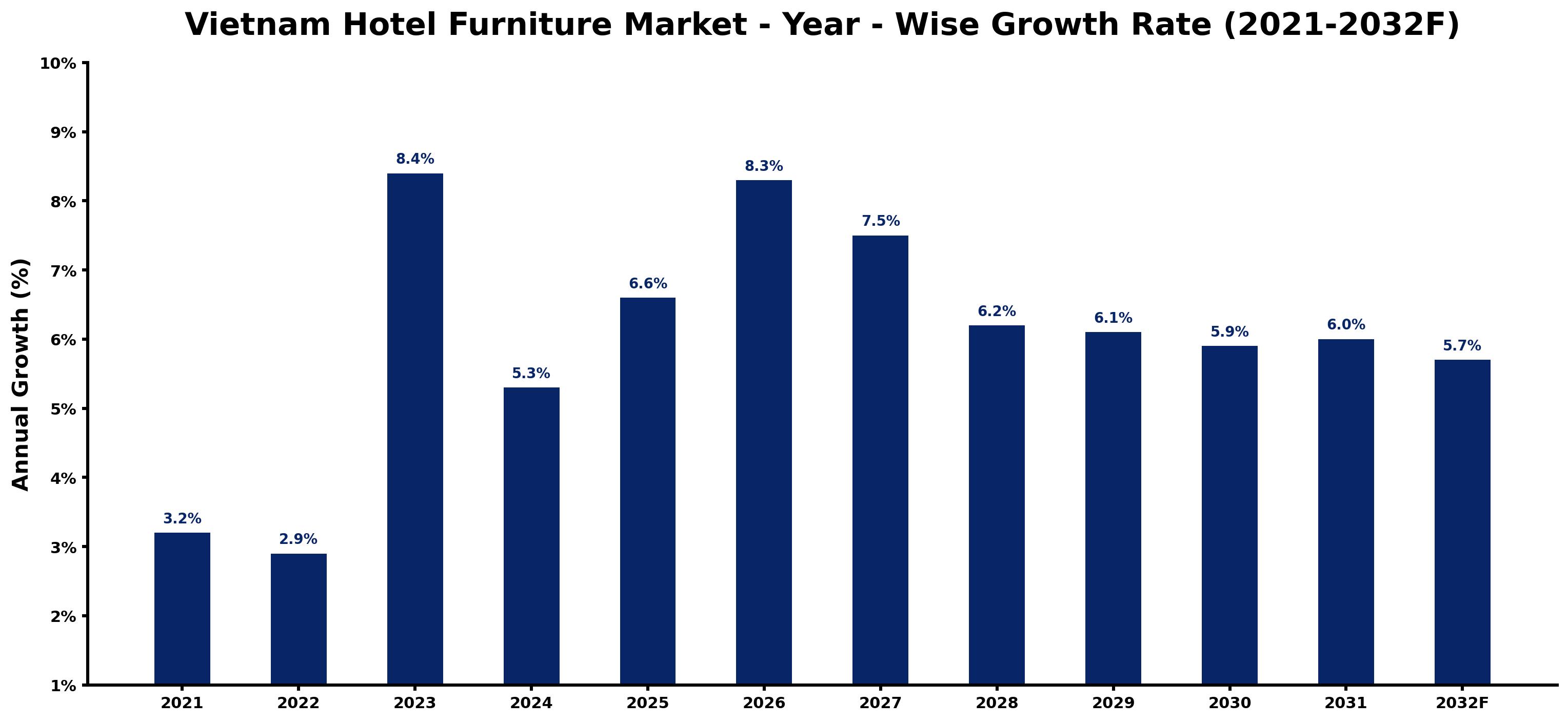
The table below presents the year wise growth rates along with the key drivers influencing the market
| Year | Growth Rate | Major Drivers |
| 2021 | 3.2% | Post-lockdown retail projects began revitalizing the hospitality sector in Vietnam. |
| 2022 | 2.9% | International tourism recovery spurred investments in hotel infrastructure and furnishings. |
| 2023 | 8.4% | Local manufacturers embraced sustainable materials, meeting eco-conscious consumer preferences effectively. |
| 2024 | 5.3% | Technological innovations in furniture design enhanced customization options for hotels. |
| 2025 | 6.6% | Rising disposable incomes among Vietnamese consumers increased demand for upscale hotel experiences. |
| 2026 | 8.3% | The influx of foreign hotel brands in urban centers expanded market opportunities significantly. |
| 2027 | 7.5% | Competitive pressure promoted collaborations between hotels and local furniture artisans for uniqueness. |
| 2028 | 6.2% | Increased focus on wellness tourism influenced the design of hotel furniture and spaces. |
| 2029 | 6.1% | Urbanization trends drove the development of boutique hotels with bespoke furniture solutions. |
| 2030 | 5.9% | The Vietnamese economy's stability attracted foreign investments in hotel construction and design. |
| 2031 | 6.0% | Sustainable practices became standard, impacting design choices in hotel furniture across Vietnam. |
| 2032 | 5.7% | Integration of smart technologies in furniture design improved guest experiences and operational efficiency. |
Note - Market size estimations and growth projections presented in this report are based on 6Wresearch's advanced forecasting approach, validated with industry datasets as of June 2026.
Vietnam Hotel Furniture Market Synopsis
The Vietnam Hotel Furniture Market is projected to reach 8.3% and witness significant growth during the forecast period (2026-2032). As tourism in Vietnam continues to flourish, the demand for high-quality hotel furniture that meets the needs of both leisure and business travelers is on the rise. This market encompasses a diverse array of products, including hotel room furniture, lobby furnishings, restaurant and dining area pieces, and outdoor furniture suitable for resorts. Vietnam's reputation as an economical manufacturing hub, paired with its skilled craftsmanship, has made it an attractive source for international hotel chains seeking quality furnishings.
Vietnam Hotel Furniture Market Growth Drivers
Several factors are propelling the growth of the Vietnam Hotel Furniture market. One of the primary drivers is the robust increase in tourism. As Vietnam emerges as a preferred destination for tourists globally, the hospitality sector is expanding rapidly, driving demand for furniture. Furthermore, renovations and expansions of existing hotels are becoming commonplace, requiring innovative and aesthetically pleasing furniture solutions.
- The rise of business travel contributes significantly, as corporate visitors demand comfortable and functional furnishings that enhance their stay experience.
- Increased foreign investments in Vietnam's hospitality sector have further stimulated the market, with international chains seeking local suppliers for their furniture needs.
- The emergence of boutique and themed hotels has shifted expectations, leading to increased demand for unique and custom furniture that reflects specific brand identities.
- A growing emphasis on sustainability within the market compels producers to adopt eco-friendly materials and practices, appealing to environmentally conscious hoteliers and guests alike.
- Overall, the synergy between tourism growth and innovative product development positions the Vietnam Hotel Furniture market for sustained expansion in the coming years.
Vietnam Hotel Furniture Market Challenges and Restraints
Despite the positive outlook, the Vietnam Hotel Furniture market faces several challenges that could impede growth. One significant challenge is balancing aesthetic design with durability and functionality, as furniture must not only attract but also endure heavy use from guests.
- The need for furniture to conform to various hotel styles and themes can complicate production, as customization can lead to increased costs and longer lead times.
- Rising demand for sustainable materials requires manufacturers to invest in eco-friendly sourcing and production practices, which may not align with all business models.
- As the industry recovers from the impacts of the COVID-19 pandemic, fluctuating economic conditions may cause hoteliers to approach furniture investments cautiously.
- The pressure to maintain competitive pricing in light of increasing production costs can challenge profitability for manufacturers.
- Lastly, supply chain disruptions remain a risk, affecting the timely delivery of products essential to hotel operations.
Vietnam Hotel Furniture Market Government Investment and Initiatives
The Vietnamese government plays an active role in supporting the hospitality sector, which includes the hotel furniture market. Initiatives aimed at enhancing the tourism infrastructure have led to increased public spending in areas such as transportation and hotel development. Moreover, government policies encouraging foreign investment in the hospitality sector create a favorable environment for hotel growth.
Recent regulations have also focused on sustainability, prompting local manufacturers to adopt environmentally friendly practices. The government's commitment to promoting Vietnam as a prime tourism destination translates into investments that benefit the entire supply chain, from manufacturers to hoteliers. Such initiatives collectively contribute to a market environment conducive to growth and innovation.
Vietnam Hotel Furniture Market Latest Developments (May 2025 - June 2026)
Recent developments in the Vietnam Hotel Furniture market reflect a committed push towards innovation and sustainability. During this period, many manufacturers are increasingly adopting sustainable sourcing practices, with many utilizing materials that minimize environmental impact. The industry is also witnessing a shift towards technology integration in furniture design, aiming to enhance guest experience through smart furniture solutions.
Additionally, the recovery of the tourism sector post-COVID-19 is prompting a surge in hotel renovations, prompting hoteliers to reassess their furniture needs. Collaborative projects between local manufacturers and international design firms are emerging, focusing on creating custom solutions that cater to the evolving demands of travelers. The market dynamics are also shifting towards creating multifunctional spaces within hotels, influencing furniture designs to allow flexibility while maintaining aesthetic appeal.
Vietnam Hotel Furniture Market - Key Attractiveness of the Report
- 10 Years of Market Numbers
- Historical Data Starting from 2022 to 2025
- Base Year: 2025
- Forecast Data until 2032
- Key Performance Indicators Impacting the Market
- Major Upcoming Developments and Projects
Key Highlights of the Report:
- Vietnam Hotel Furniture Market Outlook
- Market Size of Vietnam Hotel Furniture Market, 2025
- Forecast of Vietnam Hotel Furniture Market, 2032
- Historical Data and Forecast of Vietnam Hotel Furniture Revenues & Volume for the Period 2022-2032F
- Vietnam Hotel Furniture Market Trend Evolution
- Vietnam Hotel Furniture Market Drivers and Challenges
- Vietnam Hotel Furniture Price Trends
- Vietnam Hotel Furniture Porter's Five Forces
- Vietnam Hotel Furniture Industry Life Cycle
- Historical Data and Forecast of Vietnam Hotel Furniture Market Revenues & Volume By Product Types for the Period 2022-2032F
- Historical Data and Forecast of Vietnam Hotel Furniture Market Revenues & Volume By Table and Chairs for the Period 2022-2032F
- Historical Data and Forecast of Vietnam Hotel Furniture Market Revenues & Volume By Hotel Beds for the Period 2022-2032F
- Historical Data and Forecast of Vietnam Hotel Furniture Market Revenues & Volume By Hotel Casegoods for the Period 2022-2032F
- Historical Data and Forecast of Vietnam Hotel Furniture Market Revenues & Volume By Other for the Period 2022-2032F
- Historical Data and Forecast of Vietnam Hotel Furniture Market Revenues & Volume By Applications for the Period 2022-2032F
- Historical Data and Forecast of Vietnam Hotel Furniture Market Revenues & Volume By Business Hotel for the Period 2022-2032F
- Historical Data and Forecast of Vietnam Hotel Furniture Market Revenues & Volume By Luxury Hotel for the Period 2022-2032F
- Historical Data and Forecast of Vietnam Hotel Furniture Market Revenues & Volume By Boutique Hotel for the Period 2022-2032F
- Historical Data and Forecast of Vietnam Hotel Furniture Market Revenues & Volume By Other for the Period 2022-2032F
- Vietnam Hotel Furniture Import Export Trade Statistics
- Market Opportunity Assessment By Product Types
- Market Opportunity Assessment By Applications
- Vietnam Hotel Furniture Top Companies Market Share
- Vietnam Hotel Furniture Competitive Benchmarking By Technical and Operational Parameters
- Vietnam Hotel Furniture Company Profiles
- Vietnam Hotel Furniture Key Strategic Recommendations






































