Vietnam Kids Footwear Market Growth Rate
According to 6Wresearch internal database and industry insights, the Vietnam Kids Footwear Market is growing at a compound annual growth rate (CAGR) of 7.45% during the forecast period (2026-2032).
Vietnam Kids Footwear Market Year-wise Growth Rate and Key Drivers
This graph highlights how the Vietnam Kids Footwear Market has steadily grown over the past five years, supported by major growth factors.
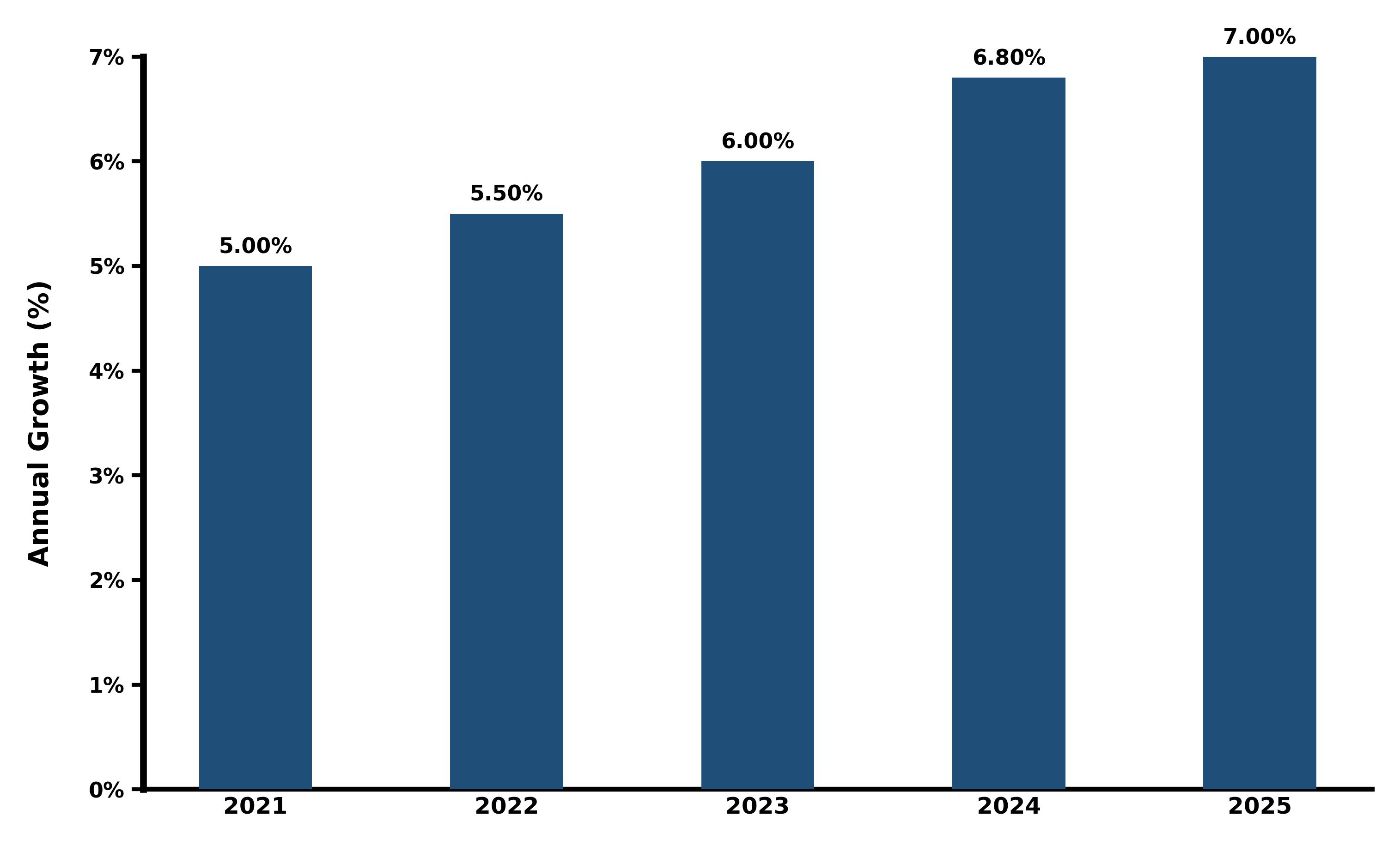
The table below presents the year‑wise growth rates along with the key drivers influencing the market
| Years | Est. Annual Growth in % | Growth Drivers |
| 2021 | 5% | Increase in demand for comfortable and stylish footwear among kids. |
| 2022 | 5.5% | Growing fashion awareness and changing lifestyle in urban regions. |
| 2023 | 6% | Rising disposable income among parents and the growing middle class. |
| 2024 | 6.8% | Increasing use of e-commerce platforms for kids' footwear shopping. |
| 2025 | 7% | Rising brand penetration and expansion of domestic manufacturing. |
Topics Covered in the Vietnam Kids Footwear Market Report
The Vietnam Kids Footwear Market report thoroughly covers the market by product types, end-users, and distribution channels. The market report provides an unbiased and detailed analysis of ongoing market trends, opportunities/high growth areas, and market drivers, which would help stakeholders devise and align their market strategies according to the current and future market dynamics.
Vietnam Kids Footwear Market Highlights
| Report Name | Vietnam Kids Footwear Market |
| Forecast Period | 2026-2032 |
| CAGR | 7.45% |
| Growing Sector | E-commerce |
Vietnam Kids Footwear Market Synopsis
The Vietnam Kids Footwear Market is expected to grow robustly due to increased demand among consumers for comfortable and sustainable footwear for children. Also, increasing disposable income and a growing middle-class population are driving the demand for premium footwear for children. The expansion of online retail platforms is also boosting the market growth by providing ease of accessibility and a wide range of product offerings to the consumers. Rising social media platforms and fashion consciousness trends are boosting the demand for stylish footwear.
Evaluation of Growth Drivers in the Vietnam Kids Footwear Market
Below mentioned are some growth drivers and their impact on market dynamics:
| Drivers | Primary Segments Affected | Why It Matters |
| Growing Fashion Consciousness | Product Types (Casual, Sports, Formal, Others) | Boosts demand for trendy footwear and branded products for kids. |
| Rise in Disposable Income | End-users (Boys, Girls, Unisex) | Increases purchasing power, especially for premium and branded kids' footwear. |
| E-commerce Growth | Distribution Channels (Online Retail) | Online platforms are increasing the accessibility of products to a large consumer base. |
| Government Initiatives in Retail | Product Types (Casual, Sports, Formal, Others) | Promotes local manufacturing and makes better quality standards for footwear. |
| Increase in Brand Awareness | End-users (Boys, Girls, Unisex) | Increases competition and drives innovation in kids' footwear products. |
The Vietnam Kids Footwear Market is projected to grow significantly, with a CAGR of 7.45% during the forecast period of 2026-2032. The Vietnam Kids Footwear Market key drivers include increasing spending power of consumers, driving demand for the premium footwear segment. Other than that, growing fashion trends among consumers due to the penetration of social media platforms are encouraging the demand for stylish and high-quality footwear for children. Growing sustainability trends within Vietnam are boosting the demand for eco-friendly and sustainable footwear solutions. Other than that, the growth of online retail platforms is also encouraging market expansion by providing competitive pricing and a wide variety of product offerings to the consumers.
Evaluation of Restraints in the Vietnam Kids Footwear Market
Below mentioned are some major restraints and their influence on market dynamics:
| Restraints | Primary Segments Affected | What This Means |
| High Production Costs | Product Types (All Categories) | Increases costs of production and affects pricing strategies for companies. |
| Limited Domestic Manufacturing | Distribution Channels (Offline Retail) | Limits the availability of locally produced footwear, increasing reliance on imports. |
| Seasonal Demand | End-users (Boys, Girls, Unisex) | Makes volatility in demand, and the inventory management and sales gets affected. |
| Rising Competition from Low-Cost Imports | Product Types (All Categories) | Pressures local brands to lower prices, impacting profit margins. |
| Regulatory Compliance | Product Types (Casual, Sports, Formal, Others) | Makes the cost higher of compliance and may lower market access for some brands. |
Vietnam Kids Footwear Market Challenges
The Vietnam Kids Footwear Market encounters difficulties as it lacks sufficient domestic production capacity, which forces most brands to depend on imported goods. The seasonal demand patterns lead to difficulties in managing inventory. Besides, the growing competition from low-priced imported products compels local brands to create unique products. Also, new market entrants encounter obstacles from regulatory requirements, which create difficulties for certain companies who want to enter the market. The manufacturing sector faces major challenges through these factors, which will disrupt the entire market system.
Vietnam Kids Footwear Market Trends
Some major trends contributing to the Vietnam Kids Footwear Market Growth are:
- Health-Conscious Footwear Products: Consumers are increasingly proffering for ergonomic and comfortable shoes which prioritize health benefits and are adjustable for growing children’s feet and well-being.
- Technological Advancements: Growing technological advancements such as 3D printing and customization for personal touch are enahncing the quality and design of footwear.
- Influence of Social Media: Growing social media fashion trends are boosting the demand for premium and stylish footwear providing both comfort and unique options of footwear.
Investment Opportunities in the Vietnam Kids Footwear Market
Here are some investment opportunities in the Vietnam Kids Footwear Industry:
- Customized Footwear: The consumers are increasingly preferring for customized and stylish footwear options such as footwears having unique design and colours.
- Sustainable Kids Footwear: There is a growing demand among consumers for eco-friendly and environmentally-conscious footwear due to increased awareness about environmental concerns.
- E-commerce Platforms: The online retail platforms are encouraging the industry growth by providing ease of accessibility and wide variety of products offerings to the consumers.
Top 5 Leading Players in the Vietnam Kids Footwear Market
Here are some top companies contributing to the Vietnam Kids Footwear Market Share:
1. Biti's (Binh Tien Imex Corp)
| Company Name | Biti's (Binh Tien Imex Corp) |
| Headquarters | District 6, Ho Chi Minh City, Vietnam |
| Established Year | 1982 |
| Official Website | Click Here |
Biti's is the most iconic footwear brand in Vietnam, famously known for its slogan "Nâng niu bàn chân Việt" (Cherishing Vietnamese feet). For the kids' segment, they are the first and only footwear licensee for Disney in the country, producing high-quality themed shoes featuring popular characters.
2. Rabity (Tan Phu Fashion)
| Company Name | Rabity (Tan Phu Fashion) |
| Headquarters | Ho Chi Minh City, Vietnam |
| Established Year | 2000 (Brand launched in 2016) |
| Official Website | Click Here |
Rabity is currently the largest kids' fashion brand in Vietnam, operating over 80 showrooms nationwide. While they cover full apparel, their footwear line is a major driver, focusing on natural materials and ergonomic designs for children aged 1–15.
3. Crown Space
| Company Name | Crown Space |
| Headquarters | Hanoi, Vietnam |
| Established Year | 2007 |
| Official Website | Click Here |
Crown Space positions itself as a high-end distributor and retailer of international kids' footwear brands like Crown UK and Royale Baby. They specialize in "Health Footwear," emphasizing arch support and breathable leather to ensure proper bone development.
4. Bita's (Binh Tan Consumer Goods)
| Company Name | Bita's (Binh Tan Consumer Goods) |
| Headquarters | Binh Tan District, Ho Chi Minh City, Vietnam |
| Established Year | 1991 |
| Official Website | Click Here |
Often considered the primary rival to Biti's, Bita's is a massive manufacturer with a workforce of over 5,000. They produce a vast range of durable canvas shoes and PVC sandals that are staples in the "Back to School" season.
5. Prowin (Nam Binh Co., Ltd)
| Company Name | Prowin (Nam Binh Co., Ltd) |
| Headquarters | Di An, Binh Duong, Vietnam |
| Established Year | 2005 |
| Official Website | Click Here |
Prowin is a specialist in the athletic and sports footwear niche. For children, they are the leading domestic provider of soccer cleats and badminton shoes, filling a gap for affordable, performance-oriented gear.
Government Regulations Introduced in the Vietnam Kids Footwear Market
According to Vietnamese government data, the Vietnam Kids Footwear Market is regulated by the Vietnam Ministry of Industry and Trade (MOIT), which sets standards for product safety, quality, and environmental regulations. The Vietnam Footwear Industry Development Program targets two goals which include enhancing local manufacturing capabilities and bettering production methods. Government incentives such as tax reductions and subsidies for eco-friendly manufacturing are also encouraging investments in sustainable footwear production. These initiatives help local and international businesses to fulfill product requirements while expanding their ability to enter new markets.
Future Insights of the Vietnam Kids Footwear Market
The Vietnam Kids Footwear Market shows future potential as it has strong growth predictions. Market expansion will occur as people have higher disposable incomes and the middle class expands their demand for fashionable and comfortable shoes. E-commerce will continue to be a key expansion driver as it provides users with convenient shopping options. The market will experience growth as the government backs local manufacturing and eco-friendly operations, which create an environment that supports business expansion in upcoming years.
Market Segmentation Analysis
The report offers a comprehensive study of the subsequent market segments and their leading categories.
Casual Footwear to Dominate the Market – By Product Type
According to Guneet Kaur, Senior Research Analyst at 6Wresearch, casual footwear is leading the market. Mainly due to its versatility, comfort, and affordability. Also, these shoes are preferred by both parents and kids for daily wear, making them a staple in the kids' footwear segment.
Boys to Dominate the Market – By End-users
Boys' footwear is leading the market as the most significant consumer segment, with greater demand for a variety of designs in both casual and sports shoes. The popularity of trendy, durable, and functional footwear makes it the fastest-growing end-user category in the market.
Key attractiveness of the Report
- 10 Years Market Numbers.
- Historical Data Starting from 2022 to 2025.
- Base Year: 2025
- Forecast Data until 2032.
- Key Performance Indicators Impacting the Market.
- Major Upcoming Developments and Projects.
Key Highlights of the Report:
- Vietnam Kids Footwear Market Outlook
- Market Size of Vietnam Kids Footwear Market, 2025
- Forecast of Vietnam Kids Footwear Market, 2032
- Historical Data and Forecast of Vietnam Kids Footwear Revenues & Volume for the Period 2022-2032
- Vietnam Kids Footwear Market Trend Evolution
- Vietnam Kids Footwear Market Drivers and Challenges
- Vietnam Kids Footwear Price Trends
- Vietnam Kids Footwear Porter's Five Forces
- Vietnam Kids Footwear Industry Life Cycle
- Historical Data and Forecast of Vietnam Kids Footwear Market Revenues & Volume By Product Type for the Period 2022-2032
- Historical Data and Forecast of Vietnam Kids Footwear Market Revenues & Volume By Casual for the Period 2022-2032
- Historical Data and Forecast of Vietnam Kids Footwear Market Revenues & Volume By Sports for the Period 2022-2032
- Historical Data and Forecast of Vietnam Kids Footwear Market Revenues & Volume By Formal for the Period 2022-2032
- Historical Data and Forecast of Vietnam Kids Footwear Market Revenues & Volume By Others for the Period 2022-2032
- Historical Data and Forecast of Vietnam Kids Footwear Market Revenues & Volume By End-users for the Period 2022-2032
- Historical Data and Forecast of Vietnam Kids Footwear Market Revenues & Volume By Boys for the Period 2022-2032
- Historical Data and Forecast of Vietnam Kids Footwear Market Revenues & Volume By Girls for the Period 2022-2032
- Historical Data and Forecast of Vietnam Kids Footwear Market Revenues & Volume By Unisex for the Period 2022-2032
- Vietnam Kids Footwear Import Export Trade Statistics
- Market Opportunity Assessment By Product Type
- Market Opportunity Assessment By End-users
- Vietnam Kids Footwear Top Companies Market Share
- Vietnam Kids Footwear Competitive Benchmarking By Technical and Operational Parameters
- Vietnam Kids Footwear Company Profiles
- Vietnam Kids Footwear Key Strategic Recommendations
Market Covered
The report subsequently covers the market by following segments and subsegments.
By Product Type
- Casual
- Sports
- Formal
- Others
By End-users
- Boys
- Girls
- Unisex






































