Vietnam LTE IoT Market Size & Growth Rate (2026-2032)
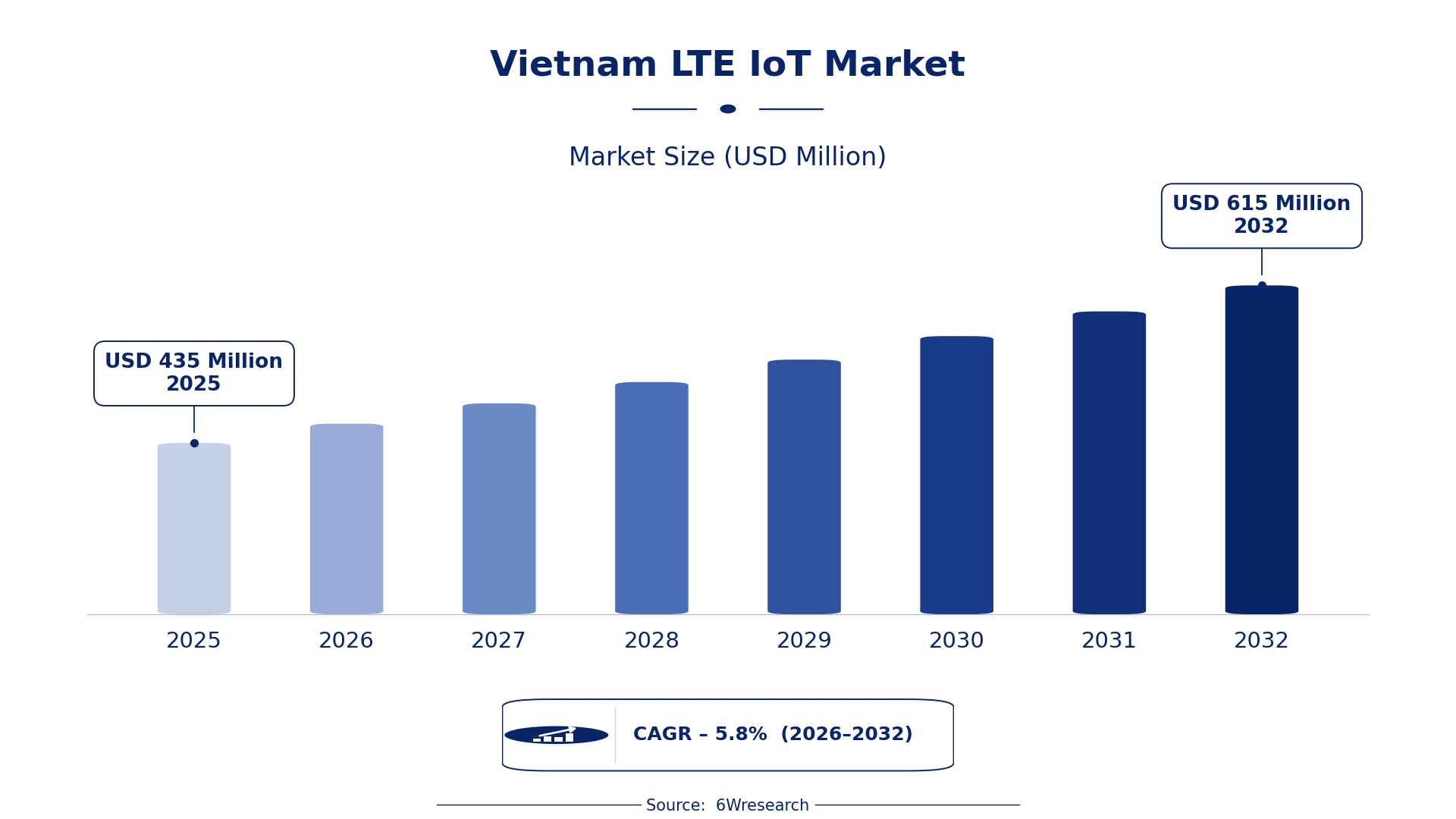
The Vietnam LTE IoT Market was estimated at USD 435 Million in 2025 and is projected to reach USD 615 Million by 2032, growing at a CAGR of 5.8% from 2026 to 2032.
Vietnam LTE IoT Market Synopsis
Vietnam is making remarkable strides in the LTE IoT market, as organizations across various sectors recognize the need for efficient connectivity solutions. The adoption of LTE networks is enabling real-time data analytics, enhancing operational efficiencies, and promoting innovation in smart city initiatives.
As the nation gears up for Industry 4.0, the LTE IoT market is becoming a vital pillar for economic growth. This sector not only supports local industries in asset management and logistics but also positions Vietnam as a competitive player on the global digital stage.
Vietnam LTE IoT Market Year-wise Growth Rate and Key Drivers
This graph illustrates the annual growth rates of the Vietnam LTE IoT Market from 2021 to 2032, highlighting a steady upward trajectory and projected expansion over the forecast period.
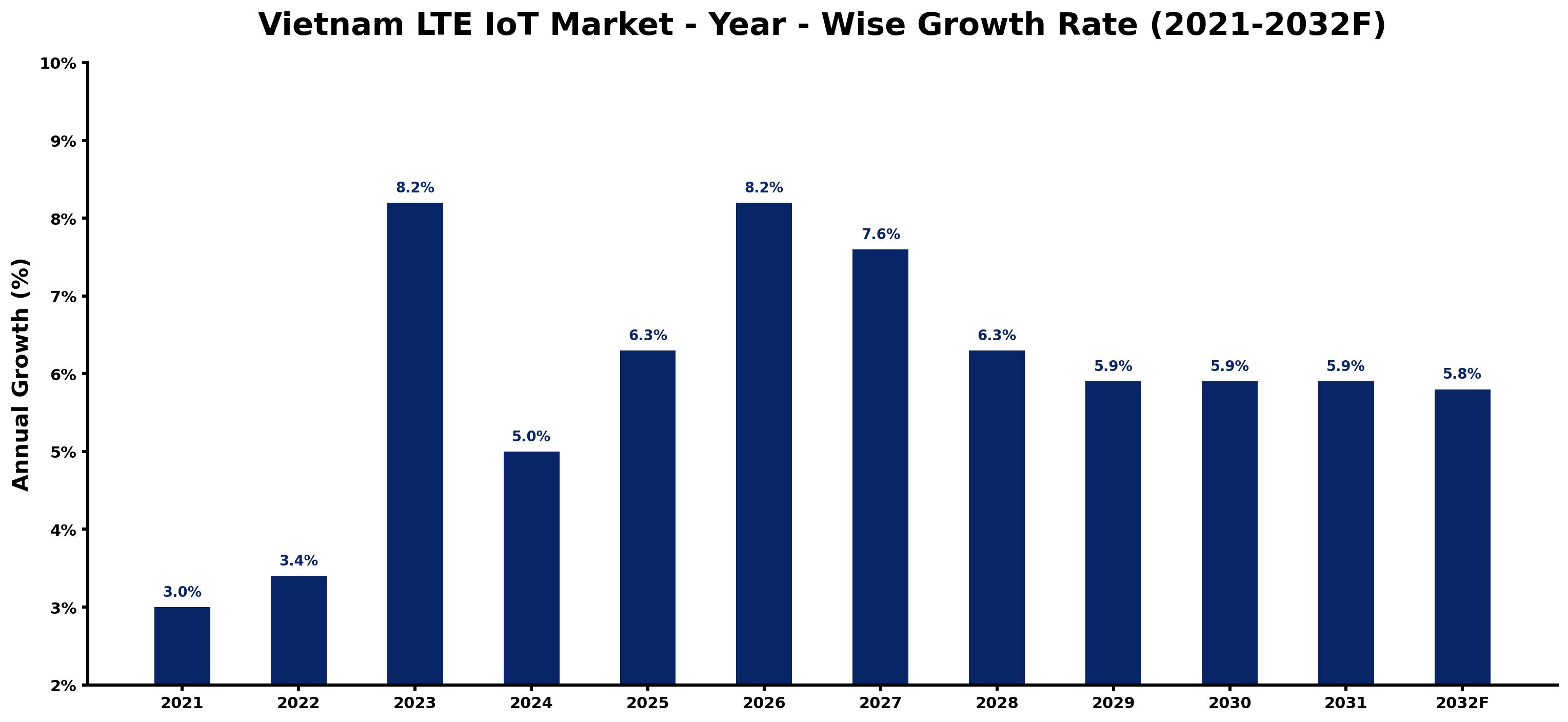
The table below presents the year‑wise growth rates along with the key drivers influencing the market
| Year | Growth Rate | Major Drivers |
| 2021 | 3.0% | Government initiative promoting smart cities and IoT integration. |
| 2022 | 3.4% | Launch of nationwide IoT connectivity program by VNTA. |
| 2023 | 8.2% | Increase in smart meter adoption driven by EVN initiatives. |
| 2024 | 5.0% | Growth in urbanization boosting demand for smart appliances. |
| 2025 | 6.3% | Development of local IoT startups spurring innovation and adoption. |
| 2026 | 8.2% | Vietnam’s focus on digital transformation enhancing IoT applications. |
| 2027 | 7.6% | Rising consumer interest in connected home technologies. |
| 2028 | 6.3% | Increased investment in smart logistics solutions for cities. |
| 2029 | 5.9% | Government support for tech-driven agricultural innovations continues. |
| 2030 | 5.9% | Enhanced regulatory frameworks for IoT device security implemented. |
| 2031 | 5.9% | Emergence of 5G technology enabling advanced IoT solutions. |
| 2032 | 5.8% | Growing partnerships between tech firms and local governments. |
Note: Market size estimations and growth projections presented in this report are based on 6Wresearch's proprietary forecasting methodology, utilizing the latest available industry data, government publications, and primary research inputs.
Vietnam LTE IoT Market Key Takeaways
Below are some of the specific key takeaways from the market, including:
- Growing investment in IoT devices and platforms reflects rising demand for data-driven decision-making.
- Government initiatives are actively fostering a digital transformation environment for IoT adoption.
- The agriculture and logistics sectors are rapidly embracing LTE IoT technology for enhanced efficiency.
- Recent trends indicate increased collaboration among businesses to identify and utilize IoT applications effectively.
- Security and interoperability remain challenges that must be addressed for further market growth.
Evaluation of Restraints in Vietnam LTE IoT Market
Despite its promising growth, the Vietnam LTE IoT market faces notable obstacles. One major challenge is the limited coverage of LTE networks, especially in rural areas, which hampers the accessibility of IoT solutions. Expanding network infrastructure is not just costly but also logistically complex. Additionally, standardization remains elusive, with many devices and platforms lacking compatibility, which stifles widespread adoption. Security vulnerabilities pose another significant risk, as businesses grapple with the potential for cyber threats. Addressing these restraints is crucial for unlocking the market's full potential.
Vietnam LTE IoT Market Trends
Several trends are shaping the demand within the Vietnam LTE IoT market. There is a growing emphasis on data analytics, enabling businesses to derive actionable insights from IoT-generated data. The push towards smart city projects is also gaining momentum, with cities implementing IoT solutions to improve public services and infrastructure management. Furthermore, advancements in device technology are enhancing the efficiency and functionality of IoT applications, making them more appealing to various sectors.
Vietnam LTE IoT Market Opportunities
Opportunities abound for growth and investment in the Vietnam LTE IoT market. Industries such as agriculture, healthcare, and transportation are ripe for IoT integration, offering innovative applications that can drive operational improvements. Additionally, the government's ongoing digital transformation initiatives create a fertile environment for new IoT projects. Companies that can identify niche applications and tailor their solutions accordingly stand to gain a competitive edge.
Government Initiatives in the Vietnam LTE IoT Market
The Vietnamese government recognizes the importance of IoT in driving economic progress and has implemented various initiatives to support the sector. By focusing on digital transformation and innovation, the government is creating favorable conditions for the expansion of the LTE IoT market. These efforts are aimed at not only enhancing connectivity but also ensuring Vietnam remains competitive in the global digital economy.
- A national digital infrastructure upgrade programme now in its rollout phase aims to enhance LTE coverage nationwide.
- A recently launched regulatory framework seeks to standardize IoT technologies to promote interoperability among devices.
- A planned public-private initiative expected to expand telecom infrastructure access by 2028 will facilitate IoT deployment in underserved areas.
- Ongoing funding initiatives from the government to support smart city projects are encouraging local investments in IoT technologies.
- Current efforts focus on enhancing cybersecurity measures to protect IoT devices and networks from vulnerabilities.
Future Insights of the Vietnam LTE IoT Market
Looking ahead, the Vietnam LTE IoT market is set to grow substantially between 2026 and 2032. As connectivity continues to improve, the adoption of IoT solutions will likely accelerate across various sectors. Businesses will increasingly rely on data-driven insights to enhance their operations and drive innovation. Continued government support for digital initiatives will be crucial in fostering an environment conducive to IoT growth. The market's trajectory suggests that Vietnam could emerge as a regional leader in IoT solutions, particularly as industries recognize the transformative power of connected technology.
Vietnam LTE IoT Market Latest Developments
Recent industry activity in the Vietnam LTE IoT market reflects a dynamic shift towards enhanced connectivity solutions. As companies adapt to the changing digital landscape, several noteworthy developments have taken place over the last year. The focus remains on innovation and expanding service offerings across various sectors.
- A major technology vendor launched a new IoT platform in early 2025, designed to streamline device management for businesses.
- An initiative that began in mid-2025 and remains underway involves partnerships between telecom providers and local enterprises to co-develop IoT applications.
- A service upgrade was completed in late 2025, enhancing the data analytics capabilities of existing IoT platforms.
- By mid-2026, a rollout of new security features for IoT devices is expected to address rising concerns over data protection.
- Upcoming plans for 2026 include an expansion of LTE infrastructure in rural areas to increase accessibility for IoT applications.
Vietnam LTE IoT Market - Key Attractiveness of the Report
- 10 Years of Market Numbers
- Historical Data Starting from 2022 to 2025
- Base Year: 2025
- Forecast Data until 2032
- Key Performance Indicators Impacting the Market
- Major Upcoming Developments and Projects
Key Highlights of the Report:
- Vietnam LTE IoT Market Outlook
- Market Size of Vietnam LTE IoT Market, 2025
- Forecast of Vietnam LTE IoT Market, 2032
- Historical Data and Forecast of Vietnam LTE IoT Revenues & Volume for the Period 2022-2032F
- Vietnam LTE IoT Market Trend Evolution
- Vietnam LTE IoT Market Drivers and Challenges
- Vietnam LTE IoT Price Trends
- Vietnam LTE IoT Porter's Five Forces
- Vietnam LTE IoT Industry Life Cycle
- Historical Data and Forecast of Vietnam LTE IoT Market Revenues & Volume By Technology for the Period 2022-2032F
- Historical Data and Forecast of Vietnam LTE IoT Market Revenues & Volume By NB-IoT for the Period 2022-2032F
- Historical Data and Forecast of Vietnam LTE IoT Market Revenues & Volume By LTE-M for the Period 2022-2032F
- Historical Data and Forecast of Vietnam LTE IoT Market Revenues & Volume By Service for the Period 2022-2032F
- Historical Data and Forecast of Vietnam LTE IoT Market Revenues & Volume By Professional Services for the Period 2022-2032F
- Historical Data and Forecast of Vietnam LTE IoT Market Revenues & Volume By Managed Services for the Period 2022-2032F
- Historical Data and Forecast of Vietnam LTE IoT Market Revenues & Volume By Industry for the Period 2022-2032F
- Historical Data and Forecast of Vietnam LTE IoT Market Revenues & Volume By Manufacturing for the Period 2022-2032F
- Historical Data and Forecast of Vietnam LTE IoT Market Revenues & Volume By Energy and utilities for the Period 2022-2032F
- Historical Data and Forecast of Vietnam LTE IoT Market Revenues & Volume By Transportation and logistics for the Period 2022-2032F
- Historical Data and Forecast of Vietnam LTE IoT Market Revenues & Volume By Healthcare for the Period 2022-2032F
- Historical Data and Forecast of Vietnam LTE IoT Market Revenues & Volume By Agriculture for the Period 2022-2032F
- Vietnam LTE IoT Import Export Trade Statistics
- Market Opportunity Assessment By Technology
- Market Opportunity Assessment By Service
- Market Opportunity Assessment By Industry
- Vietnam LTE IoT Top Companies Market Share
- Vietnam LTE IoT Competitive Benchmarking By Technical and Operational Parameters
- Vietnam LTE IoT Company Profiles
- Vietnam LTE IoT Key Strategic Recommendations






































