Vietnam Molded Pulp Packaging Market Size, Share & Growth Rate
The Vietnam Molded Pulp Packaging Market was estimated at USD 966 Million in 2025 and is projected to reach USD 1370 Million by 2032, growing at a CAGR of 5.1% from 2026 to 2032. This robust growth trajectory is primarily driven by increasing environmental awareness and a shift in consumer preferences towards sustainable packaging solutions. Furthermore, government initiatives aimed at reducing single-use plastics and fostering a circular economy are expected to further bolster demand across various sectors, including food and beverage, electronics, and healthcare.
Vietnam Molded Pulp Packaging Market Year-wise Growth Rate and Key Drivers
This graph highlights how the Vietnam Molded Pulp Packaging Market has steadily grown over the years, supported by major growth factors.
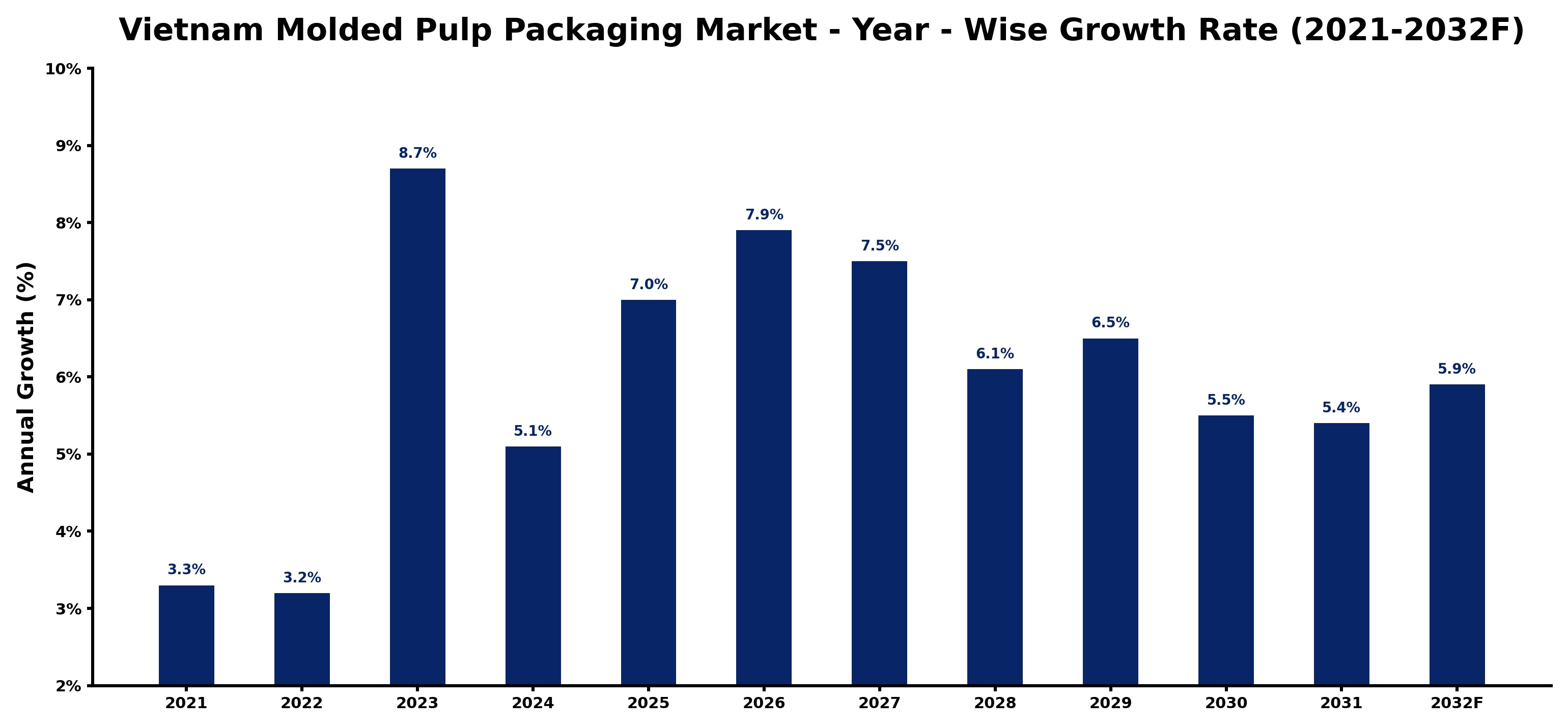
The table below presents the year‑wise growth rates along with the key drivers influencing the market
| Year | Growth Rate | Major Drivers |
| 2021 | 3.3% | Increasing industrial infrastructure investments |
| 2022 | 3.2% | Government infrastructure modernization initiatives |
| 2023 | 8.7% | Expansion of manufacturing activities |
| 2024 | 5.1% | Expansion of transportation and logistics networks |
| 2025 | 7.0% | Increasing adoption of advanced technologies |
| 2026 | 7.9% | Expansion of commercial construction activities |
| 2027 | 7.5% | Expansion of manufacturing activities |
| 2028 | 6.1% | Growing renewable energy integration projects |
| 2029 | 6.5% | Expansion of transportation and logistics networks |
| 2030 | 5.5% | Increasing smart city development projects |
| 2031 | 5.4% | Expansion of manufacturing activities |
| 2032 | 5.9% | Expansion of commercial construction activities |
Note - Market size estimations and growth projections presented in this report are based on 6Wresearch's advanced forecasting approach, validated with industry datasets as of June 2026.
Vietnam Molded Pulp Packaging Market Synopsis
A significant aspect of the Vietnam Molded Pulp Packaging Market is the shift in the e-commerce sector, where the need for protective, sustainable packaging solutions is rapidly expanding. This demand is not only reshaping logistics but is also compelling businesses to reassess their packaging strategies and invest in eco-friendly alternatives.
As consumers increasingly prioritize eco-conscious products, molded pulp packaging's appeal as a biodegradable and versatile option stands out. The combination of consumer demand and regulatory pressures has positioned molded pulp as a key player in Vietnam's packaging landscape, catering effectively to environmentally minded brands.
Vietnam Molded Pulp Packaging Market Key Takeaways
- The market is poised for substantial growth, with a projected CAGR of 5.1% from 2026 to 2032.
- Rising environmental awareness is significantly driving the demand for sustainable packaging solutions.
- Government regulations aimed at reducing plastic waste are further incentivizing the transition to molded pulp packaging.
- The ongoing growth of the e-commerce sector necessitates protective and eco-friendly packaging options.
- Prominent players in the market are focusing on innovation and efficiency in production processes to meet sustainability goals.
Evaluation of Restraints in Vietnam Molded Pulp Packaging Market
While the Vietnam Molded Pulp Packaging Market is experiencing positive momentum, there are inherent challenges that may impede its growth. One significant restraint is the sourcing of raw materials, as achieving sustainability requires consistent access to high-quality recycled paper. Additionally, the fragility of molded pulp products can pose issues, particularly for industries needing robust protection during transportation. Balancing cost-efficiency with eco-friendliness remains a critical challenge for manufacturers aiming to thrive in this competitive landscape.
Vietnam Molded Pulp Packaging Market Trends
Several trends are currently shaping the Vietnam Molded Pulp Packaging Market. Firstly, there is an increasing focus on technology-driven innovations that enhance the durability and functionality of molded pulp products. Secondly, the rise of bio-based coatings is gaining traction, providing additional protection and extending the shelf life of products packaged in molded pulp. Lastly, collaborative efforts between businesses and governmental bodies are fostering research and development initiatives aimed at further elevating sustainable packaging practices.
Vietnam Molded Pulp Packaging Market Opportunities
The Vietnam Molded Pulp Packaging Market holds significant opportunities for growth, particularly as more companies pivot towards sustainability. Investment in innovative production technologies can enhance efficiency and reduce costs, making molded pulp an even more attractive option. Additionally, niche markets, such as premium food and beverage packaging, present avenues for tailored solutions, enabling businesses to differentiate themselves while appealing to environmentally conscious consumers.
Government Initiatives in the Vietnam Molded Pulp Packaging Market
The Vietnamese government has implemented a range of initiatives aimed at promoting sustainable packaging practices. These include regulations targeting the reduction of plastic usage and incentives for companies adopting environmentally friendly materials. Public spending on waste management and recycling infrastructure is also being prioritized, creating a supportive framework for the growth of the molded pulp packaging sector.
Future Insights of the Vietnam Molded Pulp Packaging Market
Looking ahead to 2026-2032, the Vietnam Molded Pulp Packaging Market is expected to align closely with global sustainability trends, making significant strides in both market size and innovation. As consumer preferences increasingly lean towards eco-friendly solutions, businesses will likely invest more in molded pulp technology. Additionally, collaborations between industry stakeholders and government will likely accelerate advancements, ensuring that the market continues to evolve in response to both environmental challenges and consumer demands.
Vietnam Molded Pulp Packaging Market Latest Developments (May 2025 - June 2026)
Recent developments in the Vietnam Molded Pulp Packaging Market highlight a strong push towards innovation and collaboration. Companies are exploring new methods for enhancing the durability and aesthetic appeal of molded pulp products. Moreover, partnerships with research institutions are increasing, aimed at developing advanced materials and optimizing production techniques. The ongoing dialogue within industry forums reflects a collective commitment to achieving sustainability while addressing market demands.
Vietnam Molded Pulp Packaging Market - Key Attractiveness of the Report
- 10 Years of Market Numbers
- Historical Data Starting from 2022 to 2025
- Base Year: 2025
- Forecast Data until 2032
- Key Performance Indicators Impacting the Market
- Major Upcoming Developments and Projects
Key Highlights of the Report:
- Vietnam Molded Pulp Packaging Market Outlook
- Market Size of Vietnam Molded Pulp Packaging Market, 2025
- Forecast of Vietnam Molded Pulp Packaging Market, 2032
- Historical Data and Forecast of Vietnam Molded Pulp Packaging Revenues & Volume for the Period 2022-2032F
- Vietnam Molded Pulp Packaging Market Trend Evolution
- Vietnam Molded Pulp Packaging Market Drivers and Challenges
- Vietnam Molded Pulp Packaging Price Trends
- Vietnam Molded Pulp Packaging Porter's Five Forces
- Vietnam Molded Pulp Packaging Industry Life Cycle
- Historical Data and Forecast of Vietnam Molded Pulp Packaging Market Revenues & Volume By Source for the Period 2022-2032F
- Historical Data and Forecast of Vietnam Molded Pulp Packaging Market Revenues & Volume By Wood Pulp for the Period 2022-2032F
- Historical Data and Forecast of Vietnam Molded Pulp Packaging Market Revenues & Volume By Non-wood Pulp for the Period 2022-2032F
- Historical Data and Forecast of Vietnam Molded Pulp Packaging Market Revenues & Volume By Molded Type for the Period 2022-2032F
- Historical Data and Forecast of Vietnam Molded Pulp Packaging Market Revenues & Volume By Thick Wall for the Period 2022-2032F
- Historical Data and Forecast of Vietnam Molded Pulp Packaging Market Revenues & Volume By Transfer for the Period 2022-2032F
- Historical Data and Forecast of Vietnam Molded Pulp Packaging Market Revenues & Volume By Thermoformed for the Period 2022-2032F
- Historical Data and Forecast of Vietnam Molded Pulp Packaging Market Revenues & Volume By Processed for the Period 2022-2032F
- Historical Data and Forecast of Vietnam Molded Pulp Packaging Market Revenues & Volume By Product for the Period 2022-2032F
- Historical Data and Forecast of Vietnam Molded Pulp Packaging Market Revenues & Volume By Trays for the Period 2022-2032F
- Historical Data and Forecast of Vietnam Molded Pulp Packaging Market Revenues & Volume By End Caps for the Period 2022-2032F
- Historical Data and Forecast of Vietnam Molded Pulp Packaging Market Revenues & Volume By Bowls & Cups for the Period 2022-2032F
- Historical Data and Forecast of Vietnam Molded Pulp Packaging Market Revenues & Volume By Clamshells for the Period 2022-2032F
- Historical Data and Forecast of Vietnam Molded Pulp Packaging Market Revenues & Volume By Plates for the Period 2022-2032F
- Historical Data and Forecast of Vietnam Molded Pulp Packaging Market Revenues & Volume By Others for the Period 2022-2032F
- Vietnam Molded Pulp Packaging Import Export Trade Statistics
- Market Opportunity Assessment By Source
- Market Opportunity Assessment By Molded Type
- Market Opportunity Assessment By Product
- Vietnam Molded Pulp Packaging Top Companies Market Share
- Vietnam Molded Pulp Packaging Competitive Benchmarking By Technical and Operational Parameters
- Vietnam Molded Pulp Packaging Company Profiles
- Vietnam Molded Pulp Packaging Key Strategic Recommendations






































