Vietnam MVNO Market Size & Growth Rate (2026-2032)
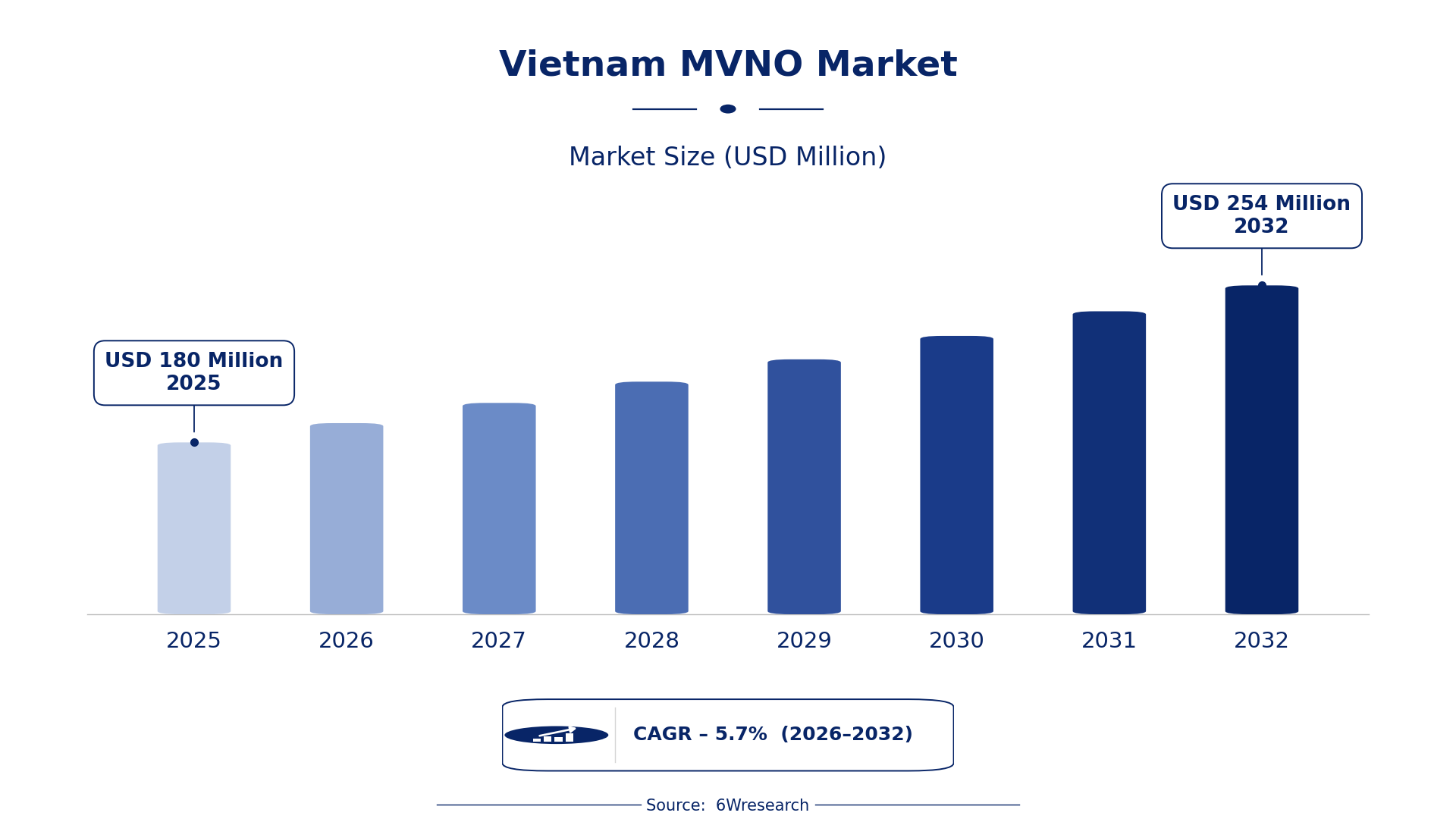
The Vietnam MVNO Market was estimated at USD 180 Million in 2025 and is projected to reach USD 254 Million by 2032, growing at a CAGR of 5.7% from 2026 to 2032.
Vietnam MVNO Market Synopsis
The Vietnam MVNO market has gained traction in recent years, fueled by a growing appetite for personalized mobile services. As traditional mobile network operators grapple with competitive pricing and evolving consumer expectations, MVNOs are stepping in to fill the gaps with targeted offerings.
Looking ahead, the market is set to expand further, driven by increasing demand for data services and the need for flexible pricing structures. As consumers seek more cost-effective solutions, MVNOs are well-positioned to capture a significant share of the telecommunications pie.
Vietnam MVNO Market Year-wise Growth Rate and Key Drivers
This graph illustrates the annual growth rates of the Vietnam MVNO Market from 2021 to 2032, highlighting a steady upward trajectory and projected expansion over the forecast period.
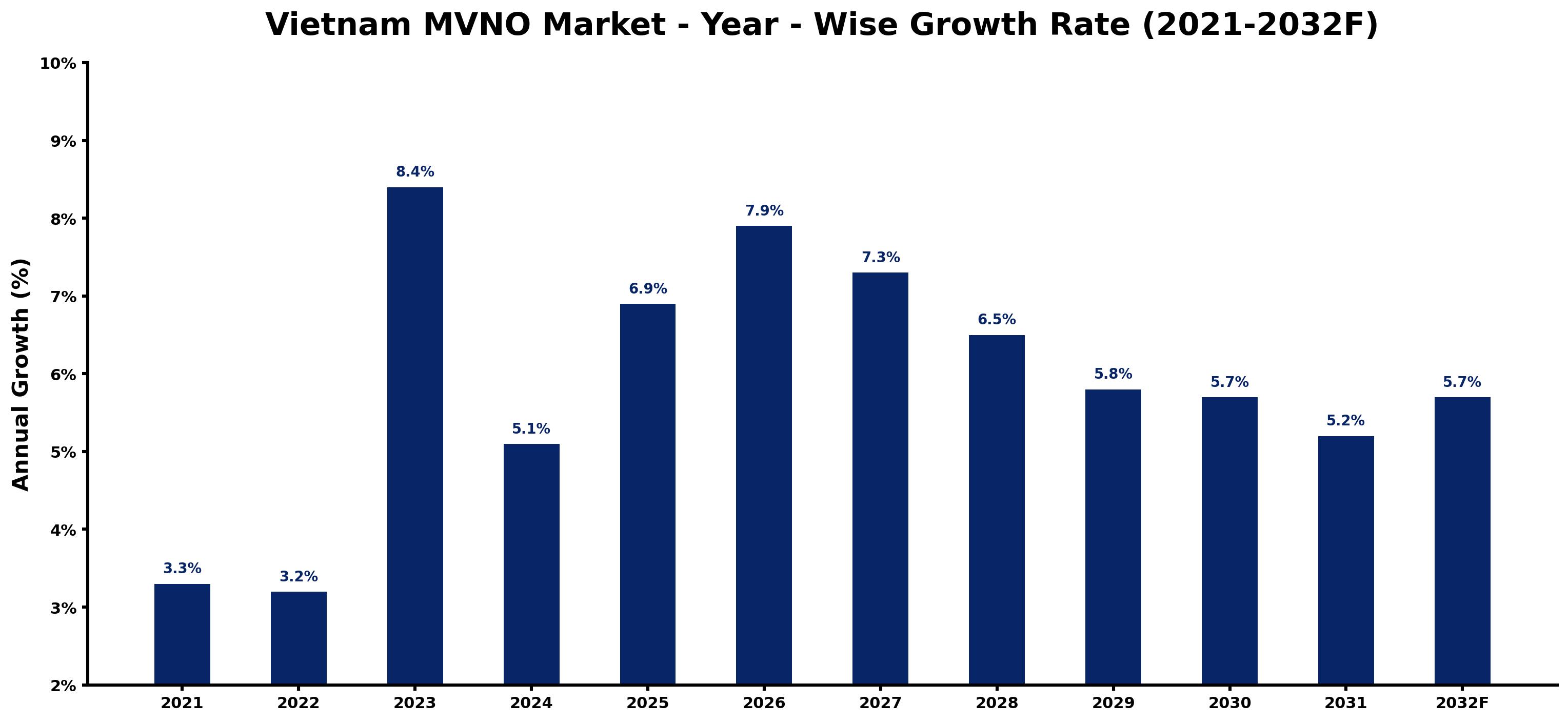
The table below presents the year‑wise growth rates along with the key drivers influencing the market
| Year | Growth Rate | Major Drivers |
| 2021 | 3.3% | Emergence of local startups offering competitive MVNO services. |
| 2022 | 3.2% | Implementation of regulations supporting MVNO market entry. |
| 2023 | 8.4% | Rising adoption of 5G technology by virtual operators. |
| 2024 | 5.1% | Government incentives for digital business transformation programs. |
| 2025 | 6.9% | Increasing foreign investment in telecommunications infrastructure. |
| 2026 | 7.9% | Popularity of mobile streaming services among consumers. |
| 2027 | 7.3% | Targeted marketing strategies for rural mobile users. |
| 2028 | 6.5% | Successful partnerships between MVNOs and content providers. |
| 2029 | 5.8% | Greater consumer access to affordable data plans. |
| 2030 | 5.7% | Boost in IoT applications requiring MVNO connectivity solutions. |
| 2031 | 5.2% | Policy support for innovative mobile service offerings. |
| 2032 | 5.7% | Focus on eco-friendly mobile service options for users. |
Note: Market size estimations and growth projections presented in this report are based on 6Wresearch's proprietary forecasting methodology, utilizing the latest available industry data, government publications, and primary research inputs.
Vietnam MVNO Market Key Takeaways
Below are some of the specific key takeaways from the market, including:
- The market is witnessing a shift towards niche offerings as consumer preferences evolve.
- Regulatory support is creating opportunities for new MVNO entrants.
- Cost-effective mobile plans are increasingly appealing to consumers.
- Competition among MVNOs is intensifying, requiring innovative marketing strategies.
- The COVID-19 pandemic has accelerated the demand for flexible mobile services.
Evaluation of Restraints in Vietnam MVNO Market
Despite its growth potential, the Vietnam MVNO market faces notable constraints. Negotiating favorable wholesale access agreements with major mobile network operators remains a challenge, often marred by complexity and lengthy processes. Regulatory uncertainties can deter potential investors, creating a hesitance to enter the market. The fierce competition from established players further complicates efforts for MVNOs to differentiate themselves. Additionally, securing a loyal subscriber base in a crowded environment demands considerable marketing investments.
Vietnam MVNO Market Trends
Current trends in the Vietnam MVNO market highlight a strong shift towards the integration of Internet of Things (IoT) services. As businesses and consumers increasingly rely on smart devices, MVNOs are adapting their offerings to include IoT connectivity options. on top of that, the demand for customized mobile plans continues to rise, pushing MVNOs to innovate in service delivery.
Another emerging trend is the focus on customer experience, with many MVNOs investing in digital platforms that enhance user engagement and satisfaction. This emphasis on technology-driven solutions reflects a broader industry trend towards digitization.
Vietnam MVNO Market Opportunities
The Vietnam MVNO market is ripe with opportunities for growth and investment. As consumer preferences shift towards affordable and personalized mobile services, MVNOs can capture market share by offering tailored solutions. The increasing penetration of smartphones and the demand for data services present avenues for innovative service offerings. Additionally, partnerships with local businesses can enhance service delivery and expand customer reach.
Government Initiatives in the Vietnam MVNO Market
Government policy plays a crucial role in shaping the Vietnam MVNO market. Regulatory frameworks are evolving to support MVNO operations, aiming to foster competition and enhance consumer choice. With a focus on expanding telecommunications access, public-sector initiatives are critical in creating a conducive environment for MVNOs.
- A regulatory framework introduced in 2025 mandating billing transparency has been successfully implemented.
- A national digital infrastructure upgrade programme is currently underway, enhancing network access for MVNOs.
- Ongoing assessments of market regulations are expected to streamline the entry process for new MVNOs.
- A planned public-private initiative aims to expand telecom infrastructure access by 2028.
Future Insights of the Vietnam MVNO Market
As we look toward 2026-2032, the Vietnam MVNO market is likely to continue its upward trajectory. With rising consumer expectations for personalized services and flexible pricing, MVNOs that prioritize innovation and customer engagement will thrive. The integration of advanced technologies and the expansion of IoT services will further enhance market dynamics, providing opportunities for those willing to adapt and innovate.
Vietnam MVNO Market Latest Developments
In the past year, the Vietnam MVNO market has experienced notable developments, reflecting the competitive nature of the industry. Various initiatives aimed at improving service offerings and enhancing customer satisfaction have emerged, signaling an active market environment.
- A leading regional operator launched a new flexible pricing plan in Q3 2025, aimed at attracting younger consumers.
- A major technology vendor began implementing an advanced billing system for MVNOs in early 2025, enhancing operational efficiency.
- An initiative to collaborate with local businesses for bundled services is currently underway, expected to expand consumer reach by mid-2026.
- A planned expansion of network infrastructure is set to begin in late 2025, aimed at improving coverage for MVNOs.
Vietnam MVNO Market - Key Attractiveness of the Report
- 10 Years of Market Numbers
- Historical Data Starting from 2022 to 2025
- Base Year: 2025
- Forecast Data until 2032
- Key Performance Indicators Impacting the Market
- Major Upcoming Developments and Projects
Key Highlights of the Report:
- Vietnam MVNO Market Outlook
- Market Size of Vietnam MVNO Market, 2025
- Forecast of Vietnam MVNO Market, 2032
- Historical Data and Forecast of Vietnam MVNO Revenues & Volume for the Period 2022-2032F
- Vietnam MVNO Market Trend Evolution
- Vietnam MVNO Market Drivers and Challenges
- Vietnam MVNO Price Trends
- Vietnam MVNO Porter's Five Forces
- Vietnam MVNO Industry Life Cycle
- Historical Data and Forecast of Vietnam MVNO Market Revenues & Volume By Operational Model for the Period 2022-2032F
- Historical Data and Forecast of Vietnam MVNO Market Revenues & Volume By Reseller for the Period 2022-2032F
- Historical Data and Forecast of Vietnam MVNO Market Revenues & Volume By Service Operator for the Period 2022-2032F
- Historical Data and Forecast of Vietnam MVNO Market Revenues & Volume By Full MVNO for the Period 2022-2032F
- Historical Data and Forecast of Vietnam MVNO Market Revenues & Volume By Organization Size for the Period 2022-2032F
- Historical Data and Forecast of Vietnam MVNO Market Revenues & Volume By SMES for the Period 2022-2032F
- Historical Data and Forecast of Vietnam MVNO Market Revenues & Volume By Large Enterprise for the Period 2022-2032F
- Historical Data and Forecast of Vietnam MVNO Market Revenues & Volume By Subscriber for the Period 2022-2032F
- Historical Data and Forecast of Vietnam MVNO Market Revenues & Volume By Consumer for the Period 2022-2032F
- Historical Data and Forecast of Vietnam MVNO Market Revenues & Volume By Enterprise for the Period 2022-2032F
- Vietnam MVNO Import Export Trade Statistics
- Market Opportunity Assessment By Operational Model
- Market Opportunity Assessment By Organization Size
- Market Opportunity Assessment By Subscriber
- Vietnam MVNO Top Companies Market Share
- Vietnam MVNO Competitive Benchmarking By Technical and Operational Parameters
- Vietnam MVNO Company Profiles
- Vietnam MVNO Key Strategic Recommendations






































