Vietnam Patio Heaters Market Size Growth Rate
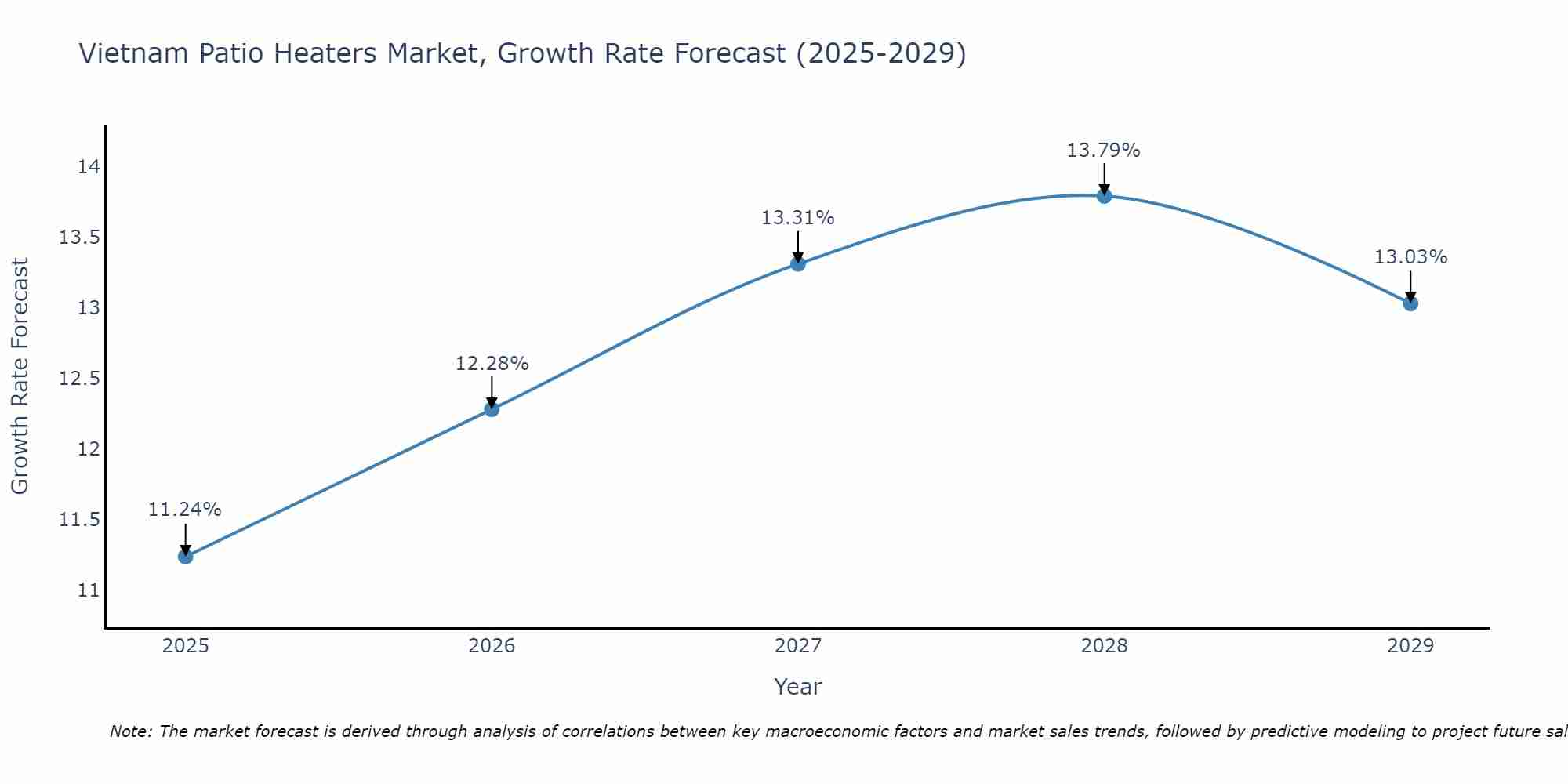
The Vietnam Patio Heaters Market is projected to witness mixed growth rate patterns during 2025 to 2029. Starting at 11.24% in 2025, the market peaks at 13.79% in 2028, and settles at 13.03% by 2029.
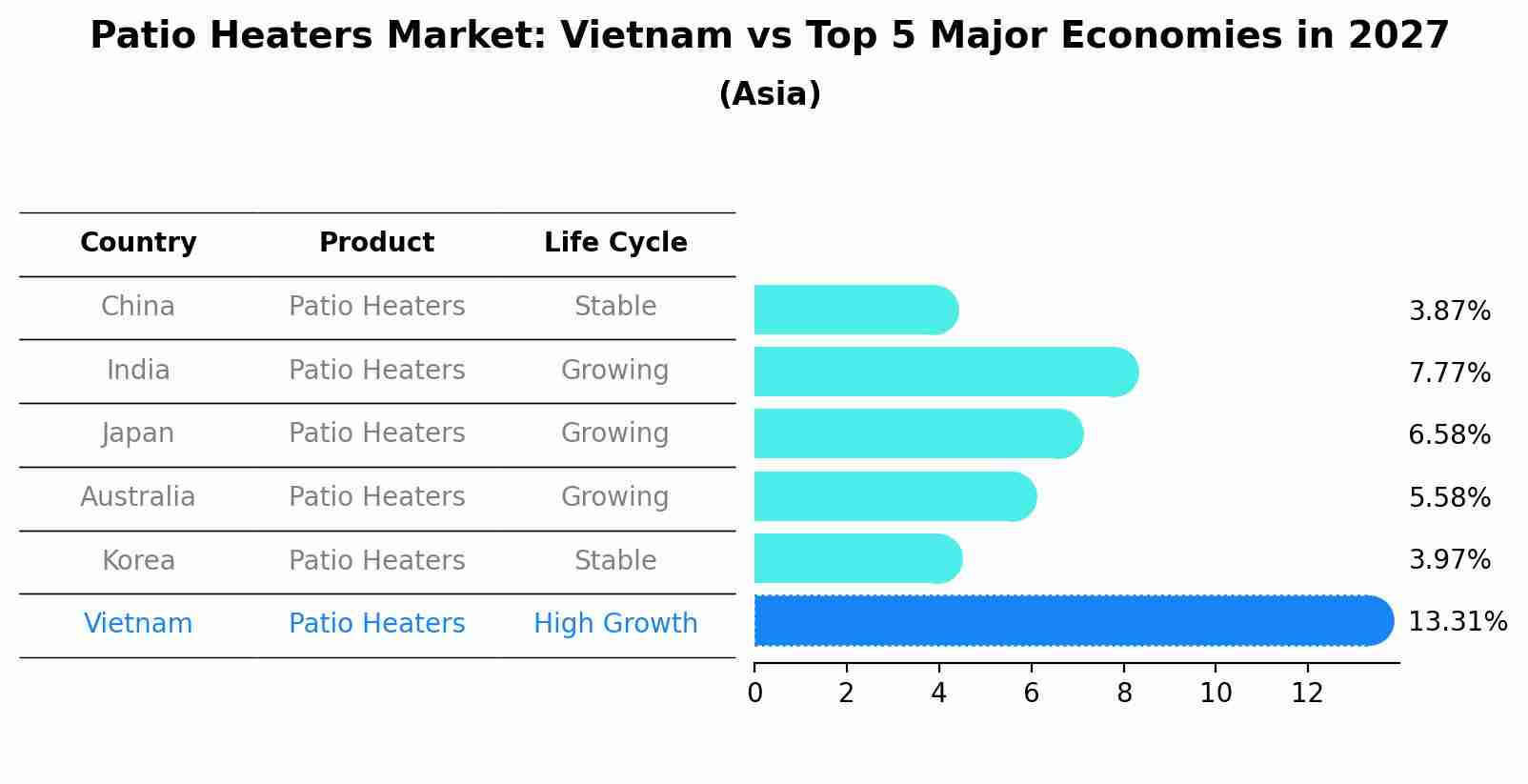
Patio Heaters Market: Vietnam vs Top 5 Major Economies in 2027 (Asia)
By 2027, the Patio Heaters market in Vietnam is anticipated to reach a growth rate of 13.31%, as part of an increasingly competitive Asia region, where China remains at the forefront, supported by India, Japan, Australia and South Korea, driving innovations and market adoption across sectors.
Vietnam Patio Heaters Market Synopsis
The patio heaters market in Vietnam has gained momentum in recent years, driven by the growing trend of outdoor dining and recreational spaces. As more restaurants, cafes, and hotels offer outdoor seating options, the demand for patio heaters has surged. These heaters provide warmth and comfort in cooler weather, extending the usability of outdoor spaces. With an increasing focus on comfort and ambiance, both commercial and residential consumers are investing in patio heaters, making it a niche yet growing market in Vietnam.
Drivers of the Market
The patio heaters market in Vietnam is growing due to the country`s thriving hospitality industry. Restaurants, cafes, and hotels are increasingly installing patio heaters to extend outdoor seating options, especially during cooler months. The desire for outdoor entertainment spaces and the rise in tourism have also contributed to the market`s expansion.
Challenges of the Market
The patio heaters market in Vietnam faces challenges related to consumer preferences and environmental sustainability. Consumer preferences for outdoor heating solutions can be influenced by design trends and lifestyle choices, necessitating constant innovation and adaptability from manufacturers. Additionally, as environmental concerns become more prominent, patio heater manufacturers must invest in more energy-efficient and eco-friendly heating technologies, which can increase production costs. Moreover, competition from alternative outdoor heating solutions, such as fire pits and electric heaters, adds complexity to the market landscape. Furthermore, ensuring product safety and compliance with safety standards is crucial for customer satisfaction and safety. Lastly, the affordability and accessibility of patio heaters to various consumer segments are important factors influencing market demand and adoption.
COVID-19 Impact on the Market
The patio heaters market in Vietnam was adversely affected by the pandemic as outdoor dining and leisure activities were restricted. Businesses in this sector saw a significant decline in demand, and many faced financial difficulties. However, with the easing of restrictions and the return of outdoor gatherings, the market began to recover, albeit at a slower pace than before the pandemic.
Key Players in the Market
The patio heaters market may feature a mix of local and international brands. Local manufacturers, as well as international companies like Bromic Heating, could be prominent players
Key Highlights of the Report:
- Vietnam Patio Heaters Market Outlook
- Market Size of Vietnam Patio Heaters Market, 2024
- Forecast of Vietnam Patio Heaters Market, 2031
- Historical Data and Forecast of Vietnam Patio Heaters Revenues & Volume for the Period 2021-2031
- Vietnam Patio Heaters Market Trend Evolution
- Vietnam Patio Heaters Market Drivers and Challenges
- Vietnam Patio Heaters Price Trends
- Vietnam Patio Heaters Porter's Five Forces
- Vietnam Patio Heaters Industry Life Cycle
- Historical Data and Forecast of Vietnam Patio Heaters Market Revenues & Volume By Type for the Period 2021-2031
- Historical Data and Forecast of Vietnam Patio Heaters Market Revenues & Volume By Electric for the Period 2021-2031
- Historical Data and Forecast of Vietnam Patio Heaters Market Revenues & Volume By Natural Gas for the Period 2021-2031
- Historical Data and Forecast of Vietnam Patio Heaters Market Revenues & Volume By Propane for the Period 2021-2031
- Historical Data and Forecast of Vietnam Patio Heaters Market Revenues & Volume By Application for the Period 2021-2031
- Historical Data and Forecast of Vietnam Patio Heaters Market Revenues & Volume By Commercial for the Period 2021-2031
- Historical Data and Forecast of Vietnam Patio Heaters Market Revenues & Volume By Residential for the Period 2021-2031
- Vietnam Patio Heaters Import Export Trade Statistics
- Market Opportunity Assessment By Type
- Market Opportunity Assessment By Application
- Vietnam Patio Heaters Top Companies Market Share
- Vietnam Patio Heaters Competitive Benchmarking By Technical and Operational Parameters
- Vietnam Patio Heaters Company Profiles
- Vietnam Patio Heaters Key Strategic Recommendations






































