Vietnam Peas Market Size, Share & Growth Rate
The Vietnam Peas Market was estimated at USD 187 Million in 2025 and is projected to reach USD 264 Million by 2032, growing at a CAGR of 5.0% from 2026 to 2032. This upward trajectory is primarily driven by the increasing consumer inclination towards plant-based protein sources and the versatile applications of peas in various culinary formats. Moreover, the growing adoption of vegetarian and vegan diets is further amplifying the demand, as more individuals seek nutrient-dense ingredients for healthier meal options.
Vietnam Peas Market Year-wise Growth Rate and Key Drivers
This graph highlights how the Vietnam Peas Market has steadily grown over the years, supported by major growth factors.
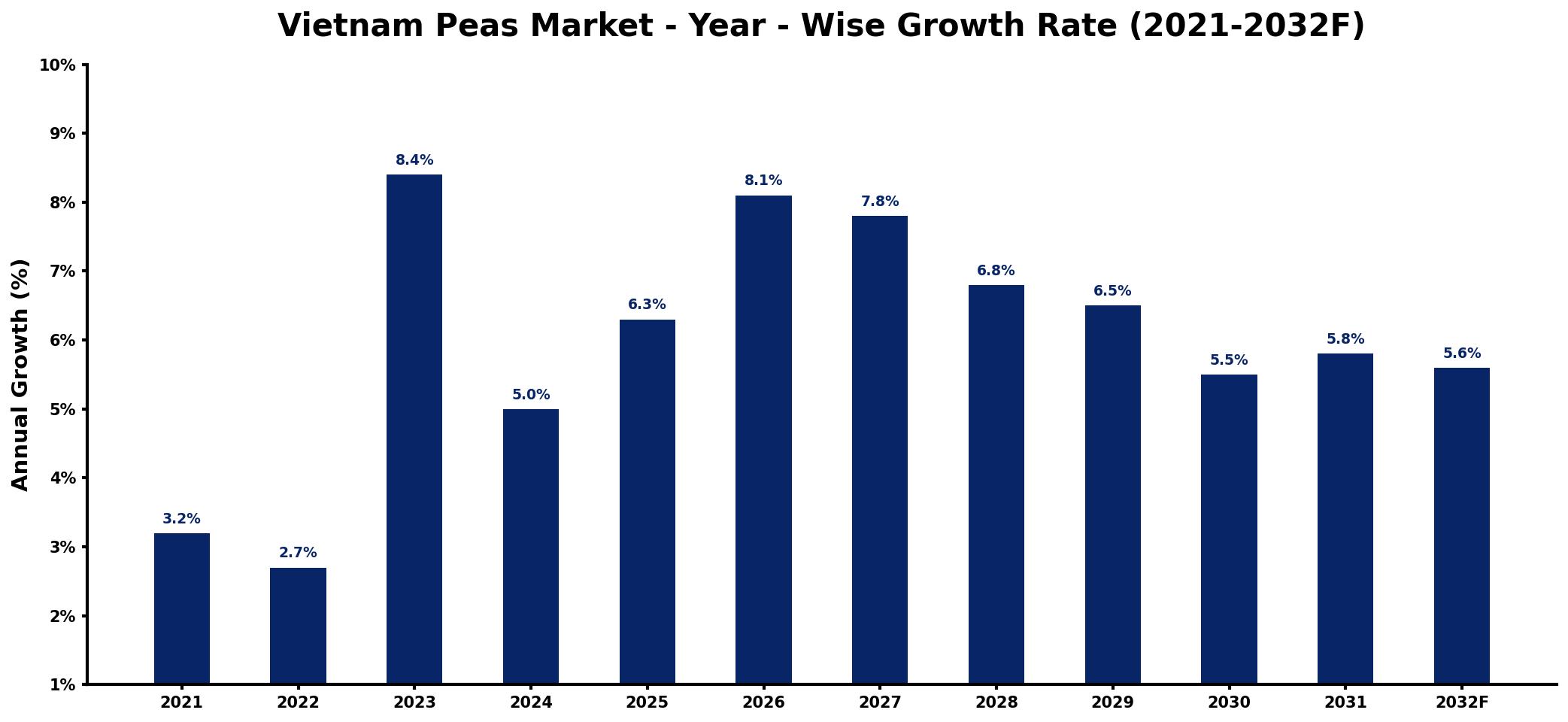
The table below presents the year‑wise growth rates along with the key drivers influencing the market
| Year | Growth Rate | Major Drivers |
| 2021 | 3.2% | Rising consumer health consciousness |
| 2022 | 2.7% | Increased plant-based diet trends |
| 2023 | 8.4% | Expansion of organic farming practices |
| 2024 | 5.0% | Growing demand for protein sources |
| 2025 | 6.3% | Investment in agricultural technology |
| 2026 | 8.1% | Enhanced distribution network efficiency |
| 2027 | 7.8% | Strengthening export market opportunities |
| 2028 | 6.8% | Development of value-added products |
| 2029 | 6.5% | Growing interest in sustainability initiatives |
| 2030 | 5.5% | Increase in food processing investments |
| 2031 | 5.8% | Rising popularity of vegan lifestyles |
| 2032 | 5.6% | growing downstream application demand |
Note: Market size estimations and growth projections presented in this report are based on 6Wresearch's proprietary forecasting methodology, utilizing the latest available industry data, government publications, and primary research inputs.
Vietnam Peas Market Synopsis
The Vietnamese market for peas is flourishing, marked by a notable shift in dietary habits toward health-conscious food choices. As green peas and snow peas gain popularity, they are increasingly featured in local cuisines, enhancing both flavor and nutritional value in dishes like stir-fries and salads.
Given their mild sweetness and high protein content, peas are carving a niche in the Vietnamese diet. This trend is bolstered by a growing awareness of sustainability and wellness, encouraging consumers to explore more plant-based and environmentally friendly food options.
Vietnam Peas Market Key Takeaways
- The market is witnessing a significant demand for plant-based protein alternatives driven by health trends.
- Peas are increasingly recognized for their versatility in various culinary applications, enhancing their market appeal.
- Educational marketing is crucial to raising awareness of peas' culinary potential among consumers.
- The impact of COVID-19 has led to shifts in consumer preferences towards healthier eating habits.
- Seed suppliers are focusing on providing diverse pea varieties catering to both home gardeners and culinary professionals.
Evaluation of Restraints in Vietnam Peas Market
While the Vietnam peas market shows promise, it is not without its challenges. One significant restraint is the limited consumer familiarity with the diverse culinary uses of peas. Many traditional Vietnamese dishes do not typically feature peas, leading consumers to favor more familiar vegetables. Additionally, competition from long-standing staples in the vegetable segment further complicates market penetration. To counter these restraints, strategic investments in educational campaigns that highlight the flavors and versatility of peas are essential for increasing acceptance among Vietnamese consumers.
Vietnam Peas Market Trends
Several trends are shaping the demand for peas in Vietnam. The rise in interest surrounding health and wellness is prompting consumers to incorporate more nutrient-rich foods into their diets. Innovations in product offerings, such as pre-packaged pea snacks and frozen peas for convenience, are also gaining traction. Moreover, there is a marked shift towards sustainable farming practices, with both consumers and growers seeking eco-friendly methods of cultivation. This trend dovetails nicely with the global movement towards plant-based eating, positioning peas as a key player in the healthy food market.
Vietnam Peas Market Opportunities
Opportunities abound in the Vietnam peas market, particularly for entrepreneurs and investors seeking to tap into the growing health food sector. The increasing popularity of vegetarian and vegan diets presents a fertile ground for the development of new products. Additionally, as urban gardening gains popularity, the demand for pea seed varieties that cater to home gardening enthusiasts is likely to increase. Collaborations with local chefs and restaurants to promote peas as a trendy ingredient could also spur significant growth, driving consumer interest and product innovation.
Government Initiatives in the Vietnam Peas Market
The Vietnamese government is actively promoting agricultural diversification and sustainability, which benefits the peas market. Initiatives that encourage farmers to adopt modern farming techniques and improve crop yield are crucial for enhancing the quality of pea production. Furthermore, public spending on agricultural research and development is being directed towards improving seed quality and pest resistance, thus ensuring a more resilient supply chain for peas. These policies aim to foster an environment conducive to growth within the agricultural sector.
Future Insights of the Vietnam Peas Market
Looking forward to 2026-2032, the Vietnam peas market is poised for sustained growth as the trends toward health-conscious eating and plant-based diets continue to gain momentum. The integration of peas into traditional Vietnamese cuisine could revolutionize consumer perceptions, positioning peas as a staple ingredient rather than a niche one. Enhanced distribution channels and marketing strategies focused on educating the public about the versatility of peas will be vital. Additionally, technological advancements in agriculture may lead to higher yields and improved product quality, further driving market growth.
Vietnam Peas Market Latest Developments (2025 - 2026)
In the recent months leading to mid-2026, the Vietnam peas market has seen an uptick in the introduction of innovative frozen and packaged pea products aimed at health-conscious consumers. Companies are increasingly collaborating with local culinary experts to create recipes and meal kits that feature peas prominently, enhancing their visibility in the market. Furthermore, sustainability initiatives are being embraced by more agricultural producers, who are adopting eco-friendly farming practices to cater to the rising demand for sustainable food sources.
Vietnam Peas Market - Key Attractiveness of the Report
- 10 Years of Market Numbers
- Historical Data Starting from 2022 to 2025
- Base Year: 2025
- Forecast Data until 2032
- Key Performance Indicators Impacting the Market
- Major Upcoming Developments and Projects
Key Highlights of the Report:
- Vietnam Peas Market Outlook
- Market Size of Vietnam Peas Market, 2025
- Forecast of Vietnam Peas Market, 2032
- Historical Data and Forecast of Vietnam Peas Revenues & Volume for the Period 2022-2032F
- Vietnam Peas Market Trend Evolution
- Vietnam Peas Market Drivers and Challenges
- Vietnam Peas Price Trends
- Vietnam Peas Porter's Five Forces
- Vietnam Peas Industry Life Cycle
- Historical Data and Forecast of Vietnam Peas Market Revenues & Volume By Type for the Period 2022-2032F
- Historical Data and Forecast of Vietnam Peas Market Revenues & Volume By Field Peas for the Period 2022-2032F
- Historical Data and Forecast of Vietnam Peas Market Revenues & Volume By Garden Peas for the Period 2022-2032F
- Historical Data and Forecast of Vietnam Peas Market Revenues & Volume By Others for the Period 2022-2032F
- Historical Data and Forecast of Vietnam Peas Market Revenues & Volume By Application for the Period 2022-2032F
- Historical Data and Forecast of Vietnam Peas Market Revenues & Volume By Food for the Period 2022-2032F
- Historical Data and Forecast of Vietnam Peas Market Revenues & Volume By Others for the Period 2022-2032F
- Historical Data and Forecast of Vietnam Peas Market Revenues & Volume By Distribution Channel for the Period 2022-2032F
- Historical Data and Forecast of Vietnam Peas Market Revenues & Volume By Online for the Period 2022-2032F
- Historical Data and Forecast of Vietnam Peas Market Revenues & Volume By Offline for the Period 2022-2032F
- Historical Data and Forecast of Vietnam Peas Market Revenues & Volume By Others for the Period 2022-2032F
- Vietnam Peas Import Export Trade Statistics
- Market Opportunity Assessment By Type
- Market Opportunity Assessment By Application
- Market Opportunity Assessment By Distribution Channel
- Vietnam Peas Top Companies Market Share
- Vietnam Peas Competitive Benchmarking By Technical and Operational Parameters
- Vietnam Peas Company Profiles
- Vietnam Peas Key Strategic Recommendations






































