Vietnam Perchloroethylene Market Size, Share & Growth Rate
The Vietnam Perchloroethylene Market was estimated at USD 371 Million in 2025 and is projected to reach USD 525 Million by 2032, growing at a CAGR of 5.1% from 2026 to 2032. This growth trajectory is primarily driven by the expansion of the dry cleaning industry, which continues to gain traction alongside rising urbanization and disposable income. Furthermore, the automotive and textile sectors are increasingly relying on perchloroethylene for essential industrial processes, further propelling market demand.
Vietnam Perchloroethylene Market Year-wise Growth Rate and Key Drivers
This graph highlights how the Vietnam Perchloroethylene Market has steadily grown over the years, supported by major growth factors.
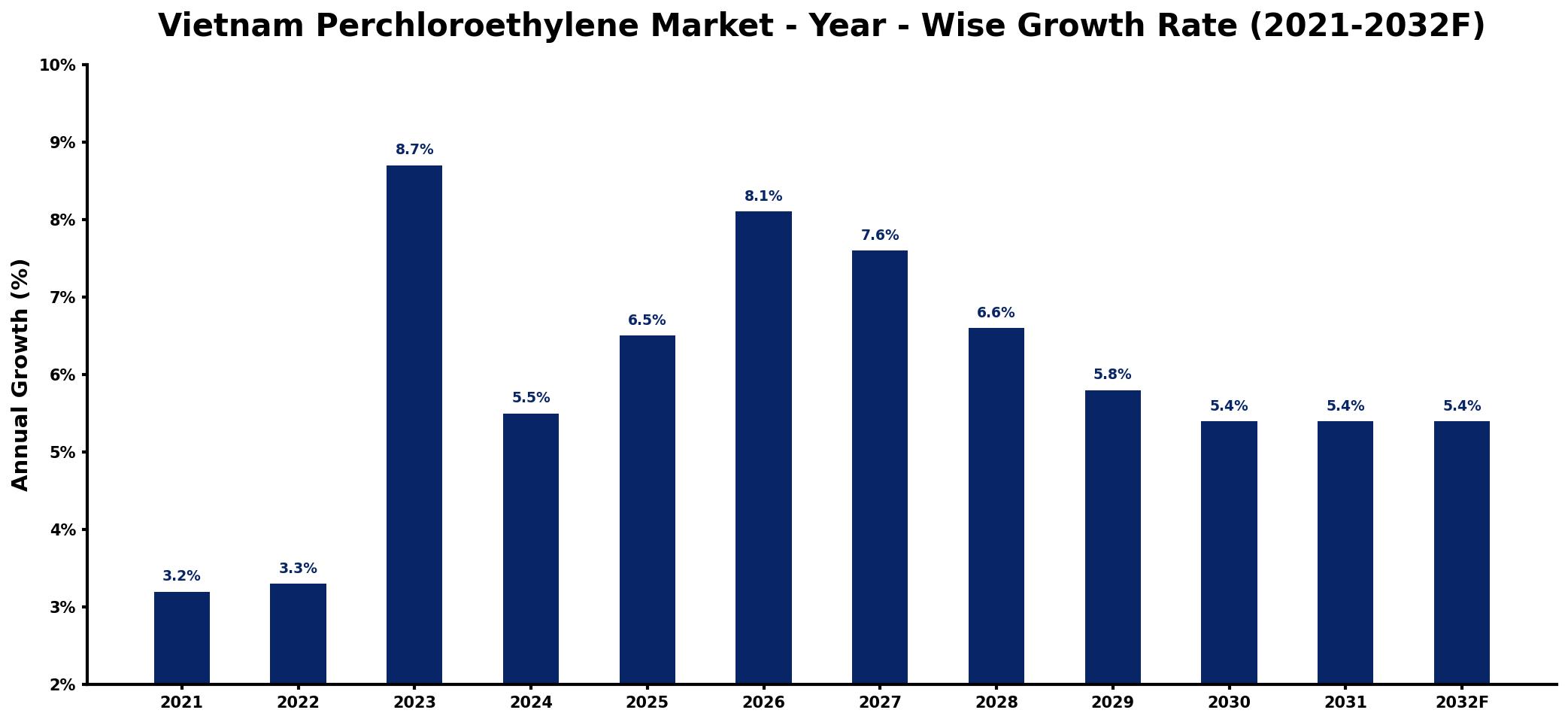
The table below presents the year‑wise growth rates along with the key drivers influencing the market
| Year | Growth Rate | Major Drivers |
| 2021 | 3.2% | Increased industrial cleaning applications |
| 2022 | 3.3% | Growth in textile manufacturing sector |
| 2023 | 8.7% | Rising demand from automotive industry |
| 2024 | 5.5% | Expansion of dry cleaning services |
| 2025 | 6.5% | Investments in chemical processing facilities |
| 2026 | 8.1% | Higher demand from electronics sector |
| 2027 | 7.6% | growing automotive sector requirements |
| 2028 | 6.6% | Surge in environmental regulations compliance |
| 2029 | 5.8% | strengthening underlying market demand |
| 2030 | 5.4% | Increased focus on sustainable practices |
| 2031 | 5.4% | Emergence of new industrial applications |
| 2032 | 5.4% | rising infrastructure development spending |
Note: Market size estimations and growth projections presented in this report are based on 6Wresearch's proprietary forecasting methodology, utilizing the latest available industry data, government publications, and primary research inputs.
Vietnam Perchloroethylene Market Synopsis
The Vietnam perchloroethylene market is currently undergoing a dynamic phase of growth, spurred by increasing demand in dry cleaning and metal degreasing applications. The solvents vital role in various industrial processes is ensuring its continued relevance amidst shifting consumer behaviors and growing urban lifestyles.
As industries expand and diversify, particularly in textiles and automotive manufacturing, the dependence on perchloroethylene for efficient operations remains strong. However, the landscape is also evolving due to environmental regulations, necessitating a careful balance between traditional uses and sustainable practices.
Vietnam Perchloroethylene Market Key Takeaways
- The market is projected to grow significantly, reaching USD 525 Million by 2032.
- Increased disposable incomes are driving demand for dry cleaning services.
- Environmental regulations are shaping the market, pushing for eco-friendly alternatives.
- The automotive and textile industries are key consumers of perchloroethylene.
- COVID-19 highlighted vulnerabilities but also underscored essential industrial applications.
Evaluation of Restraints in Vietnam Perchloroethylene Market
Despite the promising growth outlook, the Vietnam perchloroethylene market faces significant challenges. Environmental concerns surrounding the hazardous nature of perchloroethylene are at the forefront, as stricter regulations emerge to mitigate soil and water contamination. Companies are increasingly pressured to adopt sustainable practices, which necessitate significant investment in eco-friendly alternatives. Compounding these issues is the rise in competition from less harmful cleaning solvents, which could further affect market dynamics. As workplace safety regulations tighten, the industry must navigate these restraints while striving for growth.
Vietnam Perchloroethylene Market Trends
Current trends influencing the Vietnam perchloroethylene market include a noticeable shift towards sustainable alternatives in response to environmental and health concerns. Moreover, innovation in chemical production processes is expected to enhance the purity and efficacy of perchloroethylene, catering to modern industrial needs. The ongoing expansion of urban areas also drives demand for advanced dry cleaning solutions, thus shaping a versatile market landscape.
Vietnam Perchloroethylene Market Opportunities
There are substantial opportunities for growth within the Vietnam perchloroethylene market, particularly in the development of safer, eco-friendly solvents that can meet the demands of stringent environmental regulations. As consumer preferences shift toward sustainability, businesses that invest in alternative technologies stand to gain significant market share. Furthermore, expanding industrial sectors, especially automotive manufacturing, present avenues for increased perchloroethylene applications, solidifying its relevance in the coming years.
Government Initiatives in the Vietnam Perchloroethylene Market
The Vietnamese government is actively pursuing policies to enhance environmental protection, impacting the perchloroethylene market. Initiatives aimed at regulating hazardous chemicals are being strengthened, encouraging companies to transition toward sustainable practices. Additionally, public investments in chemical research and development are set to promote innovations within the industry, supporting safer alternatives and improving overall market conditions.
Future Insights of the Vietnam Perchloroethylene Market
Looking ahead to the 2026-2032 period, the Vietnam perchloroethylene market is poised for significant transformation. Growth will likely be influenced by advancements in chemical formulation technology, enabling the production of more sustainable solvents. As consumer and regulatory pressures increase for greener solutions, companies that adapt to these changes will lead the market. The ongoing expansion of industries dependent on perchloroethylene indicates a robust future, but firms must navigate environmental challenges to fully capitalize on emerging opportunities.
Vietnam Perchloroethylene Market Latest Developments (2025 - 2026)
Recent industry developments have seen a growing emphasis on sustainability within the Vietnam perchloroethylene market. Companies are beginning to prioritize research into alternative solvents and more eco-friendly production methods. Additionally, there is a noticeable trend towards collaboration between industry stakeholders and governmental bodies to promote cleaner practices, which could lead to significant shifts in market operations. These efforts reflect a broader commitment to balancing industrial needs with environmental responsibility.
Vietnam Perchloroethylene Market - Key Attractiveness of the Report
- 10 Years of Market Numbers
- Historical Data Starting from 2022 to 2025
- Base Year: 2025
- Forecast Data until 2032
- Key Performance Indicators Impacting the Market
- Major Upcoming Developments and Projects
Key Highlights of the Report:
- Vietnam Perchloroethylene Market Outlook
- Market Size of Vietnam Perchloroethylene Market, 2025
- Forecast of Vietnam Perchloroethylene Market, 2032
- Historical Data and Forecast of Vietnam Perchloroethylene Revenues & Volume for the Period 2022-2032F
- Vietnam Perchloroethylene Market Trend Evolution
- Vietnam Perchloroethylene Market Drivers and Challenges
- Vietnam Perchloroethylene Price Trends
- Vietnam Perchloroethylene Porter's Five Forces
- Vietnam Perchloroethylene Industry Life Cycle
- Historical Data and Forecast of Vietnam Perchloroethylene Market Revenues & Volume By Type for the Period 2022-2032F
- Historical Data and Forecast of Vietnam Perchloroethylene Market Revenues & Volume By Ethylene Oxychlorination for the Period 2022-2032F
- Historical Data and Forecast of Vietnam Perchloroethylene Market Revenues & Volume By Acetylene Method for the Period 2022-2032F
- Historical Data and Forecast of Vietnam Perchloroethylene Market Revenues & Volume By Ethylene Direct Chlorination for the Period 2022-2032F
- Historical Data and Forecast of Vietnam Perchloroethylene Market Revenues & Volume By End-use for the Period 2022-2032F
- Historical Data and Forecast of Vietnam Perchloroethylene Market Revenues & Volume By Dry Cleaning Agent for the Period 2022-2032F
- Historical Data and Forecast of Vietnam Perchloroethylene Market Revenues & Volume By Solvent for the Period 2022-2032F
- Historical Data and Forecast of Vietnam Perchloroethylene Market Revenues & Volume By Others for the Period 2022-2032F
- Vietnam Perchloroethylene Import Export Trade Statistics
- Market Opportunity Assessment By Type
- Market Opportunity Assessment By End-use
- Vietnam Perchloroethylene Top Companies Market Share
- Vietnam Perchloroethylene Competitive Benchmarking By Technical and Operational Parameters
- Vietnam Perchloroethylene Company Profiles
- Vietnam Perchloroethylene Key Strategic Recommendations






































