Vietnam Personal Computers Market Size, Share & Growth Rate
The Vietnam Personal Computers Market was estimated at USD 275 Million in 2025 and is projected to reach USD 389 Million by 2032, growing at a CAGR of 5.1% from 2026 to 2032. This significant growth trajectory is fueled by the rapid expansion of the digital economy, increasing remote work and learning trends, as well as a burgeoning middle class eager for technological adoption. Businesses and educational institutions are driving the demand for personal computers, ensuring that the market remains vibrant and resilient.
Vietnam Personal Computers Market Year-wise Growth Rate and Key Drivers
This graph highlights how the Vietnam Personal Computers Market has steadily grown over the years, supported by major growth factors.
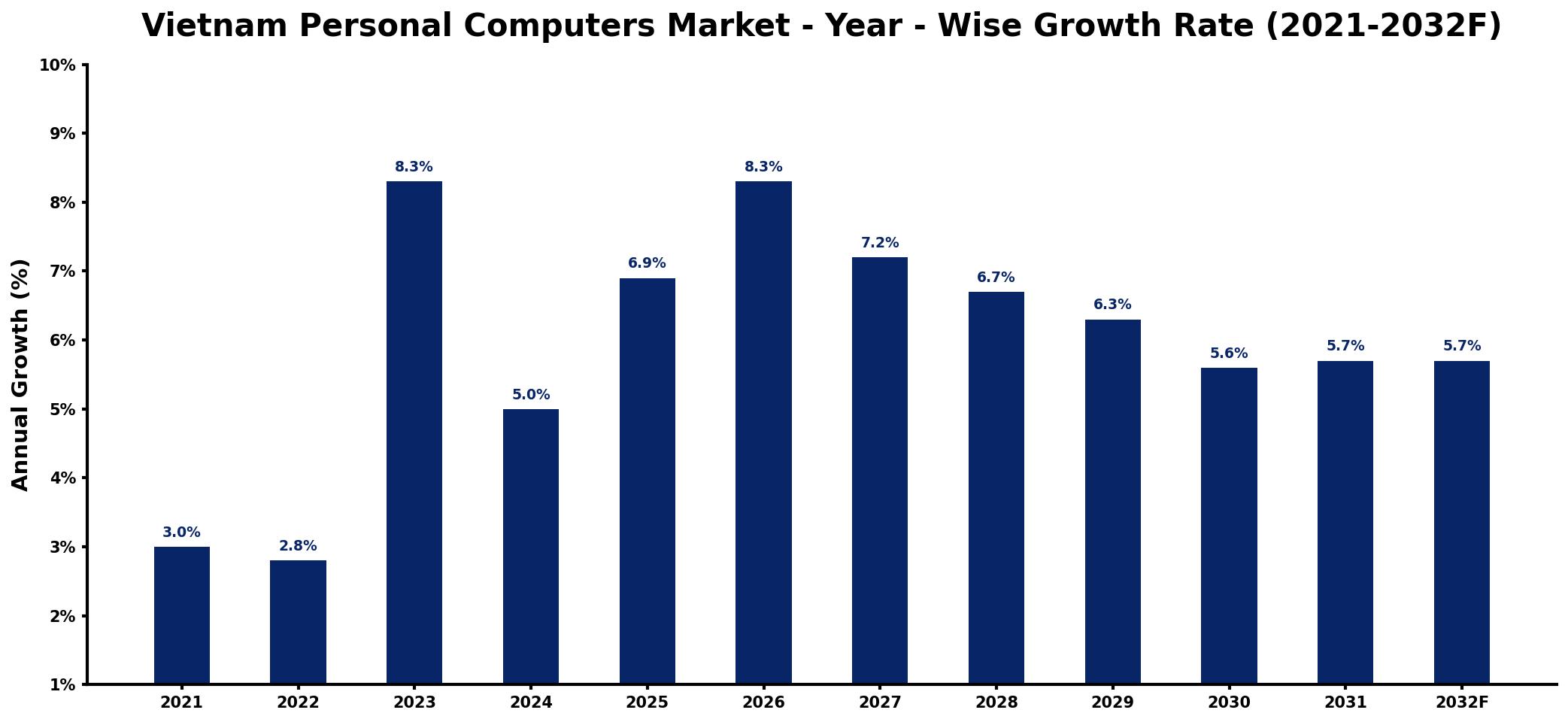
The table below presents the year‑wise growth rates along with the key drivers influencing the market
| Year | Growth Rate | Major Drivers |
| 2021 | 3.0% | Rising remote work adoption |
| 2022 | 2.8% | Increased online education demand |
| 2023 | 8.3% | Growing gaming industry investments |
| 2024 | 5.0% | Expansion of digital infrastructure |
| 2025 | 6.9% | Surge in e-commerce activities |
| 2026 | 8.3% | Enhanced cloud services utilization |
| 2027 | 7.2% | Growth in tech startup ecosystem |
| 2028 | 6.7% | Increasing demand for streaming services |
| 2029 | 6.3% | Rising interest in cybersecurity solutions |
| 2030 | 5.6% | Growth of virtual collaboration tools |
| 2031 | 5.7% | increased overall sector activity |
| 2032 | 5.7% | Increased focus on sustainability initiatives |
Note: Market size estimations and growth projections presented in this report are based on 6Wresearch's proprietary forecasting methodology, utilizing the latest available industry data, government publications, and primary research inputs.
Vietnam Personal Computers Market Synopsis
In Vietnam, personal computers have become indispensable, bridging the gap between professional requirements and personal leisure. As remote work and online education gain traction, the demand for reliable computing devices has surged, leading to heightened competition among manufacturers.
Notably, Vietnam's government has actively promoted digital literacy through various initiatives, further enhancing the push for personal computing devices. This supportive framework is integral for businesses, educators, and individuals alike, creating a robust ecosystem for personal computer sales.
Vietnam Personal Computers Market Key Takeaways
- The Vietnam personal computers market is positioned for growth, driven by increased remote work and educational needs.
- Government initiatives fostering digital literacy are creating a supportive environment for market expansion.
- Price sensitivity remains a crucial factor influencing consumer buying decisions and manufacturer strategies.
- The rising middle class is eager for technology, positively impacting the demand for personal computing devices.
- Competition from alternative devices necessitates continuous innovation within the personal computer segment.
Evaluation of Restraints in Vietnam Personal Computers Market
While the market is poised for growth, several restraints are at play. Chief among these is the pronounced price sensitivity of Vietnamese consumers, which limits manufacturers' ability to elevate profit margins without sacrificing market share. Additionally, many users display a lack of awareness regarding the necessity for regular upgrades and maintenance, often postponing purchases until devices are no longer functional. This mindset, coupled with rapid technological advances leading to obsolescence, poses challenges in fostering a proactive market environment.
Vietnam Personal Computers Market Trends
Current trends reveal an increasing demand for portable and versatile devices that cater to the needs of remote workers and students alike. Moreover, the integration of cloud computing solutions is transforming how personal computers are utilized, enhancing productivity and collaboration. Notably, sustainability in product development is gaining traction as consumers become more environmentally conscious, prompting manufacturers to consider eco-friendly practices in their production processes.
Vietnam Personal Computers Market Opportunities
The ongoing digital transformation within Vietnam presents numerous growth opportunities for the personal computers market. There is significant potential for investment in educational technology, particularly as schools and universities pivot towards blended learning models. Additionally, emerging entrepreneurs in e-commerce are likely to require reliable personal computing solutions, driving demand further. Such shifts emphasize the need for manufacturers to innovate and adapt their offerings to meet these evolving requirements.
Government Initiatives in the Vietnam Personal Computers Market
The Vietnamese government is actively fostering an environment conducive to technological growth through various initiatives aimed at enhancing digital literacy. Public spending on education technology and infrastructure upgrades supports the widespread adoption of personal computers. Furthermore, programs designed to encourage young entrepreneurs and startups in the tech sector are pivotal in bolstering market demand and ensuring long-term sustainability in the personal computers space.
Future Insights of the Vietnam Personal Computers Market
Looking ahead to 2026-2032, the Vietnam personal computers market is expected to continue its upward trajectory, driven by ongoing digitalization and the integration of technology into everyday life. As the hybrid work model becomes more prevalent, businesses will require adaptable solutions, stimulating demand for innovative personal computing devices. Additionally, a growing emphasis on educational technology will ensure that personal computers remain central to learning environments, securing a bright future for the market.
Vietnam Personal Computers Market Latest Developments (2025 - 2026)
Recent industry developments indicate a shift toward more integrated computing solutions, with manufacturers introducing devices that prioritize both performance and user experience. Companies are also increasingly focusing on enhancing supply chain resilience in response to past disruptions caused by global events. Furthermore, collaborative efforts between technology firms and educational institutions are paving the way for tailored solutions that meet the specific needs of Vietnam's evolving digital landscape.
Vietnam Personal Computers Market - Key Attractiveness of the Report
- 10 Years of Market Numbers
- Historical Data Starting from 2022 to 2025
- Base Year: 2025
- Forecast Data until 2032
- Key Performance Indicators Impacting the Market
- Major Upcoming Developments and Projects
Key Highlights of the Report:
- Vietnam Personal Computers Market Outlook
- Market Size of Vietnam Personal Computers Market, 2025
- Forecast of Vietnam Personal Computers Market, 2032
- Historical Data and Forecast of Vietnam Personal Computers Revenues & Volume for the Period 2022-2032F
- Vietnam Personal Computers Market Trend Evolution
- Vietnam Personal Computers Market Drivers and Challenges
- Vietnam Personal Computers Price Trends
- Vietnam Personal Computers Porter's Five Forces
- Vietnam Personal Computers Industry Life Cycle
- Historical Data and Forecast of Vietnam Personal Computers Market Revenues & Volume By Product Type for the Period 2022-2032F
- Historical Data and Forecast of Vietnam Personal Computers Market Revenues & Volume By Desktop for the Period 2022-2032F
- Historical Data and Forecast of Vietnam Personal Computers Market Revenues & Volume By Notebook for the Period 2022-2032F
- Historical Data and Forecast of Vietnam Personal Computers Market Revenues & Volume By Workstation for the Period 2022-2032F
- Historical Data and Forecast of Vietnam Personal Computers Market Revenues & Volume By Others for the Period 2022-2032F
- Historical Data and Forecast of Vietnam Personal Computers Market Revenues & Volume By Distribution Channel for the Period 2022-2032F
- Historical Data and Forecast of Vietnam Personal Computers Market Revenues & Volume By Business-To-Business (B2B) for the Period 2022-2032F
- Historical Data and Forecast of Vietnam Personal Computers Market Revenues & Volume By Business-To-Consumer (B2C) for the Period 2022-2032F
- Historical Data and Forecast of Vietnam Personal Computers Market Revenues & Volume By Application for the Period 2022-2032F
- Historical Data and Forecast of Vietnam Personal Computers Market Revenues & Volume By Consumer for the Period 2022-2032F
- Historical Data and Forecast of Vietnam Personal Computers Market Revenues & Volume By Commercial for the Period 2022-2032F
- Historical Data and Forecast of Vietnam Personal Computers Market Revenues & Volume By Industrial for the Period 2022-2032F
- Vietnam Personal Computers Import Export Trade Statistics
- Market Opportunity Assessment By Product Type
- Market Opportunity Assessment By Distribution Channel
- Market Opportunity Assessment By Application
- Vietnam Personal Computers Top Companies Market Share
- Vietnam Personal Computers Competitive Benchmarking By Technical and Operational Parameters
- Vietnam Personal Computers Company Profiles
- Vietnam Personal Computers Key Strategic Recommendations






































