Vietnam Plastic Building Materials Market Summary
The vietnam plastic building materials market was estimated at USD 282 Million in 2025 and is projected to reach USD 396 Million by 2032, growing at a CAGR of 7.8% from 2026 to 2032.
Vietnam Plastic Building Materials Market Year-wise Growth Rate and Key Drivers
This graph highlights how the Vietnam Plastic Building Materials Market has steadily grown over the past five years, supported by major growth factors.
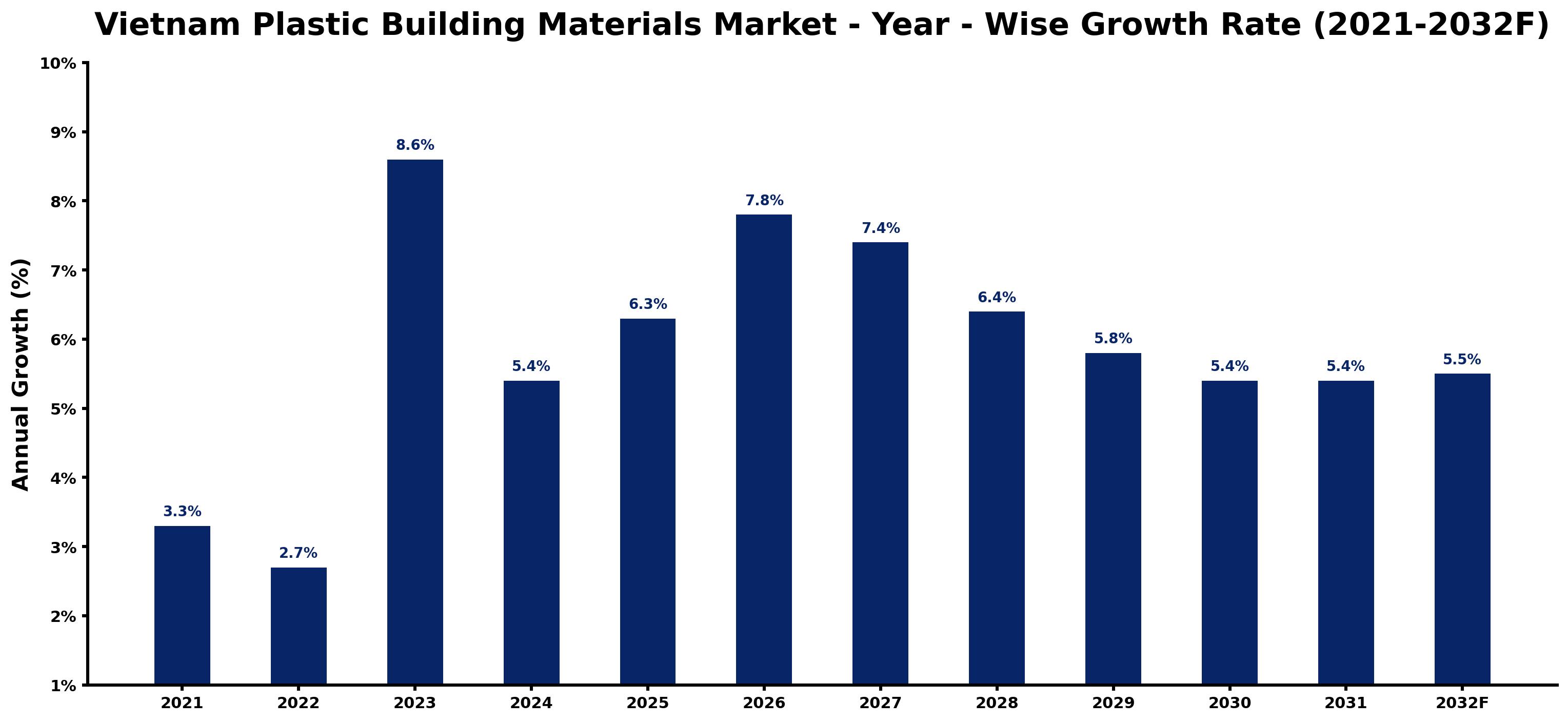
The table below presents the year wise growth rates along with the key drivers influencing the market
| Year | Growth Rate | Major Drivers |
| 2021 | 3.3% | Vietnam's construction sector rebounds as infrastructure projects gain momentum post-COVID-19. |
| 2022 | 2.7% | Increased urbanization leads to higher demand for affordable housing options nationwide. |
| 2023 | 8.6% | Manufacturing shifts from China to Vietnam enhance local production capabilities significantly. |
| 2024 | 5.4% | Innovative building techniques utilizing eco-friendly plastics capture market interest steadily. |
| 2025 | 6.3% | Rural electrification initiatives stimulate demand for durable plastic building materials. |
| 2026 | 7.8% | Foreign investments in Vietnam's construction sector expand, boosting material supply chains. |
| 2027 | 7.4% | Technological advancements in material science foster the development of lighter plastics. |
| 2028 | 6.4% | Sustainability trends push builders to prefer recyclable plastic options over traditional materials. |
| 2029 | 5.8% | Urban planning reforms encourage mixed-use developments, increasing material consumption rates. |
| 2030 | 5.4% | Local manufacturers focus on enhancing product quality to meet international standards. |
| 2031 | 5.4% | E-commerce growth transforms distribution channels for plastic building materials significantly. |
| 2032 | 5.5% | Increased focus on disaster-resistant housing increases demand for resilient plastic components. |
Note - Market size estimations and growth projections presented in this report are based on 6Wresearch's advanced forecasting approach, validated with industry datasets as of June 2026.
Vietnam Plastic Building Materials Market Synopsis
The Vietnam Plastic Building Materials Market is projected to reach 7.8% and witness significant growth during the forecast period (2026-2032). This market encompasses the production, distribution, and utilization of plastic-based materials that are essential in the construction and building industry. Typical products within this market include PVC pipes, plastic roofing sheets, insulation materials, plastic panels, and various other innovative solutions that cater to an evolving construction landscape.
Vietnam Plastic Building Materials Market Growth Drivers
Several factors are propelling the Vietnam plastic building materials market forward. One of the primary drivers is the country's rapid urbanization, which necessitates increased construction activities to accommodate the growing population. This urbanization trend is accompanied by a surge in infrastructure development, leading to higher demand for cost-effective and efficient building materials.
- The lightweight nature of plastic building materials facilitates easier handling and transportation, reducing labor costs associated with construction.
- Many plastic products are recognized for their durability and resistance to deterioration, making them a favorable choice for long-term use in various climatic conditions.
- With an increasing focus on sustainable construction practices, the recycling potential of certain plastic materials is becoming more appealing to builders and developers alike.
- Cost-effectiveness stands out as a significant factor; plastic materials often present a more affordable alternative to traditional building materials such as concrete and steel.
- The versatility of plastic in designing innovative architectural solutions is leading to its growing adoption in more aesthetically-focused projects.
Vietnam Plastic Building Materials Market Challenges and Restraints
Despite the favorable growth outlook, several challenges impact the Vietnam plastic building materials market. Traditional building materials like wood and concrete maintain a stronghold in the construction sector, often due to established usage practices and contractor preferences.
- Ensuring the consistent quality and long-term durability of plastic building materials is critical for gaining wider acceptance among industry professionals.
- Environmental concerns regarding the use of non-recyclable plastics are prompting a need for eco-friendly alternatives that maintain performance standards.
- The initial cost of transitioning to plastic materials may deter some construction companies that prefer to stick with more conventional materials.
- Market education and awareness are required to combat misconceptions about the performance and safety of plastic building products.
- Regulatory scrutinies and changing public attitudes towards sustainability could hinder market expansion if not addressed effectively.
Vietnam Plastic Building Materials Market Government Investment and Initiatives
The Vietnamese government plays a pivotal role in supporting the growth of the plastic building materials market through various policies and initiatives. Public investments in infrastructure development have created a conducive environment for the adoption of innovative building solutions.
- Government initiatives aim to promote sustainable development by encouraging the use of recyclable materials in construction, directly impacting the plastic building materials sector.
- Public spending on infrastructure projects, especially in urban areas, translates to increased demand for affordable building materials.
- Incentives for eco-friendly construction practices are pushing manufacturers to invest in more sustainable plastic solutions.
- There are ongoing discussions around enhancing the regulatory framework to ensure the quality and safety of plastic building materials.
- Collaboration with international organizations to boost technology transfer and best practices in plastic material manufacturing is being prioritized.
Vietnam Plastic Building Materials Market Latest Developments (May 2025 - June 2026)
The period from May 2025 to June 2026 has witnessed several noteworthy developments in the Vietnam plastic building materials market. Companies have increasingly focused on improving the sustainability of their products, responding to consumer preferences for eco-friendly options.
- There has been a marked increase in collaborations between manufacturers and research institutions aimed at developing advanced, sustainable materials.
- Industry stakeholders have shown a growing commitment to innovation, with new product offerings that enhance the performance and aesthetic appeal of plastic building materials.
- Market players have begun investing in advanced manufacturing technologies to enhance production efficiency and reduce waste.
- Public awareness campaigns regarding the benefits and sustainability of plastic building materials have gained traction, fostering greater acceptance in the construction sector.
- Strategic partnerships have emerged to facilitate knowledge sharing and address challenges related to recyclability and material lifecycle in construction applications.
Vietnam Plastic Building Materials Market - Key Attractiveness of the Report
- 10 Years of Market Numbers
- Historical Data Starting from 2022 to 2025
- Base Year: 2025
- Forecast Data until 2032
- Key Performance Indicators Impacting the Market
- Major Upcoming Developments and Projects
Key Highlights of the Report:
- Vietnam Plastic Building Materials Market Outlook
- Market Size of Vietnam Plastic Building Materials Market, 2025
- Forecast of Vietnam Plastic Building Materials Market, 2032
- Historical Data and Forecast of Vietnam Plastic Building Materials Revenues & Volume for the Period 2022-2032F
- Vietnam Plastic Building Materials Market Trend Evolution
- Vietnam Plastic Building Materials Market Drivers and Challenges
- Vietnam Plastic Building Materials Price Trends
- Vietnam Plastic Building Materials Porter's Five Forces
- Vietnam Plastic Building Materials Industry Life Cycle
- Historical Data and Forecast of Vietnam Plastic Building Materials Market Revenues & Volume By Product Type for the Period 2022-2032F
- Historical Data and Forecast of Vietnam Plastic Building Materials Market Revenues & Volume By Thermoplastic for the Period 2022-2032F
- Historical Data and Forecast of Vietnam Plastic Building Materials Market Revenues & Volume By Thermosetting Plastic for the Period 2022-2032F
- Historical Data and Forecast of Vietnam Plastic Building Materials Market Revenues & Volume By Applications for the Period 2022-2032F
- Historical Data and Forecast of Vietnam Plastic Building Materials Market Revenues & Volume By Flooring for the Period 2022-2032F
- Historical Data and Forecast of Vietnam Plastic Building Materials Market Revenues & Volume By Window and Door Panel for the Period 2022-2032F
- Historical Data and Forecast of Vietnam Plastic Building Materials Market Revenues & Volume By Siding for the Period 2022-2032F
- Historical Data and Forecast of Vietnam Plastic Building Materials Market Revenues & Volume By Piping for the Period 2022-2032F
- Historical Data and Forecast of Vietnam Plastic Building Materials Market Revenues & Volume By Roofing for the Period 2022-2032F
- Historical Data and Forecast of Vietnam Plastic Building Materials Market Revenues & Volume By Insulation for the Period 2022-2032F
- Historical Data and Forecast of Vietnam Plastic Building Materials Market Revenues & Volume By Others for the Period 2022-2032F
- Vietnam Plastic Building Materials Import Export Trade Statistics
- Market Opportunity Assessment By Product Type
- Market Opportunity Assessment By Applications
- Vietnam Plastic Building Materials Top Companies Market Share
- Vietnam Plastic Building Materials Competitive Benchmarking By Technical and Operational Parameters
- Vietnam Plastic Building Materials Company Profiles
- Vietnam Plastic Building Materials Key Strategic Recommendations






































