Vietnam Pneumatic Valves Market Summary
The vietnam pneumatic valves market was estimated at USD 253 Million in 2025 and is projected to reach USD 358 Million by 2032, growing at a CAGR of 8.2% from 2026 to 2032.
Vietnam Pneumatic Valves Market Year-wise Growth Rate and Key Drivers
This graph highlights how the Vietnam Pneumatic Valves Market has steadily grown over the past five years, supported by major growth factors.
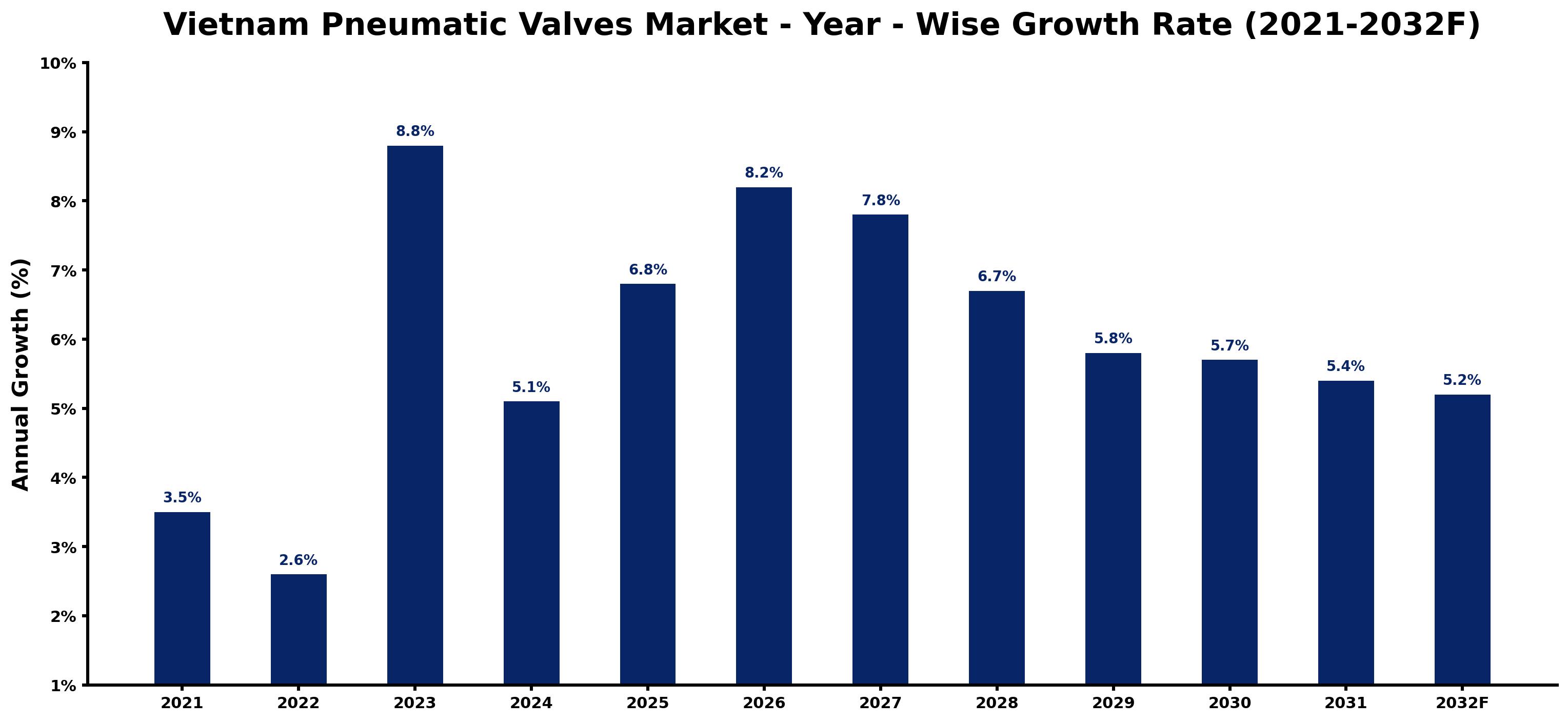
The table below presents the year wise growth rates along with the key drivers influencing the market
| Year | Growth Rate | Major Drivers |
| 2021 | 3.5% | Post-lockdown manufacturing recovery significantly boosts pneumatic valve sector investments. |
| 2022 | 2.6% | Increased foreign direct investment enhances production capacities and technological integration. |
| 2023 | 8.8% | A surge in renewable energy projects stimulates demand for efficient pneumatic solutions. |
| 2024 | 5.1% | Infrastructure development plans prioritize automation, expanding the market for pneumatic valves. |
| 2025 | 6.8% | The automotive industry's transition to electric vehicles necessitates advanced pneumatic technologies. |
| 2026 | 8.2% | Local manufacturers focus on quality improvements to compete with imported valve options. |
| 2027 | 7.8% | Smart factory implementations drive the adoption of interconnected pneumatic systems. |
| 2028 | 6.7% | Urbanization trends elevate construction demands, requiring robust pneumatic valve applications. |
| 2029 | 5.8% | Sustainability focuses shift industries toward energy-efficient pneumatic systems and practices. |
| 2030 | 5.7% | Emerging technologies in robotics enhance the need for precise pneumatic control mechanisms. |
| 2031 | 5.4% | Competitive pressures lead companies to innovate, further stimulating market growth dynamics. |
| 2032 | 5.2% | Global supply chain adjustments encourage domestic sourcing and production of pneumatic valves. |
Note - Market size estimations and growth projections presented in this report are based on 6Wresearch's advanced forecasting approach, validated with industry datasets as of June 2026.
Vietnam Pneumatic Valves Market Synopsis
The Vietnam Pneumatic Valves Market is projected to reach 8.2% and witness significant growth during the forecast period (2026-2032). This growth is underpinned by the nation's booming industrial and manufacturing sectors, increased automation across various industries, and a heightened demand for efficient pneumatic systems. Pneumatic valves serve a vital function in controlling the flow of air or gas within pneumatic systems, thereby facilitating automation and improving process efficiencies across industries including manufacturing, automotive, and oil gas.
Vietnam Pneumatic Valves Market Growth Drivers
The escalation of the Vietnam pneumatic valves market can be attributed to several key drivers:
- Industrial Expansion: The rapid growth of Vietnam's industrial and manufacturing sectors, particularly in automotive and electronics, has propelled the demand for pneumatic systems that enhance production processes.
- Automation and Robotics: The growing trend toward automation and the adoption of robotics across various industries necessitate the use of pneumatic valves for the effective regulation of pneumatic actuators and components.
- Energy Efficiency: Increased focus on energy-efficient operations has led industries to favor pneumatic systems, which are often viewed as more environmentally sustainable compared to electric or hydraulic alternatives.
- Process Optimization: Companies are increasingly aware of the benefits provided by pneumatic systems, including higher operational efficiency and reduced downtime, which bolsters the demand for pneumatic valves.
- Infrastructure Modernization: As Vietnam continues to modernize its infrastructure, the anticipated investment in various projects is expected to further drive the need for reliable pneumatic systems and associated valves.
Vietnam Pneumatic Valves Market Challenges and Restraints
Although the Vietnam pneumatic valves market is poised for growth, it faces several challenges:
- Competition from Alternative Control Valves: The presence of competing technologies, such as electric and hydraulic valves, may limit the market opportunities for pneumatic valves in specific applications.
- Skilled Labor Shortage: There is a notable scarcity of skilled professionals who can design, install, and maintain intricate pneumatic systems, potentially hindering market growth.
- Supply Chain Disruptions: Recent global events, including the pandemic, have highlighted vulnerabilities in supply chains, which could affect the availability and distribution of pneumatic valves.
- Technological Advancements: Rapid advancements in valve technology may necessitate continual investment in product development to remain competitive.
- Economic Volatility: Economic uncertainties can lead to fluctuations in industrial activities, impacting the overall demand for pneumatic valves.
Vietnam Pneumatic Valves Market COVID-19 Impact
The COVID-19 pandemic has had a significant impact on the Vietnam pneumatic valves market. Disruptions in supply chains and logistics during this period affected the availability of pneumatic valves and their related components. Moreover, the economic slowdown resulted in reduced industrial activities, which temporarily impacted the demand for pneumatic valves in various sectors. Nevertheless, the pandemic has underscored the critical importance of automation and digitalization in industries, which could stimulate future growth in the adoption of pneumatic systems and equipment as industries recover.
Vietnam Pneumatic Valves Market Government Investment and Initiatives
The Vietnamese government has rolled out various policies and initiatives aimed at supporting the development of its industrial sector, which directly influences the pneumatic valves market. Key government investments include:
- Infrastructure Development Programs: The government is prioritizing the modernization of industrial infrastructure, thereby creating a conducive environment for pneumatic systems.
- Support for Automation: Policies promoting automation and smart manufacturing are designed to incentivize industries to adopt advanced technologies, including pneumatic valves.
- Energy Efficiency Initiatives: Government initiatives aimed at enhancing energy efficiency in industrial operations are expected to increase the adoption of environmentally friendly pneumatic systems.
- Workforce Development Programs: To address the skilled labor shortage, the government is investing in education and training programs to equip professionals with the necessary skills for managing pneumatic systems.
- Incentives for Foreign Investment: The government encourages foreign investment in the Vietnamese manufacturing sector, which may bolster demand for pneumatic valves as businesses expand their operations.
Vietnam Pneumatic Valves Market Latest Developments (May 2025 - June 2026)
Recent developments within the Vietnam pneumatic valves market from May 2025 to June 2026 highlight a range of industry shifts. Companies are increasingly focusing on innovative solutions aimed at enhancing the efficiency and functionality of pneumatic systems. The sector is witnessing advancements in smart technology and connectivity, aligning with the broader trends of Industry 4.0. Additionally, there is a growing emphasis on the integration of digital tools that enable remote monitoring and management of pneumatic valves. As the competitive landscape evolves, companies are finding opportunities for collaboration and partnerships to expand their market reach. Furthermore, governmental and industry stakeholders are actively engaging in dialogues that promote technological adoption and long-term sustainability in industrial practices.
Vietnam Pneumatic Valves Market - Key Attractiveness of the Report
- 10 Years of Market Numbers
- Historical Data Starting from 2022 to 2025
- Base Year: 2025
- Forecast Data until 2032
- Key Performance Indicators Impacting the Market
- Major Upcoming Developments and Projects
Key Highlights of the Report:
- Vietnam Pneumatic Valves Market Outlook
- Market Size of Vietnam Pneumatic Valves Market, 2025
- Forecast of Vietnam Pneumatic Valves Market, 2032
- Historical Data and Forecast of Vietnam Pneumatic Valves Revenues & Volume for the Period 2022-2032F
- Vietnam Pneumatic Valves Market Trend Evolution
- Vietnam Pneumatic Valves Market Drivers and Challenges
- Vietnam Pneumatic Valves Price Trends
- Vietnam Pneumatic Valves Porter's Five Forces
- Vietnam Pneumatic Valves Industry Life Cycle
- Historical Data and Forecast of Vietnam Pneumatic Valves Market Revenues & Volume By Product Type for the Period 2022-2032F
- Historical Data and Forecast of Vietnam Pneumatic Valves Market Revenues & Volume By Sliding shaft for the Period 2022-2032F
- Historical Data and Forecast of Vietnam Pneumatic Valves Market Revenues & Volume By Rotating shaft for the Period 2022-2032F
- Historical Data and Forecast of Vietnam Pneumatic Valves Market Revenues & Volume By End-Users for the Period 2022-2032F
- Historical Data and Forecast of Vietnam Pneumatic Valves Market Revenues & Volume By Chemicals and petrochemicals for the Period 2022-2032F
- Historical Data and Forecast of Vietnam Pneumatic Valves Market Revenues & Volume By Power generation and management for the Period 2022-2032F
- Historical Data and Forecast of Vietnam Pneumatic Valves Market Revenues & Volume By Mining for the Period 2022-2032F
- Historical Data and Forecast of Vietnam Pneumatic Valves Market Revenues & Volume By Water and wastewater management? for the Period 2022-2032F
- Vietnam Pneumatic Valves Import Export Trade Statistics
- Market Opportunity Assessment By Product Type
- Market Opportunity Assessment By End-Users
- Vietnam Pneumatic Valves Top Companies Market Share
- Vietnam Pneumatic Valves Competitive Benchmarking By Technical and Operational Parameters
- Vietnam Pneumatic Valves Company Profiles
- Vietnam Pneumatic Valves Key Strategic Recommendations






































