Vietnam Polymyxin B Sulfate Market Size, Share & Growth Rate
The Vietnam Polymyxin B Sulfate Market was estimated at USD 259 Million in 2025 and is projected to reach USD 364 Million by 2032, growing at a CAGR of 5.0% from 2026 to 2032. This growth trajectory is primarily fueled by the rising incidence of bacterial infections and an escalating demand for effective antibiotics in both hospital and community settings. The ongoing advancements in healthcare infrastructure and increased awareness regarding antibiotic stewardship are also critical factors propelling the market forward.
Vietnam Polymyxin B Sulfate Market Year-wise Growth Rate and Key Drivers
This graph highlights how the Vietnam Polymyxin B Sulfate Market has steadily grown over the years, supported by major growth factors.
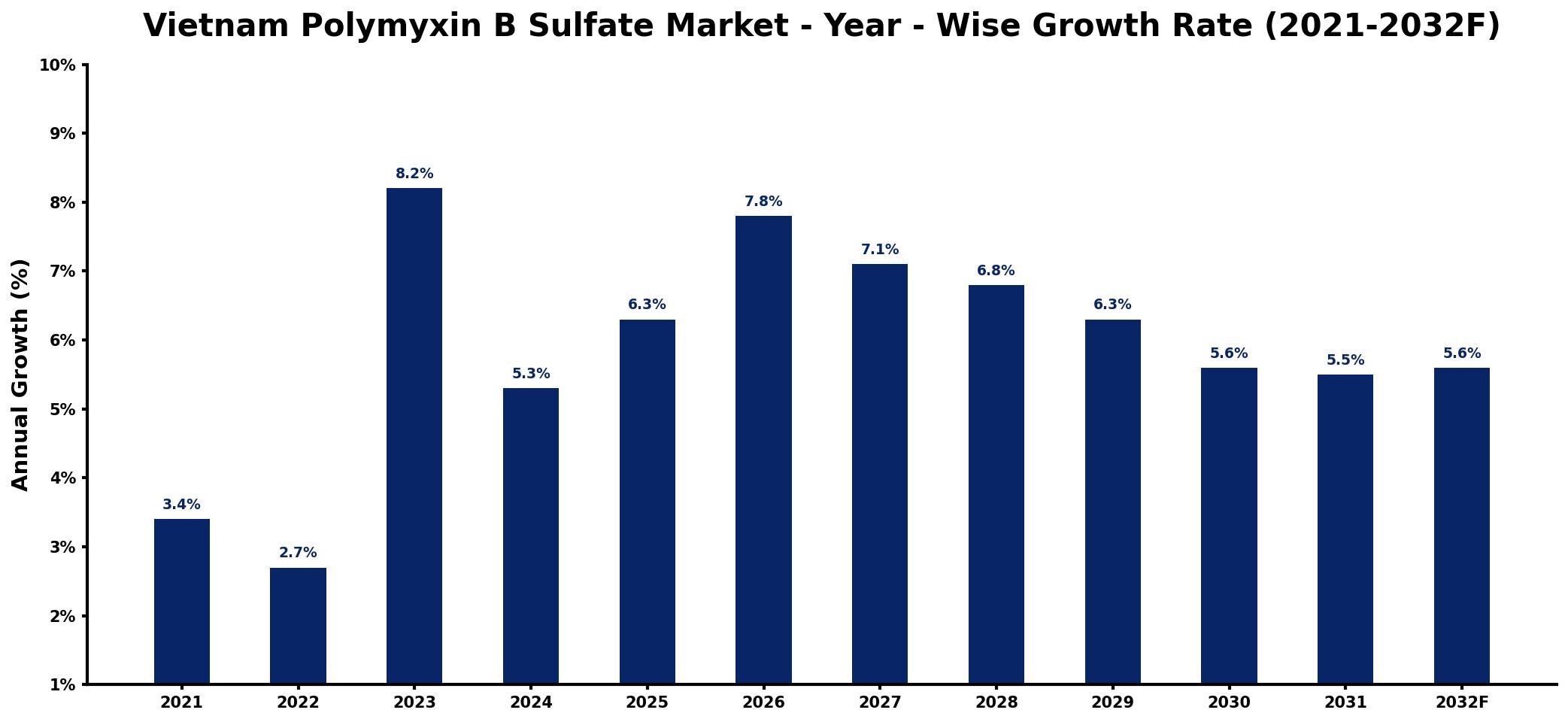
The table below presents the year‑wise growth rates along with the key drivers influencing the market
| Year | Growth Rate | Major Drivers |
| 2021 | 3.4% | Rising healthcare expenditure trends |
| 2022 | 2.7% | Increased prevalence of infections |
| 2023 | 8.2% | Growing antibiotic resistance concerns |
| 2024 | 5.3% | Expansion of healthcare infrastructure |
| 2025 | 6.3% | Surge in clinical research investments |
| 2026 | 7.8% | Increasing demand for effective treatments |
| 2027 | 7.1% | Growing awareness of infection control |
| 2028 | 6.8% | Advancements in pharmaceutical technologies |
| 2029 | 6.3% | Rising number of hospital admissions |
| 2030 | 5.6% | Increasing focus on preventive measures |
| 2031 | 5.5% | growing commercial sector adoption |
| 2032 | 5.6% | Emergence of new therapeutic applications |
Note: Market size estimations and growth projections presented in this report are based on 6Wresearch's proprietary forecasting methodology, utilizing the latest available industry data, government publications, and primary research inputs.
Vietnam Polymyxin B Sulfate Market Synopsis
In recent years, the Vietnam Polymyxin B Sulfate market has experienced robust growth driven by the pressing need for effective treatments against bacterial infections. However, as the market matures, it faces challenges such as antibiotic resistance and stringent regulatory landscapes that could impact future growth.
Looking ahead, the market is set to expand, supported by an increase in research and development efforts by pharmaceutical companies aiming to enhance formulation efficacy. The growing public and private investments in healthcare are likely to create further opportunities for growth within this critical segment of the antibiotic market.
Vietnam Polymyxin B Sulfate Market Key Takeaways
- The market is projected to grow at a CAGR of 5.0% from 2026 to 2032.
- Increased incidence of bacterial infections is a primary driver of market demand.
- Research and development activities are enhancing the efficacy of existing formulations.
- Rising healthcare infrastructure in Vietnam is supporting broader access to antibiotics.
- Antibiotic resistance remains a pivotal challenge that requires careful monitoring.
Evaluation of Restraints in Vietnam Polymyxin B Sulfate Market
Despite its growth potential, the Vietnam Polymyxin B Sulfate market faces significant restraints that could hinder its progress. Chief among these is the challenge of antibiotic resistance, a pressing global health issue that necessitates stringent monitoring and regulation. As more bacteria develop resistance to available treatments, the clinical utility of Polymyxin B Sulfate may be compromised, thus affecting demand. Additionally, the complexity and cost associated with regulatory compliance can burden manufacturers, limiting their ability to innovate and adapt to market needs effectively.
Vietnam Polymyxin B Sulfate Market Trends
Several trends are shaping the Vietnam Polymyxin B Sulfate market landscape. First, the increased focus on combating antibiotic resistance has led to a heightened demand for more efficient antibiotics. Furthermore, the rise of telemedicine and digital health initiatives in Vietnam is promoting better patient education regarding antibiotic use. Additionally, the integration of advanced drug delivery systems is enhancing the therapeutic efficacy of Polymyxin B Sulfate, making it a more viable option for healthcare providers.
Vietnam Polymyxin B Sulfate Market Opportunities
The Vietnam Polymyxin B Sulfate market presents numerous opportunities for growth and investment. The increasing prevalence of drug-resistant infections offers a compelling case for the development of innovative formulations. Furthermore, as healthcare access expands, there are opportunities for new entrants to capture market share by introducing improved antibiotic products. Collaborations between pharmaceutical companies and research institutions can also accelerate the development of next-generation antibiotics, addressing the urgent need for effective treatments.
Government Initiatives in the Vietnam Polymyxin B Sulfate Market
The Vietnamese government is actively enhancing healthcare access and quality through various initiatives. Policies aimed at increasing public spending on healthcare infrastructure are fostering a more robust environment for pharmaceutical growth. Additionally, the government's focus on regulating antibiotic usage to combat resistance is leading to stricter guidelines, ensuring that antibiotics, including Polymyxin B Sulfate, are used judiciously and responsibly.
Future Insights of the Vietnam Polymyxin B Sulfate Market
As we look toward 2026-2032, the Vietnam Polymyxin B Sulfate market is expected to thrive, supported by an increasing demand for effective antibiotics amid rising antibiotic resistance. The healthcare sector's evolution, coupled with investments in research and development, will likely lead to more advanced formulations that enhance therapeutic outcomes. This trajectory suggests a promising outlook, as the market adapts to both consumer needs and regulatory demands.
Vietnam Polymyxin B Sulfate Market Latest Developments (2025 - 2026)
During the period from & to June 2026, the Vietnam Polymyxin B Sulfate market has seen notable developments, including increased collaborations between pharmaceutical manufacturers and research institutions to enhance the efficacy of existing antibiotic formulations. Additionally, initiatives to improve supply chain resilience have been introduced, aiming to ensure consistent availability of Polymyxin B Sulfate in the market. Ongoing education programs directed at healthcare providers regarding the optimal use of antibiotics are also gaining traction.
Vietnam Polymyxin B Sulfate Market - Key Attractiveness of the Report
- 10 Years of Market Numbers
- Historical Data Starting from 2022 to 2025
- Base Year: 2025
- Forecast Data until 2032
- Key Performance Indicators Impacting the Market
- Major Upcoming Developments and Projects
Key Highlights of the Report:
- Vietnam Polymyxin B Sulfate Market Outlook
- Market Size of Vietnam Polymyxin B Sulfate Market, 2025
- Forecast of Vietnam Polymyxin B Sulfate Market, 2032
- Historical Data and Forecast of Vietnam Polymyxin B Sulfate Revenues & Volume for the Period 2022-2032F
- Vietnam Polymyxin B Sulfate Market Trend Evolution
- Vietnam Polymyxin B Sulfate Market Drivers and Challenges
- Vietnam Polymyxin B Sulfate Price Trends
- Vietnam Polymyxin B Sulfate Porter's Five Forces
- Vietnam Polymyxin B Sulfate Industry Life Cycle
- Historical Data and Forecast of Vietnam Polymyxin B Sulfate Market Revenues & Volume By Types for the Period 2022-2032F
- Historical Data and Forecast of Vietnam Polymyxin B Sulfate Market Revenues & Volume By Tablets for the Period 2022-2032F
- Historical Data and Forecast of Vietnam Polymyxin B Sulfate Market Revenues & Volume By Injections for the Period 2022-2032F
- Historical Data and Forecast of Vietnam Polymyxin B Sulfate Market Revenues & Volume By Applications for the Period 2022-2032F
- Historical Data and Forecast of Vietnam Polymyxin B Sulfate Market Revenues & Volume By Hospitals for the Period 2022-2032F
- Historical Data and Forecast of Vietnam Polymyxin B Sulfate Market Revenues & Volume By Private Clinics for the Period 2022-2032F
- Historical Data and Forecast of Vietnam Polymyxin B Sulfate Market Revenues & Volume By Others for the Period 2022-2032F
- Vietnam Polymyxin B Sulfate Import Export Trade Statistics
- Market Opportunity Assessment By Types
- Market Opportunity Assessment By Applications
- Vietnam Polymyxin B Sulfate Top Companies Market Share
- Vietnam Polymyxin B Sulfate Competitive Benchmarking By Technical and Operational Parameters
- Vietnam Polymyxin B Sulfate Company Profiles
- Vietnam Polymyxin B Sulfate Key Strategic Recommendations






































