Vietnam Rubber Processing Equipment Market Size, Share & Growth Rate
The Vietnam Rubber Processing Equipment Market was estimated at USD 416 Million in 2025 and is projected to reach USD 584 Million by 2032, growing at a CAGR of 5.0% from 2026 to 2032. This impressive growth trajectory is fueled by the increasing demand for high-quality rubber products, especially from the automotive and construction industries. Additionally, the push for modernization and the adoption of energy-efficient technologies are driving the demand for innovative rubber processing equipment in the country.
Vietnam Rubber Processing Equipment Market Year-wise Growth Rate and Key Drivers
This graph highlights how the Vietnam Rubber Processing Equipment Market has steadily grown over the years, supported by major growth factors.
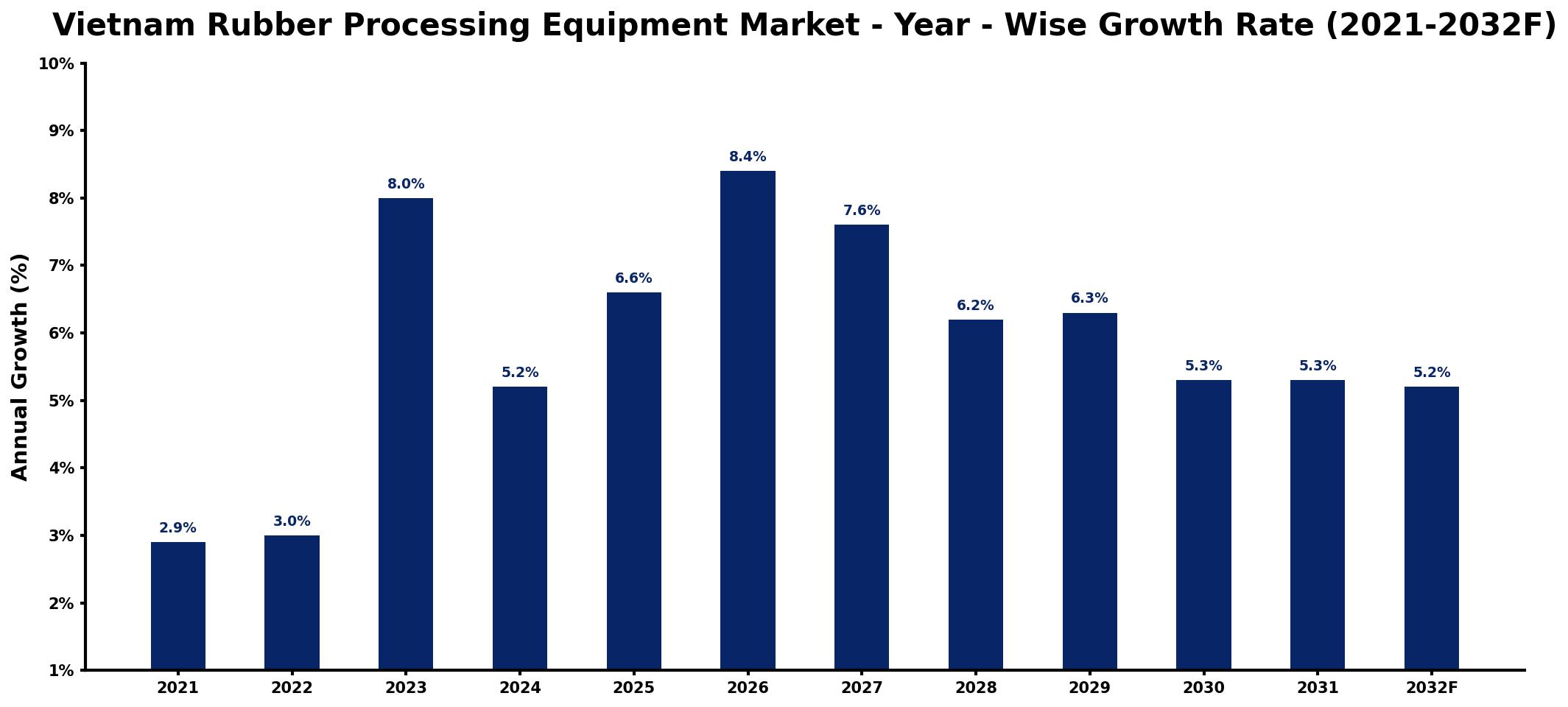
The table below presents the year‑wise growth rates along with the key drivers influencing the market
| Year | Growth Rate | Major Drivers |
| 2021 | 2.9% | Rising demand in export markets |
| 2022 | 3.0% | Increased investments in infrastructure |
| 2023 | 8.0% | Growth in automotive sector production |
| 2024 | 5.2% | Expansion of agricultural applications |
| 2025 | 6.6% | Boost in domestic manufacturing capabilities |
| 2026 | 8.4% | Surge in eco-friendly initiatives |
| 2027 | 7.6% | Technological advancements in production |
| 2028 | 6.2% | Increase in global trade activities |
| 2029 | 6.3% | Development of new industrial projects |
| 2030 | 5.3% | Strengthening of supply chain networks |
| 2031 | 5.3% | rising export shipment volumes |
| 2032 | 5.2% | Rising consumer demand for sustainability |
Note: Market size estimations and growth projections presented in this report are based on 6Wresearch's proprietary forecasting methodology, utilizing the latest available industry data, government publications, and primary research inputs.
Vietnam Rubber Processing Equipment Market Synopsis
Vietnam's rubber processing equipment market is witnessing a notable shift as manufacturers seek to modernize aging infrastructure. The country's status as a major rubber producer requires investments in advanced machinery that can enhance productivity and ensure compliance with international standards.
As the market evolves, there is a pressing need for energy-efficient solutions that can reduce operational costs while improving output quality. This trend is compelling manufacturers to innovate and develop equipment that meets the dynamic demands of the rubber industry.
Vietnam Rubber Processing Equipment Market Key Takeaways
- The market is driven by rising demand for advanced rubber processing technologies.
- Modernization efforts in rubber processing facilities are critical for enhancing productivity.
- Energy efficiency is becoming a key focus area for manufacturers.
- The recovery of key industries post-COVID-19 will significantly influence market growth.
- Investment in automation and compliance with environmental standards remains a priority.
Evaluation of Restraints in Vietnam Rubber Processing Equipment Market
Despite its growth potential, the Vietnam rubber processing equipment market faces several restraints. A substantial portion of existing processing facilities still relies on traditional methodologies and outdated equipment. This reliance can hinder productivity and compromise product quality. Furthermore, the high capital investment required for upgrading to modern and automated systems poses a significant barrier for many manufacturers. Ensuring compliance with stringent environmental regulations adds an additional layer of complexity for operators looking to modernize their processing capabilities.
Vietnam Rubber Processing Equipment Market Trends
Emerging trends within the Vietnam rubber processing equipment market indicate a strong shift towards automation and smart manufacturing. Technologies such as the Internet of Things (IoT) are being integrated into processing lines to enhance real-time monitoring and data analytics. Moreover, sustainability practices are gaining momentum, with an increasing emphasis on eco-friendly production methods and materials. This not only aligns with global sustainability trends but also meets the growing consumer demand for environmentally responsible products.
Vietnam Rubber Processing Equipment Market Opportunities
The landscape of the Vietnam rubber processing equipment market presents numerous opportunities for growth and investment. With the forecasted expansion of the rubber industry, companies that focus on developing cutting-edge, energy-efficient technologies stand to gain a competitive advantage. Additionally, as international trade continues to expand, there is a rising need for local manufacturers to comply with global standards, which creates further demand for advanced processing equipment. Strategic partnerships and collaborations can also open up new avenues for innovation and market penetration.
Government Initiatives in the Vietnam Rubber Processing Equipment Market
The Vietnamese government is actively promoting the development of the rubber processing industry through various initiatives. Policies aimed at enhancing infrastructure and facilitating technology transfer are being implemented to support modernization efforts. Furthermore, public spending on industrial development includes incentives for manufacturers investing in automation and environmentally sustainable practices. These initiatives are crucial for positioning Vietnam as a key player in the global rubber market.
Future Insights of the Vietnam Rubber Processing Equipment Market
Looking ahead to 2026-2032, the Vietnam rubber processing equipment market is poised for substantial evolution. The ongoing modernization of processing facilities, coupled with advancements in technology, will likely foster increased efficiency and productivity. As domestic and international demand for rubber products grows, manufacturers will be required to adapt swiftly to changing market dynamics. The emphasis on sustainability and compliance with global standards will drive innovation, creating a more robust and competitive market landscape.
Vietnam Rubber Processing Equipment Market Latest Developments (2025 - 2026)
Recent developments in the Vietnam rubber processing equipment market reflect a focus on technological advancements and sustainability. Manufacturers are increasingly adopting smart technologies to optimize processing operations, while investment in research and development is fostering innovation. Additionally, collaborations among industry stakeholders are emerging, aiming to improve the overall efficiency of rubber production and meet the evolving demands of the global market.
Vietnam Rubber Processing Equipment Market - Key Attractiveness of the Report
- 10 Years of Market Numbers
- Historical Data Starting from 2022 to 2025
- Base Year: 2025
- Forecast Data until 2032
- Key Performance Indicators Impacting the Market
- Major Upcoming Developments and Projects
Key Highlights of the Report:
- Vietnam Rubber Processing Equipment Market Outlook
- Market Size of Vietnam Rubber Processing Equipment Market, 2025
- Forecast of Vietnam Rubber Processing Equipment Market, 2032
- Historical Data and Forecast of Vietnam Rubber Processing Equipment Revenues & Volume for the Period 2022-2032F
- Vietnam Rubber Processing Equipment Market Trend Evolution
- Vietnam Rubber Processing Equipment Market Drivers and Challenges
- Vietnam Rubber Processing Equipment Price Trends
- Vietnam Rubber Processing Equipment Porter's Five Forces
- Vietnam Rubber Processing Equipment Industry Life Cycle
- Historical Data and Forecast of Vietnam Rubber Processing Equipment Market Revenues & Volume By Type for the Period 2022-2032F
- Historical Data and Forecast of Vietnam Rubber Processing Equipment Market Revenues & Volume By Small-scale for the Period 2022-2032F
- Historical Data and Forecast of Vietnam Rubber Processing Equipment Market Revenues & Volume By Large-scale for the Period 2022-2032F
- Historical Data and Forecast of Vietnam Rubber Processing Equipment Market Revenues & Volume By Application for the Period 2022-2032F
- Historical Data and Forecast of Vietnam Rubber Processing Equipment Market Revenues & Volume By Automobile for the Period 2022-2032F
- Historical Data and Forecast of Vietnam Rubber Processing Equipment Market Revenues & Volume By Household Electrical Appliances for the Period 2022-2032F
- Historical Data and Forecast of Vietnam Rubber Processing Equipment Market Revenues & Volume By Other for the Period 2022-2032F
- Vietnam Rubber Processing Equipment Import Export Trade Statistics
- Market Opportunity Assessment By Type
- Market Opportunity Assessment By Application
- Vietnam Rubber Processing Equipment Top Companies Market Share
- Vietnam Rubber Processing Equipment Competitive Benchmarking By Technical and Operational Parameters
- Vietnam Rubber Processing Equipment Company Profiles
- Vietnam Rubber Processing Equipment Key Strategic Recommendations






































