Vietnam Salicylic Acid Market Size Growth Rate
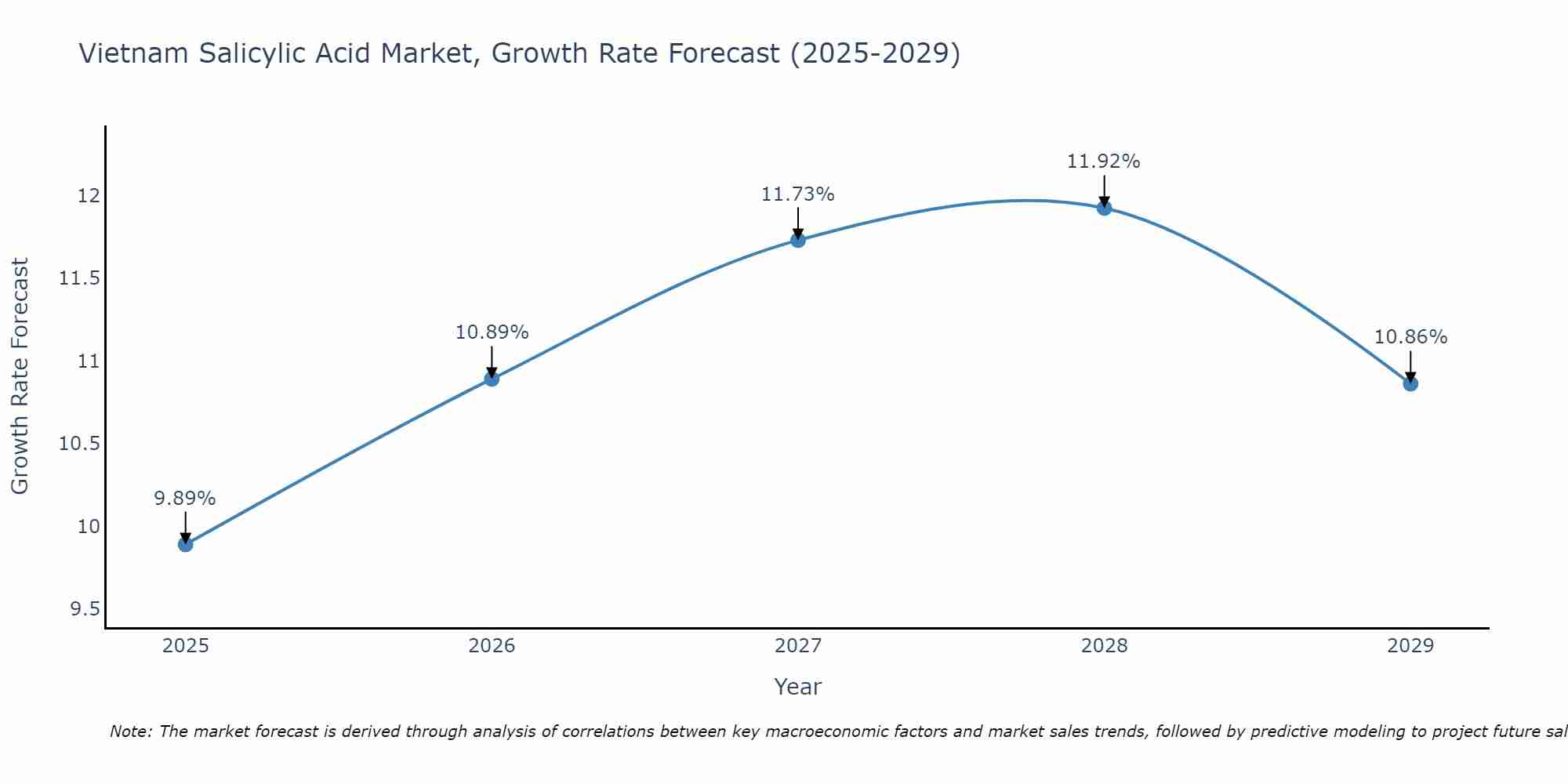
The Vietnam Salicylic Acid Market is projected to witness mixed growth rate patterns during 2025 to 2029. Starting at 9.89% in 2025, the market peaks at 11.92% in 2028, and settles at 10.86% by 2029.
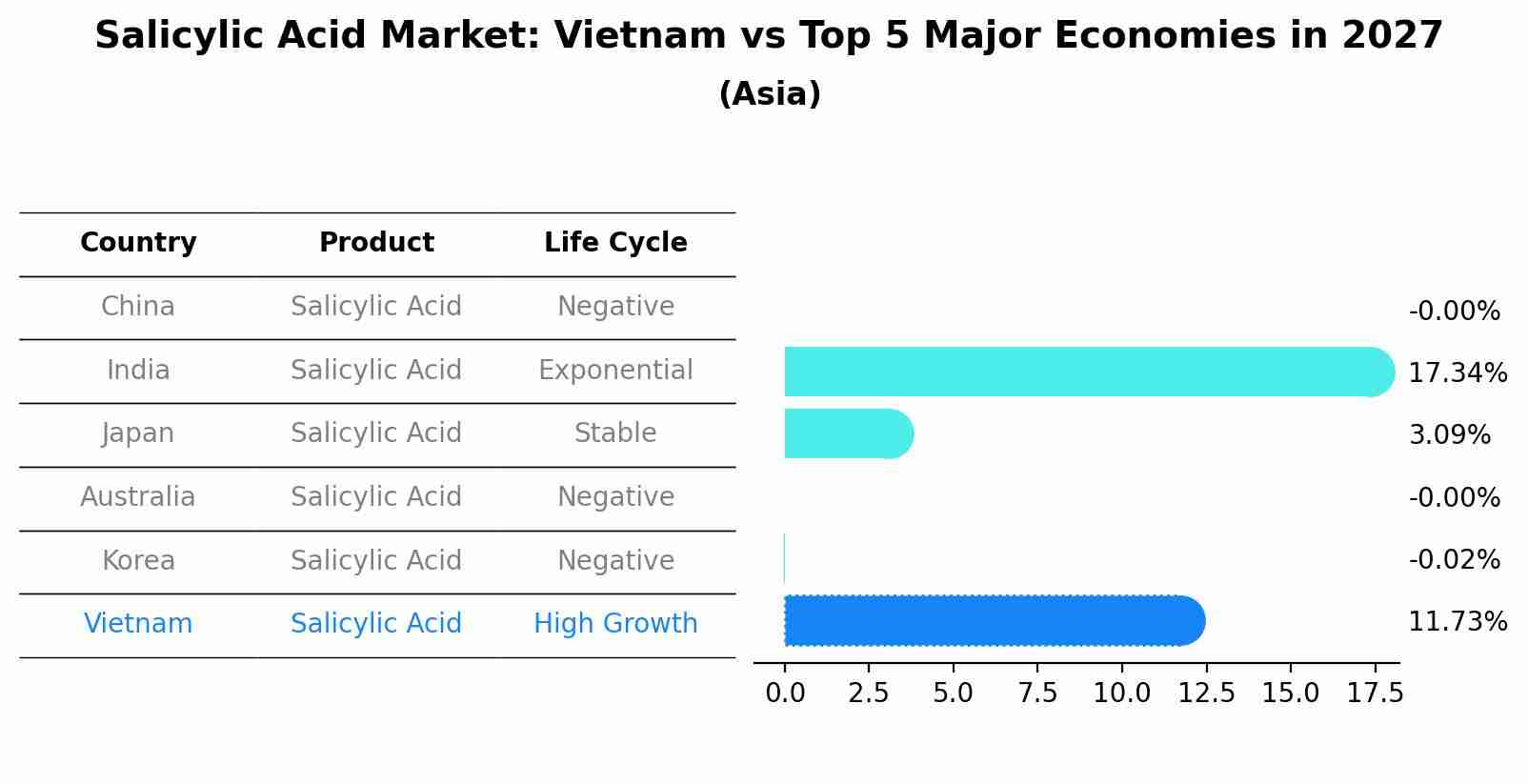
Salicylic Acid Market: Vietnam vs Top 5 Major Economies in 2027 (Asia)
The Salicylic Acid market in Vietnam is projected to grow at a high growth rate of 11.73% by 2027, within the Asia region led by China, along with other countries like India, Japan, Australia and South Korea, collectively shaping a dynamic and evolving market environment driven by innovation and increasing adoption of emerging technologies.
Vietnam Salicylic Acid Market Overview
The Vietnam Salicylic Acid market is integral to the pharmaceutical, cosmetics, and personal care industries. Salicylic acid is widely used in the production of medications, skincare products, and hair care formulations. The market dynamics are influenced by factors such as consumer trends in health and beauty, advancements in pharmaceutical research, and regulatory considerations. Vietnam`s growing healthcare and beauty consciousness contribute to the steady demand for salicylic acid. The market also responds to global trends in natural and organic product formulations, influencing product innovation and market competitiveness.
Drivers of the Market
The salicylic acid market in Vietnam is being driven by the rising awareness of skincare and dermatological products. Salicylic acid is a key ingredient in various skincare products and has gained popularity for its exfoliating and acne-fighting properties. The growing middle-class population with higher disposable incomes is contributing to the increased consumption of such products, leading to market expansion.
Challenges of the Market
The Vietnam Salicylic Acid market faces challenges linked to regulatory requirements and product safety. Salicylic acid is used in cosmetics and pharmaceuticals, necessitating strict adherence to quality and safety standards. Keeping up with evolving regulations and ensuring product purity and efficacy is vital. The market players must also deal with counterfeit and substandard products, requiring robust quality control measures.
COVID 19 Impact on the Market
The Vietnam Salicylic Acid Market experienced the effects of the COVID-19 pandemic, with disruptions in the pharmaceutical and cosmetic industries, where salicylic acid is widely used. The market faced challenges related to supply chain disruptions and a temporary decline in consumer spending on non-essential products. However, as healthcare and personal care sectors adapt to the new normal, the Vietnam Salicylic Acid Market is poised for recovery. The increased focus on health and wellness is expected to drive demand for salicylic acid in pharmaceuticals and skincare products.
Key Players in the Market
In Vietnam`s Salicylic Acid market, leading players have contributed significantly to the pharmaceutical and cosmetic industries. Companies such as PharmaChem Innovations, Salix Pharmaceuticals Ltd., and CosmeticAcids Group have been instrumental. PharmaChem Innovations, known for its high-purity salicylic acid and adherence to pharmaceutical standards, holds a prominent position in the market.
Key Highlights of the Report:
- Vietnam Salicylic Acid Market Outlook
- Market Size of Vietnam Salicylic Acid Market, 2024
- Forecast of Vietnam Salicylic Acid Market, 2031
- Historical Data and Forecast of Vietnam Salicylic Acid Revenues & Volume for the Period 2021-2031
- Vietnam Salicylic Acid Market Trend Evolution
- Vietnam Salicylic Acid Market Drivers and Challenges
- Vietnam Salicylic Acid Price Trends
- Vietnam Salicylic Acid Porter's Five Forces
- Vietnam Salicylic Acid Industry Life Cycle
- Historical Data and Forecast of Vietnam Salicylic Acid Market Revenues & Volume By Application for the Period 2021-2031
- Historical Data and Forecast of Vietnam Salicylic Acid Market Revenues & Volume By Pharmaceutical for the Period 2021-2031
- Historical Data and Forecast of Vietnam Salicylic Acid Market Revenues & Volume By Food & Preservatives for the Period 2021-2031
- Historical Data and Forecast of Vietnam Salicylic Acid Market Revenues & Volume By Cosmetics for the Period 2021-2031
- Historical Data and Forecast of Vietnam Salicylic Acid Market Revenues & Volume By Others for the Period 2021-2031
- Vietnam Salicylic Acid Import Export Trade Statistics
- Market Opportunity Assessment By Application
- Vietnam Salicylic Acid Top Companies Market Share
- Vietnam Salicylic Acid Competitive Benchmarking By Technical and Operational Parameters
- Vietnam Salicylic Acid Company Profiles
- Vietnam Salicylic Acid Key Strategic Recommendations






































