Vietnam Spices Market Growth Rate
According to 6Wresearch internal database and industry insights, the Vietnam Spices Market is growing at a compound annual growth rate (CAGR) of 5.9% during the forecast period (2026-2032).
Vietnam Spices Market Year-wise Growth Rate and Key Drivers
This graph highlights how the Vietnam Spices Market has steadily grown over the past five years, supported by major growth factors.
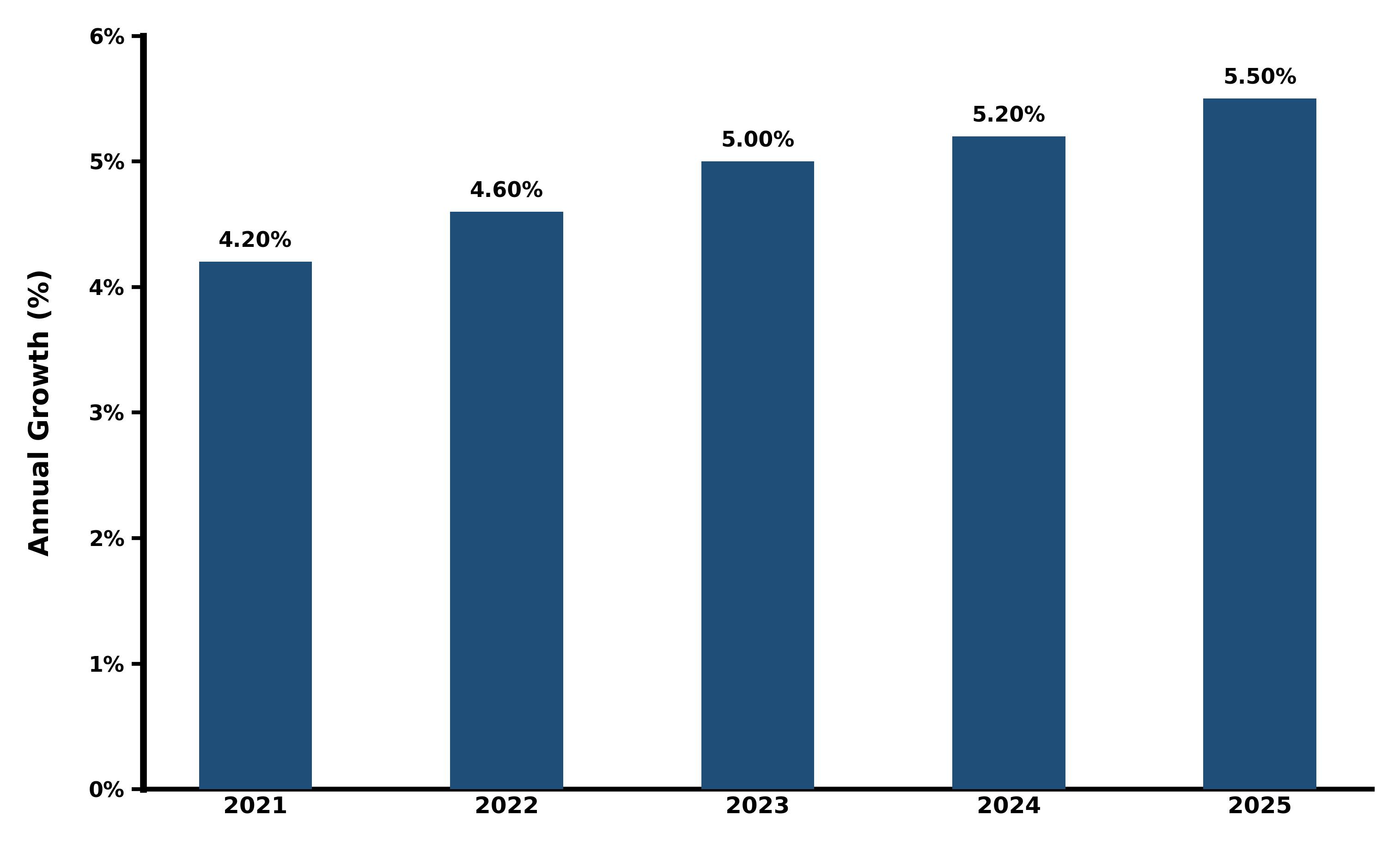 The table below presents the year‑wise growth rates along with the key drivers influencing the market
| Years | Est. Annual Growth in % | Growth Drivers |
| 2021 | 4.2% | Increasing demand for spices in domestic culinary sectors, especially in urban areas. |
| 2022 | 4.6% | More popularity of Vietnamese cuisine globally, boosting demand for traditional spices. |
| 2023 | 5% | Growing export markets, particularly to North America, Europe, and the Middle East. |
| 2024 | 5.2% | More consumer preference for organic and chemical-free spices. |
| 2025 | 5.5% | Development of spice processing infrastructure and focus on quality control for exports. |
Topics Covered in the Vietnam Spices Market Report
The Vietnam Spices Market report thoroughly covers the market by products, forms, category and distribution channels. The report provides an unbiased and detailed analysis of ongoing market trends, opportunities/high growth areas, and market drivers, which would help stakeholders devise and align their market strategies according to the current and future market dynamics.
Vietnam Spices Market Highlights
| Report Name | Vietnam Spices Market |
| Forecast Period | 2026–2032 |
| CAGR | 5.9% |
| Growing Sector | Export |
Vietnam Spices Market Synopsis
The Vietnam Spices Market will experience substantial expansion as of increasing domestic demand and strong export market potential. The market is growing as both traditional and contemporary cooking practices now use more spices while people increasingly choose organic and natural food options. The market expansion has been supported by government programs which aim to enhance both spice production and export quality standards. The development of online retail and distribution networks for spices is driving market growth as urban consumers prefer easy access to products.
Evaluation of Growth Drivers in the Vietnam Spices Market
Below mentioned are some growth drivers and their impact on market dynamics:
| Drivers | Primary Segments Affected | Why It Matters |
| Growing Export Potential | Product Categories (Pepper, Turmeric, Ginger, etc.) | Expands Vietnam’s role as a major exporter of spices. |
| Rise in Organic Product Demand | Product Categories (Organic Spices) | Meets consumer demand for healthier, chemical-free spices. |
| Increased Focus on Processing Infrastructure | Form (Powder, Whole) | Increases product quality and consistency, bolstering export standards. |
| Government Support for Spice Production | Product Categories (Cinnamon, Cardamom) | Supports sustainable production and increases export competitiveness. |
| E-commerce and Online Retail Growth | Distribution Channels (Non-Store based) | Makes consumer access to spices through online platforms. |
The Vietnam Spices Market is expected to have consistent growth, at a CAGR of 5.9% during the forecast period of 2026-2032. The Vietnam Spices Market operates through several main factors which exist as international markets increasingly demand Vietnamese spices that include pepper and turmeric and ginger. The demand for organic spices which contain no chemical additives grows as more consumers today prioritize health. The major development of markets which export goods to North America and Europe and the Middle East drives business expansion. The production capacity increases through government backing of sustainable agriculture and quality control measures together with improvements in spice processing facilities. Moreover, the global rise of Vietnamese cuisine increases the demand for spices both within Vietnam and other countries.
Evaluation of Restraints in the Vietnam Spices Market
Below mentioned are some major restraints and their influence on market dynamics:
| Restraints | Primary Segments Affected | What This Means |
| High Price Volatility of Raw Materials | All Product Categories | Creates instability in pricing and consumer demand. |
| Competition from Alternative Spices | Product Categories (Turmeric, Pepper) | Reduces demand for traditional spice products. |
| Environmental Impact of Spice Cultivation | Organic and Conventional Spices | Makes production costs higher and limits sustainability. |
| Limited Processing and Storage Facilities | Form (Powder, Whole) | Constrains quality and export capacity. |
| Cultural Preferences in Spice Consumption | Product Categories (Coriander, Ginger) | Hampers the expansion of market in specific regions. |
Vietnam Spices Market Challenges
The Vietnam Spices Market faces several challenges in its path of growth. These difficulties include raw material price fluctuations that create production cost problems and price stability issues. The lack of processing infrastructure and storage facilities prevents products from meeting quality standards needed for export. Different regions in Vietnam have varying spice consumption patterns as of cultural preferences, which limits market growth. The spice market faces two major problems, which include rising competition from both alternative spices and global markets and environmental issues that will affect sustainable agricultural practices.
Vietnam Spices Market Trends
Key trends contributing to the Vietnam Spices Market growth are:
- Health-Conscious Spice Products: There is a growing demand for organic turmeric, ginger, and pepper among consumers due to increasing demand for healthy species.
- Halal & Kosher Certification Growth: There is a growing demand for halal-certified and kosher spices in global markets, thus the Vietnam producers are providing with proper certifications on the halal products.
- E-commerce and Online Retail Expansion: The online retail platforms are increasing the industry expansion by providing ease of accessibility and wide range product offerings to the consumers.
Vietnam Spices Market Investment Opportunities
Key investment opportunities present in the Vietnam Spices Industry are:
- Sustainable Spice Production: Investment in eco-friendly and sustainable farming practices could position Vietnam as a leader in the global spice market, particularly for organic and fair-trade products.
- Growth in Export Markets: There is a growing demand for Vietnamese spices among the consumers of North America and Europe, which is expected to expand the market share.
- Product Innovation: The investors can invest more in the making of spice blends and ready-to-use spice kits which are getting more popularity in the market due to increasing demand for convenience.
Leading Companies in the Vietnam Spices Market
Here are some top companies contributing to the Vietnam Spices Market Share:
1. Masan Consumer Corporation
| Company Name | Masan Consumer Corporation |
|---|---|
| Established Year | 1996 |
| Headquarters | Ho Chi Minh City, Vietnam |
| Official Website | Click Here |
Masan Consumer Corporation is a dominant player in Vietnam’s sauces market, specializing in chili sauce, soy sauce, and fish sauce. The company is known for its high-quality products and extensive market presence, both domestically and internationally, making it a leader in the Vietnamese food industry.
2. Unilever Vietnam (Knorr/Aji-ngon)
| Company Name | Unilever Vietnam (Knorr/Aji-ngon) |
|---|---|
| Established Year | 1995 |
| Headquarters | Ho Chi Minh City, Vietnam |
| Official Website | Click Here |
Unilever Vietnam, under brands like Knorr and Aji-ngon, is a major player in the seasoning powders and blends market. Known for its innovative flavor solutions, the company is a trusted name in Vietnamese households and continues to lead in the seasoning products segment.
3. Ajinomoto Vietnam
| Company Name | Ajinomoto Vietnam |
|---|---|
| Established Year | 1994 |
| Headquarters | Ho Chi Minh City, Vietnam |
| Official Website | Click Here |
Ajinomoto Vietnam is a leading manufacturer of seasoning products and flavor enhancers. The company is recognized for its commitment to delivering high-quality ingredients and flavor solutions, playing a crucial role in Vietnam’s food and beverage industry.
4. Cholimex Food
| Company Name | Cholimex Food |
|---|---|
| Established Year | 1990 |
| Headquarters | Ho Chi Minh City, Vietnam |
| Official Website | Click Here |
Cholimex Food is a significant player in the Vietnamese chili sauce and spice market. The company is known for its diverse range of chili sauces and spice products, offering high-quality, flavorful solutions for both domestic and international markets.
5. Dh Foods
| Company Name | Dh Foods |
|---|---|
| Established Year | 2003 |
| Headquarters | Hanoi, Vietnam |
| Official Website | Click Here |
Dh Foods is known for its regional specialty spices and natural ingredient products. The company emphasizes sustainability and authenticity in its offerings, catering to a wide range of culinary needs in both the domestic and international markets.
Government Regulations Introduced in the Vietnam Spices Market
According to Vietnamese government data, the Vietnam Spices Market is well regulated by various government policy ensuring the smooth growth of the market. It has implemented various programs to boost spice production and processing and export activities. The Vietnam Ministry of Agriculture and Rural Development (MARD) has introduced policies aimed at increasing the quality of agricultural products, including spices, to meet international standards. Also, the government has provided backing to the Vietnam National Agro-Forestry-Fisheries Quality Assurance Department (NAFIQAD) to develop enhanced spice export standards, which have increased the global competitiveness of Vietnamese spices.
Future Insights of the Vietnam Spices Market
The future outlook for the Vietnam Spices Market is optimistic, with continuous growth anticipated. The market expansion occurs as domestic and international markets demand more products, especially North American and European and Middle Eastern export markets. The worldwide increase in Vietnamese cuisine and spice adoption drives the expansion of the market, which is further increased by consumers who prefer organic and natural products. Other than that, government support for infrastructure development, integrated with a growing online retail sector, will further stimulate the market's expansion.
Market Segmentation Analysis
The report offers a comprehensive study of the subsequent market segments and their leading categories.
Pepper to Dominate the Market – By Product
According to Guneet Kaur, Senior Research Analyst at 6Wresearch, pepper is leading the Market. This is due to its widespread culinary use, both domestically and internationally. As a staple spice, its demand remains strong in both traditional and modern dishes, contributing significantly to growth of export.
Powder to Dominate the Market – By Form
The powder form of spices is leading the market. As it provides convenience and ease of use in cooking and food manufacturing. Its popularity in both retail and industrial markets is driven by the growing demand for ready-to-use products and packaged spices.
Organic to Dominate the Market – By Category
Organic spices are leading the market. Mainly due to increasing health-conscious consumer preferences for chemical-free, sustainably grown products. Also, with rising awareness of the environmental and health benefits of organic farming, the demand for organic turmeric, ginger, and pepper is growing rapidly.
Non-Store Based to Dominate the Market – By Distribution Channel
Non-store-based channels is leading the market. This is mainly due to the increasing preference for online shopping and the convenience it offers. Consumers are increasingly purchasing spices from digital platforms, driven by their urban lifestyle and the need for easy home delivery options.
Key attractiveness of the report
- 10 Years Market Numbers.
- Historical Data Starting from 2022 to 2025.
- Base Year: 2025
- Forecast Data until 2032.
- Key Performance Indicators Impacting the Market.
- Major Upcoming Developments and Projects.
Key Highlights of the Report:
- Vietnam Spices Market Outlook
- Market Size of Vietnam Spices Market, 2025
- Forecast of Vietnam Spices Market, 2032
- Historical Data and Forecast of Vietnam Spices Revenues & Volume for the Period 2022-2032
- Vietnam Spices Market Trend Evolution
- Vietnam Spices Market Drivers and Challenges
- Vietnam Spices Price Trends
- Vietnam Spices Porter's Five Forces
- Vietnam Spices Industry Life Cycle
- Historical Data and Forecast of Vietnam Spices Market Revenues & Volume By Product for the Period 2022-2032
- Historical Data and Forecast of Vietnam Spices Market Revenues & Volume By Pepper for the Period 2022-2032
- Historical Data and Forecast of Vietnam Spices Market Revenues & Volume By Ginger for the Period 2022-2032
- Historical Data and Forecast of Vietnam Spices Market Revenues & Volume By Cinnamon for the Period 2022-2032
- Historical Data and Forecast of Vietnam Spices Market Revenues & Volume By Cumin for the Period 2022-2032
- Historical Data and Forecast of Vietnam Spices Market Revenues & Volume By Turmeric for the Period 2022-2032
- Historical Data and Forecast of Vietnam Spices Market Revenues & Volume By Cardamom for the Period 2022-2032
- Historical Data and Forecast of Vietnam Spices Market Revenues & Volume By Coriander for the Period 2022-2032
- Historical Data and Forecast of Vietnam Pepper Spices Market Revenues & Volume By Others for the Period 2022-2032
- Historical Data and Forecast of Vietnam Spices Market Revenues & Volume By Form for the Period 2022-2032
- Historical Data and Forecast of Vietnam Spices Market Revenues & Volume By Powder for the Period 2022-2032
- Historical Data and Forecast of Vietnam Spices Market Revenues & Volume By Whole for the Period 2022-2032
- Historical Data and Forecast of Vietnam Spices Market Revenues & Volume By Chopped/Crushed for the Period 2022-2032
- Historical Data and Forecast of Vietnam Spices Market Revenues & Volume By Category for the Period 2022-2032
- Historical Data and Forecast of Vietnam Spices Market Revenues & Volume By Organic for the Period 2022-2032
- Historical Data and Forecast of Vietnam Spices Market Revenues & Volume By Conventional for the Period 2022-2032
- Historical Data and Forecast of Vietnam Spices Market Revenues & Volume By Distribution Channel for the Period 2022-2032
- Historical Data and Forecast of Vietnam Spices Market Revenues & Volume By Store Based for the Period 2022-2032
- Historical Data and Forecast of Vietnam Spices Market Revenues & Volume By Non-Store Based for the Period 2022-2032
- Vietnam Spices Import Export Trade Statistics
- Market Opportunity Assessment By Product
- Market Opportunity Assessment By Form
- Market Opportunity Assessment By Category
- Market Opportunity Assessment By Distribution Channel
- Vietnam Spices Top Companies Market Share
- Vietnam Spices Competitive Benchmarking By Technical and Operational Parameters
- Vietnam Spices Company Profiles
- Vietnam Spices Key Strategic Recommendations
Market Covered
The report subsequently covers the market by following segments and subsegments:
By Product
- Pepper
- Ginger
- Cinnamon
- Cumin
- Turmeric
- Cardamom
- Coriander
- Others
By Form
- Powder
- Whole
- Chopped/Crushed
By Category
- Organic
- Conventional
By Distribution Channel
- Store-based
- Non-Store based






































