Vietnam Sports Apparel Market Summary
The vietnam sports apparel market was estimated at USD 228 Million in 2025 and is projected to reach USD 323 Million by 2032, growing at a CAGR of 7.8% from 2026 to 2032.
Vietnam Sports Apparel Market Year-wise Growth Rate and Key Drivers
This graph highlights how the Vietnam Sports Apparel Market has steadily grown over the past five years, supported by major growth factors.
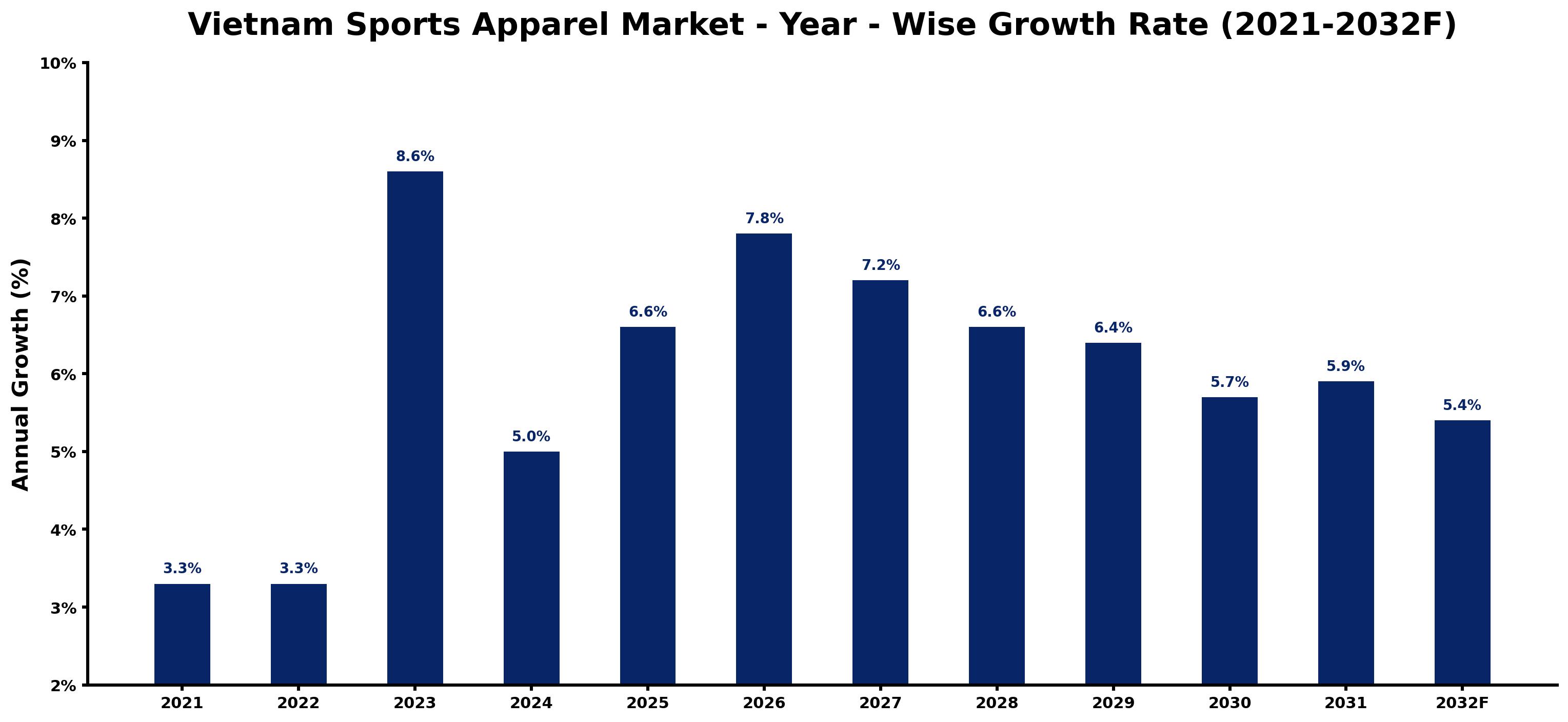
The table below presents the year wise growth rates along with the key drivers influencing the market
| Year | Growth Rate | Major Drivers |
| 2021 | 3.3% | Post-lockdown retail projects emphasized e-commerce growth in Vietnam's sports apparel sector. |
| 2022 | 3.3% | An emerging middle class increasingly prioritizes health and fitness-related purchases. |
| 2023 | 8.6% | Local brands innovated quickly, catering to unique tastes and preferences among consumers. |
| 2024 | 5.0% | International sports events inspire local participation, boosting apparel sales significantly. |
| 2025 | 6.6% | Environmental consciousness among consumers escalates demand for sustainable sportswear options. |
| 2026 | 7.8% | Youth engagement in sports programs drives apparel market diversification and creativity. |
| 2027 | 7.2% | Technological integration enhances online shopping experiences across various platforms. |
| 2028 | 6.6% | Vietnam's urbanization trends create a surge in sports facilities and apparel needs. |
| 2029 | 6.4% | Fitness influencers on social media increasingly influence apparel buying decisions nationwide. |
| 2030 | 5.7% | Corporate wellness programs expand, encouraging employees to invest in activewear solutions. |
| 2031 | 5.9% | Rural markets become accessible, introducing sports apparel to previously untouched demographics. |
| 2032 | 5.4% | Collaborative collections between local designers and international brands enhance market appeal. |
Note - Market size estimations and growth projections presented in this report are based on 6Wresearch's advanced forecasting approach, validated with industry datasets as of June 2026.
Vietnam Sports Apparel Market Synopsis
The Vietnam Sports Apparel Market is projected to reach 7.8% and witness significant growth during the forecast period (2026-2032). The market has been experiencing a robust upward trajectory, primarily driven by an increase in health consciousness and lifestyle transformations among consumers. This evolution has consistently encouraged the adoption of sports apparel as an integral part of daily attire, transcending beyond mere functional use to encompass style and comfort.
Vietnam Sports Apparel Market Growth Drivers
Several key drivers underpin the expansion of the Vietnam Sports Apparel Market. Firstly, the rising awareness of health and fitness has catalyzed a growing demand for specialized clothing suitable for various physical activities. Secondly, shifts in lifestyle preferences towards more active and health-oriented living are driving consumer interest in sports apparel. Additionally, rising disposable incomes among the Vietnamese population have fostered a willingness to invest in quality sportswear that combines both aesthetics and performance. Furthermore, the athleisure trend has emerged as a significant contributor, as consumers increasingly opt for apparel that serves dual purposes for workouts and casual outings. Lastly, the increasing number of fitness centers and recreational facilities has bolstered the need for functional and fashionable sportswear.
Vietnam Sports Apparel Market Challenges and Restraints
Despite the positive growth outlook, the Vietnam Sports Apparel Market faces several challenges. Price sensitivity among consumers presents a significant hurdle, as many individuals may gravitate towards more affordable options, impacting premium brands. Moreover, the strong presence of established global sports apparel brands increases competition, making it difficult for local manufacturers to gain significant market share. The prevalence of counterfeit products also poses a threat, undermining consumer trust and brand integrity. Furthermore, shifts in consumer spending patterns, particularly during economic fluctuations, can affect the demand for discretionary items such as sports apparel. Lastly, the market must navigate the complexities of evolving fashion trends, necessitating agility and innovation from manufacturers to meet changing consumer preferences.
Vietnam Sports Apparel Market Investment Opportunities
Investors looking to enter the Vietnam Sports Apparel Market can find numerous opportunities. Increasing health awareness creates a robust market for innovative and functional apparel. Additionally, the growth of digital sales channels offers avenues for e-commerce and direct-to-consumer models that can attract a younger demographic. Collaborations between local brands and international entities can facilitate knowledge transfer and enhance product offerings. The expansion of fitness facilities and a growing culture of wellness can further drive demand for high-quality sports apparel. Moreover, the ongoing trend towards sustainable and eco-friendly sportswear will present opportunities for brands that prioritize environmental considerations in their product development.
Vietnam Sports Apparel Market Government Investment and Initiatives
The Vietnamese government has recognized the importance of developing the sports and health sector, which includes sports apparel. Policies aimed at promoting public health initiatives and boosting the fitness culture among citizens are gaining traction. Investments in sports infrastructure, such as fitness centers and community sports programs, are being prioritized to encourage more active lifestyles. Additionally, the government's focus on promoting local manufacturing of sports apparel can lead to increased domestic production capabilities. Incentives for foreign investment in the textile and apparel sectors further indicate a supportive environment for market growth. Overall, these initiatives signal a commitment to enhancing the sports industry, thereby indirectly benefiting the sports apparel market.
Vietnam Sports Apparel Market Latest Developments (May 2025 - June 2026)
The period from May 2025 to June 2026 has seen considerable developments in the Vietnam Sports Apparel Market. The demand for innovative and technologically advanced fabrics has increased, with brands seeking to incorporate features that enhance performance and comfort. Additionally, the market has witnessed a rise in collaborations aimed at co-branding efforts, where local designers work alongside established brands to create unique offerings that resonate with Vietnamese consumers. Sustainability has emerged as a focal point, leading manufacturers to explore eco-friendly materials and practices in apparel production. Retail channels have also evolved, with a noticeable shift toward online platforms as consumers continue to embrace digital shopping experiences. Collectively, these developments underscore a dynamic market landscape characterized by innovation, collaboration, and heightened consumer engagement.
Vietnam Sports Apparel Market - Key Attractiveness of the Report
- 10 Years of Market Numbers
- Historical Data Starting from 2022 to 2025
- Base Year: 2025
- Forecast Data until 2032
- Key Performance Indicators Impacting the Market
- Major Upcoming Developments and Projects
Key Highlights of the Report:
- Vietnam Sports Apparel Market Outlook
- Market Size of Vietnam Sports Apparel Market, 2025
- Forecast of Vietnam Sports Apparel Market, 2032
- Historical Data and Forecast of Vietnam Sports Apparel Revenues & Volume for the Period 2022-2032F
- Vietnam Sports Apparel Market Trend Evolution
- Vietnam Sports Apparel Market Drivers and Challenges
- Vietnam Sports Apparel Price Trends
- Vietnam Sports Apparel Porter's Five Forces
- Vietnam Sports Apparel Industry Life Cycle
- Historical Data and Forecast of Vietnam Sports Apparel Market Revenues & Volume By End-users for the Period 2022-2032F
- Historical Data and Forecast of Vietnam Sports Apparel Market Revenues & Volume By Children for the Period 2022-2032F
- Historical Data and Forecast of Vietnam Sports Apparel Market Revenues & Volume By Men for the Period 2022-2032F
- Historical Data and Forecast of Vietnam Sports Apparel Market Revenues & Volume By Women for the Period 2022-2032F
- Historical Data and Forecast of Vietnam Sports Apparel Market Revenues & Volume By Distribution Channel for the Period 2022-2032F
- Historical Data and Forecast of Vietnam Sports Apparel Market Revenues & Volume By E-commerce for the Period 2022-2032F
- Historical Data and Forecast of Vietnam Sports Apparel Market Revenues & Volume By Supermarket/Hypermarket for the Period 2022-2032F
- Historical Data and Forecast of Vietnam Sports Apparel Market Revenues & Volume By Brand Outlets for the Period 2022-2032F
- Historical Data and Forecast of Vietnam Sports Apparel Market Revenues & Volume By Discount Stores for the Period 2022-2032F
- Vietnam Sports Apparel Import Export Trade Statistics
- Market Opportunity Assessment By End-users
- Market Opportunity Assessment By Distribution Channel
- Vietnam Sports Apparel Top Companies Market Share
- Vietnam Sports Apparel Competitive Benchmarking By Technical and Operational Parameters
- Vietnam Sports Apparel Company Profiles
- Vietnam Sports Apparel Key Strategic Recommendations






































