Vietnam Steel Tubes Market Size Growth Rate
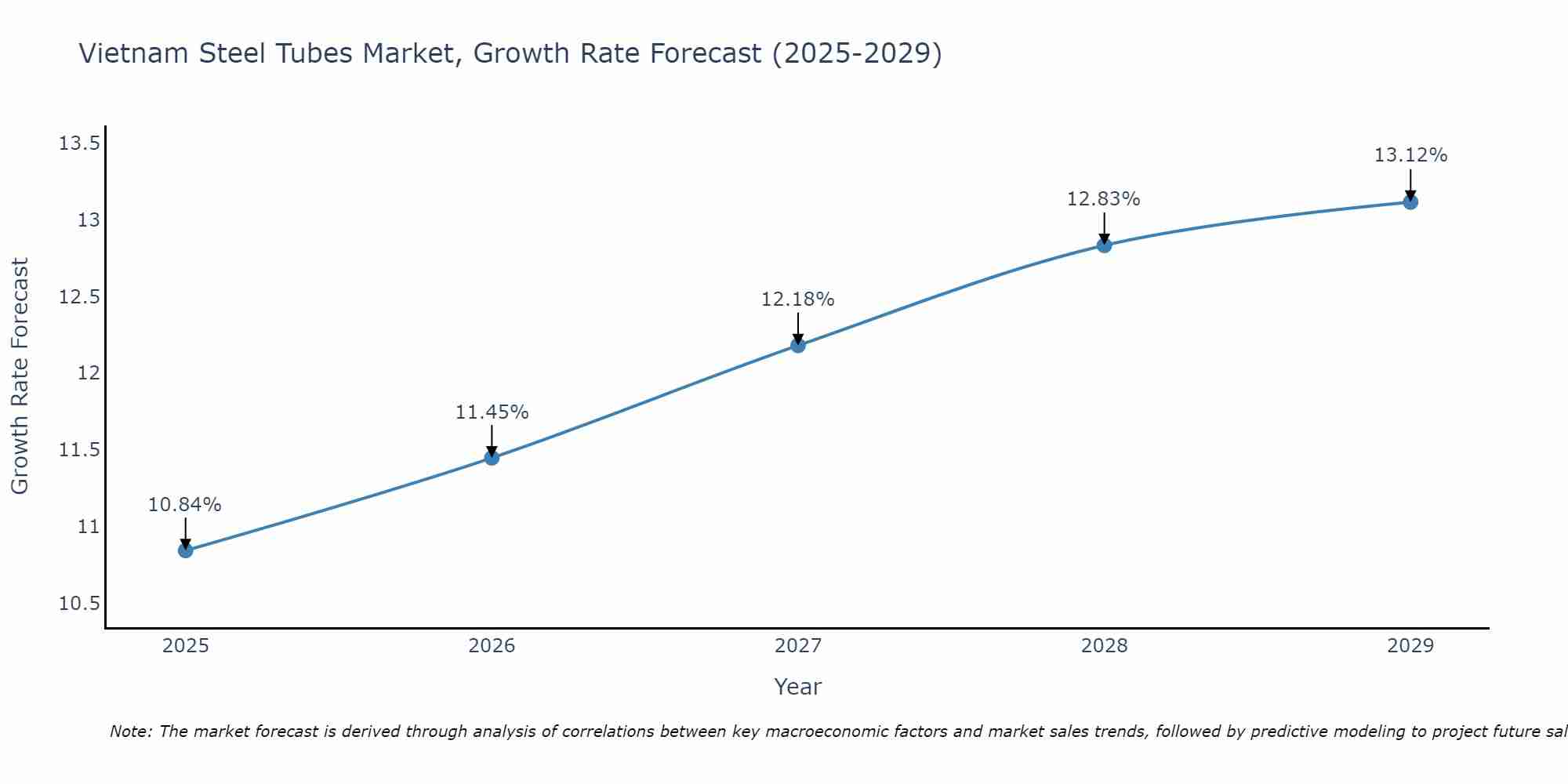
The Vietnam Steel Tubes Market is poised for steady growth rate improvements from 2025 to 2029. From 10.84% in 2025, the growth rate steadily ascends to 13.12% in 2029.
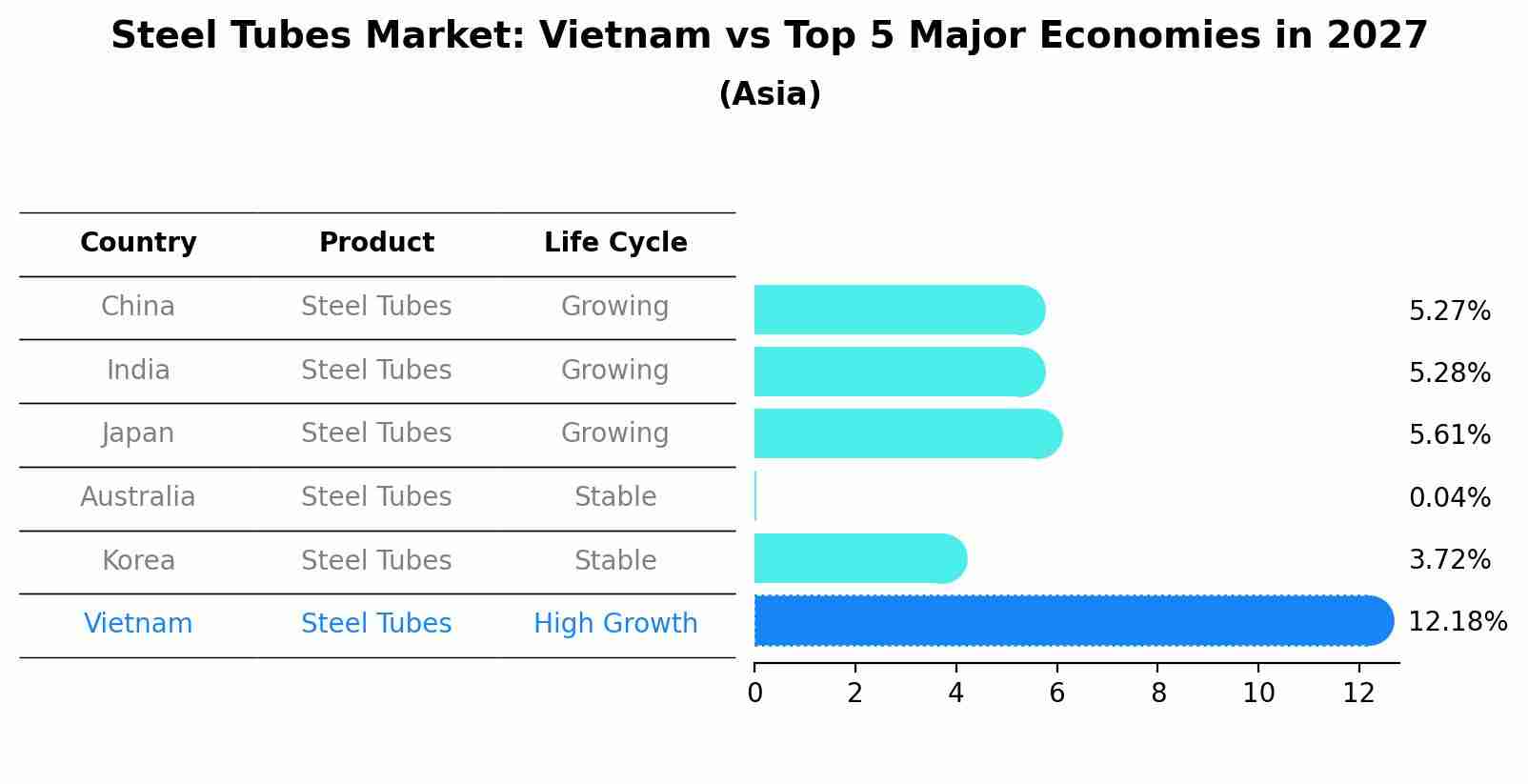
Steel Tubes Market: Vietnam vs Top 5 Major Economies in 2027 (Asia)
In the Asia region, the Steel Tubes market in Vietnam is projected to expand at a high growth rate of 12.18% by 2027. The largest economy is China, followed by India, Japan, Australia and South Korea.
Vietnam Steel Tubes Market Synopsis
The Vietnam Steel Tubes market plays a pivotal role in the country`s construction, manufacturing, and infrastructure sectors. Steel tubes are used in a wide range of applications, including structural support, transportation of fluids, and manufacturing of machinery and equipment. As Vietnam continues its industrial and infrastructure development, the demand for steel tubes remains robust. The market is characterized by a mix of domestic producers and international suppliers, offering various sizes and specifications to meet industry-specific needs. The construction of new buildings, bridges, and pipelines contributes to the sustained growth of this market.
Drivers of the Market
The steel tubes market in Vietnam is thriving owing to their extensive use in various industries, including construction, automotive, and manufacturing. Steel tubes are prized for their strength and versatility in structural applications and transportation of liquids and gases. Infrastructure development projects and the automotive industry`s growth are key drivers, along with the increasing demand for high-quality, corrosion-resistant steel tubes.
Challenges of the Market
The Vietnam Steel Tubes market confronts challenges related to competition, quality control, and adherence to safety and environmental standards in construction and industrial applications. Market players must also address fluctuating steel prices and supply chain disruptions.
COVID-19 Impact on the Market
The COVID-19 pandemic had a multifaceted impact on the Vietnam steel tubes market. Initially, the market faced challenges due to disruptions in the supply chain, reduced construction activities, and economic uncertainties. Construction projects were delayed or postponed, affecting the demand for steel tubes in the building and infrastructure sectors. Manufacturers had to navigate supply chain disruptions and implement safety measures in their facilities, impacting production schedules. However, as the country gradually reopened and adapted to the new normal, construction activities started to recover, boosting the demand for steel tubes. Additionally, the government`s infrastructure development initiatives played a crucial role in revitalizing the market. Online sales channels gained prominence as businesses and consumers sought contactless purchasing options. The Vietnam steel tubes market is expected to rebound as construction projects gain momentum and infrastructure development continues to be a priority.
Key Players in the Market
Local steel tube manufacturers and distributors, such as SMC Steel and Hoa Phat Group, are key players in Vietnam steel tubes market.
Key Highlights of the Report:
- Vietnam Steel Tubes Market Outlook
- Market Size of Vietnam Steel Tubes Market, 2024
- Forecast of Vietnam Steel Tubes Market, 2031
- Historical Data and Forecast of Vietnam Steel Tubes Revenues & Volume for the Period 2021-2031
- Vietnam Steel Tubes Market Trend Evolution
- Vietnam Steel Tubes Market Drivers and Challenges
- Vietnam Steel Tubes Price Trends
- Vietnam Steel Tubes Porter's Five Forces
- Vietnam Steel Tubes Industry Life Cycle
- Historical Data and Forecast of Vietnam Steel Tubes Market Revenues & Volume By Product Type for the Period 2021-2031
- Historical Data and Forecast of Vietnam Steel Tubes Market Revenues & Volume By Seamless Steel Tubes for the Period 2021-2031
- Historical Data and Forecast of Vietnam Steel Tubes Market Revenues & Volume By Welded Steel Tubes for the Period 2021-2031
- Historical Data and Forecast of Vietnam Steel Tubes Market Revenues & Volume By Material Type for the Period 2021-2031
- Historical Data and Forecast of Vietnam Steel Tubes Market Revenues & Volume By Carbon Steel for the Period 2021-2031
- Historical Data and Forecast of Vietnam Steel Tubes Market Revenues & Volume By Stainless Steel for the Period 2021-2031
- Historical Data and Forecast of Vietnam Steel Tubes Market Revenues & Volume By Alloy Steel for the Period 2021-2031
- Historical Data and Forecast of Vietnam Steel Tubes Market Revenues & Volume By Others for the Period 2021-2031
- Historical Data and Forecast of Vietnam Steel Tubes Market Revenues & Volume By End Use for the Period 2021-2031
- Historical Data and Forecast of Vietnam Steel Tubes Market Revenues & Volume By Oil and Gas for the Period 2021-2031
- Historical Data and Forecast of Vietnam Steel Tubes Market Revenues & Volume By Petrochemicals for the Period 2021-2031
- Historical Data and Forecast of Vietnam Steel Tubes Market Revenues & Volume By Infrastructure and Construction for the Period 2021-2031
- Historical Data and Forecast of Vietnam Steel Tubes Market Revenues & Volume By Automotive for the Period 2021-2031
- Historical Data and Forecast of Vietnam Steel Tubes Market Revenues & Volume By Water Treatment and Sewage for the Period 2021-2031
- Historical Data and Forecast of Vietnam Steel Tubes Market Revenues & Volume By Others for the Period 2021-2031
- Vietnam Steel Tubes Import Export Trade Statistics
- Market Opportunity Assessment By Product Type
- Market Opportunity Assessment By Material Type
- Market Opportunity Assessment By End Use
- Vietnam Steel Tubes Top Companies Market Share
- Vietnam Steel Tubes Competitive Benchmarking By Technical and Operational Parameters
- Vietnam Steel Tubes Company Profiles
- Vietnam Steel Tubes Key Strategic Recommendations






































