Vietnam Stuffed Toys Market Size, Share & Growth Rate
The Vietnam Stuffed Toys Market was estimated at USD 1169 Million in 2025 and is projected to reach USD 1662 Million by 2032, growing at a CAGR of 5.2% from 2026 to 2032. This growth is driven by a combination of rising disposable incomes, which has led consumers to invest more in toys and gifts, and a flourishing retail sector that offers an extensive range of stuffed toys. Additionally, cultural traditions and seasonal festivities stimulate demand, creating a vibrant market environment.
Vietnam Stuffed Toys Market Year-wise Growth Rate and Key Drivers
This graph highlights how the Vietnam Stuffed Toys Market has steadily grown over the years, supported by major growth factors.
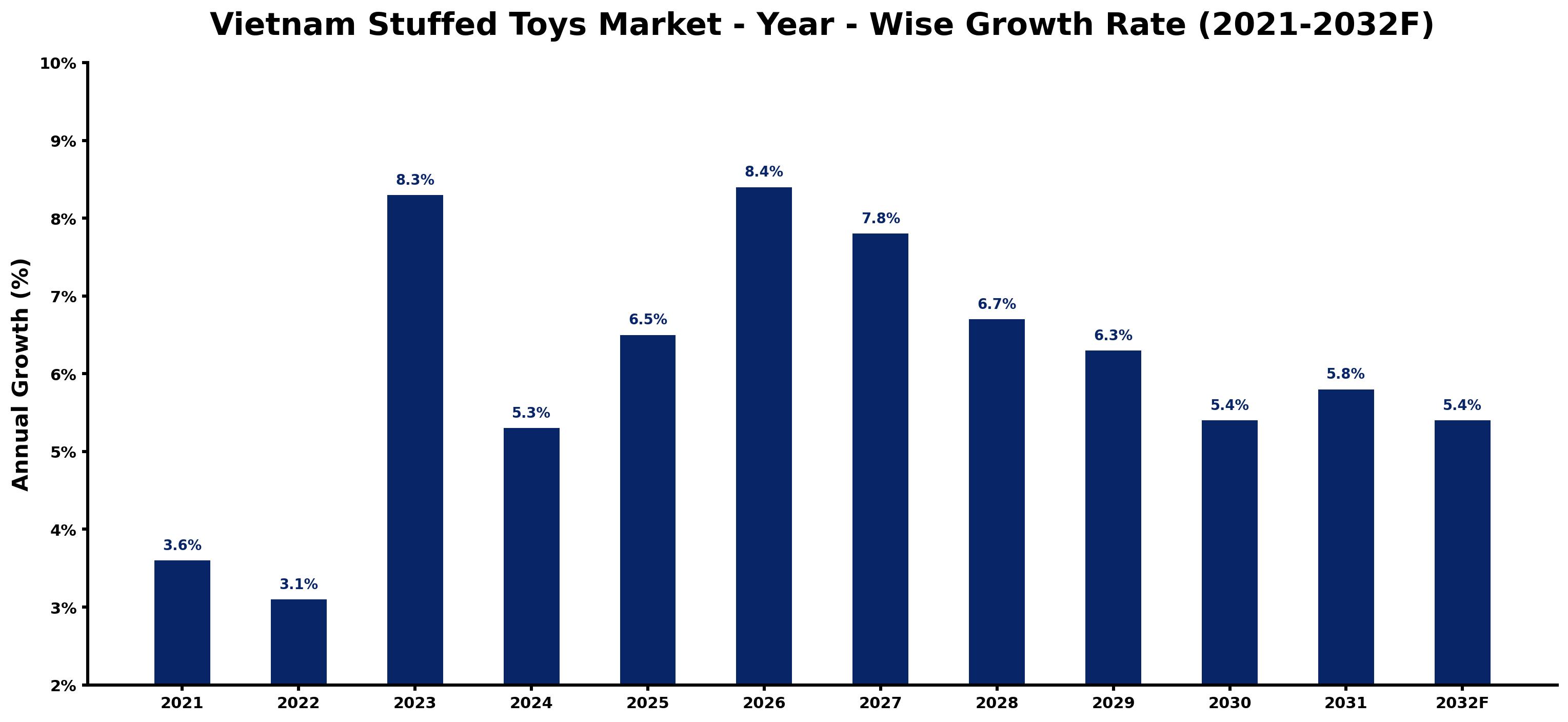
The table below presents the year‑wise growth rates along with the key drivers influencing the market
| Year | Growth Rate | Major Drivers |
| 2021 | 3.6% | Increasing smart city development projects |
| 2022 | 3.1% | Increasing industrial infrastructure investments |
| 2023 | 8.3% | Increasing industrial automation investments |
| 2024 | 5.3% | Increasing industrial automation investments |
| 2025 | 6.5% | Increasing adoption of advanced technologies |
| 2026 | 8.4% | Increasing smart city development projects |
| 2027 | 7.8% | Growing urbanization and commercial development |
| 2028 | 6.7% | Government infrastructure modernization initiatives |
| 2029 | 6.3% | Expansion of transportation and logistics networks |
| 2030 | 5.4% | Growing urbanization and commercial development |
| 2031 | 5.8% | Expansion of transportation and logistics networks |
| 2032 | 5.4% | Increasing industrial infrastructure investments |
Note - Market size estimations and growth projections presented in this report are based on 6Wresearch’s advanced forecasting approach, validated with industry datasets as of June 2026.
Vietnam Stuffed Toys Market Synopsis
Recent momentum in the Vietnam stuffed toys market indicates a strong recovery from the disruptions caused by the COVID-19 pandemic, with consumers returning to retail spaces and making purchases for celebrations. This rebound is expected to continue, supported by a growing consumer base keen on gifting high-quality stuffed toys, particularly during special occasions.
Looking ahead, the market is poised to capitalize on enhanced consumer preferences for safe, eco-friendly, and innovative products. As brands adapt to the evolving tastes and demands of young consumers and their parents, the market's trajectory will likely remain upward, setting the stage for significant growth in the coming years.
Vietnam Stuffed Toys Market Key Takeaways
- The Vietnam stuffed toys market is witnessing a robust recovery post-COVID-19, driven by increased consumer confidence.
- Rising disposable incomes are leading to higher spending on non-essential items, particularly toys.
- Seasonal events and festivals significantly boost demand for stuffed toys, enhancing sales across the retail sector.
- Product safety and compliance with regulations are paramount to gaining consumer trust in a competitive market.
- Local manufacturers face challenges from imported goods and counterfeit products, which can impact market share.
Evaluation of Restraints in Vietnam Stuffed Toys Market
The Vietnam stuffed toys market faces several restraints that could hinder its potential. One of the primary concerns is product safety and quality. As consumer awareness of safety standards grows, manufacturers must invest in ensuring compliance, especially for products aimed at children. Furthermore, the market is increasingly challenged by the influx of imported toys and counterfeit products that offer lower prices but pose risks to safety and quality assurance. This competitive landscape complicates the positioning for locally made stuffed toys, making it crucial for local players to emphasize their value proposition.
Vietnam Stuffed Toys Market Trends
In the evolving landscape of the Vietnam stuffed toys market, several key trends are gaining traction. An increasing preference for eco-friendly materials reflects a broader global movement towards sustainability, prompting brands to innovate in their product offerings. Personalization and customization are also becoming important, as consumers seek unique items that resonate on a personal level. Technological advancements, such as interactive features in stuffed toys, are appealing to a tech-savvy generation, thereby enhancing consumer engagement.
Vietnam Stuffed Toys Market Opportunities
Opportunities for growth in the Vietnam stuffed toys market are abundant, particularly as urbanization and income levels continue to rise. The demand for educational toys and those that promote child development is on the rise, reflecting parental preference for enriching play experiences. Moreover, e-commerce is experiencing rapid growth, providing avenues for companies to reach consumers directly, thus expanding their market reach. Investing in marketing campaigns that resonate with local culture and values can further bolster brand loyalty and consumer connections.
Government Initiatives in the Vietnam Stuffed Toys Market
The Vietnamese government has recognized the significance of the toy industry in promoting local manufacturing and economic growth. Initiatives aimed at supporting small and medium-sized enterprises in the toy sector are being implemented, including grants and subsidies for compliance with international safety standards. Additionally, public awareness campaigns about safe and educational toys are being encouraged to ensure that consumers are informed when making purchasing decisions, thereby fostering a healthier market environment.
Future Insights of the Vietnam Stuffed Toys Market
Between 2026 and 2032, the Vietnam stuffed toys market is expected to continue its upward trajectory, driven by a combination of market recovery and evolving consumer preferences. The integration of technology into toys will likely appeal to the digital generation, while a greater emphasis on safety and quality will become essential for consumer retention. Furthermore, local manufacturers may find new avenues for growth through collaboration with international brands, enhancing their visibility and competitive edge in both domestic and global markets.
Vietnam Stuffed Toys Market Latest Developments (May 2025 - June 2026)
Recently, the Vietnam stuffed toys market has seen a notable shift towards enhanced online retail strategies as brands adapt to changing consumer shopping habits. Many companies are launching campaigns to promote their products on social media platforms, effectively engaging a younger demographic. Additionally, product lines featuring educational themes have gained popularity, aligning with parents' desires for toys that combine fun and learning, thereby influencing purchasing decisions significantly.
Vietnam Stuffed Toys Market - Key Attractiveness of the Report
- 10 Years of Market Numbers
- Historical Data Starting from 2022 to 2025
- Base Year: 2025
- Forecast Data until 2032
- Key Performance Indicators Impacting the Market
- Major Upcoming Developments and Projects
Key Highlights of the Report:
- Vietnam Stuffed Toys Market Outlook
- Market Size of Vietnam Stuffed Toys Market, 2025
- Forecast of Vietnam Stuffed Toys Market, 2032
- Historical Data and Forecast of Vietnam Stuffed Toys Revenues & Volume for the Period 2022-2032F
- Vietnam Stuffed Toys Market Trend Evolution
- Vietnam Stuffed Toys Market Drivers and Challenges
- Vietnam Stuffed Toys Price Trends
- Vietnam Stuffed Toys Porter's Five Forces
- Vietnam Stuffed Toys Industry Life Cycle
- Historical Data and Forecast of Vietnam Stuffed Toys Market Revenues & Volume By Product Type for the Period 2022-2032F
- Historical Data and Forecast of Vietnam Stuffed Toys Market Revenues & Volume By Cartoon Characters for the Period 2022-2032F
- Historical Data and Forecast of Vietnam Stuffed Toys Market Revenues & Volume By Animals for the Period 2022-2032F
- Historical Data and Forecast of Vietnam Stuffed Toys Market Revenues & Volume By Dolls for the Period 2022-2032F
- Historical Data and Forecast of Vietnam Stuffed Toys Market Revenues & Volume By Playsets for the Period 2022-2032F
- Historical Data and Forecast of Vietnam Stuffed Toys Market Revenues & Volume By Others for the Period 2022-2032F
- Historical Data and Forecast of Vietnam Stuffed Toys Market Revenues & Volume By Raw Material for the Period 2022-2032F
- Historical Data and Forecast of Vietnam Stuffed Toys Market Revenues & Volume By Pellets for the Period 2022-2032F
- Historical Data and Forecast of Vietnam Stuffed Toys Market Revenues & Volume By Fabric for the Period 2022-2032F
- Historical Data and Forecast of Vietnam Stuffed Toys Market Revenues & Volume By Bamboo for the Period 2022-2032F
- Historical Data and Forecast of Vietnam Stuffed Toys Market Revenues & Volume By Others for the Period 2022-2032F
- Vietnam Stuffed Toys Import Export Trade Statistics
- Market Opportunity Assessment By Product Type
- Market Opportunity Assessment By Raw Material
- Vietnam Stuffed Toys Top Companies Market Share
- Vietnam Stuffed Toys Competitive Benchmarking By Technical and Operational Parameters
- Vietnam Stuffed Toys Company Profiles
- Vietnam Stuffed Toys Key Strategic Recommendations






































