Vietnam Upholstery Fabric Market Size, Share & Growth Rate
The Vietnam Upholstery Fabric Market was estimated at USD 723 Million in 2025 and is projected to reach USD 1031 Million by 2032, growing at a CAGR of 5.2% from 2026 to 2032. This robust growth trajectory reflects increasing consumer demand for high-quality upholstery options in the home furnishing and interior design sectors. Rising disposable incomes and a burgeoning middle class are propelling investments in furniture, further fueling the need for diverse and aesthetically appealing upholstery fabrics.
Vietnam Upholstery Fabric Market Year-wise Growth Rate and Key Drivers
This graph highlights how the Vietnam Upholstery Fabric Market has steadily grown over the years, supported by major growth factors.
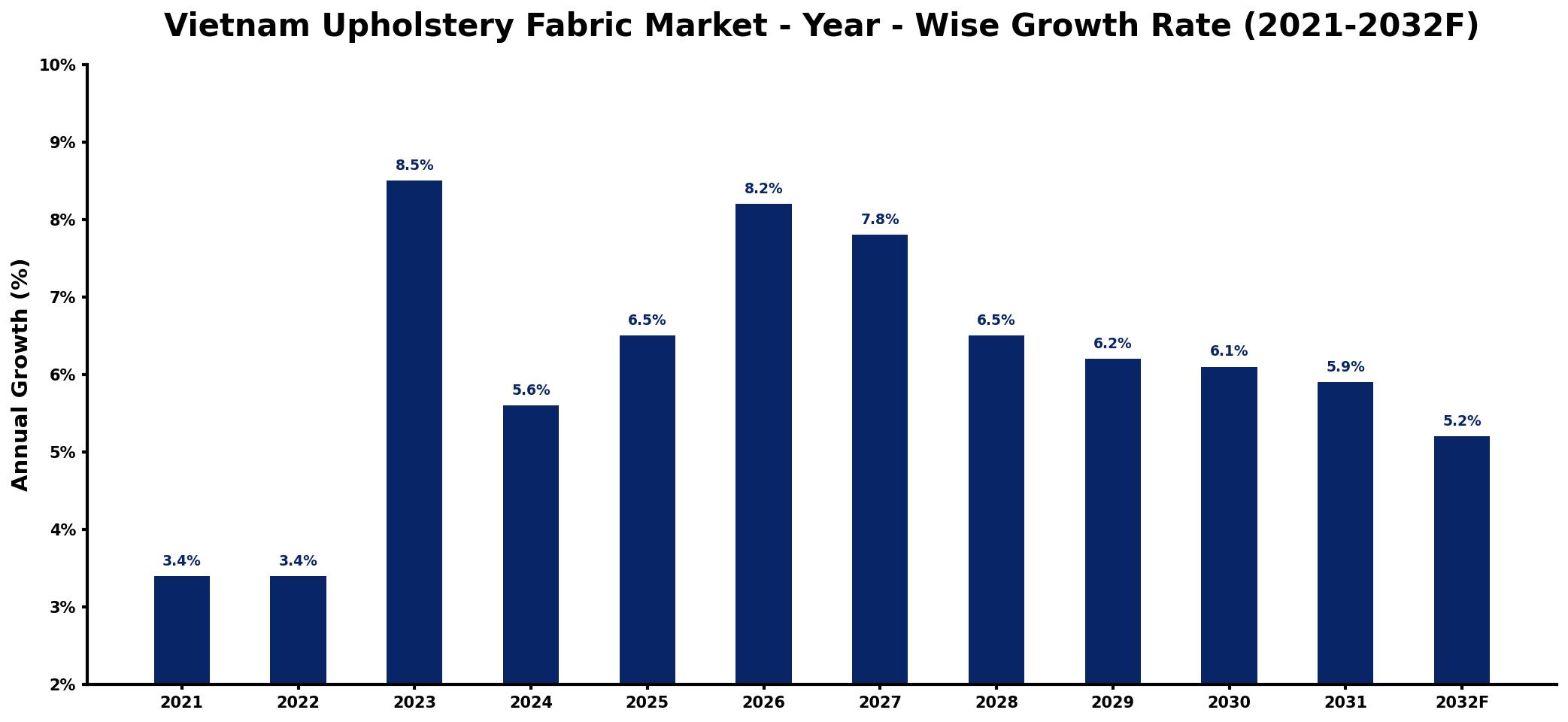
The table below presents the year‑wise growth rates along with the key drivers influencing the market
| Year | Growth Rate | Major Drivers |
| 2021 | 3.4% | Rising construction sector investments |
| 2022 | 3.4% | Increased home renovation activities |
| 2023 | 8.5% | Growing demand for sustainable materials |
| 2024 | 5.6% | Expansion of interior design trends |
| 2025 | 6.5% | Surge in furniture manufacturing demand |
| 2026 | 8.2% | Increase in hospitality industry projects |
| 2027 | 7.8% | Growing popularity of DIY projects |
| 2028 | 6.5% | Rising disposable income levels |
| 2029 | 6.2% | Strengthening export market opportunities |
| 2030 | 6.1% | Growth in e-commerce furniture sales |
| 2031 | 5.9% | Increased focus on customization options |
| 2032 | 5.2% | Emerging trends in eco-friendly living |
Note: Market size estimations and growth projections presented in this report are based on 6Wresearch's proprietary forecasting methodology, utilizing the latest available industry data, government publications, and primary research inputs.
Vietnam Upholstery Fabric Market Synopsis
In Vietnam, the upholstery fabric market is experiencing a dynamic transformation, driven by shifting consumer preferences and an evolving interior design landscape. Homeowners increasingly prioritize comfort, style, and personalization, leading to a surge in demand for varied fabric types and innovative designs.
As this market continues to expand, both domestic manufacturers and international suppliers are stepping up their game. Companies are not only competing on quality and pricing but are also innovating to meet the contemporary tastes of Vietnamese consumers who are more discerning and trend-savvy.
Vietnam Upholstery Fabric Market Key Takeaways
- The market is on a growth trajectory, anticipated to reach USD 1031 Million by 2032.
- Consumer demand for high-quality and stylish upholstery is reshaping product offerings.
- Manufacturers are adapting to design trends to align with changing preferences.
- Online sales and e-commerce are becoming integral for market recovery post-COVID-19.
- Competition in the market is driving innovation and quality improvements.
Evaluation of Restraints in Vietnam Upholstery Fabric Market
Despite its growth potential, the Vietnam upholstery fabric market faces several restraints that could hinder its momentum. Rapidly changing consumer preferences pose a significant challenge, as customers increasingly seek unique fabrics that reflect their personal style. This constant evolution demands agility from manufacturers, who must be quick to adapt their offerings. Additionally, intense competition among domestic and international players complicates pricing strategies, often forcing businesses to compromise on margins. Manufacturers must invest in research and development to keep pace with trends and maintain a competitive edge.
Vietnam Upholstery Fabric Market Trends
Several trends are currently shaping the Vietnam upholstery fabric market. Sustainability is emerging as a focal point, with consumers increasingly gravitating towards eco-friendly fabrics. Additionally, the rise of multifunctional furniture is leading to innovative upholstery solutions that cater to the modern consumer's need for versatility. Technological advancements, such as digital printing and smart fabrics, are also gaining traction, allowing for more personalized and sophisticated design options.
Vietnam Upholstery Fabric Market Opportunities
The upholstery fabric market in Vietnam offers numerous growth opportunities for manufacturers and investors. Expanding e-commerce channels can facilitate broader market access and reach untapped customer segments. Furthermore, the growing trend of home renovations and interior design improvements presents a lucrative avenue for upholstery fabric suppliers. By diversifying product lines to include sustainable and innovative fabrics, companies can effectively align with evolving consumer values and preferences.
Government Initiatives in the Vietnam Upholstery Fabric Market
The Vietnamese government is actively supporting the furniture and textile industries, recognizing their role in economic development and job creation. Various policies aimed at promoting domestic manufacturing and innovation are in place, encouraging investment in modern technologies. Furthermore, initiatives aimed at enhancing trade agreements and access to international markets are expected to benefit local upholstery fabric manufacturers, offering them a platform to expand their reach.
Future Insights of the Vietnam Upholstery Fabric Market
Looking ahead to the period from 2026 to 2032, the Vietnam upholstery fabric market is poised for significant growth driven by ongoing urbanization and rising living standards. With a focus on aesthetics and comfort, consumers are likely to invest more in quality upholstery options for their homes. Manufacturers who embrace innovation and sustainability will thrive, as these factors become increasingly paramount in consumer decision-making. Overall, the market's future appears bright, with ample opportunities for growth and expansion.
Vietnam Upholstery Fabric Market Latest Developments (2025 - 2026)
Recent developments in the Vietnam upholstery fabric market indicate a strategic pivot towards digital channels and sustainable practices. Manufacturers are enhancing their online presence to cater to the rising trend of e-commerce and direct-to-consumer sales. Additionally, there's a noticeable push towards adopting eco-friendly materials and production methods, reflecting a growing awareness of environmental issues among consumers. This shift is expected to redefine market dynamics and provide new avenues for growth.
Vietnam Upholstery Fabric Market - Key Attractiveness of the Report
- 10 Years of Market Numbers
- Historical Data Starting from 2022 to 2025
- Base Year: 2025
- Forecast Data until 2032
- Key Performance Indicators Impacting the Market
- Major Upcoming Developments and Projects
Key Highlights of the Report:
- Vietnam Upholstery Fabric Market Outlook
- Market Size of Vietnam Upholstery Fabric Market, 2025
- Forecast of Vietnam Upholstery Fabric Market, 2032
- Historical Data and Forecast of Vietnam Upholstery Fabric Revenues & Volume for the Period 2022-2032F
- Vietnam Upholstery Fabric Market Trend Evolution
- Vietnam Upholstery Fabric Market Drivers and Challenges
- Vietnam Upholstery Fabric Price Trends
- Vietnam Upholstery Fabric Porter's Five Forces
- Vietnam Upholstery Fabric Industry Life Cycle
- Historical Data and Forecast of Vietnam Upholstery Fabric Market Revenues & Volume By Type for the Period 2022-2032F
- Historical Data and Forecast of Vietnam Upholstery Fabric Market Revenues & Volume By Natural Fabrics for the Period 2022-2032F
- Historical Data and Forecast of Vietnam Upholstery Fabric Market Revenues & Volume By Synthesis Fabrics for the Period 2022-2032F
- Historical Data and Forecast of Vietnam Upholstery Fabric Market Revenues & Volume By Application for the Period 2022-2032F
- Historical Data and Forecast of Vietnam Upholstery Fabric Market Revenues & Volume By Traditional Upholstery for the Period 2022-2032F
- Historical Data and Forecast of Vietnam Upholstery Fabric Market Revenues & Volume By Automobile Upholstery for the Period 2022-2032F
- Historical Data and Forecast of Vietnam Upholstery Fabric Market Revenues & Volume By Marine Upholstery for the Period 2022-2032F
- Historical Data and Forecast of Vietnam Upholstery Fabric Market Revenues & Volume By Other for the Period 2022-2032F
- Vietnam Upholstery Fabric Import Export Trade Statistics
- Market Opportunity Assessment By Type
- Market Opportunity Assessment By Application
- Vietnam Upholstery Fabric Top Companies Market Share
- Vietnam Upholstery Fabric Competitive Benchmarking By Technical and Operational Parameters
- Vietnam Upholstery Fabric Company Profiles
- Vietnam Upholstery Fabric Key Strategic Recommendations






































