Vietnam Vetiver Oil Market Size, Share & Growth Rate
The Vietnam Vetiver Oil Market was estimated at USD 879 Million in 2025 and is projected to reach USD 1247 Million by 2032, growing at a CAGR of 5.1% from 2026 to 2032. This remarkable growth trajectory is largely attributable to the increasing demand for natural and organic products across the cosmetics and fragrance sectors. Additionally, the expanding global awareness of the therapeutic benefits of vetiver oil has spurred its adoption in wellness applications, further catalyzing market growth.
Vietnam Vetiver Oil Market Year-wise Growth Rate and Key Drivers
This graph highlights how the Vietnam Vetiver Oil Market has steadily grown over the years, supported by major growth factors.
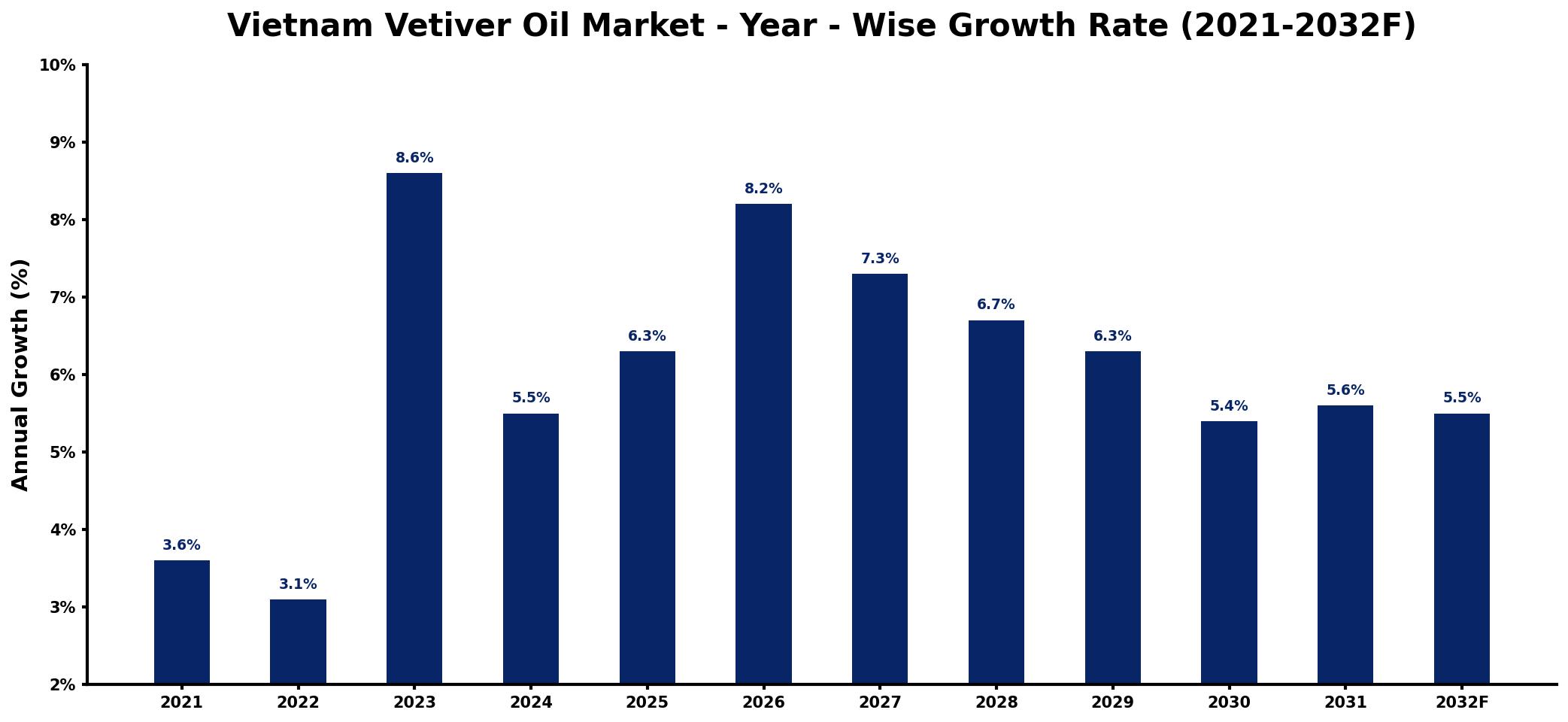
The table below presents the year‑wise growth rates along with the key drivers influencing the market
| Year | Growth Rate | Major Drivers |
| 2021 | 3.6% | Increased demand for natural fragrances |
| 2022 | 3.1% | Growing interest in aromatherapy solutions |
| 2023 | 8.6% | Expansion of wellness industry offerings |
| 2024 | 5.5% | Rising popularity of organic ingredients |
| 2025 | 6.3% | Surge in eco-friendly product launches |
| 2026 | 8.2% | Higher investments in sustainable sourcing |
| 2027 | 7.3% | Increased applications in personal care |
| 2028 | 6.7% | Growing market for natural cosmetics |
| 2029 | 6.3% | improved raw material availability |
| 2030 | 5.4% | rising export shipment volumes |
| 2031 | 5.6% | Increased collaborations with luxury brands |
| 2032 | 5.5% | rising demand from electronics |
Note: Market size estimations and growth projections presented in this report are based on 6Wresearch's proprietary forecasting methodology, utilizing the latest available industry data, government publications, and primary research inputs.
Vietnam Vetiver Oil Market Synopsis
In recent years, the Vietnam Vetiver Oil Market has gained momentum, driven by heightened consumer interest in eco-friendly and sustainable products. As the global demand for natural essential oils surges, Vietnam's unique climate and cultivation practices position it as a key player in this expanding market.
Looking ahead, the market is poised for continued growth as more consumers seek out quality vetiver oil for applications ranging from aromatherapy to skincare. The focus on sustainability in production further enhances the appeal of Vietnamese vetiver oil, attracting a discerning international clientele.
Vietnam Vetiver Oil Market Key Takeaways
- The market is expected to witness a significant CAGR of 5.1% from 2026 to 2032.
- Growing demand for natural and organic products drives the use of vetiver oil in various sectors.
- The therapeutic benefits of vetiver oil enhance its popularity in wellness and aromatherapy.
- Vietnams favorable agricultural conditions support the sustainable cultivation of vetiver.
- Export opportunities are expanding as quality and sustainability align with international standards.
Evaluation of Restraints in Vietnam Vetiver Oil Market
Despite its growth potential, the Vietnam Vetiver Oil Market faces notable challenges. The labor-intensive nature of vetiver oil production often results in quality and supply inconsistencies, particularly when relying on small-scale farmers. This inconsistency can hinder market stability and quality assurance, crucial for meeting international standards. Moreover, environmental concerns related to cultivation practices can potentially affect sustainability, making responsible farming practices vital for long-term market health. Additionally, fluctuations in demand from the fragrance and cosmetics industries introduce volatility, necessitating careful market management and production strategies.
Vietnam Vetiver Oil Market Trends
The market is increasingly influenced by a shift towards natural ingredients in personal care products. Consumers are showing a preference for vetiver oil due to its calming and therapeutic properties. Another key trend is the rise of online retail channels, making it easier for producers to reach international buyers directly. Sustainability continues to be a major trend, with brands seeking to source vetiver oil from environmentally responsible producers, further enhancing its appeal.
Vietnam Vetiver Oil Market Opportunities
Opportunities for growth in the Vietnam Vetiver Oil Market are robust. With the increasing popularity of organic and natural personal care products, companies can capitalize on this trend by promoting the therapeutic qualities of vetiver oil. Additionally, the development of value-added products, such as blended oils and aromatic formulations, can open new market segments. The global shift towards sustainable sourcing also presents opportunities for Vietnamese producers to cater to eco-conscious consumers seeking high-quality, responsibly sourced vetiver oil.
Government Initiatives in the Vietnam Vetiver Oil Market
The Vietnamese government is actively promoting the cultivation and export of vetiver oil through various initiatives. Efforts to improve agricultural practices and provide training for local farmers aim to enhance the quality and consistency of production. Additionally, policies focused on sustainable agriculture and environmental conservation align with global standards, ensuring that Vietnamese vetiver oil remains competitive in international markets. Support for cooperatives and small producers further strengthens the industry, fostering collaboration and innovation.
Future Insights of the Vietnam Vetiver Oil Market
Looking forward to the period between 2026 and 2032, the Vietnam Vetiver Oil Market is set to expand significantly. With rising global demand for natural essential oils and growing consumer awareness of the benefits of vetiver oil, producers are likely to invest in improved cultivation methods and quality control measures. As Vietnam strengthens its position in the global market, there is a promising outlook for both domestic and international sales, particularly as sustainability becomes a non-negotiable requirement for consumers worldwide.
Vietnam Vetiver Oil Market Latest Developments (2025 - 2026)
Recent developments in the Vietnam Vetiver Oil Market reflect a renewed focus on quality and sustainability. Producers are increasingly adopting advanced extraction techniques to enhance oil purity, while new partnerships are being formed to bolster international trade. As consumer preferences evolve, many companies are also diversifying their product offerings to include blends and formulations that cater to specific wellness needs. With the gradual recovery from the pandemic, the market is expected to regain its momentum, further establishing Vietnam as a key player in the essential oils sector.
Vietnam Vetiver Oil Market - Key Attractiveness of the Report
- 10 Years of Market Numbers
- Historical Data Starting from 2022 to 2025
- Base Year: 2025
- Forecast Data until 2032
- Key Performance Indicators Impacting the Market
- Major Upcoming Developments and Projects
Key Highlights of the Report:
- Vietnam Vetiver Oil Market Outlook
- Market Size of Vietnam Vetiver Oil Market, 2025
- Forecast of Vietnam Vetiver Oil Market, 2032
- Historical Data and Forecast of Vietnam Vetiver Oil Revenues & Volume for the Period 2022-2032F
- Vietnam Vetiver Oil Market Trend Evolution
- Vietnam Vetiver Oil Market Drivers and Challenges
- Vietnam Vetiver Oil Price Trends
- Vietnam Vetiver Oil Porter's Five Forces
- Vietnam Vetiver Oil Industry Life Cycle
- Historical Data and Forecast of Vietnam Vetiver Oil Market Revenues & Volume By Application for the Period 2022-2032F
- Historical Data and Forecast of Vietnam Vetiver Oil Market Revenues & Volume By Medical for the Period 2022-2032F
- Historical Data and Forecast of Vietnam Vetiver Oil Market Revenues & Volume By Food & Beverage for the Period 2022-2032F
- Historical Data and Forecast of Vietnam Vetiver Oil Market Revenues & Volume By Spa & Relaxation for the Period 2022-2032F
- Vietnam Vetiver Oil Import Export Trade Statistics
- Market Opportunity Assessment By Application
- Vietnam Vetiver Oil Top Companies Market Share
- Vietnam Vetiver Oil Competitive Benchmarking By Technical and Operational Parameters
- Vietnam Vetiver Oil Company Profiles
- Vietnam Vetiver Oil Key Strategic Recommendations






































