Vietnam Vicuna Wool Market Size, Share & Growth Rate
The Vietnam Vicuna Wool Market was estimated at USD 449 Million in 2025 and is projected to reach USD 632 Million by 2032, growing at a CAGR of 5.0% from 2026 to 2032. This impressive growth is primarily driven by the increasing affluence of Vietnamese consumers who are developing a keen interest in luxury textiles. The unique characteristics of vicuna wool, including its unparalleled softness and warmth, further enhance its desirability in the high-end fashion segment.
Vietnam Vicuna Wool Market Year-wise Growth Rate and Key Drivers
This graph highlights how the Vietnam Vicuna Wool Market has steadily grown over the years, supported by major growth factors.
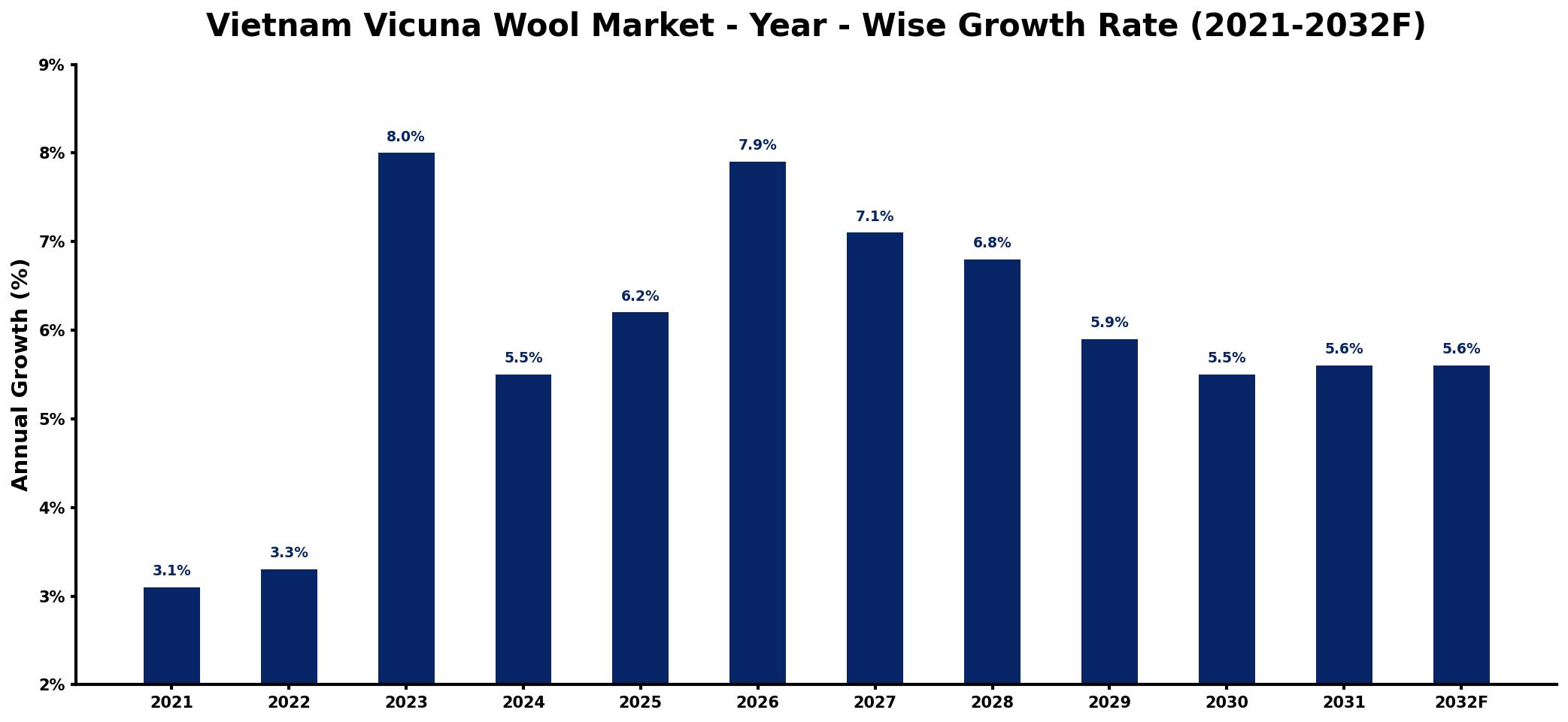
The table below presents the year‑wise growth rates along with the key drivers influencing the market
| Year | Growth Rate | Major Drivers |
| 2021 | 3.1% | Rising luxury apparel demand |
| 2022 | 3.3% | Increased sustainable fashion interest |
| 2023 | 8.0% | Growing global market awareness |
| 2024 | 5.5% | Expansion of eco-friendly brands |
| 2025 | 6.2% | Higher investment in textile technology |
| 2026 | 7.9% | Boost in premium product offerings |
| 2027 | 7.1% | Strengthened supply chain networks |
| 2028 | 6.8% | Enhanced customer experience focus |
| 2029 | 5.9% | Diversification of fashion collections |
| 2030 | 5.5% | Growing online retail platforms |
| 2031 | 5.6% | Strengthened international trade agreements |
| 2032 | 5.6% | Increased consumer education initiatives |
Note: Market size estimations and growth projections presented in this report are based on 6Wresearch's proprietary forecasting methodology, utilizing the latest available industry data, government publications, and primary research inputs.
Vietnam Vicuna Wool Market Synopsis
The demand for vicuna wool in Vietnam is distinctively propelled by a growing preference for sustainable luxury, as consumers seek products that not only exemplify elegance but also align with ethical sourcing principles. This has created a small yet vibrant market, where local artisans craft exquisite garments and accessories, showcasing the unique qualities of vicuna wool.
However, the market remains constrained by the limited supply of vicuna wool, a consequence of the strict conservation regulations governing the harvesting of this rare fiber. As consumers become more discerning, the ability to source vicuna wool sustainably will be crucial in fulfilling the burgeoning demand in this niche sector.
Vietnam Vicuna Wool Market Key Takeaways
- Vietnam's vicuna wool market is characterized by its luxurious and rare nature, attracting affluent consumers.
- Ethical sourcing and sustainability are increasingly important to consumers and brands in this sector.
- International luxury brands are starting to recognize Vietnam as an emerging market for vicuna wool products.
- The market is forecasted to grow significantly, fueled by rising disposable incomes and luxury consumption trends.
- Challenges include regulatory barriers and competition from other luxury fibers like cashmere.
Evaluation of Restraints in Vietnam Vicuna Wool Market
The vicuna wool market in Vietnam is hindered by several key restraints that are largely a function of the rarity of the raw material. The strict international regulations aimed at protecting vicuna populations limit the amount of wool that can be sustainably harvested and traded. As such, the high cost of acquisition due to limited supply directly impacts market pricing and accessibility. Additionally, businesses must navigate a complex regulatory landscape that requires adherence to ethical sourcing practices, creating additional operational challenges. The presence of alternative luxury fibers, which are more readily available, adds another layer of competition, complicating market dynamics.
Vietnam Vicuna Wool Market Trends
A notable trend in the Vietnam vicuna wool market is the increasing integration of sustainable fashion practices among both consumers and producers. As the demand for transparency in sourcing rises, brands are prioritizing sustainability in their production processes. Furthermore, a growing number of Vietnamese artisans are emerging, elevating the craftsmanship associated with vicuna wool products, thereby enhancing their value in the luxury market. Digital platforms are also becoming instrumental in reaching discerning consumers, promoting vicuna wool as a premium and ethical choice in textiles.
Vietnam Vicuna Wool Market Opportunities
The Vietnamese vicuna wool market presents several avenues for growth and investment. As consumer preferences shift towards unique, high-quality materials, brands that focus on sustainable and ethical practices are likely to thrive. Collaborations with international luxury brands and increased export opportunities can further bolster the market. There is also potential in niche segments, such as bespoke fashion and artisanal accessories, where the exclusivity of vicuna wool can command premium pricing. Additionally, enhancing marketing efforts to educate consumers on the benefits and uniqueness of vicuna wool could stimulate demand.
Government Initiatives in the Vietnam Vicuna Wool Market
The Vietnamese government has recognized the importance of sustainable practices in the textile sector, including the vicuna wool market. Policies aimed at promoting sustainable agricultural practices, biodiversity conservation, and the protection of endangered species are relevant to the vicuna wool supply chain. Furthermore, public initiatives to support local artisans and small businesses are encouraging the growth of traditional craftsmanship in luxury textiles. By fostering an environment that values ethical sourcing and sustainability, the government is indirectly boosting the vicuna wool market's prospects.
Future Insights of the Vietnam Vicuna Wool Market
Looking ahead to 2026-2032, the Vietnam vicuna wool market is expected to continue its upward trajectory. As consumers increasingly seek luxury goods that reflect sustainability and ethical practices, the market will likely witness heightened demand for vicuna wool products. The integration of technology in production and sales will also enhance operational efficiencies and consumer engagement. Continued global interest in Vietnamese craftsmanship coupled with a growing local appetite for luxury textiles presents a promising future for the vicuna wool market.
Vietnam Vicuna Wool Market Latest Developments (2025 - 2026)
Recent developments in the Vietnam vicuna wool market indicate a growing awareness and interest among local brands and artisans in sustainable sourcing practices. There is a noticeable shift towards collaborations with international luxury fashion houses that seek to integrate vicuna wool into their collections. Additionally, various industry seminars and workshops are being conducted to educate stakeholders on the ethical implications and market potentials of vicuna wool. This collective effort is paving the way for a more robust presence of vicuna wool in the luxury textiles sector.
Vietnam Vicuna Wool Market - Key Attractiveness of the Report
- 10 Years of Market Numbers
- Historical Data Starting from 2022 to 2025
- Base Year: 2025
- Forecast Data until 2032
- Key Performance Indicators Impacting the Market
- Major Upcoming Developments and Projects
Key Highlights of the Report:
- Vietnam Vicuna Wool Market Outlook
- Market Size of Vietnam Vicuna Wool Market, 2025
- Forecast of Vietnam Vicuna Wool Market, 2032
- Historical Data and Forecast of Vietnam Vicuna Wool Revenues & Volume for the Period 2022-2032F
- Vietnam Vicuna Wool Market Trend Evolution
- Vietnam Vicuna Wool Market Drivers and Challenges
- Vietnam Vicuna Wool Price Trends
- Vietnam Vicuna Wool Porter's Five Forces
- Vietnam Vicuna Wool Industry Life Cycle
- Historical Data and Forecast of Vietnam Vicuna Wool Market Revenues & Volume By Application for the Period 2022-2032F
- Historical Data and Forecast of Vietnam Vicuna Wool Market Revenues & Volume By Apparel for the Period 2022-2032F
- Historical Data and Forecast of Vietnam Vicuna Wool Market Revenues & Volume By Sports for the Period 2022-2032F
- Historical Data and Forecast of Vietnam Vicuna Wool Market Revenues & Volume By Blazers for the Period 2022-2032F
- Historical Data and Forecast of Vietnam Vicuna Wool Market Revenues & Volume By Jacketing for the Period 2022-2032F
- Historical Data and Forecast of Vietnam Vicuna Wool Market Revenues & Volume By Others for the Period 2022-2032F
- Historical Data and Forecast of Vietnam Vicuna Wool Market Revenues & Volume By Upholstery Fabrics for the Period 2022-2032F
- Historical Data and Forecast of Vietnam Vicuna Wool Market Revenues & Volume By Blankets for the Period 2022-2032F
- Historical Data and Forecast of Vietnam Apparel Vicuna Wool Market Revenues & Volume By Flooring for the Period 2022-2032F
- Vietnam Vicuna Wool Import Export Trade Statistics
- Market Opportunity Assessment By Application
- Vietnam Vicuna Wool Top Companies Market Share
- Vietnam Vicuna Wool Competitive Benchmarking By Technical and Operational Parameters
- Vietnam Vicuna Wool Company Profiles
- Vietnam Vicuna Wool Key Strategic Recommendations






































