Vietnam Whey Protein Market Size, Share & Growth Rate
The Vietnam Whey Protein Market was estimated at USD 341 Million in 2025 and is projected to reach USD 484 Million by 2032, growing at a CAGR of 5.1% from 2026 to 2032. This robust growth trajectory is propelled by the rising interest in health and fitness among Vietnamese consumers, as well as increasing disposable incomes that allow more individuals to invest in dietary supplements. The expansion of the sports nutrition segment is further enhancing the demand for various whey protein formulations, from concentrates to isolates, tailored to meet diverse nutritional needs.
Vietnam Whey Protein Market Year-wise Growth Rate and Key Drivers
This graph highlights how the Vietnam Whey Protein Market has steadily grown over the years, supported by major growth factors.
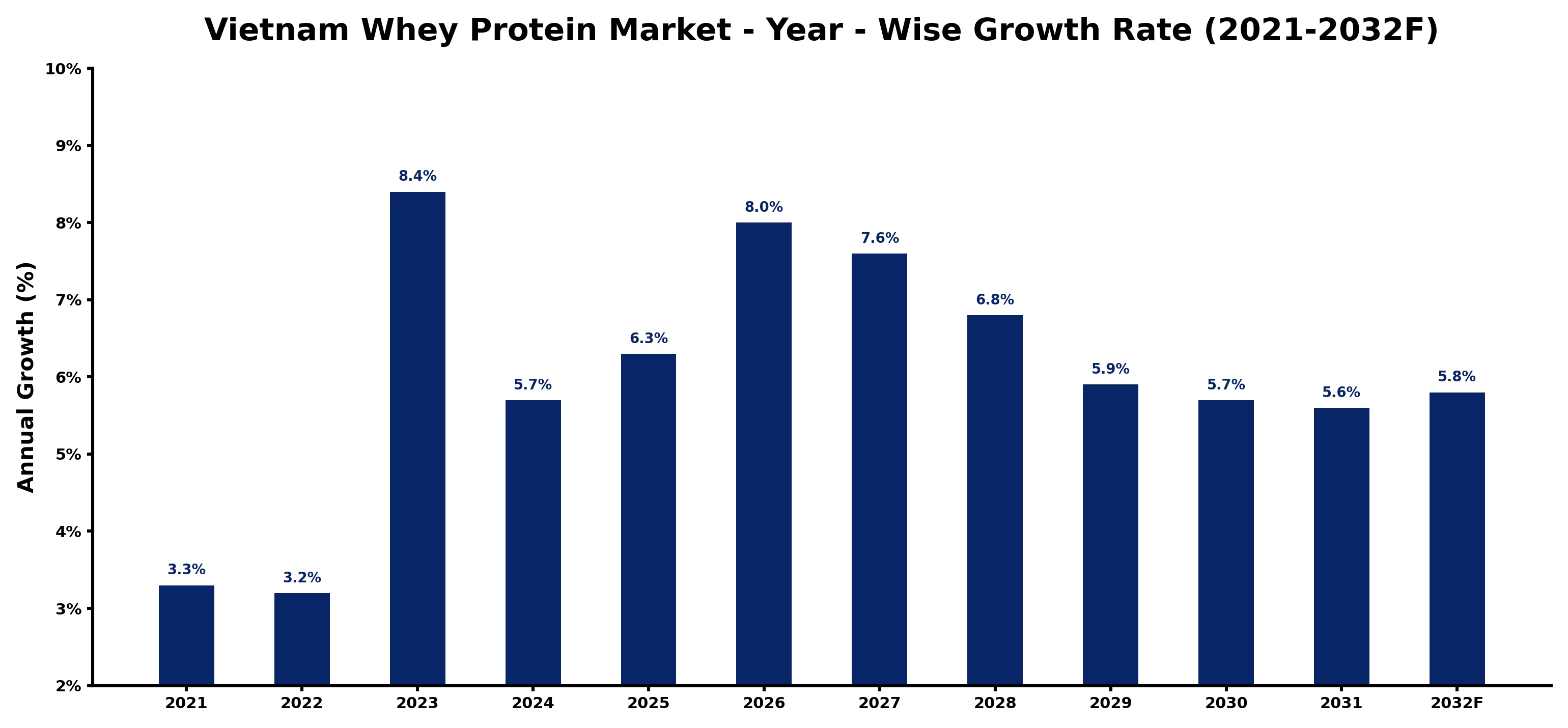
The table below presents the year‑wise growth rates along with the key drivers influencing the market
| Year | Growth Rate | Major Drivers |
| 2021 | 3.3% | Health awareness increased protein demand |
| 2022 | 3.2% | Fitness trends drove consumption growth |
| 2023 | 8.4% | E-commerce platforms expanded reach |
| 2024 | 5.7% | Dietary supplement popularity surged |
| 2025 | 6.3% | Athletic events boosted product visibility |
| 2026 | 8.0% | Nutritional education enhanced consumer choices |
| 2027 | 7.6% | Plant-based diets influenced market trends |
| 2028 | 6.8% | Innovative flavors attracted new customers |
| 2029 | 5.9% | Cross-industry collaborations enhanced offerings |
| 2030 | 5.7% | Sustainability trends shaped consumer preferences |
| 2031 | 5.6% | Celebrity endorsements increased brand visibility |
| 2032 | 5.8% | Global health trends influenced purchasing |
Note - Market size estimations and growth projections presented in this report are based on 6Wresearch’s advanced forecasting approach, validated with industry datasets as of June 2026.
Vietnam Whey Protein Market Synopsis
In Vietnam, the whey protein market is characterized by a growing number of fitness centers and health clubs that actively promote protein supplementation among their clientele. This shift in lifestyle is directly impacting consumer preferences, with an increasing number of individuals seeking whey protein products not just for muscle development but also for overall health enhancement.
The market landscape is further enriched by the introduction of innovative product lines tailored to local tastes and preferences, enhancing consumer accessibility. With online retailing gaining momentum, manufacturers are increasingly focusing on digital platforms to reach a broader audience, thereby catalyzing market growth.
Vietnam Whey Protein Market Key Takeaways
- The market is witnessing a notable increase in health-conscious consumers seeking quality protein supplements.
- Various whey protein formulations are available, catering to specific dietary requirements and preferences.
- Growth in the fitness and wellness industry is a primary driver of the rising demand for whey protein products.
- Digital marketing initiatives are transforming consumer engagement, especially through online sales channels.
- There is a pressing need to address consumer misconceptions regarding whey protein to expand market potential.
Evaluation of Restraints in Vietnam Whey Protein Market
Despite the positive growth trajectory, the Vietnam whey protein market contends with several restraints. Consumer awareness remains a significant hurdle, as many potential buyers associate whey protein exclusively with bodybuilding, overlooking its broader health benefits. This misconception can restrict market potential, especially among those not engaged in fitness activities. Additionally, traditional protein sources like meat and fish dominate the local diet, presenting stiff competition. Product quality assurance is vital; manufacturers must invest in processing and quality control to meet consumer expectations and regulatory standards.
Vietnam Whey Protein Market Trends
Current trends in the Vietnam whey protein market highlight the growing popularity of plant-based protein alternatives, alongside traditional whey products. As consumers become more aware of dietary inclusivity, the demand for mixed protein formulations is rising. Technological advancements in product formulation are also emerging, allowing for the enhancement of flavor and texture, making whey protein more appealing to a wider audience. Furthermore, the emphasis on clean label products is growing, as consumers prioritize transparency in ingredient sourcing and manufacturing processes.
Vietnam Whey Protein Market Opportunities
The evolving landscape of health and wellness presents significant growth opportunities within the Vietnam whey protein market. Expanding fitness and health initiatives, including community fitness programs, can serve as platforms for product promotion. Additionally, partnerships with health professionals and nutritionists may help in educating consumers about the benefits of whey protein beyond muscle building. There is also potential for innovation in product development, targeting niche markets such as vegan consumers or those with dietary restrictions, which can further broaden market reach.
Government Initiatives in the Vietnam Whey Protein Market
The Vietnamese government has increasingly recognized the importance of promoting health and wellness among its citizens. Initiatives aimed at improving overall nutrition and health awareness can positively impact the whey protein market. Public health campaigns focused on fitness and nutrition are becoming more prevalent, encouraging citizens to adopt healthier lifestyles, which aligns with the growing demand for whey protein products. Regulatory bodies are also putting efforts into ensuring food safety standards, which enhances consumer confidence in the products available in the market.
Future Insights of the Vietnam Whey Protein Market
Looking ahead to 2026-2032, the Vietnam whey protein market is poised for transformative growth. As awareness of the nutritional benefits of whey protein continues to spread, we anticipate a shift in perception that positions it as an everyday supplement rather than just a fitness-related product. This evolving consumer mindset, alongside increasing disposable incomes, will likely drive market expansion. Additionally, advancements in e-commerce and digital marketing will make whey protein products more accessible, fostering an environment ripe for innovation and brand loyalty.
Vietnam Whey Protein Market Latest Developments (May 2025 - June 2026)
Recent developments in the Vietnam whey protein market indicate a strategic pivot towards leveraging digital platforms for product promotion and consumer engagement. Manufacturers are introducing new variants tailored to local tastes and nutritional needs, reflecting an adaptive approach to market demands. Furthermore, collaborative efforts with fitness influencers and health bloggers are gaining traction, thereby enhancing brand visibility and consumer trust in whey protein products. The emphasis on sustainability and clean labeling is also becoming increasingly relevant, influencing product development and marketing strategies.
Vietnam Whey Protein Market - Key Attractiveness of the Report
- 10 Years of Market Numbers
- Historical Data Starting from 2022 to 2025
- Base Year: 2025
- Forecast Data until 2032
- Key Performance Indicators Impacting the Market
- Major Upcoming Developments and Projects
Key Highlights of the Report:
- Vietnam Whey Protein Market Outlook
- Market Size of Vietnam Whey Protein Market, 2025
- Forecast of Vietnam Whey Protein Market, 2032
- Historical Data and Forecast of Vietnam Whey Protein Revenues & Volume for the Period 2022-2032F
- Vietnam Whey Protein Market Trend Evolution
- Vietnam Whey Protein Market Drivers and Challenges
- Vietnam Whey Protein Price Trends
- Vietnam Whey Protein Porter's Five Forces
- Vietnam Whey Protein Industry Life Cycle
- Historical Data and Forecast of Vietnam Whey Protein Market Revenues & Volume By Type for the Period 2022-2032F
- Historical Data and Forecast of Vietnam Whey Protein Market Revenues & Volume By Whey Protein Isolates for the Period 2022-2032F
- Historical Data and Forecast of Vietnam Whey Protein Market Revenues & Volume By Whey Protein Concentrates for the Period 2022-2032F
- Historical Data and Forecast of Vietnam Whey Protein Market Revenues & Volume By Whey Protein Hydrolysates for the Period 2022-2032F
- Historical Data and Forecast of Vietnam Whey Protein Market Revenues & Volume By Application for the Period 2022-2032F
- Historical Data and Forecast of Vietnam Whey Protein Market Revenues & Volume By Nutritional Supplements for the Period 2022-2032F
- Historical Data and Forecast of Vietnam Whey Protein Market Revenues & Volume By Personal Care for the Period 2022-2032F
- Historical Data and Forecast of Vietnam Whey Protein Market Revenues & Volume By Food & Beverages for the Period 2022-2032F
- Historical Data and Forecast of Vietnam Whey Protein Market Revenues & Volume By Animal Feed & Pet Food for the Period 2022-2032F
- Vietnam Whey Protein Import Export Trade Statistics
- Market Opportunity Assessment By Type
- Market Opportunity Assessment By Application
- Vietnam Whey Protein Top Companies Market Share
- Vietnam Whey Protein Competitive Benchmarking By Technical and Operational Parameters
- Vietnam Whey Protein Company Profiles
- Vietnam Whey Protein Key Strategic Recommendations






































