Vietnam Wood Flooring Market Summary
The vietnam wood flooring market was estimated at USD 243 Million in 2025 and is projected to reach USD 344 Million by 2032, growing at a CAGR of 8.2% from 2026 to 2032.
Vietnam Wood Flooring Market Year-wise Growth Rate and Key Drivers
This graph highlights how the Vietnam Wood Flooring Market has steadily grown over the past five years, supported by major growth factors.
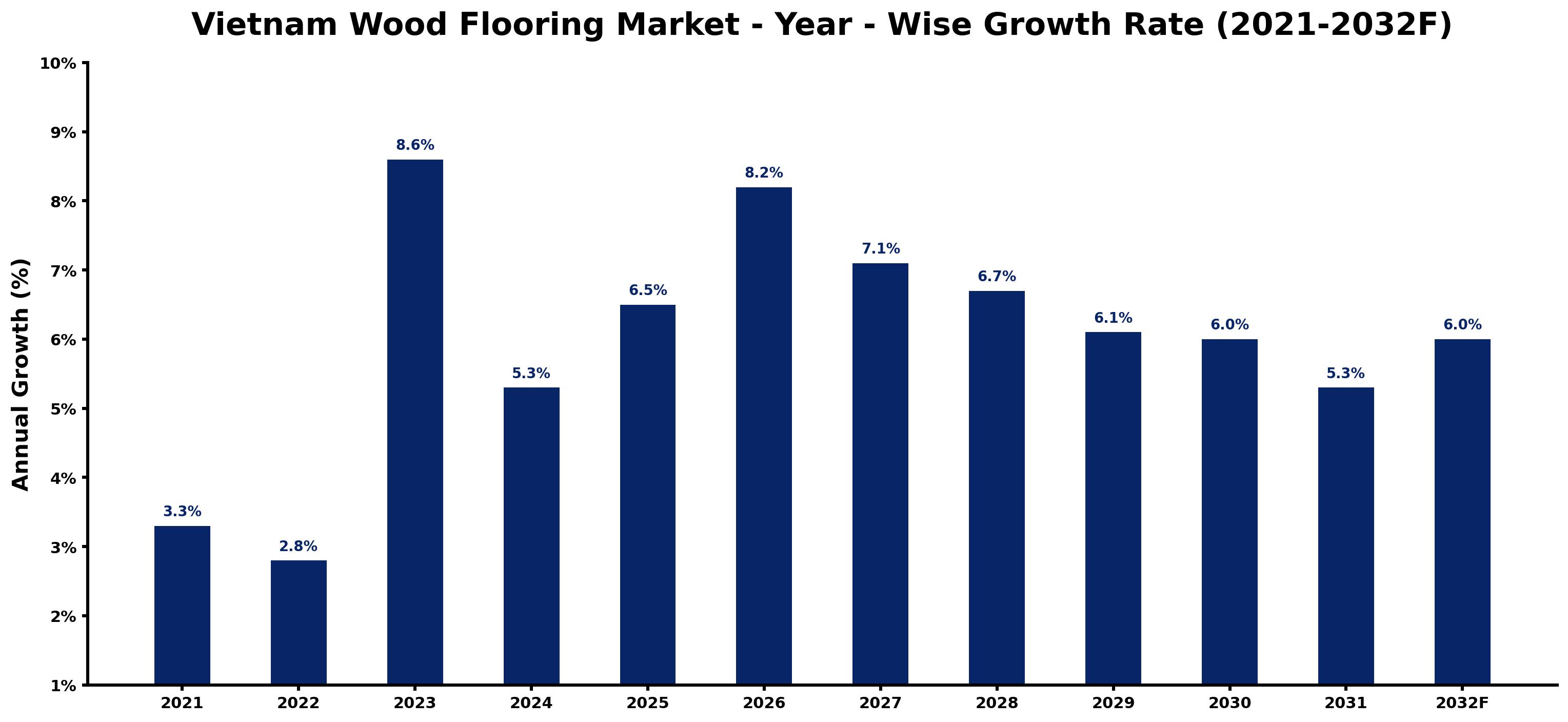
The table below presents the year wise growth rates along with the key drivers influencing the market
| Year | Growth Rate | Major Drivers |
| 2021 | 3.3% | Post-lockdown retail projects fostered demand for durable wood flooring solutions. |
| 2022 | 2.8% | An influx of foreign investments boosted manufacturing capabilities in Vietnam's flooring sector. |
| 2023 | 8.6% | A surge in urbanization increased preferences for natural materials in residential projects. |
| 2024 | 5.3% | Emerging trends in home aesthetics prompted innovative designs in wood flooring offerings. |
| 2025 | 6.5% | Local craftsmanship gained recognition, appealing to eco-conscious consumers seeking authenticity. |
| 2026 | 8.2% | E-commerce platforms expanded market reach, facilitating direct sales of wood flooring products. |
| 2027 | 7.1% | Partnerships with interior designers introduced tailored solutions for modern living spaces. |
| 2028 | 6.7% | Increased awareness of sustainable materials strengthened demand for eco-friendly wood options. |
| 2029 | 6.1% | Enhanced supply chain efficiencies lowered costs, making wood flooring more competitive. |
| 2030 | 6.0% | Consumer preferences shifted towards multifunctional spaces, driving innovative wood floor designs. |
| 2031 | 5.3% | A focus on home improvement projects stimulated spending on quality wood flooring. |
| 2032 | 6.0% | Technological advancements in manufacturing processes improved product durability and appeal. |
Note - Market size estimations and growth projections presented in this report are based on 6Wresearch's advanced forecasting approach, validated with industry datasets as of June 2026.
Vietnam Wood Flooring Market Synopsis
The Vietnam Wood Flooring Market is projected to reach 8.2% and witness significant growth during the forecast period (2026-2032). This market has experienced remarkable expansion, driven primarily by the increasing consumer preference for environmentally sustainable and visually appealing flooring solutions. As more consumers gravitate toward wood flooring products, manufacturers are responding by diversifying their offerings in hardwood and engineered wood, allowing customers to select options that align with their design aesthetics.
Vietnam Wood Flooring Market Growth Drivers
The growth trajectory of the Vietnam Wood Flooring Market can be attributed to several key factors:
- The rising demand for eco-friendly flooring solutions is a pivotal driver in the market, as consumers increasingly prioritize sustainable products that minimize environmental impact.
- Wood flooring provides a unique combination of durability, warmth, and natural aesthetics, appealing to both residential and commercial segments.
- The ongoing expansion in the construction and real estate sectors has amplified the need for high-quality wood flooring products, particularly in new builds and renovation projects.
- Diverse wood species and a variety of finish options enable consumers to personalize their flooring choices, thereby enhancing the marketing appeal of wood flooring.
- Increased disposable incomes among consumers in Vietnam, combined with a growing awareness of interior design trends, are stimulating demand for premium wood flooring options.
Vietnam Wood Flooring Market Challenges and Restraints
Despite its growth potential, the Vietnam Wood Flooring Market faces several challenges:
- Sustainable wood sourcing remains a critical challenge. As demand increases, ensuring responsible procurement of wood is essential to combat deforestation and maintain ecological balance.
- Competition from alternative flooring options, such as laminate and vinyl, presents a pricing challenge, as these materials can offer aesthetic similarities at lower costs.
- The need for continuous innovation in wood processing and treatment techniques is vital to enhance product durability and performance against competing materials.
- Market players must navigate fluctuating raw material prices, which can impact production costs and ultimately pricing strategies.
- Consumer education about the benefits of genuine wood flooring, including its longevity and ecological advantages, is necessary to differentiate it from cheaper alternatives.
Vietnam Wood Flooring Market COVID-19 Impact
The COVID-19 pandemic had multifaceted impacts on the Vietnam Wood Flooring Market. Initially, disruptions in supply chains and logistical hurdles hampered the availability of imported wood materials, which was crucial for flooring production. However, the pandemic also catalyzed an uptick in demand for wood flooring as consumers shifted their focus to home improvement projects during lockdowns. This duality in impact underscored the importance of adaptability in the face of unforeseen challenges while emphasizing a heightened consumer interest in sustainable and aesthetically pleasing living environments.
Vietnam Wood Flooring Market Government Investment and Initiatives
The Vietnamese government has been proactive in implementing initiatives that bolster the wood flooring sector. Investment in sustainable forestry practices and encouraging public-private partnerships are key elements of the government's strategy. The government has also introduced policies aimed at promoting the use of certified wood products, thereby ensuring responsible sourcing practices. By offering incentives for eco-friendly products, the government is fostering an environment that supports innovation and sustainability within the wood flooring market. Moreover, public spending on infrastructure projects has further stimulated demand for wood flooring solutions, which are increasingly recognized for their aesthetic and functional benefits in urban development.
Vietnam Wood Flooring Market Latest Developments (May 2025 - June 2026)
Recent developments in the Vietnam Wood Flooring Market indicate a notable emphasis on sustainability and innovation. Manufacturers are increasingly investing in technology to enhance the quality and durability of wood flooring products. Furthermore, there is a growing trend towards utilizing alternative eco-friendly materials that complement traditional wood options. The industry is witnessing a shift in consumer preferences toward customized designs and finishes, prompting manufacturers to innovate their product offerings constantly. Additionally, industry stakeholders are actively participating in trade fairs and exhibitions to showcase advancements and strengthen their market presence, indicating a strategic focus on expanding their reach in both domestic and international markets.
Vietnam Wood Flooring Market - Key Attractiveness of the Report
- 10 Years of Market Numbers
- Historical Data Starting from 2022 to 2025
- Base Year: 2025
- Forecast Data until 2032
- Key Performance Indicators Impacting the Market
- Major Upcoming Developments and Projects
Key Highlights of the Report:
- Vietnam Wood Flooring Market Outlook
- Market Size of Vietnam Wood Flooring Market, 2025
- Forecast of Vietnam Wood Flooring Market, 2032
- Historical Data and Forecast of Vietnam Wood Flooring Revenues & Volume for the Period 2022-2032F
- Vietnam Wood Flooring Market Trend Evolution
- Vietnam Wood Flooring Market Drivers and Challenges
- Vietnam Wood Flooring Price Trends
- Vietnam Wood Flooring Porter's Five Forces
- Vietnam Wood Flooring Industry Life Cycle
- Historical Data and Forecast of Vietnam Wood Flooring Market Revenues & Volume By Product Type for the Period 2022-2032F
- Historical Data and Forecast of Vietnam Wood Flooring Market Revenues & Volume By Solid Wood for the Period 2022-2032F
- Historical Data and Forecast of Vietnam Wood Flooring Market Revenues & Volume By Engineered Wood for the Period 2022-2032F
- Historical Data and Forecast of Vietnam Wood Flooring Market Revenues & Volume By Distribution Channel for the Period 2022-2032F
- Historical Data and Forecast of Vietnam Wood Flooring Market Revenues & Volume By Home Centers for the Period 2022-2032F
- Historical Data and Forecast of Vietnam Wood Flooring Market Revenues & Volume By Flagship Stores for the Period 2022-2032F
- Historical Data and Forecast of Vietnam Wood Flooring Market Revenues & Volume By Specialty Stores for the Period 2022-2032F
- Historical Data and Forecast of Vietnam Wood Flooring Market Revenues & Volume By Online for the Period 2022-2032F
- Historical Data and Forecast of Vietnam Wood Flooring Market Revenues & Volume By Other for the Period 2022-2032F
- Historical Data and Forecast of Vietnam Wood Flooring Market Revenues & Volume By End-User for the Period 2022-2032F
- Historical Data and Forecast of Vietnam Wood Flooring Market Revenues & Volume By Residential for the Period 2022-2032F
- Historical Data and Forecast of Vietnam Wood Flooring Market Revenues & Volume By Commercial for the Period 2022-2032F
- Vietnam Wood Flooring Import Export Trade Statistics
- Market Opportunity Assessment By Product Type
- Market Opportunity Assessment By Distribution Channel
- Market Opportunity Assessment By End-User
- Vietnam Wood Flooring Top Companies Market Share
- Vietnam Wood Flooring Competitive Benchmarking By Technical and Operational Parameters
- Vietnam Wood Flooring Company Profiles
- Vietnam Wood Flooring Key Strategic Recommendations






































