Vietnam Wood Wool Insulation Market Size, Share & Growth Rate
The Vietnam Wood Wool Insulation Market was estimated at USD 302 Million in 2025 and is projected to reach USD 427 Million by 2032, growing at a CAGR of 5.1% from 2026 to 2032. This trajectory is fueled by a heightened focus on sustainable building practices, as well as government initiatives aimed at enhancing energy efficiency in construction. The demand for eco-friendly materials in the construction sector continues to rise, propelling wood wool insulation into a preferred choice among environmentally conscious builders and consumers.
Vietnam Wood Wool Insulation Market Year-wise Growth Rate and Key Drivers
This graph highlights how the Vietnam Wood Wool Insulation Market has steadily grown over the years, supported by major growth factors.
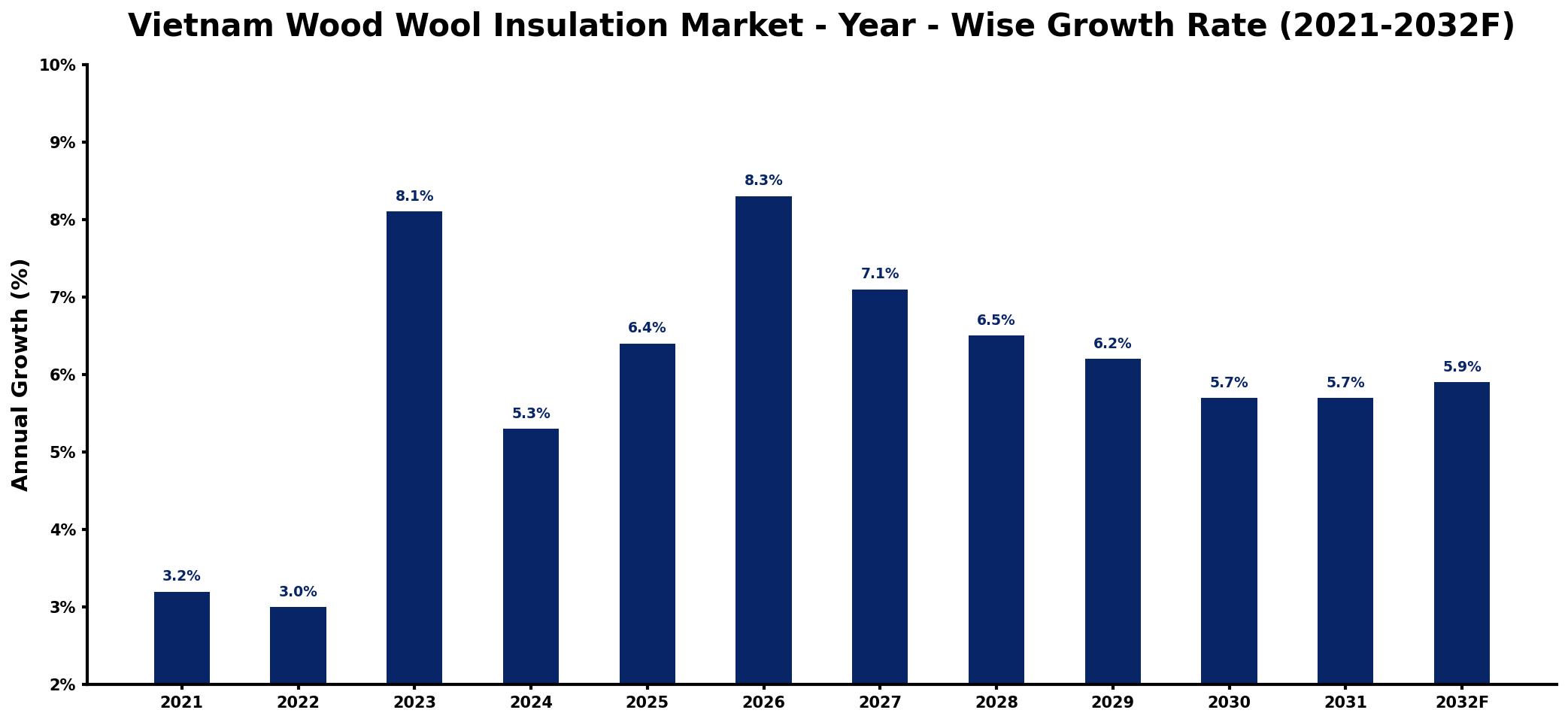
The table below presents the year‑wise growth rates along with the key drivers influencing the market
| Year | Growth Rate | Major Drivers |
| 2021 | 3.2% | Rising construction sector demand |
| 2022 | 3.0% | Increased consumer awareness sustainability |
| 2023 | 8.1% | Government incentives for renewable materials |
| 2024 | 5.3% | Growth in green building initiatives |
| 2025 | 6.4% | Expansion of eco-friendly building codes |
| 2026 | 8.3% | Surge in energy efficiency projects |
| 2027 | 7.1% | Investment in sustainable housing developments |
| 2028 | 6.5% | Rising popularity of alternative materials |
| 2029 | 6.2% | Enhanced performance standards regulations |
| 2030 | 5.7% | Growing residential renovation activities |
| 2031 | 5.7% | Increased focus on climate resilience |
| 2032 | 5.9% | Strengthening partnerships with builders |
Note: Market size estimations and growth projections presented in this report are based on 6Wresearch's proprietary forecasting methodology, utilizing the latest available industry data, government publications, and primary research inputs.
Vietnam Wood Wool Insulation Market Synopsis
In recent years, the Vietnam wood wool insulation market has experienced a surge in interest, driven by growing awareness surrounding energy efficiency. This momentum is expected to transition into a more sustainable future as builders increasingly prioritize eco-friendly materials in their projects. The market is poised for significant growth, propelled by both regulatory support and an evolving construction landscape.
As the demand for greener building solutions escalates, wood wool insulation offers a unique blend of thermal and acoustic benefits, making it an attractive choice for modern construction. The focus on reducing carbon footprints and increasing energy savings further cements its role in the market's progression, reflecting a broader shift toward sustainability in Vietnam's construction sector.
Vietnam Wood Wool Insulation Market Key Takeaways
- The market is projected to grow significantly, reaching USD 427 Million by 2032.
- Energy efficiency and sustainable practices are key drivers of market demand.
- Wood wool insulation's acoustic and thermal properties enhance its appeal in construction projects.
- Government regulations are favoring the adoption of eco-friendly materials.
- Consumer awareness is crucial for the broader acceptance of wood wool insulation.
Evaluation of Restraints in Vietnam Wood Wool Insulation Market
Despite the promising growth trajectory, several factors may restrain the expansion of the wood wool insulation market in Vietnam. A significant barrier is the limited consumer awareness regarding the advantages of wood wool compared to more established insulation materials like fiberglass and foam. As these competitors dominate the market, educating stakeholders—including builders and consumers—about the unique benefits of wood wool insulation is imperative. Additionally, the market faces challenges related to pricing and availability, which could limit broader adoption among budget-conscious project developers.
Vietnam Wood Wool Insulation Market Trends
Several trends are emerging in the Vietnam wood wool insulation market. The growing preference for natural materials is leading to increased investment in wood wool products, as consumers seek solutions that are not only effective but also sustainable. Furthermore, the rise of green building certifications and environmental standards are incentivizing the adoption of wood wool insulation as a compliant solution. Technological advancements in production methods are also enhancing the performance and affordability of wood wool insulation, making it a more viable option for various construction projects.
Vietnam Wood Wool Insulation Market Opportunities
Significant growth and investment opportunities lie within the construction and renovation sectors, particularly as urbanization continues to escalate in Vietnam. As builders look for compliant materials to meet stringent energy regulations, wood wool insulation positions itself as a valuable resource. Additionally, with the rise in eco-friendly initiatives, manufacturers have the opportunity to expand their product lines and invest in innovative solutions that cater to the growing demand for sustainability in construction.
Government Initiatives in the Vietnam Wood Wool Insulation Market
The Vietnamese government is actively promoting energy efficiency and sustainable building practices through various policies and regulations. Initiatives aimed at enhancing environmental performance in the construction industry have paved the way for the adoption of eco-friendly materials such as wood wool insulation. Furthermore, public spending on infrastructure and green building projects creates additional momentum for the market, reinforcing the commitment to sustainable development and energy conservation.
Future Insights of the Vietnam Wood Wool Insulation Market
Looking ahead to 2026-2032, the Vietnam wood wool insulation market is set for robust growth. Increased environmental awareness, alongside supportive government policies, is expected to drive demand for sustainable building materials. As consumers and builders alike prioritize energy efficiency, the advantages offered by wood wool insulation will likely lead to broader acceptance and increased market share. With an emphasis on innovation and education, stakeholders can capitalize on the opportunities that arise in this expanding sector.
Vietnam Wood Wool Insulation Market Latest Developments (2025 - 2026)
The industry has been witnessing noteworthy changes, with manufacturers adapting to shifting market dynamics and increasing consumer demand for eco-friendly products. During this period, several companies have initiated promotional campaigns focusing on the benefits of wood wool insulation, aiming to boost awareness and drive sales. Additionally, advancements in technology are leading to improved manufacturing processes and product offerings, further enhancing the competitive landscape in the wood wool insulation market.
Vietnam Wood Wool Insulation Market - Key Attractiveness of the Report
- 10 Years of Market Numbers
- Historical Data Starting from 2022 to 2025
- Base Year: 2025
- Forecast Data until 2032
- Key Performance Indicators Impacting the Market
- Major Upcoming Developments and Projects
Key Highlights of the Report:
- Vietnam Wood Wool Insulation Market Outlook
- Market Size of Vietnam Wood Wool Insulation Market, 2025
- Forecast of Vietnam Wood Wool Insulation Market, 2032
- Historical Data and Forecast of Vietnam Wood Wool Insulation Revenues & Volume for the Period 2022-2032F
- Vietnam Wood Wool Insulation Market Trend Evolution
- Vietnam Wood Wool Insulation Market Drivers and Challenges
- Vietnam Wood Wool Insulation Price Trends
- Vietnam Wood Wool Insulation Porter's Five Forces
- Vietnam Wood Wool Insulation Industry Life Cycle
- Historical Data and Forecast of Vietnam Wood Wool Insulation Market Revenues & Volume By Product Type for the Period 2022-2032F
- Historical Data and Forecast of Vietnam Wood Wool Insulation Market Revenues & Volume By Stable for the Period 2022-2032F
- Historical Data and Forecast of Vietnam Wood Wool Insulation Market Revenues & Volume By Flexible for the Period 2022-2032F
- Historical Data and Forecast of Vietnam Wood Wool Insulation Market Revenues & Volume By Application for the Period 2022-2032F
- Historical Data and Forecast of Vietnam Wood Wool Insulation Market Revenues & Volume By Thermal Insulation for the Period 2022-2032F
- Historical Data and Forecast of Vietnam Wood Wool Insulation Market Revenues & Volume By Acoustic Insulation for the Period 2022-2032F
- Historical Data and Forecast of Vietnam Wood Wool Insulation Market Revenues & Volume By Electrical Insulation for the Period 2022-2032F
- Vietnam Wood Wool Insulation Import Export Trade Statistics
- Market Opportunity Assessment By Product Type
- Market Opportunity Assessment By Application
- Vietnam Wood Wool Insulation Top Companies Market Share
- Vietnam Wood Wool Insulation Competitive Benchmarking By Technical and Operational Parameters
- Vietnam Wood Wool Insulation Company Profiles
- Vietnam Wood Wool Insulation Key Strategic Recommendations






































