Vietnam Wound Dressings Market Size, Share & Growth Rate
The Vietnam Wound Dressings Market was estimated at USD 1476 Million in 2025 and is projected to reach USD 2093 Million by 2032, growing at a CAGR of 5.1% from 2026 to 2032. This growth trajectory is underpinned by the nations aging population, which intensifies the need for effective wound care solutions. The increasing prevalence of chronic diseases also fuels demand, as healthcare providers seek innovative dressings to ensure better healing outcomes.
Vietnam Wound Dressings Market Year-wise Growth Rate and Key Drivers
This graph highlights how the Vietnam Wound Dressings Market has steadily grown over the years, supported by major growth factors.
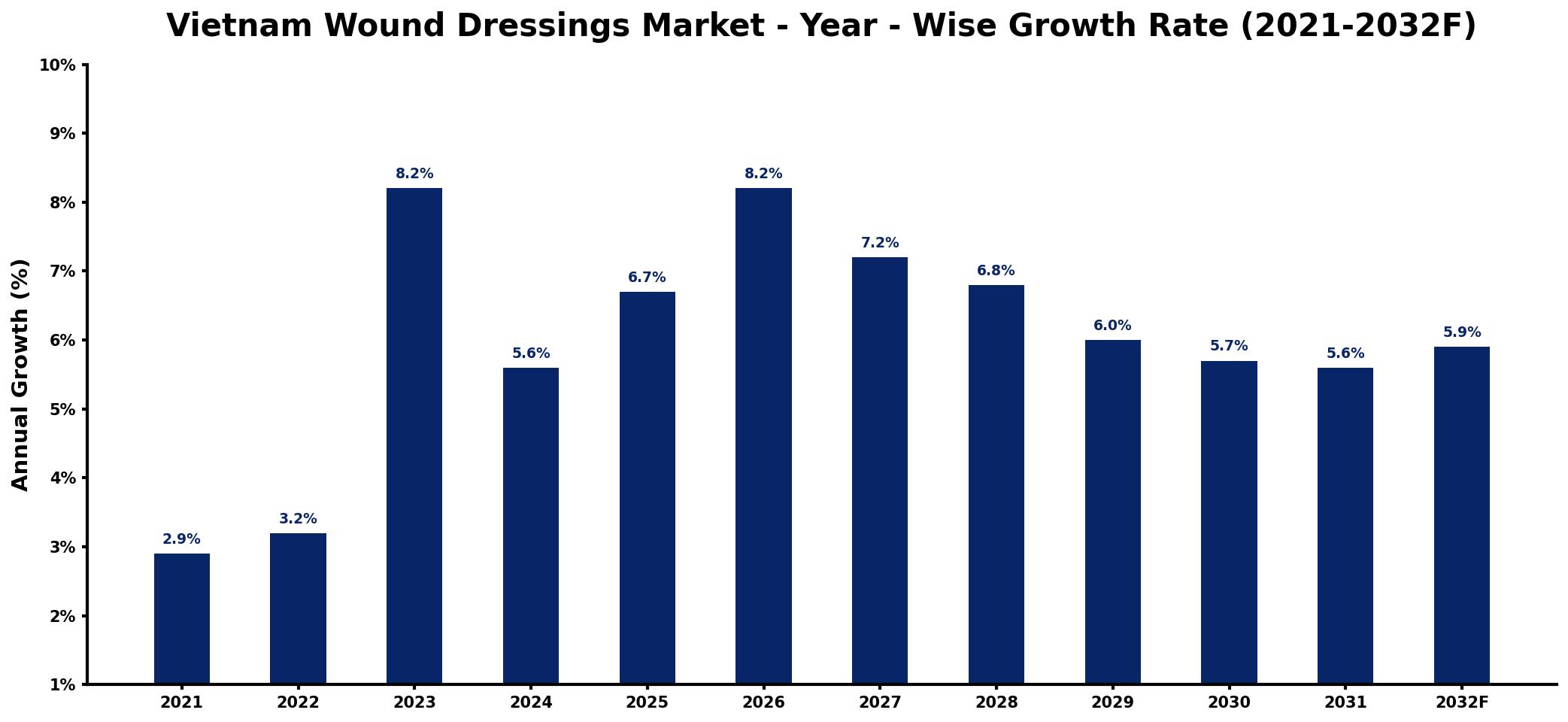
The table below presents the year‑wise growth rates along with the key drivers influencing the market
| Year | Growth Rate | Major Drivers |
| 2021 | 2.9% | Rising healthcare expenditure in region |
| 2022 | 3.2% | Increased prevalence of chronic conditions |
| 2023 | 8.2% | Expansion of healthcare infrastructure initiatives |
| 2024 | 5.6% | Growth in surgical procedures performed |
| 2025 | 6.7% | Technological advancements in medical supplies |
| 2026 | 8.2% | Surge in elderly population demographics |
| 2027 | 7.2% | Enhanced focus on infection control |
| 2028 | 6.8% | Rising awareness of advanced therapies |
| 2029 | 6.0% | Increased government healthcare funding |
| 2030 | 5.7% | growing emerging market penetration |
| 2031 | 5.6% | increased production capacity utilization |
| 2032 | 5.9% | Strengthening partnerships with healthcare providers |
Note: Market size estimations and growth projections presented in this report are based on 6Wresearch's proprietary forecasting methodology, utilizing the latest available industry data, government publications, and primary research inputs.
Vietnam Wound Dressings Market Synopsis
In recent years, the Vietnam wound dressings market has witnessed remarkable momentum driven by advancements in medical technology and heightened awareness around wound management. As hospitals and clinics increasingly prioritize patient-centered care, the market is evolving rapidly to incorporate diverse and effective dressing solutions.
Looking forward, the market is expected to continue on this upward trajectory, propelled by ongoing innovations and an increasing commitment to improving healthcare standards. The push for specialized wound dressings will remain critical as healthcare providers strive to address the unique needs of patients, enhancing recovery and reducing infection risks.
Vietnam Wound Dressings Market Key Takeaways
- The market is heavily influenced by demographic changes, particularly an aging population.
- Chronic diseases are leading to an increased demand for advanced wound care products.
- Ongoing innovations in dressing materials are diversifying product offerings available in the market.
- Healthcare professionals are increasingly focused on patient education regarding proper wound care.
- COVID-19 has accentuated the importance of effective wound management in healthcare settings.
Evaluation of Restraints in Vietnam Wound Dressings Market
Despite the growth prospects, the Vietnam wound dressings market faces several constraints. A key challenge lies in ensuring that products meet stringent international quality standards, as the pressure to provide effective wound care intensifies. Furthermore, there is a pressing need for widespread education amongst healthcare providers and patients regarding the correct application and selection of wound dressings, which can significantly impact healing outcomes. Addressing these issues is critical for maximizing the potential of this burgeoning market.
Vietnam Wound Dressings Market Trends
The market is witnessing several trends that are shaping its future. The integration of smart technologies, such as sensors in wound dressings, allows for real-time monitoring of wound conditions, enhancing patient care. Moreover, the shift towards eco-friendly and sustainable materials in the manufacturing of dressings is gaining traction, responding to growing environmental concerns. Additionally, an increase in telemedicine has paved the way for remote consultations, further driving demand for effective wound management solutions.
Vietnam Wound Dressings Market Opportunities
The Vietnam wound dressings market is ripe with opportunities for growth and investment. With a sustained emphasis on healthcare improvements, there is potential for developing advanced dressings tailored to specific wound types and patient demographics. Furthermore, expanding into rural healthcare facilities presents an opportunity to reach underserved populations, thus broadening the market base. Collaborations with educational institutions to enhance training for healthcare providers could also lead to better patient outcomes and drive demand.
Government Initiatives in the Vietnam Wound Dressings Market
The Vietnamese government is increasingly recognizing the importance of wound care in its healthcare policies. Public spending on healthcare infrastructure has seen a rise, with initiatives aimed at improving access to quality medical supplies, including wound dressings. Programs focused on enhancing healthcare provider training and patient education around wound management are also being implemented to support the growth of this market.
Future Insights of the Vietnam Wound Dressings Market
From 2026 to 2032, the Vietnam wound dressings market is anticipated to evolve significantly. As technological innovations continue to emerge, the market is likely to see a proliferation of specialized and advanced dressing solutions. Furthermore, ongoing research into wound care will enhance product efficacy, ultimately improving patient outcomes. The combination of demographic shifts and increased awareness about wound management will fuel market growth, positioning Vietnam as a key player in the regional healthcare landscape.
Vietnam Wound Dressings Market Latest Developments (2025 - 2026)
Recent developments in the Vietnam wound dressings market indicate a shift towards more personalized and technology-driven solutions. Manufacturers are responding to the heightened demand for innovative products, leading to the introduction of specialized dressings catering to various wound types. Additionally, partnerships between healthcare providers and manufacturers have emerged to enhance the distribution of advanced wound care solutions in both urban and rural settings.
Vietnam Wound Dressings Market - Key Attractiveness of the Report
- 10 Years of Market Numbers
- Historical Data Starting from 2022 to 2025
- Base Year: 2025
- Forecast Data until 2032
- Key Performance Indicators Impacting the Market
- Major Upcoming Developments and Projects
Key Highlights of the Report:
- Vietnam Wound Dressings Market Outlook
- Market Size of Vietnam Wound Dressings Market, 2025
- Forecast of Vietnam Wound Dressings Market, 2032
- Historical Data and Forecast of Vietnam Wound Dressings Revenues & Volume for the Period 2022-2032F
- Vietnam Wound Dressings Market Trend Evolution
- Vietnam Wound Dressings Market Drivers and Challenges
- Vietnam Wound Dressings Price Trends
- Vietnam Wound Dressings Porter's Five Forces
- Vietnam Wound Dressings Industry Life Cycle
- Historical Data and Forecast of Vietnam Wound Dressings Market Revenues & Volume By Type for the Period 2022-2032F
- Historical Data and Forecast of Vietnam Wound Dressings Market Revenues & Volume By Advanced Wound Dressings for the Period 2022-2032F
- Historical Data and Forecast of Vietnam Wound Dressings Market Revenues & Volume By Traditional Wound Dressings for the Period 2022-2032F
- Historical Data and Forecast of Vietnam Wound Dressings Market Revenues & Volume By Wound Type for the Period 2022-2032F
- Historical Data and Forecast of Vietnam Wound Dressings Market Revenues & Volume By Surgical and Traumatic Wounds for the Period 2022-2032F
- Historical Data and Forecast of Vietnam Wound Dressings Market Revenues & Volume By Diabetic Foot Ulcers for the Period 2022-2032F
- Historical Data and Forecast of Vietnam Wound Dressings Market Revenues & Volume By Pressure Ulcers for the Period 2022-2032F
- Historical Data and Forecast of Vietnam Wound Dressings Market Revenues & Volume By Venous Leg Ulcers for the Period 2022-2032F
- Historical Data and Forecast of Vietnam Wound Dressings Market Revenues & Volume By Burns and Other Wounds for the Period 2022-2032F
- Historical Data and Forecast of Vietnam Wound Dressings Market Revenues & Volume By End User for the Period 2022-2032F
- Historical Data and Forecast of Vietnam Wound Dressings Market Revenues & Volume By Hospitals, ASCs, and Clinics for the Period 2022-2032F
- Historical Data and Forecast of Vietnam Wound Dressings Market Revenues & Volume By Home Care Settings for the Period 2022-2032F
- Historical Data and Forecast of Vietnam Wound Dressings Market Revenues & Volume By Other End Users for the Period 2022-2032F
- Vietnam Wound Dressings Import Export Trade Statistics
- Market Opportunity Assessment By Type
- Market Opportunity Assessment By Wound Type
- Market Opportunity Assessment By End User
- Vietnam Wound Dressings Top Companies Market Share
- Vietnam Wound Dressings Competitive Benchmarking By Technical and Operational Parameters
- Vietnam Wound Dressings Company Profiles
- Vietnam Wound Dressings Key Strategic Recommendations






































